

 プレビュー
プレビュー
 プリントを購入
 シェアする
シェアする シェアする
シェアする
 詳細を見る
詳細を見る

 ダウンロード
 似ている作品
 X線調査
X線調査 スライドショー
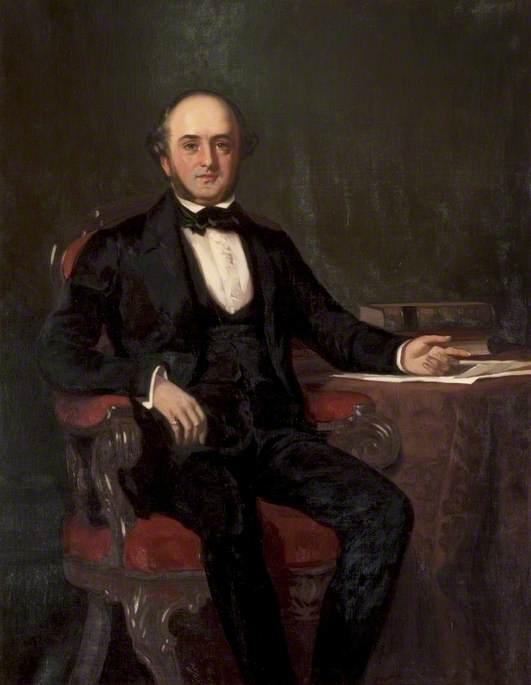
Robert Stewart, Lord Provost of Glasgow


 詳細を見る
詳細を見る




P118B $10

P118H $10

P118W $10

P438Z $10

P508JH $12

P508YH $12

P805H $10

P805Z $10

P919BZ $10

P919G $10

P919XJ $10

P959ZH $10

P968JZ $12

W106C $8

W218G $10

W218JH $8

W218Y $10

W307PJ $10

W316G $10

W316PJ $8

W316Y $10

W398PJ $8

W4111J $10

W500HY $15

W500JH $15

W692G $12

W849H $8

W940BG $15

W953PJ $8




作品のオリジナル比率に合わせた、当店の規定サイズからお選びください。

特定のフレームやスペースに合わせて、ご希望のサイズをご入力いただけます。選択されたサイズが元の画像の比率と異なる場合、アートワークをトリミングするか、手描きで要素を追加して絵画を拡張いたします。デジタルモックアップ を制作し、制作開始前にご確認(承認)をいただきます。
画面上のプレビューは、実際のトリミングや拡張を正確に反映しているものではありません。最終的な構図は、モックアップによってのみ正確にご確認いただけます。
カスタムサイズもご利用いただけますが、元の比率を維持するためには、あらかじめ用意されたリストからサイズを選択することをお勧めいたします。
ご注文後、ArtsDot.com チームより詳細な指示をお送りするとともに、仕上がりイメージ(モックアップ)をご提供いたします。


 ガラスオプションは、110cm未満のサイズでのみご利用いただけます。

Robert Stewart, Lord Provost of Glasgow
複製技法
複製画のサイズ
-


合計金額
$ 263
作品解説
Robert Stewart, Lord Provost of Glasgow – A Portrait of Civic Dignity
David Gauld’s “Robert Stewart, Lord Provost of Glasgow” is more than just a portrait; it's a meticulously rendered tableau of 19th-century civic life and the quiet authority of a man deeply embedded in his community. Painted in 1909, this oil on canvas offers a glimpse into the world of Glasgow’s political elite – a world defined by both tradition and burgeoning modernity. The painting immediately draws the eye to its subject: Lord Provost Stewart, seated at a substantial dining table, an embodiment of measured composure amidst a scene that speaks volumes about his role.
Gauld's style is distinctly Glasgow School, a movement characterized by a rich palette, loose brushwork, and a fascination with capturing the atmosphere of urban life. He doesn’t shy away from depicting the details – the worn leather of the chair, the scattered books suggesting intellectual pursuits, the carefully arranged bowl on the table hinting at hospitality. Yet, these particulars serve to enhance, rather than overwhelm, the central figure. The composition is deliberately balanced, with Stewart occupying a dominant position within the frame, radiating an air of dignified self-assurance.
The Context of Civic Leadership
To fully appreciate “Robert Stewart, Lord Provost of Glasgow,” it’s crucial to understand the significance of his office. As Lord Provost, Stewart presided over the city council and represented Glasgow on a national level. The position demanded not only political acumen but also a deep understanding of the city's social fabric – a responsibility reflected in the painting’s subtle details. The late 19th and early 20th centuries were a period of rapid industrial growth for Glasgow, transforming it into one of Europe’s largest cities. This transformation brought both prosperity and challenges, including overcrowding, poverty, and social unrest. The Lord Provost was tasked with navigating these complexities, balancing the needs of the wealthy elite with those of the working class.
Robert Stewart himself was a prominent figure in Glasgow's civic life, serving as Lord Provost from 1851 to 1854. His tenure coincided with a period of significant urban development and social reform. The painting likely commemorates his service, capturing him not merely as a politician but as a respected leader invested in the well-being of his city.
Symbolism and Artistic Technique
Gauld masterfully employs symbolism to convey Stewart’s character and authority. The books on the table suggest an educated and thoughtful individual, while the carefully arranged bowl speaks to his graciousness and hospitality – qualities essential for a leader responsible for representing the city. The lighting is particularly effective, casting a warm glow upon Stewart's face, highlighting his features and conveying a sense of serenity and confidence. Note the subtle use of color; muted tones dominate, reflecting the seriousness of the subject matter, yet punctuated by warmer hues that draw attention to Stewart’s figure.
The loose brushwork, characteristic of the Glasgow School, creates a sense of immediacy and vitality. Gauld doesn't strive for photographic realism but rather captures the essence of his subject – his presence, his demeanor, and the atmosphere surrounding him. The slightly blurred background contributes to this effect, focusing the viewer’s attention on Stewart as the central point of interest.
A Window into Victorian Glasgow
“Robert Stewart, Lord Provost of Glasgow” offers a valuable window into Victorian Glasgow – a city brimming with ambition, innovation, and social complexities. It's a portrait that transcends mere likeness, revealing something deeper about the character of its subject and the spirit of an era. The painting’s enduring appeal lies in its ability to evoke a sense of history, civic pride, and the quiet dignity of leadership. Reproductions of this work can bring a touch of Victorian elegance and thoughtful reflection to any interior space, serving as a reminder of Glasgow's rich heritage.
関連作品
アーティストの略歴
The Visionary of Glasgow: The Life and Art of David Gauld
In the vibrant, shifting landscape of late nineteenth-century Scotland, few artists captured the intersection of tradition and modernity as gracefully as David Gauld. Born in Glasgow in 1865, Gauld emerged not merely as a painter, but as a pioneer who bridged the gap between the delicate intricacies of graphic design and the monumental presence of stained glass. His journey was one of profound aesthetic evolution, deeply rooted in the artistic ferment of the Glasgow Boys movement, a group that sought to break free from the rigid academicism of the era in favor of more naturalistic, emotive, and experimental approaches.
Gauld’s early creative impulses were shaped by a meticulous eye for detail, a trait honed during his formative years as a lithographer. When he entered the Glasgow School of Art in 1882, he brought with him a burgeoning fascination with the aesthetics of the East. This period was marked by an intense engagement with Japanese prints, whose flattened perspectives and bold, calligraphic lines would forever haunt his compositions. His early public recognition arrived through his evocative pen and ink drawings for The Glasgow Weekly Citizen, works that demonstrated a masterful command of line and a rhythmic, organic sensibility that hinted at the Art Nouveau revolution still on the horizon.
A Synthesis of Light and Line
As Gauld’s career progressed, his artistic medium expanded from the delicate surface of paper to the luminous, translucent medium of stained glass. This transition allowed him to explore the interplay of light and color in a way that few of his contemporaries could match. During his time in Kirkcudbright between 1891 and 1894, Gauld undertook significant commissions for Guthrie and Wells, creating windows that were much more than mere architectural ornaments. These works were tapestries of light, where the organic, flowing forms of the Art Nouveau style met the soulful, symbolic depth of the Pre-Raphaelite tradition.
His technique in glasswork was characterized by a profound understanding of how color interacts with natural illumination. By manipulating texture and pigment, he could evoke a sense of atmosphere that felt both ethereal and grounded. This mastery of medium reflected his broader artistic philosophy: a belief that art should not only represent the world but also transform the space it inhabits. Whether working in oil, ink, or glass, Gauld sought to capture the essence of his subjects—be they the quiet dignity of a portrait or the rugged beauty of the Scottish landscape—through a lens of stylized elegance.
Legacy and Historical Significance
The trajectory of David Gauld’s life was marked by both collaboration and solitary refinement. His associations with other luminaries of the Glasgow School, such as William Stewart Shirreffs and Harrington Mann, placed him at the heart of a transformative period in Scottish art history. Even as his professional relationships shifted and he relocated between Glasgow, Kirkcudbright, and North Berwick, his commitment to innovation remained steadfast. He stood as a vital link between the nineteenth-century fascination with naturalism and the twentieth-century embrace of decorative modernism.
Today, Gauld is remembered as an artist of immense versatility and foresight. His ability to synthesize diverse influences—from the precision of Japanese woodblock prints to the romanticism of the Pre-Raphaelites—allowed him to contribute a unique voice to the Glasgow Style. His legacy lives on in the enduring beauty of his glasswork and the quiet, powerful presence of his paintings, which continue to resonate with an appreciation for craftsmanship, light, and the enduring spirit of Scottish innovation.
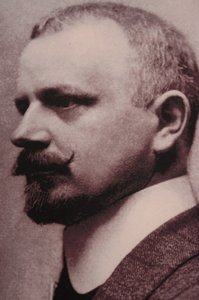
David Gauld
1865 - 1936 , United Kingdom
基本情報
- Artistic Movement Or Style: Glasgow Boys; Art Nouveau; Pre-Raphaelites; Japanese influence
- Artists Or Movements Influenced By This Artist: ['Japanese art']
- Artists Who Influenced This Artist: ['William Stewart Macgeorge']
- Date Of Birth: Glasgow, United Kingdom (1865)
- Date Of Death: 1936
- Full Name: David Gauld
- Nationality: Scottish
- Notable Artworks:
- St Agnes
- Music
- Place Of Birth: Glasgow
関連記事

David Roberts: A Scottish Pioneer of Topographical Art & Orientalist Vision
Explore the captivating world of David Roberts, a pioneering Scottish painter renowned for his detailed Orientalist scenes & stunning Egyptian landscapes. Discover his legacy and find museum-quality reproductions at ArtsDot.
Hubert Robert: Picturing Ruins, Preserving Memory – A Study of Romantic Antiquarianism & Artistic Innovation
Explore the captivating world of Hubert Robert, master of Romantic landscape painting & 'capriccio' ruins. Discover his historical context, artistic innovations, and collecting insights with ArtsDot.
Julius Leblanc Stewart: A Luminist’s Poetic Vision of Belle Époque Life
Explore the captivating world of Julius Leblanc Stewart, a master of Luminism renowned for his Belle Époque portraits and serene landscapes. Discover his artistic journey & legacy with ArtsDot.
Jacques-Louis David: Neoclassical Ideals & Revolutionary Witness
Explore the life & art of Jacques-Louis David, leading Neoclassical painter of the French Revolution. Discover iconic works like 'The Death of Marat' and his lasting impact on art history. Expert analysis & high-quality reproductions at ArtsDot.
Gerard David: Bridging Late Medieval Tradition with Early Renaissance Humanism
Explore the captivating world of Gerard David, a pivotal figure bridging late medieval artistry with the Early Renaissance. Discover his innovative techniques, religious masterpieces, and enduring legacy – a must-read for discerning art collectors.

