

 プレビュー
プレビュー
 シェアする
シェアする シェアする
シェアする
 詳細を見る
詳細を見る

 ダウンロード
 似ている作品
 X線調査
X線調査 スライドショー
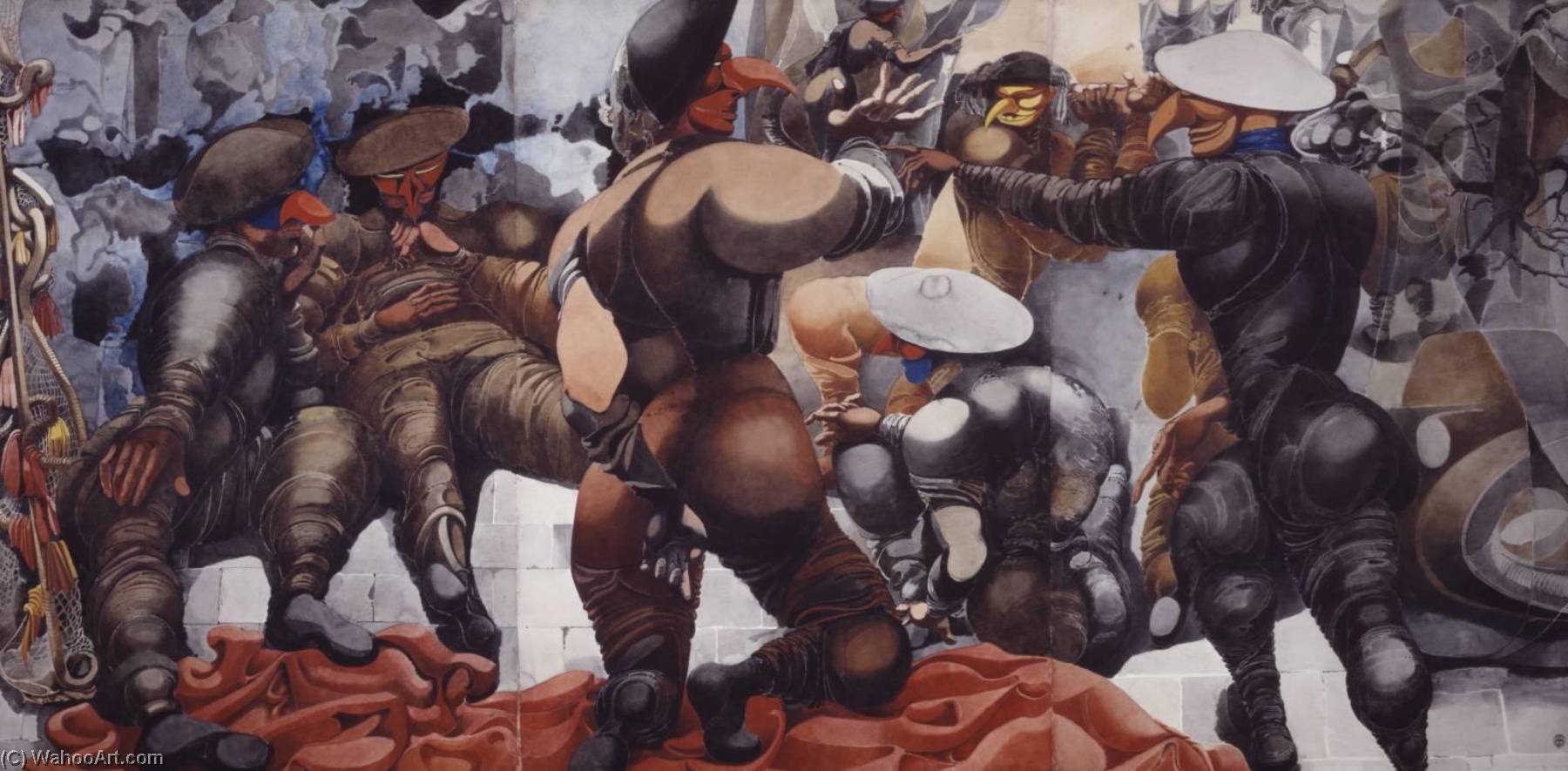
Soldiers at Rye


 詳細を見る
詳細を見る
ジークレー/アートプリント
迅速な制作と多彩な仕上げオプションを備えた、ミュージアムクオリティのジークレーまたはキャンバスプリント。 ( 手描きの絵画を購入 画像を購入)




P118B $10

P118H $10

P118W $10

P438Z $10

P508JH $12

P508YH $12

P805H $10

P805Z $10

P919BZ $10

P919G $10

P919XJ $10

P959ZH $10

P968JZ $12

W106C $8

W218G $10

W218JH $8

W218Y $10

W307PJ $10

W316G $10

W316PJ $8

W316Y $10

W398PJ $8

W4111J $10

W500HY $15

W500JH $15

W692G $12

W849H $8

W940BG $15

W953PJ $8




作品のオリジナル比率に合わせた、当店の規定サイズからお選びください。

特定のフレームやスペースに合わせて、ご自身でサイズを指定することも可能です。選択されたサイズが元の画像の比率と一致しない場合、作品をトリミングするか、鏡面反射または単色での塗りつぶしによって画像を拡張いたします。制作を開始する前に、ご確認用のデジタルモックアップをお送りいたします。
画面上のプレビューには、実際のトリミングや拡張は反映されませんのでご注意ください。最終的な構図を正確に確認できるのは、モックアップのみとなります。
カスタムサイズも承っておりますが、元の比率を維持するためには、あらかじめ用意されたリストからサイズを選択することをお勧めいたします。


 ガラスオプションは、110cm未満のサイズでのみご利用いただけます。

Soldiers at Rye
ジークレー/アートプリント
複製画のサイズ
-


合計金額
$ 62
A Stage of War: Edward Burra’s ‘Soldiers at Rye’
Edward Burra's 1941 painting, *Soldiers at Rye*, is a powerfully unsettling depiction of military life during wartime. The scene presents thirteen figures – soldiers in varying states of readiness – positioned within a bleak and indeterminate landscape. Rather than glorifying combat, Burra offers a starkly realistic portrayal, devoid of heroism, focusing instead on the psychological weight and inherent tension of waiting for action. The composition is deliberately claustrophobic; the tightly packed figures create a sense of unease and shared anxiety. This isn’t a triumphant march or a dramatic battle scene, but a moment suspended in time – a breath held before an uncertain future.Style & Technique: A Surrealist Glimpse into Reality
Burra's style is uniquely his own, blending elements of Surrealism with a distinctly British sensibility for realism and social commentary. While not strictly adhering to any single movement, the influence of artists like George Grosz – whom Burra discovered through Paul Nash – is evident in the angularity of the figures and the gritty depiction of their surroundings. He employs a meticulous technique, building up layers of watercolor and gouache to achieve remarkable detail, particularly in the rendering of uniforms and facial expressions. The color palette is muted and earthy, dominated by browns, greys, and ochres, reinforcing the somber mood. This deliberate restraint contributes to the painting’s overall sense of foreboding. Burra's masterful draughtsmanship, honed during his training at the Royal College of Art, shines through in the precise linework that defines each figure.Historical Context & The Spirit of 1941
Created in 1941, *Soldiers at Rye* is deeply rooted in the anxieties of World War II. Though painted relatively early in Britain’s involvement, the shadow of conflict looms large over the canvas. The location, Rye – a historic town on the south coast of England – was strategically important during the war, vulnerable to invasion and serving as a staging ground for troops. Burra himself did not serve in the military, but his work reflects a profound awareness of the national mood and the psychological toll of wartime. The painting can be seen as a response to official war art that often romanticized conflict; instead, Burra presents an unvarnished view of the human cost of war, focusing on the quiet desperation and uncertainty experienced by those who fought.Emotional Resonance & Lasting Impact
*Soldiers at Rye* is not a painting that offers easy answers or comforting narratives. It’s a work that demands contemplation, prompting viewers to confront the complexities of war and its impact on the human psyche. The soldiers' expressions – ranging from stoicism to apprehension – invite empathy and understanding. The lack of a clear narrative allows for multiple interpretations, making it a timeless piece that continues to resonate with audiences today. Its enduring power lies in its ability to capture not just the physical realities of war, but also the emotional weight carried by those who serve. The painting serves as a potent reminder of the human cost of conflict and the importance of remembering the sacrifices made by generations past.関連作品
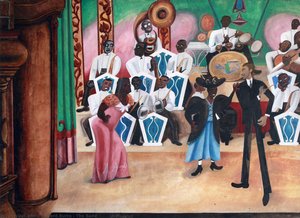
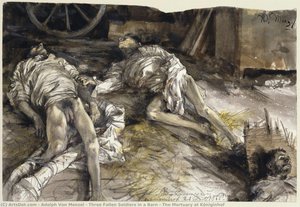
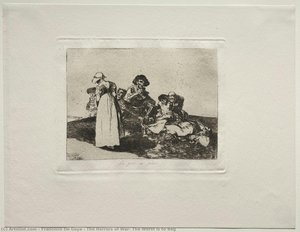
アーティストの略歴
Edward Burra: A Life in Surreal Visions
Early Life and Education
- Born: South Kensington, United Kingdom, 1905.
- Edward Burra demonstrated artistic talent early on, particularly as a draughtsman.
- He received his formal training at the Royal College of Art from 1923 to 1925, honing his skills in drawing and painting.
Early Travels and Influences (1920s)
- During the latter half of the 1920s, Burra travelled extensively throughout France.
- He focused on depicting detailed urban scenes, often portraying the harsh realities of life in cities like Toulon and Marseille.
- These early works reveal a keen observational eye and a sensitivity to social conditions.
- A pivotal moment came in 1927 when he met Paul Nash, who introduced him to avant-garde periodicals.
- Exposure to artists like George Grosz through these publications profoundly influenced Burra, inspiring him to experiment with collage and drawing within a Dadaist spirit.
Artistic Development & Key Themes (1930s-1940s)
- The Jungle (1931) exemplifies Burra’s fascination with the exotic and forbidden. The painting depicts a lavish dinner party set in a fantastical tropical world, blending sensuality with premonitions of death.
- Burra was among the first British artists to embrace Surrealism, creating a distinctive universe populated by extravagantly dressed women, workers, sailors, and soldiers—often situated in imaginary locales.
- His physical health, compromised from childhood, led him to favor watercolor as his primary medium due to its relative ease of use compared to oil paints.
- He held his first solo exhibition at the Leicester Galleries in 1930.
- The impact of Picasso’s Guernica was significant, prompting a shift in Burra's artistic style.
World War II and Later Life (1940s-1976)
- During World War II, travel restrictions led Burra to work as a stage designer for theatrical productions and ballets, achieving some recognition in this field.
- He declined an invitation to become a Royal Academician in 1963 but accepted the Order of the British Empire in 1971.
- A major retrospective of his work was organized by the Tate Gallery in 1973, solidifying his place within British art history.
- He died in Hastings on March 22, 1976, as a result of complications from a fractured iliac bone.
Artistic Style and Historical Significance
- Burra’s style is characterized by its unsettling atmosphere, vivid colors, and distorted figures.
- He masterfully blended elements of Dadaism and Surrealism with a uniquely British sensibility.
- His work offers a critical commentary on social issues, exploring themes of alienation, decadence, and the darker aspects of human nature.
- Though not always widely recognized during his lifetime, Edward Burra is now considered a pioneering figure in 20th-century British art, influencing subsequent generations of artists with his distinctive vision.
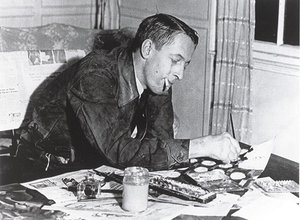
Edward Burra
1905 - 1976 , United Kingdom
基本情報
- Birth Date: 1905
- Birth Place: South Kensington, United Kingdom
- Death Date: 1976
- Influenced By: Paul Nash, George Grosz
- Movement:
- Surrealism
- Dadaism
- Name: Edward Burra
- Nationality: British
- Notable Works:
- The Jungle
- Dancing Skeletons
- The Snack Bar
- Soldiers at Rye
関連記事
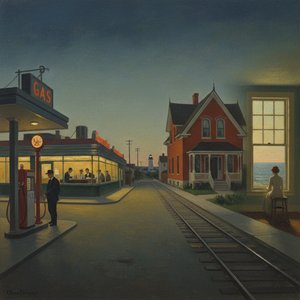
エドワード・ホッパー傑作25選:アメリカの孤独と光影の世界 | ArtsDot
エドワード・ホッパーの傑作25選。アメリカ絵画を代表するモダンアート、孤独と光影の世界を紐解きます。名画「Nighthawks」や「ハウス・バイ・ザ・レールロード」など、美術史に残る作品群をArtsDotで高品質複製画としてお楽しみください。インテリアに深みを与えるアートプリントも多数。今すぐコレクションをご覧ください。
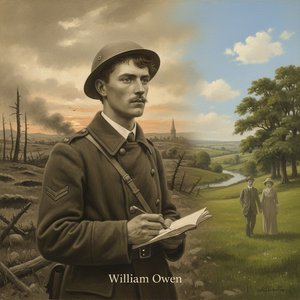
William Owen: A Poetic Vision of War & Landscape in British Modernism
Explore the poignant war poetry of Wilfred Owen, a key figure in British Modernism. Discover his innovative style, themes of loss & camaraderie, and lasting impact on 20th-century literature. Analysis & historical context included.
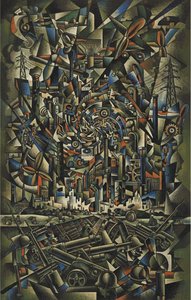
C.R.W. Nevinson: A Vorticist Vision of War & Modernity
Explore the powerful art of C.R.W. Nevinson, a key British Vorticist painter. Discover his impactful depictions of WWI and evolution beyond Futurism. Expert analysis & high-quality reproductions at ArtsDot.
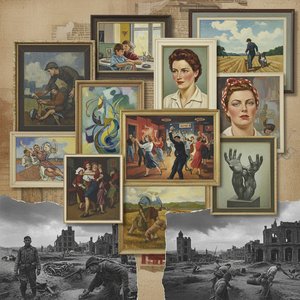
Echoes of War & Hope: Top 10 Artworks Reflecting the 1940s | ArtsDot
Journey through a decade of resilience & change with our Top 10 artworks of the 1940s. Explore iconic paintings by Rockwell, Hopper & more—reflecting WWII's impact and post-war hope. Find museum-quality reproductions at ArtsDot.com
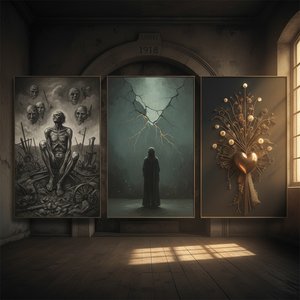
Echoes of Trauma & Hope: Representing Transformation in Artworks of 1918
Explore the profound artistic responses to World War I's trauma & hope. Discover Expressionist masterpieces by Bacon, de Kooning & more. Expert insights for collectors & art enthusiasts at ArtsDot.

