

 プレビュー
プレビュー
 プリントを購入
 シェアする
シェアする シェアする
シェアする
 詳細を見る
詳細を見る

 ダウンロード
 似ている作品
 X線調査
X線調査 スライドショー
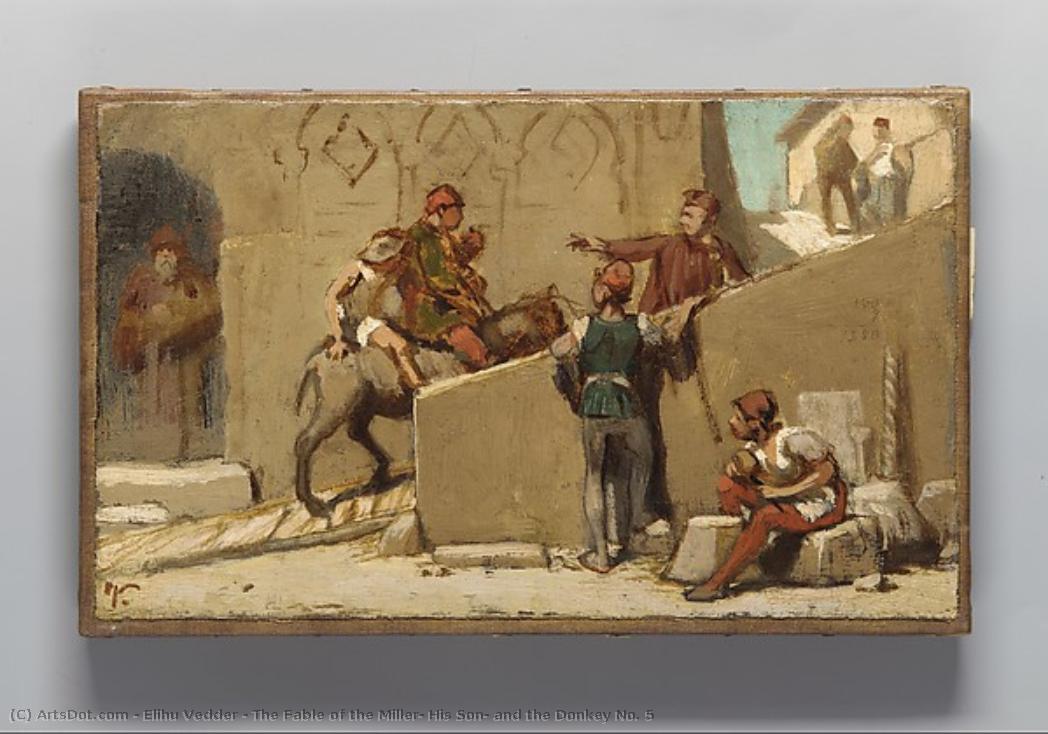
The Fable of the Miller, His Son, and the Donkey No. 5
 Oil On Canvas
- WallArt
- Symbolism
 1867
1867- 19th Century
 17.0 x 27.0 cm
 メトロポリタン美術館
 詳細を見る
詳細を見る
オンラインプレビューをはるかに凌ぐ、高解像度で鮮明なデジタル画像をご購入いただけます。
各ファイルは、社内の専門家が高度なツールと熟練した手作業によるレタッチを用いて、細心の注意を払って準備されています。すべての画像において、卓越した鮮明度、正確な色彩再現性、そして繊細なディテールを保証いたします。
最終ファイルは、プロフェッショナルな編集・印刷環境ですぐにご利用いただけるよう最適化された状態で、72時間以内にメールにてお届けいたします。これは、一流のデザインスタジオ、出版社、ギャラリーから信頼されているものと同等の品質です。
デジタル画像のご注文に付随する特典
高品質なデジタル画像配信を、確かな品質で。
ArtsDot.com を選ぶことは、単に画像を手に入れることではありません。それは、プロの手によって精密に仕上げられ、満足保証が付いた高品質なデジタルアートワークを受け取ることを意味します。ご注文いただいた際に自動的に付随する内容は、以下の通りです:

メールですぐにお届け
ご注文から72時間以内に、高解像度のデジタル画像ファイルがメールでお手元に届きます。すぐにそのままご利用いただけます。

AI技術で最適化されたデジタルファイル
お客様の作品は、高度なAIツールと専門家による手作業の編集を組み合わせてプロフェッショナルに最適化されており、細部のディテール、鮮明さ、そして正確な色再現性を最大限に引き出しています。

一生涯無料の再送サービス
ファイルを誤って削除したり、紛失してしまったりしましたか?ご安心ください。いつでも無料で再送いたします。

輸入手数料は一切かかりません
関税や手数料、配送料を気にすることなく、お気に入りのアートワークをすぐにお楽しみいただけます。デジタルダウンロードは常に免税です。

色彩再現の保証
プロ仕様のツールとカラーマネジメント技術を用いることで、デジタル画像が元の色を最大限に忠実に再現することを保証いたします。

60日間満足保証
ご購入いただいたデジタル画像にご満足いただけない場合は、60日以内であれば、修正または100%の返金(理由を問う必要はありません)をさせていただきます。

100% 返金保証
ご満足いただけない場合は、デジタルファイルを受け取ってから60日以内であれば、理由を問わず全額返金いたします。

まとめ買い割引
3枚購入で10%OFF - 5枚購入で15%OFF - 10枚以上購入で20%OFF。クリエイティブなプロジェクト、ギャラリー、エージェンシーに最適です。
A Rustic Tale Painted in Stone and Shadow: Elihu Vedder’s “The Fable of the Miller, His Son, and the Donkey No. 5”
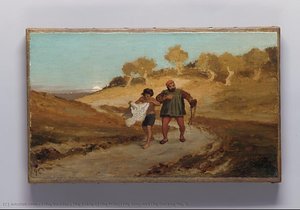
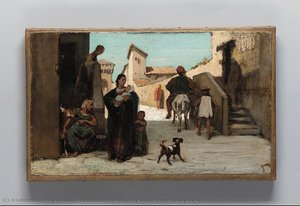
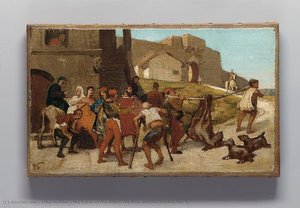
Elihu Vedder's "The Fable of the Miller, His Son, and the Donkey No. 5," painted in 1867, isn’t merely a depiction of a classic Aesop fable; it’s a poignant meditation on human folly, the relentless pursuit of approval, and the quiet dignity of acceptance. This small yet powerfully resonant oil painting, measuring just 17 x 27 cm, transports us to a sun-drenched Italian landscape—a setting meticulously chosen by Vedder to evoke the timelessness of the story itself—where a weary miller and his son grapple with the capricious judgments of passersby. The scene unfolds within a modest stone structure, its walls hinting at both shelter and confinement, mirroring the characters’ own predicament. Vedder masterfully employs a muted palette dominated by earthy ochres, warm browns, and subtle beiges, creating an atmosphere of quiet contemplation—a deliberate choice that underscores the painting's thematic weight rather than relying on dramatic color contrasts. The brushwork is deliberately loose and impressionistic; visible strokes suggest movement and texture, imbuing the scene with a sense of immediacy and capturing the fleeting nature of human interaction.A Symbolist Vision Rooted in Italian Renaissance Influence
Vedder’s work firmly resides within the Symbolist movement, yet he transcends simple imitation, forging his own unique visual language. His debt to the Italian Renaissance is palpable—particularly in the careful rendering of architectural details and the use of light and shadow, reminiscent of masters like Leonardo da Vinci and Raphael. However, Vedder departs from traditional academic realism, prioritizing emotional resonance over photographic accuracy. The figures are simplified, almost archetypal, embodying universal human experiences rather than representing specific individuals. This stylistic choice aligns perfectly with Symbolism’s core tenets: to express ideas and emotions through suggestive imagery, often drawing upon mythology, folklore, and dreamlike states. The painting's connection to the Macchiaioli movement—Italian painters who favored loose brushwork and capturing fleeting moments of light—further informs its expressive quality, adding a vibrant energy beneath the surface of apparent stillness.Decoding the Narrative: Folly, Frustration, and Fatal Missteps
At first glance, the scene appears straightforward: a miller and his son attempt to navigate a marketplace or public space, encountering a series of critical comments regarding their handling of the donkey. Yet, Vedder layers this simple narrative with profound symbolism. The donkey itself represents burdens—both literal and metaphorical—that we often carry through life, burdened by expectations, judgments, and the relentless pressure to please others. Each critique from the onlookers highlights the futility of seeking external validation; no matter how carefully one adjusts their actions, someone will always find fault. The painting’s central tension arises from the father's increasingly desperate attempts to appease these critics—a cycle that ultimately leads to a tragic outcome: the donkey’s demise. This isn’t simply a story about a lost animal; it’s an allegory for the destructive nature of vanity and the impossibility of satisfying everyone.The Artistry of Observation and Emotional Resonance
Vedder's skill lies not just in his technical proficiency but also in his ability to capture the essence of human behavior through careful observation. The composition is remarkably balanced, drawing the eye across the crowded scene while subtly emphasizing the characters’ isolation. The use of linear perspective creates a sense of depth, guiding the viewer into the heart of the drama. Notice how Vedder renders the textures—the rough stone walls, the worn clothing of the figures, and the coarse fur of the donkey—adding tactile richness to the image. The lighting, diffused and naturalistic, casts long shadows that heighten the painting’s melancholic mood. Ultimately, “The Fable of the Miller, His Son, and the Donkey No. 5” is a testament to Vedder's profound understanding of human nature—a timeless masterpiece that continues to resonate with viewers today, prompting reflection on our own desires for approval and the inherent limitations of seeking it from others.A Legacy of Symbolist Vision: Exploring Related Works
Elihu Vedder’s artistic journey is richly documented, beginning in New York City under Tompkins H. Matteson before he spent formative years studying in Paris with François-Édouard Picot and later immersing himself in the vibrant art scene of Italy. His time there profoundly shaped his style, fostering a deep connection to Italian Renaissance ideals while simultaneously embracing Symbolist principles. Explore related works such as “The Fable of the Miller, His Son, and the Donkey No. 1” and “The Fable of the Miller, His Son, and the Donkey No. 2,” each offering unique perspectives on this enduring fable. Furthermore, consider Vedder’s illustrations for Edward FitzGerald's "Rubaiyat of Omar Khayyam," a project that cemented his reputation as a visionary artist capable of blending classical allusions with evocative symbolism.- Useful Links: Wikipedia
- Artworks Database: The Fable of the Miller, His Son, and the Donkey No. 1
- Artworks Database: The Fable of the Miller, His Son, and the Donkey No. 5
- Artists Database: Elihu Vedder
関連作品
作家の略歴
初期の生活と芸術的訓練
- 生年: 1836年2月26日、アメリカ合衆国ニューヨーク市
- 没年: 1923年1月29日、イタリアローマ
エリヤ・ヴェダーは、両親が従兄弟という特異な家庭環境に生まれました。彼の幼少期は、父親の転居に伴うキューバでの滞在や、母方の祖父の家であるスケネクチディと寄宿学校の間を渡り歩くなど、多様な経験によって形作られていきました。当初は父親から懸念の声が上がったものの、ヴェダーの芸術への情熱は母親からの支援を得て育まれていきました。
- 初期の訓練: ヴェダーはニューヨーク市でトムpkins・H・マティソンのもと、正式な訓練を始めました。
- ヨーロッパでの学修: その後、パリでフランソワ=エドゥアール・ピコによって学びを深め、さらにイタリアへと渡ります。そこで彼は、イタリア・ルネサンスやマッキアリオリ派の画家たちから深い影響を受けました。
- イタリアの影響: イタリアでの日々は、同僚の画家ジョヴァンニ・コスタとの間に深い感情的な絆を育み、旅路へと駆り立てられました。しかし、経済的な制約が彼をアメリカへ帰還させることとなりました。
キャリアのハイライトと著名な作品
ヴェダーのキャリアは、絵画や版画といった視覚芸術から、壁画デザインや詩作に至るまで、多岐にわたる分野に及びました。彼はウォルト・ウィットマンやハーマン・メルヴィルといった著名な人物たちと友情を育みました。
- 『ルバイヤート』の挿絵: ヴェダーが最もよく知られているのは、エドワード・フィッツジェラルドによるオマール・ハイヤームの『ルバイヤート』(豪華版)に添えられた55点の挿絵です。これらは象徴主義芸術の傑作と見なされています。
- 幻想的な絵画: 「ロクの卵」、「漁師と精霊」、そして「海の蛇の棲み処」といった作品群は、彼の持つ先見的なスタイルと想像力豊かなテーマを見事に示しています。
- 壁画制作: 彼はワシントン図書館の閲覧室の廊下を、壮大な壁画で飾りました。
- ティファニーとの協働: ヴェダーはルイ・コンフォート・ティファニーと協力し、ティファニー社のためにガラス工芸品、モザイク、そして彫像などをデザインしました。
芸術様式と影響
ヴェダーの芸術様式を特徴づけているのは、その先見的な性質、ロマンチックなイメージ、そして東洋的な要素が頻繁に取り入れられている点です。
- 象徴主義: 彼は象徴主義運動における重要な人物であり、厳密な写実性よりも感情や個人の内面性を重視しました。
- プリラファエル派: イングランドでの経験は彼をプリラファエル兄弟団に触れさせ、その芸術様式をより明晰で緻密なものへと導きました。
- 英国およびアイルランドの神秘主義者たち: ウィリアム・ブレイクやウィリアム・バトラー・イーツらの作品から影響を受け、神秘主義や精神性への深い魅了を表現しています。
- イタリア・ルネサンスとマッキアリオリ派: イタリアでの学修は、彼が形、色彩、そして構図に対する理解を深める上で決定的な役割を果たしました。
遺産と晩年
ヴェダーの貢献は絵画という枠を超えてアメリカ美術に及んでいます。彼はイタリアで「イン・アルテ・リベルタス」グループの設立に尽力し、自伝的な考察や詩を含む多くの著作を残しました。
- 所属: ヴェダーはアメリカ芸術文学アカデミーの会員でした。
- 文芸活動: 彼は『Vの逸脱』(1910年)、『詩の中の雑多な気分』(1914年)、そして『疑念とその他のもの』(1922年)といった著作を発表しました。
- 晩年: ヴェダーは晩年を主にイタリアで過ごし、1923年にローマで亡くなるまで芸術の創造と執筆を続けました。彼の遺産は、今日なお観る者を魅了し続ける、あの情緒豊かな絵画や挿絵の中に生き続けています。
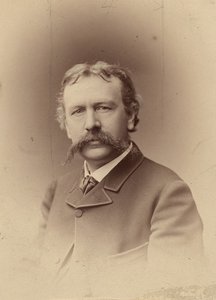
エリフ・ヴェダー
1836 - 1923 , アメリカ合衆国
プロフィール概要
- Artistic Movement Or Style: 象徴主義、ロマン主義
- Artists Who Influenced This Artist:
- フランソワ=エドゥアール・ピコ
- ジョヴァンニ・コスタ
- ウィリアム・ブレイク
- ウィリアム・バトラー・イェイツ
- Date Of Birth: 1836年2月26日
- Date Of Death: 1923年1月29日
- Full Name: エリフ・ヴェダー
- Nationality: アメリカ人
- Notable Artworks:
- ロクの卵
- 漁師と精霊たち
- 海の蛇の棲み処
- ルバイヤート挿絵
- Place Of Birth: ニューヨーク市、米国

