

 プレビュー
プレビュー
 シェアする
シェアする シェアする
シェアする
 詳細を見る
詳細を見る

 ダウンロード
 似ている作品
 X線調査
X線調査 スライドショー
 統計情報
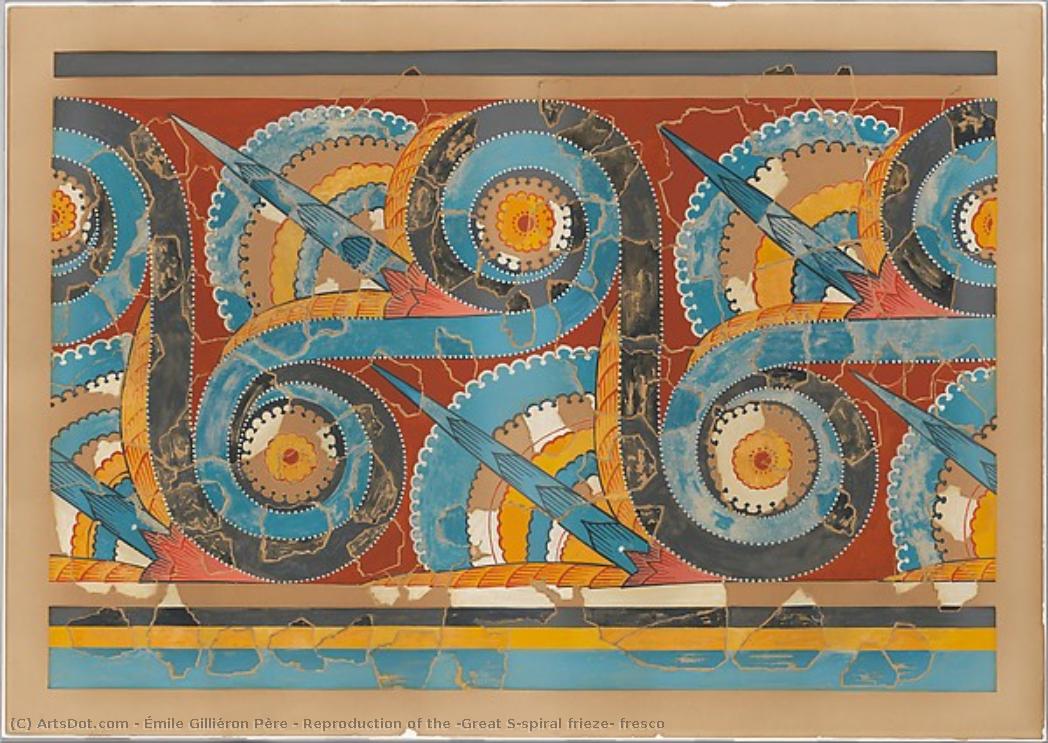
統計情報Reproduction of the "Great S-spiral frieze" fresco
 Minoan Art
 1400
1400 91.0 x 67.0 cm
 詳細を見る
詳細を見る
手描き油彩複製画
当社のアーティストが、お客様のご希望のサイズと額縁に合わせて、キャンバスに手描きで制作する油彩画です。 ( プリント版に切り替え デジタル画像販売へ切り替え)




































作品のオリジナル比率に合わせた、当店の規定サイズからお選びください。

特定のフレームやスペースに合わせて、ご希望のサイズをご入力いただけます。選択されたサイズが元の画像の比率と異なる場合、アートワークをトリミングするか、手描きで要素を追加して絵画を拡張いたします。デジタルモックアップ を制作し、制作開始前にご確認(承認)をいただきます。
画面上のプレビューは、実際のトリミングや拡張を正確に反映しているものではありません。最終的な構図は、モックアップによってのみ正確にご確認いただけます。
カスタムサイズもご利用いただけますが、元の比率を維持するためには、あらかじめ用意されたリストからサイズを選択することをお勧めいたします。
ご注文後、ArtsDot.com チームより詳細な指示をお送りするとともに、仕上がりイメージ(モックアップ)をご提供いたします。


 ガラスオプションは、110cm未満のサイズでのみご利用いただけます。

Reproduction of the "Great S-spiral frieze" fresco
複製技法
複製画のサイズ
-


合計金額
$ 263
関連作品



アーティストの略歴
The Linguistic Cartographer: Unveiling the Life and Work of Émile Gilliéron
Émile Gilliéron, a name perhaps less familiar than those of his Impressionist contemporaries, nevertheless occupies a pivotal position in the intellectual landscape of late 19th and early 20th century France. Born in 1855 in Mâcon, Burgundy, Gilliéron wasn’t a painter wielding brushstrokes on canvas, but a philologist armed with a meticulous ear and an insatiable curiosity for the living language spoken across his homeland. His life's work – a monumental linguistic survey of France – fundamentally reshaped our understanding of dialectology, geography, and even national identity. Gilliéron’s early education instilled in him a deep appreciation for classical languages, but it was during his time as a secondary school teacher that he became acutely aware of the vast discrepancies between the standardized French taught in classrooms and the vibrant, often unintelligible, vernaculars spoken by the people he encountered. This realization sparked a lifelong quest to document and analyze these regional variations, believing they held keys to understanding France’s history, culture, and the very evolution of language itself. He wasn't merely cataloging words; he was mapping the soul of a nation through its speech.A Revolution in Linguistic Methodology: The *Atlas Linguistique de la France*
Gilliéron’s most enduring legacy is undoubtedly the *Atlas Linguistique de la France* (ALF), an ambitious project begun in 1897 and completed posthumously in 1968. Prior to the ALF, dialectology was largely a historical-comparative discipline, reconstructing proto-languages from written sources. Gilliéron pioneered a radically different approach: direct fieldwork. He dispatched teams of investigators – often young teachers – across France, equipped with standardized questionnaires designed to elicit responses to over 1500 carefully chosen questions covering all aspects of daily life, from agricultural practices and domestic routines to folklore and local customs. The investigators didn’t simply record the words themselves; they meticulously noted pronunciation, intonation, and even the social context in which each utterance was made. This emphasis on *real* speech, as opposed to literary representations, marked a turning point in linguistic research. The resulting atlas – a vast collection of maps illustrating the geographical distribution of thousands of linguistic features – wasn’t just a scientific document; it was a breathtaking visual representation of France's cultural diversity. It revealed that language wasn’t a homogenous entity imposed from above, but a complex mosaic shaped by local conditions and historical contingencies.Influences and Intellectual Context: From Historical Philology to Regionalism
Gilliéron’s work emerged at a crucial juncture in French intellectual history. The late 19th century witnessed a growing interest in regional identities, fueled by the rise of nationalism and anxieties about centralization. While Gilliéron himself wasn't explicitly a political activist, his research resonated deeply with those advocating for greater recognition of France’s diverse cultures. He drew heavily from the methods of historical geography, recognizing that linguistic boundaries often reflected ancient administrative divisions, migration patterns, and trade routes. His intellectual debt to scholars like Paul Vidal de la Blache, a pioneer in human geography, is undeniable. Furthermore, Gilliéron’s meticulous attention to detail and his emphasis on empirical observation aligned with the broader positivist movement of the era. However, he transcended simple empiricism by recognizing that language wasn't merely a passive reflection of external factors; it was an active force shaping perceptions and constructing social realities. He understood that each dialect embodied a unique worldview, a particular way of experiencing and interpreting the world.Major Achievements and Lasting Impact: Beyond the Atlas
The *Atlas Linguistique de la France* remains Gilliéron’s most celebrated achievement, but his contributions extended far beyond this monumental project. He developed a sophisticated theory of linguistic boundaries – “lines of isoglosses” – demonstrating that dialects weren't separated by abrupt divisions, but rather by gradual transitions and overlapping zones of influence. He also pioneered the study of onomastics – the investigation of place names – revealing how toponyms could provide valuable insights into historical settlement patterns and cultural landscapes.- His work challenged the prevailing notion of a unified French language, exposing its inherent regional variations.
- He laid the foundations for modern sociolinguistics, recognizing the social factors that influence linguistic behavior.
- The ALF served as a model for similar linguistic surveys conducted across Europe and beyond.
Historical Significance: A Legacy of Linguistic Awareness
Émile Gilliéron’s historical significance lies in his transformation of dialectology from a marginal discipline into a central field of linguistic inquiry. He didn't just document dialects; he elevated them to the status of legitimate objects of scientific study, demonstrating their intrinsic value and their crucial role in understanding language evolution. His work coincided with – and arguably contributed to – a growing awareness of regional identities within France, challenging the homogenizing forces of centralization. While his research wasn’t explicitly political, it provided ammunition for those advocating for greater cultural autonomy. The *Atlas Linguistique de la France* continues to be an invaluable resource for linguists, historians, geographers, and anthropologists alike. It stands as a testament to Gilliéron's enduring legacy – a linguistic cartography that reveals the hidden contours of a nation’s soul, reminding us that language is not merely a tool for communication, but a vibrant expression of cultural identity and historical experience. His work continues to resonate in contemporary debates about globalization, linguistic diversity, and the preservation of endangered languages, solidifying his position as a true pioneer in the field of linguistics.
関連記事

The Enduring Legacy of Fresco Painting: Techniques, History & Contemporary Relevance
Explore the rich history & enduring artistry of fresco painting – from Giotto to Michelangelo! Discover techniques, conservation efforts, & modern applications. Learn how ArtsDot brings this timeless art form to your home.

家族の遺産を壁画で彩る:伝統技法が紡ぐ、時を超越する美と記憶
古代から現代までの壁画の歴史と技法を解説。日本の壁画文化やカスタムオーダーによる家族の遺産表現、保存・修復技術まで網羅。専門家が時を超越する美と記憶を紡ぐ芸術的価値をご案内します。

The Enduring Legacy of Fresco: Technique, History & Artistic Expression Across Cultures
Explore the rich history & enduring legacy of fresco painting! Discover ancient techniques, Giotto's masterpieces, and modern applications. Expert insights for art lovers & professionals.
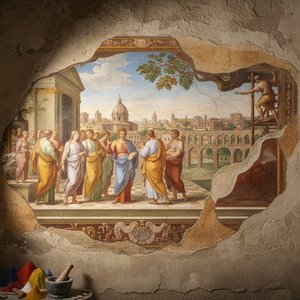
The Enduring Legacy of Fresco: Technique, History & Artistic Expression
Explore the rich history & enduring artistry of fresco painting. Discover techniques from Giotto to Michelangelo, conservation efforts, & modern applications. Learn how ArtsDot brings this timeless art form to your home.

Art That Lives With You: The Emotional Power of a Custom Interior Fresco
Discover the emotional power & timeless beauty of custom interior frescoes. Explore history, design tips & expert guidance from – creating lasting legacies.