

 プレビュー
プレビュー
 プリントを購入
 シェアする
シェアする シェアする
シェアする
 詳細を見る
詳細を見る

 ダウンロード
 似ている作品
 X線調査
X線調査 スライドショー
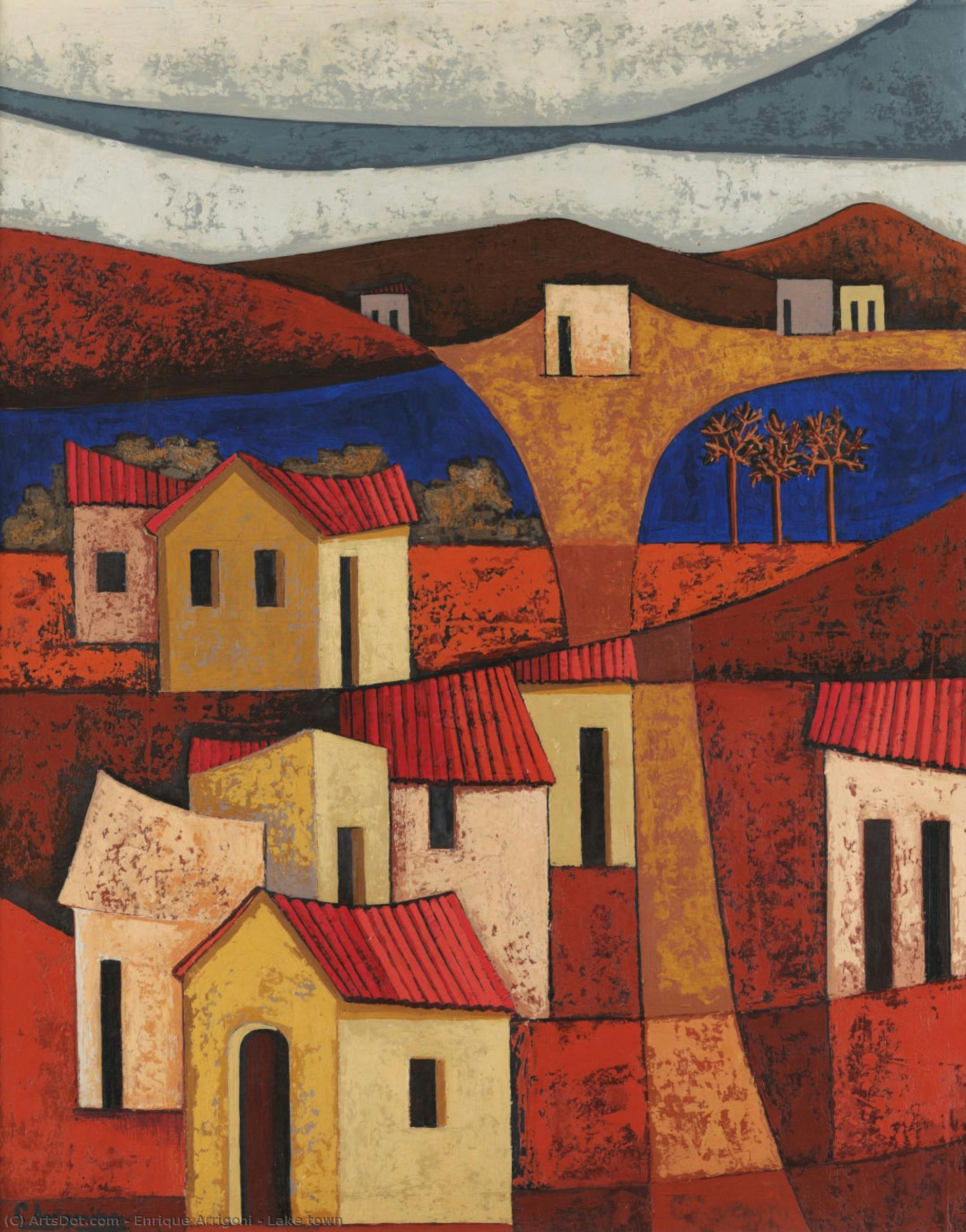
Lake town
 Contemporary Realism
 1981
1981- Modern
 70.0 x 90.0 cm
 Municipal Museum of Art of La Plata
 詳細を見る
詳細を見る




P118B $10

P118H $10

P118W $10

P438Z $10

P508JH $12

P508YH $12

P805H $10

P805Z $10

P919BZ $10

P919G $10

P919XJ $10

P959ZH $10

P968JZ $12

W106C $8

W218G $10

W218JH $8

W218Y $10

W307PJ $10

W316G $10

W316PJ $8

W316Y $10

W398PJ $8

W4111J $10

W500HY $15

W500JH $15

W692G $12

W849H $8

W940BG $15

W953PJ $8




作品のオリジナル比率に合わせた、当店の規定サイズからお選びください。

特定のフレームやスペースに合わせて、ご希望のサイズをご入力いただけます。選択されたサイズが元の画像の比率と異なる場合、アートワークをトリミングするか、手描きで要素を追加して絵画を拡張いたします。デジタルモックアップ を制作し、制作開始前にご確認(承認)をいただきます。
画面上のプレビューは、実際のトリミングや拡張を正確に反映しているものではありません。最終的な構図は、モックアップによってのみ正確にご確認いただけます。
カスタムサイズもご利用いただけますが、元の比率を維持するためには、あらかじめ用意されたリストからサイズを選択することをお勧めいたします。
ご注文後、ArtsDot.com チームより詳細な指示をお送りするとともに、仕上がりイメージ(モックアップ)をご提供いたします。


 ガラスオプションは、110cm未満のサイズでのみご利用いただけます。

Lake town
複製技法
複製画のサイズ
-


合計金額
$ 263
A Serene Escape into the Alpine Heart
In the quietude of Lake Town, painted in 1981 by the evocative Enrique Arrigoni, we find ourselves transported to a realm where time seems to have slowed to a rhythmic, peaceful crawl. This captivating piece serves as more than just a landscape; it is an invitation to inhabit a moment of profound stillness. The composition centers on a charming village nestled within the protective embrace of a mountain range, where the architecture—characterized by striking red roofs and crisp white walls—creates a rhythmic dance of color against the verdant backdrop. As the eye wanders through the scene, one notices the delicate integration of human life with the natural world, where the presence of solitary figures adds a layer of narrative depth, suggesting a quiet communion between the inhabitants and their breathtaking surroundings.
The technique employed in this work breathes life into the mountain air. Arrigoni utilizes a vivid palette that captures the luminous quality of daylight filtering through a high-altitude atmosphere. The brushwork, while precise enough to define the structural integrity of the houses, retains a painterly softness that allows the trees and distant peaks to blend seamlessly into a cohesive, atmospheric whole. This mastery of color and light creates a sense of depth that pulls the viewer into the valley, making the mountains feel both imposing and protective. For the collector or interior designer, this painting offers a sophisticated interplay of warmth and coolness, making it an ideal centerpiece for spaces designed to evoke tranquility and organic elegance.
Beyond its visual splendor, Lake Town resonates with a deep sense of nostalgia and pastoral symbolism. The village represents a sanctuary of stability and tradition, standing as a testament to the enduring beauty of simple living. The contrast between the man-made structures and the untamed greenery symbolizes the harmonious balance that can exist when humanity respects the majesty of nature. There is an emotional resonance here that speaks to the universal longing for peace—a quietude that remains accessible even in our modern, frenetic lives. To possess a reproduction of this work is to bring a window of eternal springtime into one's home, offering a constant source of inspiration and a visual breath of fresh mountain air.
関連作品
アーティストの略歴
Frank Stella: A Pioneer of Minimalism and Geometric Abstraction
Frank Stella, born in Malden, Massachusetts, on May 12, 1936, emerged as a pivotal figure in the latter half of the 20th century’s art landscape. His career, spanning nearly six decades, witnessed a profound shift in artistic approaches, moving from expressive brushstrokes to rigorously defined geometric forms and ultimately establishing himself as a key architect of minimalism. Stella's journey wasn’t one of sudden revelation but rather a gradual evolution, deeply rooted in his early experiences and influenced by the burgeoning avant-garde movements of the time. His father, Frank Sr., a gynecologist, instilled a strong work ethic and appreciation for precision, while his mother, Constance Santonelli, a practicing artist herself, nurtured his creative inclinations from a young age. This dual influence—a pragmatic father and an artistic mother—shaped Stella’s approach to art, emphasizing both technical skill and conceptual rigor.Early Influences and the Rise of Abstract Expressionism
Stella's formative years were marked by exposure to the vibrant world of New York City’s art scene. He attended Phillips Academy in Andover, Massachusetts, where he excelled academically and developed a keen interest in design and illustration. Crucially, his high school art teacher arranged a visit to the Art Center School in Los Angeles, a prestigious institution that housed a collection of works by pioneering abstract expressionists like Jackson Pollock and Franz Kline. This encounter proved transformative, exposing him to the possibilities of non-representational painting and sparking a fascination with the formal elements of color, line, and shape. The stark simplicity and directness of these artists resonated deeply, laying the groundwork for his later explorations into geometric abstraction. The influence of Kline’s forceful black brushstrokes, in particular, is often cited as a key inspiration in Stella's early development.Breaking with Tradition: Minimalism and the “Black Paintings”
In the late 1950s, Stella began to deliberately dismantle the conventions of abstract expressionism, rejecting the notion of painting as a vehicle for personal emotion or subjective experience. He sought to strip away all extraneous elements—brushstrokes, texture, and implied narrative—leaving only the essential components of the canvas: a flat surface with paint on it. This radical simplification culminated in his series of “Black Paintings” (1959-1960), consisting of four large black paintings featuring thin, parallel stripes. These works were deliberately confrontational, challenging viewers to reconsider their expectations of what art could be and signaling Stella’s commitment to a new aesthetic vocabulary. The starkness of the paintings, coupled with their precise execution, generated considerable controversy but also garnered critical attention, establishing Stella as a leading voice in the emerging minimalist movement.Exploring Geometry: Stripes, Boxes, and Beyond
Following the “Black Paintings,” Stella continued to experiment with geometric forms, moving beyond simple stripes to explore more complex arrangements of lines and shapes. His "Stripes" paintings (1960-1963) featured a series of parallel black and white stripes applied with meticulous precision, creating subtle variations in color and texture. These works demonstrated his mastery of technical skill and his ability to create visually engaging compositions through the manipulation of basic geometric elements. In the mid-1960s, Stella introduced “Boxes,” paintings that consisted of a rectangular canvas surrounded by a frame of painted lines. This series further emphasized the materiality of the artwork, highlighting the relationship between the painting itself and its surrounding environment. He also began to incorporate colored tape into his work, creating layered compositions that explored the interplay of color, line, and surface.Legacy and Influence
Frank Stella’s impact on contemporary art is undeniable. He played a crucial role in shaping the minimalist movement, demonstrating its potential for both aesthetic rigor and conceptual innovation. His emphasis on materiality, formal elements, and geometric abstraction influenced generations of artists, including Donald Judd, Sol LeWitt, and Agnes Martin. Beyond his contributions to minimalism, Stella’s work continues to be celebrated for its intellectual depth, technical precision, and enduring relevance. He remained an active artist until his death in 2024, continuing to push the boundaries of painting and sculpture. His retrospective exhibitions at major museums around the world have solidified his place as one of the most important artists of the 20th century, a true pioneer who redefined the possibilities of abstract art.
enrique arrigoni
1936 - 2017 , Argentina
基本情報
- Artistic Movement Or Style:
- Minimalism
- Post-painterly abstraction
- Artists Or Movements Influenced By This Artist:
- Minimalism
- Post-painterly abstraction
- Artists Who Influenced This Artist:
- Franz Kline
- Jackson Pollock
- Date Of Birth: May 12, 1936
- Date Of Death: May 4, 2024
- Full Name: Frank Philip Stella
- Nationality: American
- Notable Artworks: ['Various paintings and sculptures']
- Place Of Birth: Malden, Massachusetts
関連記事

ジョン・コンスタブルの傑作25選:英国風景画の巨匠が描く自然と光の詩 | ArtsDot
ジョン・コンスタブルの傑作25選。英国風景画の巨匠が描く自然と光の詩の世界へ。ロマン主義を代表する絵画、デダム・ヴェールやヘイ・ウェインなど、ArtsDotで高品質なアートプリントをお楽しみください。インテリアに深みと感動を。コレクションはこちら。

Serene Visions: Exploring Themes of Tranquility in Art History & Contemporary Practice
Explore the history of serene landscape art & discover artists who evoke tranquility. Find the perfect calming artwork for your home with expert guidance from ArtsDot.

ロマン派ランドスケープ:時代を彩る巨匠の10選|アートとインテリアの世界
ロマン派絵画の時代を彩る10選。巨匠たちの風景が織りなす感動の世界へ。ターナー、ルーベンスなど、名作の裏話と高精細複製でアートをお部屋に。ArtsDot.comで至福のアート体験を。

Evocations of Place: A Historical Journey Through Landscape Art
Explore the rich history of landscape art with ArtsDot. Discover renowned artists, movements like Impressionism & Romanticism, and expert guidance for collecting timeless pieces. Find your perfect serene escape today!

葛飾北斎:25の傑作が語る浮世絵の世界 - ArtsDot
葛飾北斎の25選:『神奈川沖浪裏』や『富嶽三十六景』など、浮世絵の世界を深く探求。木版画の技法と日本美術の美をArtsDotで。高品質なアートプリントで空間に感動を。コレクションはこちら。