

 プレビュー
プレビュー
 シェアする
シェアする シェアする
シェアする
 詳細を見る
詳細を見る

 ダウンロード
 似ている作品
 X線調査
X線調査 スライドショー
 Stats
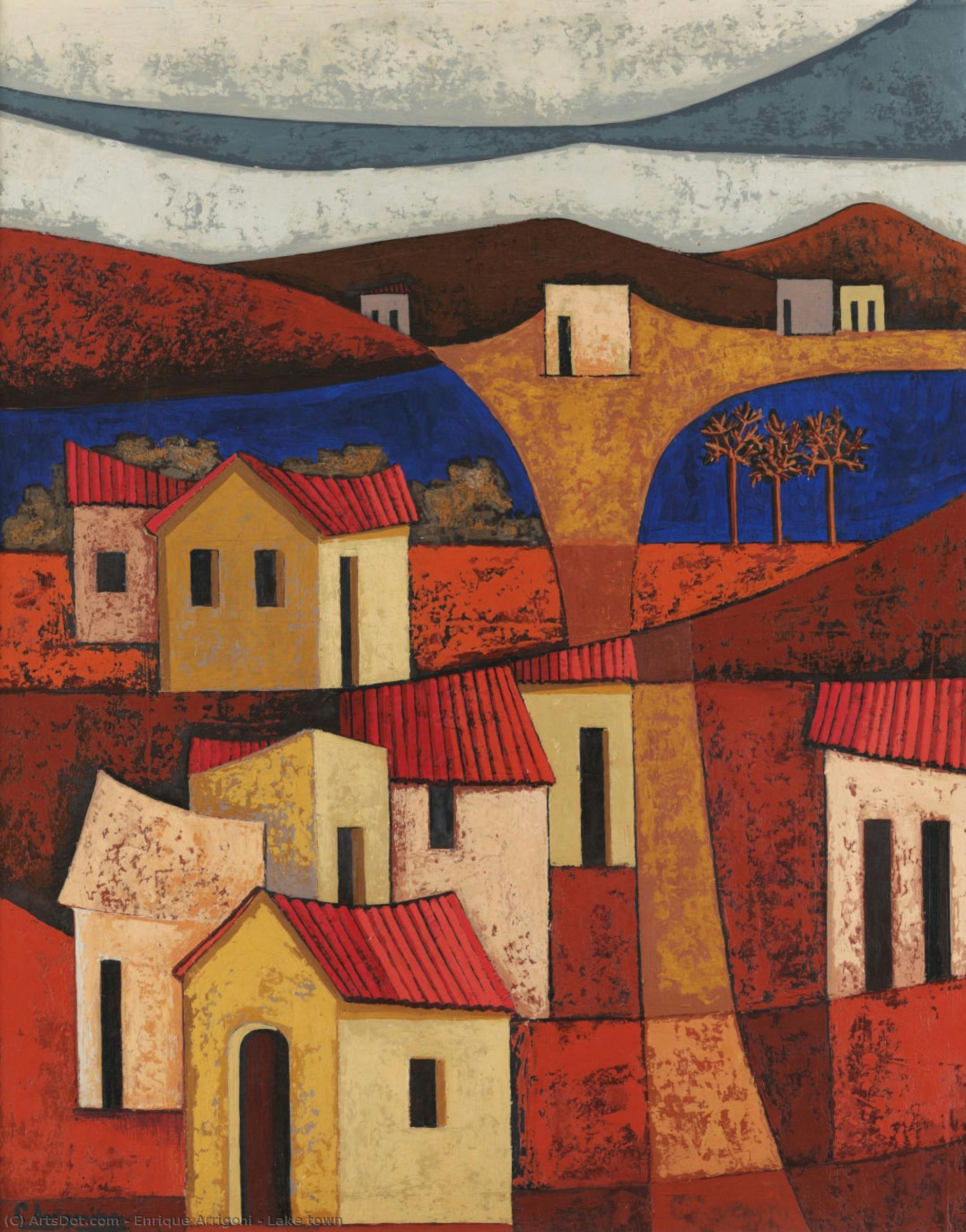
StatsLake town
 Contemporary Realism
 1981
1981- Modern
 70.0 x 90.0 cm
 Municipal Museum of Art of La Plata
 詳細を見る
詳細を見る
オンラインプレビューをはるかに凌ぐ、高解像度で鮮明なデジタル画像をご購入いただけます。
各ファイルは、社内の専門家が高度なツールと熟練した手作業によるレタッチを用いて、細心の注意を払って準備されています。すべての画像において、卓越した鮮明度、正確な色彩再現性、そして繊細なディテールを保証いたします。
最終ファイルは、プロフェッショナルな編集・印刷環境ですぐにご利用いただけるよう最適化された状態で、72時間以内にメールにてお届けいたします。これは、一流のデザインスタジオ、出版社、ギャラリーから信頼されているものと同等の品質です。
デジタルアート
個人での鑑賞、印刷、クリエイティブなプロジェクト用に、高解像度ファイルをダウンロードできます。 ( Switch to Print 手描きの絵画を購入)
デジタル画像のご注文に付随する特典
高品質なデジタル画像配信を、確かな品質で。
ArtsDot.com を選ぶことは、単に画像を手に入れることではありません。それは、プロの手によって精密に仕上げられ、満足保証が付いた高品質なデジタルアートワークを受け取ることを意味します。ご注文いただいた際に自動的に付随する内容は、以下の通りです:

メールですぐにお届け
ご注文から72時間以内に、高解像度のデジタル画像ファイルがメールでお手元に届きます。すぐにそのままご利用いただけます。

AI技術で最適化されたデジタルファイル
お客様の作品は、高度なAIツールと専門家による手作業の編集を組み合わせてプロフェッショナルに最適化されており、細部のディテール、鮮明さ、そして正確な色再現性を最大限に引き出しています。

一生涯無料の再送サービス
ファイルを誤って削除したり、紛失してしまったりしましたか?ご安心ください。いつでも無料で再送いたします。

輸入手数料は一切かかりません
関税や手数料、配送料を気にすることなく、お気に入りのアートワークをすぐにお楽しみいただけます。デジタルダウンロードは常に免税です。

色彩再現の保証
プロ仕様のツールとカラーマネジメント技術を用いることで、デジタル画像が元の色を最大限に忠実に再現することを保証いたします。

100日間満足保証
ご購入いただいたデジタル画像にご満足いただけない場合は、100日以内であれば、理由を問わず修正または100%の返金対応をさせていただきます。

100% 返金保証
ご満足いただけない場合は、デジタルファイルを受け取ってから100日以内であれば、理由を問わず全額返金いたします。

まとめ買い割引
3枚購入で10%OFF - 5枚購入で15%OFF - 10枚以上購入で20%OFF。クリエイティブなプロジェクト、ギャラリー、エージェンシーに最適です。
A Serene Escape into the Alpine Heart
In the quietude of Lake Town, painted in 1981 by the evocative Enrique Arrigoni, we find ourselves transported to a realm where time seems to have slowed to a rhythmic, peaceful crawl. This captivating piece serves as more than just a landscape; it is an invitation to inhabit a moment of profound stillness. The composition centers on a charming village nestled within the protective embrace of a mountain range, where the architecture—characterized by striking red roofs and crisp white walls—creates a rhythmic dance of color against the verdant backdrop. As the eye wanders through the scene, one notices the delicate integration of human life with the natural world, where the presence of solitary figures adds a layer of narrative depth, suggesting a quiet communion between the inhabitants and their breathtaking surroundings.
The technique employed in this work breathes life into the mountain air. Arrigoni utilizes a vivid palette that captures the luminous quality of daylight filtering through a high-altitude atmosphere. The brushwork, while precise enough to define the structural integrity of the houses, retains a painterly softness that allows the trees and distant peaks to blend seamlessly into a cohesive, atmospheric whole. This mastery of color and light creates a sense of depth that pulls the viewer into the valley, making the mountains feel both imposing and protective. For the collector or interior designer, this painting offers a sophisticated interplay of warmth and coolness, making it an ideal centerpiece for spaces designed to evoke tranquility and organic elegance.
Beyond its visual splendor, Lake Town resonates with a deep sense of nostalgia and pastoral symbolism. The village represents a sanctuary of stability and tradition, standing as a testament to the enduring beauty of simple living. The contrast between the man-made structures and the untamed greenery symbolizes the harmonious balance that can exist when humanity respects the majesty of nature. There is an emotional resonance here that speaks to the universal longing for peace—a quietude that remains accessible even in our modern, frenetic lives. To possess a reproduction of this work is to bring a window of eternal springtime into one's home, offering a constant source of inspiration and a visual breath of fresh mountain air.
関連作品
作家の略歴
Frank Stella: A Pioneer of Minimalism and Geometric Abstraction
Frank Stella, born in Malden, Massachusetts, on May 12, 1936, emerged as a pivotal figure in the latter half of the 20th century’s art landscape. His career, spanning nearly six decades, witnessed a profound shift in artistic approaches, moving from expressive brushstrokes to rigorously defined geometric forms and ultimately establishing himself as a key architect of minimalism. Stella's journey wasn’t one of sudden revelation but rather a gradual evolution, deeply rooted in his early experiences and influenced by the burgeoning avant-garde movements of the time. His father, Frank Sr., a gynecologist, instilled a strong work ethic and appreciation for precision, while his mother, Constance Santonelli, a practicing artist herself, nurtured his creative inclinations from a young age. This dual influence—a pragmatic father and an artistic mother—shaped Stella’s approach to art, emphasizing both technical skill and conceptual rigor.Early Influences and the Rise of Abstract Expressionism
Stella's formative years were marked by exposure to the vibrant world of New York City’s art scene. He attended Phillips Academy in Andover, Massachusetts, where he excelled academically and developed a keen interest in design and illustration. Crucially, his high school art teacher arranged a visit to the Art Center School in Los Angeles, a prestigious institution that housed a collection of works by pioneering abstract expressionists like Jackson Pollock and Franz Kline. This encounter proved transformative, exposing him to the possibilities of non-representational painting and sparking a fascination with the formal elements of color, line, and shape. The stark simplicity and directness of these artists resonated deeply, laying the groundwork for his later explorations into geometric abstraction. The influence of Kline’s forceful black brushstrokes, in particular, is often cited as a key inspiration in Stella's early development.Breaking with Tradition: Minimalism and the “Black Paintings”
In the late 1950s, Stella began to deliberately dismantle the conventions of abstract expressionism, rejecting the notion of painting as a vehicle for personal emotion or subjective experience. He sought to strip away all extraneous elements—brushstrokes, texture, and implied narrative—leaving only the essential components of the canvas: a flat surface with paint on it. This radical simplification culminated in his series of “Black Paintings” (1959-1960), consisting of four large black paintings featuring thin, parallel stripes. These works were deliberately confrontational, challenging viewers to reconsider their expectations of what art could be and signaling Stella’s commitment to a new aesthetic vocabulary. The starkness of the paintings, coupled with their precise execution, generated considerable controversy but also garnered critical attention, establishing Stella as a leading voice in the emerging minimalist movement.Exploring Geometry: Stripes, Boxes, and Beyond
Following the “Black Paintings,” Stella continued to experiment with geometric forms, moving beyond simple stripes to explore more complex arrangements of lines and shapes. His "Stripes" paintings (1960-1963) featured a series of parallel black and white stripes applied with meticulous precision, creating subtle variations in color and texture. These works demonstrated his mastery of technical skill and his ability to create visually engaging compositions through the manipulation of basic geometric elements. In the mid-1960s, Stella introduced “Boxes,” paintings that consisted of a rectangular canvas surrounded by a frame of painted lines. This series further emphasized the materiality of the artwork, highlighting the relationship between the painting itself and its surrounding environment. He also began to incorporate colored tape into his work, creating layered compositions that explored the interplay of color, line, and surface.Legacy and Influence
Frank Stella’s impact on contemporary art is undeniable. He played a crucial role in shaping the minimalist movement, demonstrating its potential for both aesthetic rigor and conceptual innovation. His emphasis on materiality, formal elements, and geometric abstraction influenced generations of artists, including Donald Judd, Sol LeWitt, and Agnes Martin. Beyond his contributions to minimalism, Stella’s work continues to be celebrated for its intellectual depth, technical precision, and enduring relevance. He remained an active artist until his death in 2024, continuing to push the boundaries of painting and sculpture. His retrospective exhibitions at major museums around the world have solidified his place as one of the most important artists of the 20th century, a true pioneer who redefined the possibilities of abstract art.
enrique arrigoni
1936 - 2017 , Argentina
プロフィール概要
- Artistic Movement Or Style:
- Minimalism
- Post-painterly abstraction
- Artists Or Movements Influenced By This Artist:
- Minimalism
- Post-painterly abstraction
- Artists Who Influenced This Artist:
- Franz Kline
- Jackson Pollock
- Date Of Birth: May 12, 1936
- Date Of Death: May 4, 2024
- Full Name: Frank Philip Stella
- Nationality: American
- Notable Artworks: ['Various paintings and sculptures']
- Place Of Birth: Malden, Massachusetts