

 プレビュー
プレビュー
 シェアする
シェアする シェアする
シェアする
 詳細を見る
詳細を見る

 ダウンロード
 似ている作品
 X線調査
X線調査 スライドショー
 統計情報
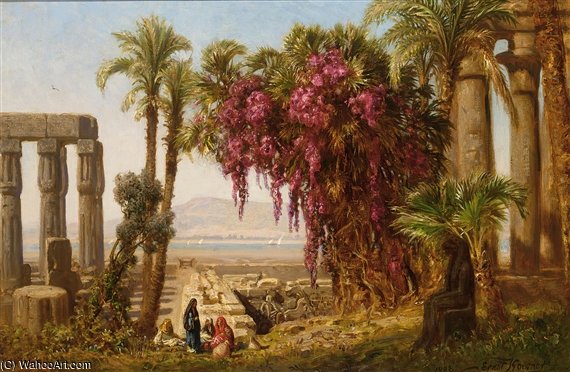
統計情報Arab Women Resting Near A Ruin, The River Nile In The Distance
 詳細を見る
詳細を見る
ジークレー/アートプリント
迅速な制作と多彩な仕上げオプションを備えた、ミュージアムクオリティのジークレーまたはキャンバスプリント。 ( 手描きの絵画を購入 デジタル画像販売へ切り替え)




































作品のオリジナル比率に合わせた、当店の規定サイズからお選びください。

特定のフレームやスペースに合わせて、ご自身でサイズを指定することも可能です。選択されたサイズが元の画像の比率と一致しない場合、作品をトリミングするか、鏡面反射または単色での塗りつぶしによって画像を拡張いたします。制作を開始する前に、ご確認用のデジタルモックアップをお送りいたします。
画面上のプレビューには、実際のトリミングや拡張は反映されませんのでご注意ください。最終的な構図を正確に確認できるのは、モックアップのみとなります。
カスタムサイズも承っておりますが、元の比率を維持するためには、あらかじめ用意されたリストからサイズを選択することをお勧めいたします。


 ガラスオプションは、110cm未満のサイズでのみご利用いただけます。

Arab Women Resting Near A Ruin, The River Nile In The Distance
ジークレー/アートプリント
複製画のサイズ
-


合計金額
$ 62
関連作品
アーティストの略歴
The Visionary of the Nile: The Life and Art of Ernst Carl Eugen Koerner
Ernst Carl Eugen Koerner was far more than a mere chronicler of landscapes; he was a painter who possessed the rare ability to weave scientific precision with the profound, sweeping emotions of the Romantic era. Born in 1846 in the quiet estate of Mlewie and raised amidst a lineage of intellectual rigor, Koerner’s early life provided the foundation for a career defined by an insatiable curiosity about the world. While his roots were firmly planted in the Prussian tradition of scholarship and civic duty, his spirit was destined for the sun-drenched horizons of the Orient. His formative training under masters such as Hermann Eschke, Karl Steffeck, and Gottlieb Biermann equipped him with a technical mastery that allowed him to capture not just the light, but the very atmosphere of the distant lands he visited. As his artistry matured, Koerner embarked on extensive travels that would define his legacy. His journeys through the North Sea, the Baltics, and the rugged terrains of Scotland and Spain served as a prelude to his most significant period of exploration. Between 1873 and 1886, Koerner turned his gaze toward Egypt and the Middle East, a period that would yield his most iconic and enduring works. In these canvases, one does not simply see the Pyramids of Gizeh or the temples of the Nile; one feels the weight of antiquity and the shimmering heat of the desert. His work from this era is characterized by an extraordinary attention to detail—a meticulousness that suggests a scientific eye—yet it is always tempered by a poetic sensibility that captures the mystery and grandeur of ancient civilizations.A Legacy Written in Light and Stone
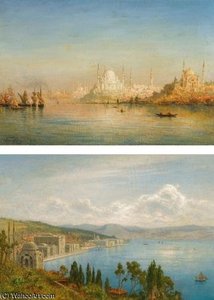
The significance of Koerner’s contribution to 19th-century landscape painting lies in his unique ability to bridge the gap between documentation and art. His depictions of the Temple of Philae, the Sphinx, and the majestic Bosphorus serve as luminous windows into a bygone era, preserving the architectural splendor of the East with an almost archaeological fidelity. He was not merely painting scenery; he was capturing the soul of historical sites that were, at the time, still being rediscovered by the Western world. This dual role as both artist and observer earned him immense respect within the European art community, eventually leading to his appointment as a Professor and his leadership as Chairman of the Verein Berliner Künstler. Beyond his celebrated landscapes, Koerondere’s artistic range extended into the sacred and the nocturnal. His ability to manipulate light is perhaps most breathtaking in his nocturnes, such as The Golden Horn - A Nocturne, where the play of moonlight on water creates a sense of profound stillness and introspection. Even within the more structured demands of religious art, such as his altarpieces for the Erlöserkirche in Berlin-Rummelsburg, his characteristic mastery of light and form remained evident. Ultimately, the life of Ernst Carl Eugen Koerner represents a magnificent intersection of European academic tradition and an adventurous, global perspective. His work remains a vital testament to the era of great exploration, offering modern viewers a chance to wander through the ancient landscapes of Egypt and the vibrant streets of Constantinople through the eyes of a master who saw beauty in both the monumental and the minute.- Mastery of Light: Renowned for his ability to capture the specific atmospheric conditions of different climates.
- Historical Preservation: His detailed paintings serve as important visual records of 19th-century archaeological sites.
- Romantic Realism: A unique stylistic blend of precise observation and emotional, Romantic depth.
ernst carl eugen koerner
1846 - 1927 , Germany
基本情報
- Artistic Movement Or Style: Landscape Art
- Artists Or Movements Influenced By This Artist: ['Romanticism']
- Artists Who Influenced This Artist: ['Eduard Hildebrandt']
- Date Of Birth: November 3, 1846
- Date Of Death: July 30, 1927
- Full Name: Ernst Karl Eugen Koerner
- Nationality: German
- Notable Artworks:
- The Temple Of Seti I, Abydos
- The Golden Horn - A Nocturne
- Place Of Birth: Stibbe near Marienwerder, Germany