

 プレビュー
プレビュー
 シェアする
シェアする シェアする
シェアする
 詳細を見る
詳細を見る

 ダウンロード
 似ている作品
 X線調査
X線調査 スライドショー
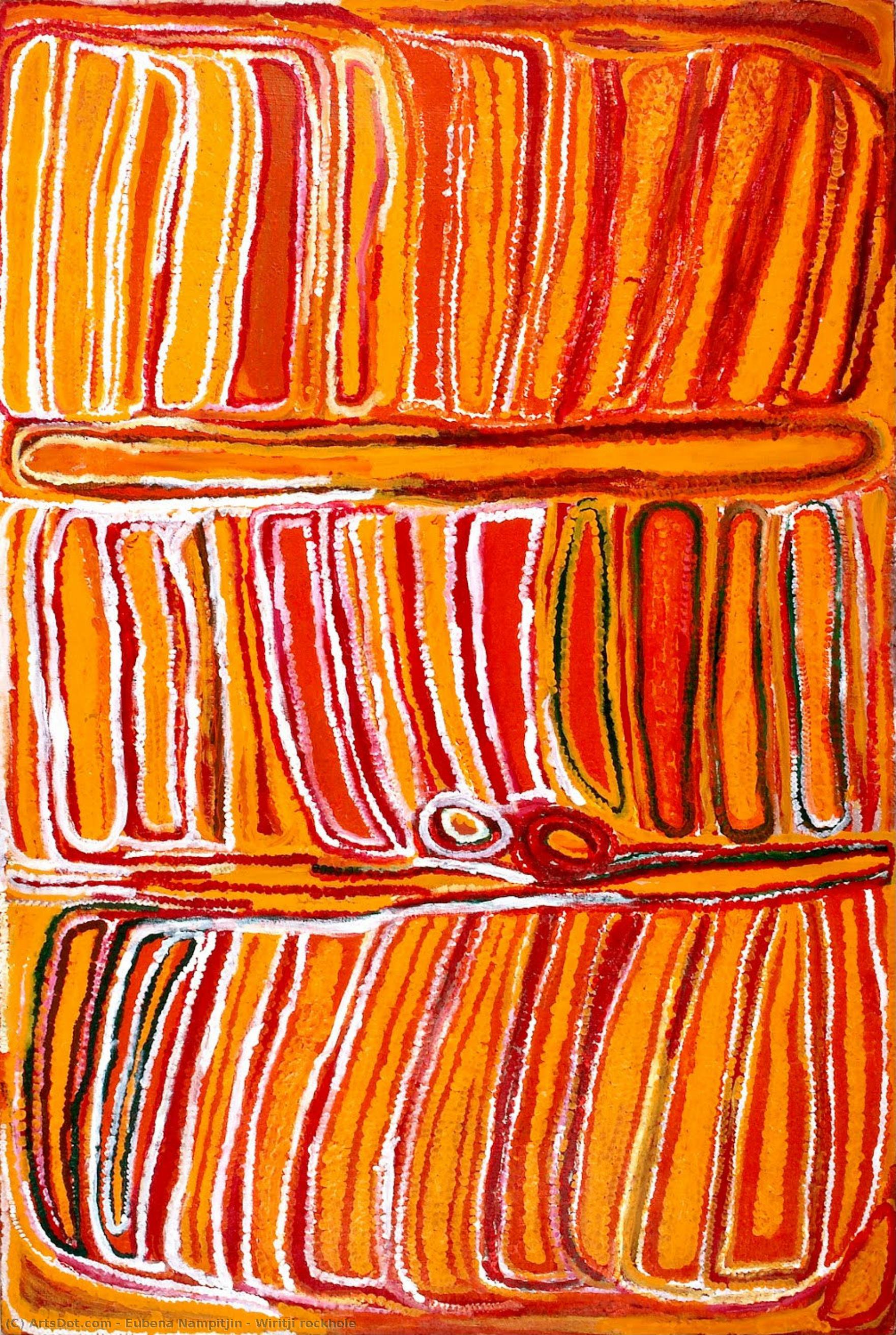
Wiritji rockhole
 詳細を見る
詳細を見る
ジークレー/アートプリント
迅速な制作と多彩な仕上げオプションを備えた、ミュージアムクオリティのジークレーまたはキャンバスプリント。 ( 手描きの絵画を購入 画像を購入)




































作品のオリジナル比率に合わせた、当店の規定サイズからお選びください。

特定のフレームやスペースに合わせて、ご自身でサイズを指定することも可能です。選択されたサイズが元の画像の比率と一致しない場合、作品をトリミングするか、鏡面反射または単色での塗りつぶしによって画像を拡張いたします。制作を開始する前に、ご確認用のデジタルモックアップをお送りいたします。
画面上のプレビューには、実際のトリミングや拡張は反映されませんのでご注意ください。最終的な構図を正確に確認できるのは、モックアップのみとなります。
カスタムサイズも承っておりますが、元の比率を維持するためには、あらかじめ用意されたリストからサイズを選択することをお勧めいたします。


 ガラスオプションは、110cm未満のサイズでのみご利用いただけます。

Wiritji rockhole
ジークレー/アートプリント
複製画のサイズ
-


合計金額
$ 62
関連作品

アーティストの略歴
A Voice of the Desert: The Life and Legacy of Eubena Nampitjin
Born amidst the vast, sun-drenched expanses of the Canning Stock Route in remote Western Australia, Eubena Nampitjin emerged as a profound storyteller whose canvas served as a bridge between ancient tradition and contemporary expression. As a member of the Wangkajunga language group, her early years were defined by the rhythmic movements of nomadic life, traversing the Great Sandy Desert in pursuit of sustenance and spiritual connection. This formative period was not merely about survival; it was an immersion into a sacred landscape. Under the guidance of her mother, Nampitjin mastered the delicate art of traditional healing, a practice that deeply embedded within her a sense of responsibility toward her people and their land. This role as a healer and a primary law woman would later infuse her paintings with a spiritual weight, making every brushstroke an act of cultural preservation.
The trajectory of her life took a pivotal turn in 1963 when she relocated to Balgo, Western Australia. This move placed her at the heart of a burgeoning art movement centered around Lake Gregory, a site of immense cultural significance. It was here that Nampitjin’s intellectual and artistic pursuits began to intertwine. Beyond the canvas, she became a vital custodian of language, collaborating with linguists such as James Cowan to document the intricacies of the Kukatja language. This monumental effort, which culminated in the publication of a dictionary in 1992, ensured that the linguistic nuances of her ancestors would not be lost to time. Her deep engagement with the spoken word undoubtedly enriched her visual vocabulary, allowing her to translate the complex Dreamtime narratives into a tangible, visual medium.
The Evolution of Style and Symbolism
Nampitjin’s artistic journey is characterized by a remarkable stylistic evolution that mirrored her deepening connection to her ancestral motifs. While many of her contemporaries in the Balgo movement utilized dense fields of dots, Nampitjin’s work underwent a fascinating transition. In her earlier years, her technique was more traditional, but as she matured, she began to experiment with more fluid, expressive movements. Her 1991 masterpiece, Kinyu, stands as a testament to this period of transformation. Art historians have noted how this work moved away from the rigid structure of dotting toward a more rhythmic use of lines and vibrant color palettes, including soft yellows and pinks. This shift was not merely aesthetic; it served as a metaphor for the very surface of her country—a landscape that is both textured and ever-changing.
The themes within her work are inseparable from the geography of her homeland. Her paintings often serve as maps of memory, capturing the essence of the desert through:
- Ancestral Landscapes: The depiction of the Great Sandy Desert and the spiritual significance of specific waterholes and landmarks.
- Dreamtime Narratives: The visual translation of ancient stories that dictate the laws and customs of the Wangkajunga people.
- Cultural Resilience: The use of color and line to represent the enduring strength of her community and their connection to the earth.
Recognition and Enduring Significance
As her reputation grew, so did the international recognition of her profound talent. A defining moment in her career arrived in 1998, when she was honored with the Open Painting prize at the National Aboriginal and Torres Strait Islander Art Award. This accolade solidified her status as one of Australia’s most significant Indigenous artists. Her work, often created alongside her husband, Purungu Tjakata Tjapaltjarri, and her daughters, reflected a familial and communal approach to art-making that is central to the Warlayirti Artists organization.
In her later years, Nampitjin found her way back to the desert landscapes of her youth, using the familiar terrain as a primary motif for her final works. She continued to paint with vigor until her passing in 2013, leaving behind a legacy that transcends simple aesthetics. Her contribution to Australian art lies in her ability to weave together the roles of healer, linguist, and painter, creating a body of work that is simultaneously a personal memoir and a collective history of the Australian desert. Through her eyes, the world learned to see the profound beauty and the unbreakable spirit of the Wangkajunga people.
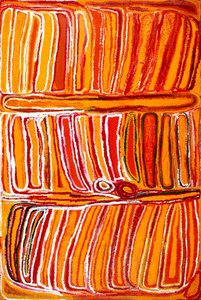
Eubena Nampitjin
1921 - 2013 , Australia
基本情報
- Artistic Movement Or Style: Dot painting
- Date Of Birth: July 1, 1921
- Date Of Death: March 11, 2013
- Full Name: Eubena Nampitjin
- Nationality: Australian
- Notable Artworks: ['Kinyu']
- Place Of Birth: Tinnaroo, Australia