
- ホーム

- キャンバスプリント用
- family of indian painters who were active in the pahari region, mainly in the kangra valley, from around 1740 to 1830
 プレビュー
プレビュー
 シェアする
シェアする シェアする
シェアする
 詳細を見る
詳細を見る

 ダウンロード
 似ている作品
 X線調査
X線調査 スライドショー
 Stats
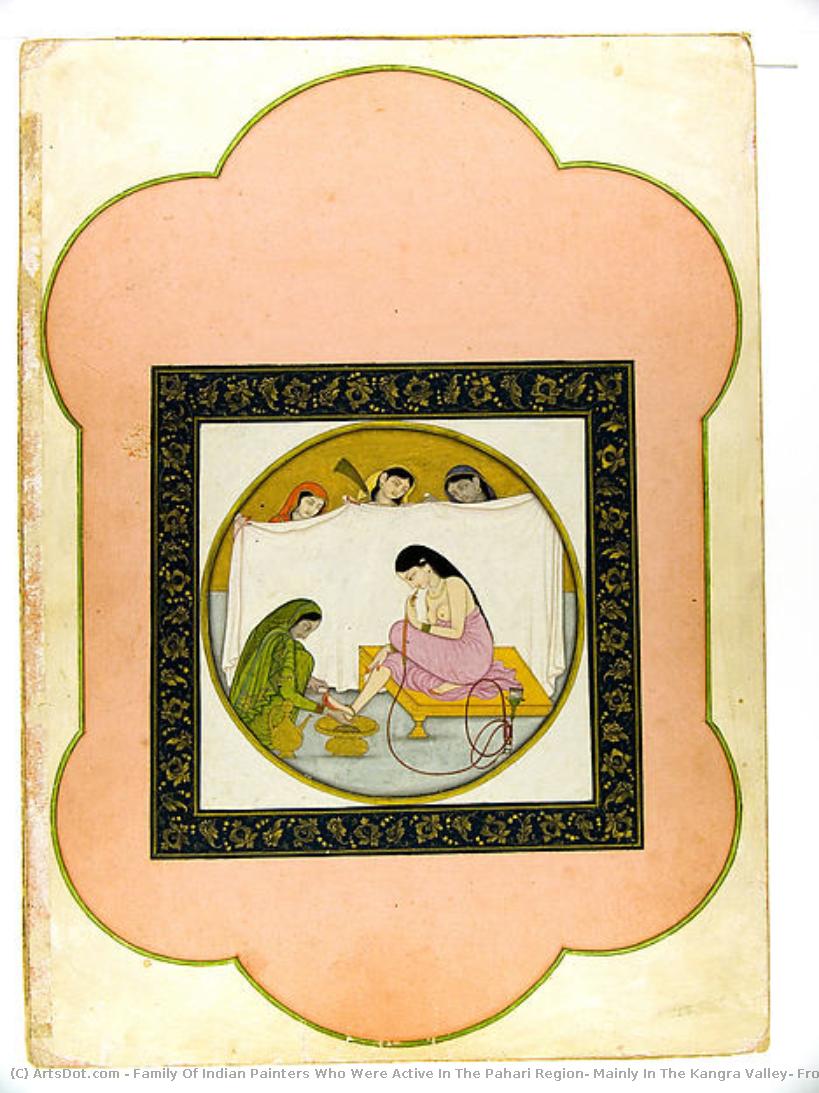
StatsRadha Prepares to Meet Her Lover
 Pahari Painting
 1780
1780 28.0 x 20.0 cm
 詳細を見る
詳細を見る
ジークレー/アートプリント
迅速な制作と多彩な仕上げオプションを備えた、ミュージアムクオリティのジークレーまたはキャンバスプリント。 ( 手描きの絵画を購入 Switch to Digital Image)




































作品のオリジナル比率に合わせた、当店の規定サイズからお選びください。

特定のフレームやスペースに合わせて、ご自身でサイズを指定することも可能です。選択されたサイズが元の画像の比率と一致しない場合、作品をトリミングするか、鏡面反射または単色での塗りつぶしによって画像を拡張いたします。制作を開始する前に、ご確認用のデジタルモックアップをお送りいたします。
画面上のプレビューには、実際のトリミングや拡張は反映されませんのでご注意ください。最終的な構図を正確に確認できるのは、モックアップのみとなります。
カスタムサイズも承っておりますが、元の比率を維持するためには、あらかじめ用意されたリストからサイズを選択することをお勧めいたします。


 ガラスオプションは、110cm未満のサイズでのみご利用いただけます。

Radha Prepares to Meet Her Lover
ジークレー/アートプリント
複製画のサイズ
-


合計金額
$ 62
関連作品

アーティストの略歴
The Legacy of the Kangra School: Exploring the Artistic Family Behind Pahari Miniature Painting
The Kangra School, nestled in the verdant Himalayan foothills of Himachal Pradesh, stands as a beacon of Indian miniature painting—a tradition profoundly shaped by the artistic endeavors of a remarkable family. Emerging around 1740 and flourishing until approximately 1830, this lineage represents the first generation following the legendary masters Pandit Seu and Nainsukh, establishing itself as one of the most influential forces in Himalayan art history. To understand their contribution is to delve into a world where individual talent was inextricably linked to familial heritage, creating a cohesive yet diverse aesthetic that captured the very soul of the Pahari region. The foundations of this dynasty were laid by Pandit Seu, the patriarch whose meticulous approach and dedication to portraying Hindu mythology—particularly the enchanting legends of Krishna—became the cornerstone of the Kangra style. His workshop in Guler served as a crucible for artistic excellence. This tradition was further refined by his nephew, Nainsukh, a painter of unparalleled brilliance who dared to experiment with innovative techniques. By skillfully blending the grandeur of Mughal influences with traditional Pahari sensibilities, Nainsukh expanded the stylistic repertoire available to his descendants, imbuing images with an unprecedented emotional depth and a gift for precise observation.A Collaborative Vision: The Six Younger Artists
The true breadth of this family's impact is best seen through the collective work of the six younger artists: Khushala, Kama, Gaudhu, Nikka, Ranjha, and Fattu. As the sons of Manaku and Nainsukh, these painters inherited a prestigious workshop and a shared artistic vocabulary. While they faced the inevitable challenges of limited patronage and the necessity of seeking opportunities in various small courts across the region, their prolific output remains a testament to their consistent vision. Their work demonstrates a fascinating evolution, where the more angular and monochrome tendencies seen in some early works gradually transitioned into the refined, lyrical, and emotionally resonant style that defines the peak of the Kangra School. The movement of these artists was often dictated by the political landscape of the time. As Nainsukh himself left the family workshop in Guler to find work in Jasrota and later Basohli, his kin followed similar paths, seeking new patrons among the Rajput rulers. This dispersion, while challenging for a centralized school, allowed the Kangra style to permeate different courts, leaving an indelible mark on the artistic landscape of the entire valley.Artistic Mastery and Historical Significance
The achievements of this family extend far beyond mere technical skill; they captured the essence of human emotion and divine romance. Their oeuvre includes celebrated series such as the Gita Govinda, the Bhagavata Purana, and the Ramayana, works that utilized a sophisticated language of color and line to narrate sacred stories. The mastery of their "absolutely assured hand" allowed them to convey subtle nuances of facial expression and the delicate textures of nature, making their miniatures windows into a spiritual and romantic ideal. The historical significance of this group lies in their role as bridge-builders between eras and styles. They successfully integrated the sophisticated elements of Mughal painting—such as refined portraiture and complex compositions—into the local Pahari tradition, which had previously been more focused on religious iconography. In doing so, they created a unique aesthetic that was both cosmopolitan and deeply rooted in the Himalayan landscape. Today, the legacy of these painters remains a vital chapter in the history of Indian art, representing a period of unparalleled harmony between technical innovation and spiritual devotion.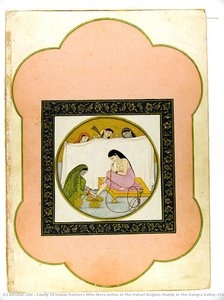
基本情報
- Artistic Movement Or Style: Pahari art
- Artists Or Movements Influenced By This Artist: ['European Romanticism']
- Artists Who Influenced This Artist:
- Pandit Seu
- Nainsukh
- Date Of Death: Living
- Full Name: Family of Indian painters
- Nationality: Indian
- Notable Artworks:
- Churning of the ocean Manthan
- The Palace of the Pandava Brothers Set
- Place Of Birth: Guler, India
関連記事
Raja Ravi Varma: Bridging Tradition & Modernity in 19th-Century Indian Art
Explore the life & art of Raja Ravi Varma, a pioneer who fused European techniques with Indian iconography. Discover his iconic paintings, lasting legacy, and influence on modern Indian art at ArtsDot.
愛の軌跡を彩る絵画:新婚夫婦のための芸術的物語と永続的な絆
新婚生活を特別なものにする絵画選び。ArtsDotでは、手描きの油絵や写真から創るカスタムポートレートをご用意。オーダーメイドで二人の愛の物語を紡ぎませんか?無料アートコンサルテーションも実施中!
Anniversary Art Gifts: 10 Masterpieces for a Lasting Love Story |
Find the perfect anniversary gift! Explore 10 meaningful art masterpieces – from Monet to Van Gogh – & discover their romantic stories. Shop museum-quality reproductions at for a lasting tribute to your love.
Romantic Masterpieces: 10 Artworks to Stir Your Soul |
Fall in love with art! Explore 10 iconic romantic paintings – from Renaissance classics to Impressionist masterpieces. Discover the stories behind artists like Monet & Klimt, and find museum-quality reproductions for your home at .
The Enduring Motif of Love in Art History: A Cross-Cultural Exploration of Representation and Emotion
Explore the rich history of love in art! Discover iconic masterpieces, artistic techniques & cultural symbolism from antiquity to modern times. Expert analysis for collectors.