

 プレビュー
プレビュー
 プリントを購入
 シェアする
シェアする シェアする
シェアする
 詳細を見る
詳細を見る

 ダウンロード
 似ている作品
 X線調査
X線調査 スライドショー
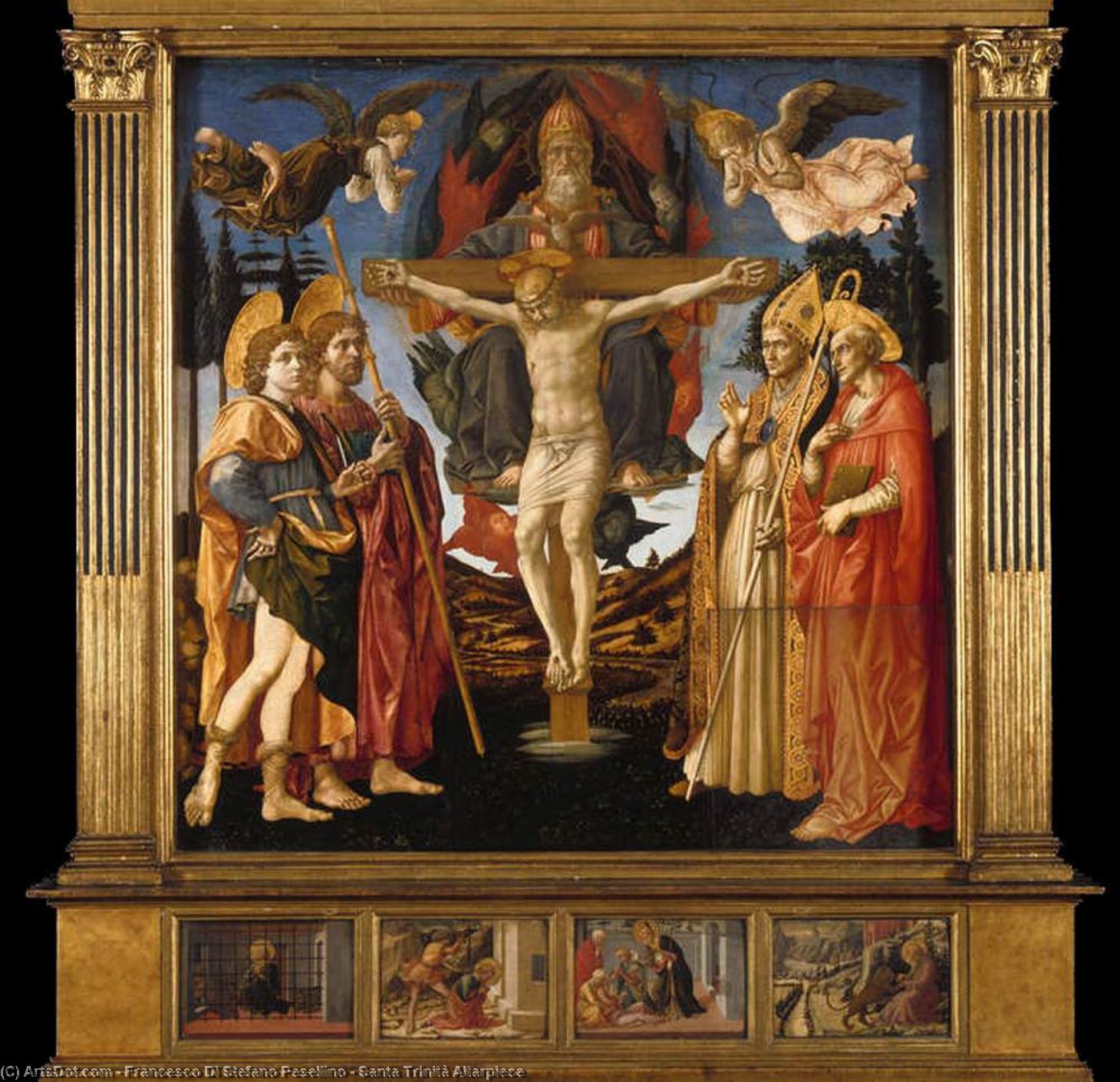
Santa Trinità Altarpiece


 詳細を見る
詳細を見る




P118B $10

P118H $10

P118W $10

P438Z $10

P508JH $12

P508YH $12

P805H $10

P805Z $10

P919BZ $10

P919G $10

P919XJ $10

P959ZH $10

P968JZ $12

W106C $8

W218G $10

W218JH $8

W218Y $10

W307PJ $10

W316G $10

W316PJ $8

W316Y $10

W398PJ $8

W4111J $10

W500HY $15

W500JH $15

W692G $12

W849H $8

W940BG $15

W953PJ $8




作品のオリジナル比率に合わせた、当店の規定サイズからお選びください。

特定のフレームやスペースに合わせて、ご希望のサイズをご入力いただけます。選択されたサイズが元の画像の比率と異なる場合、アートワークをトリミングするか、手描きで要素を追加して絵画を拡張いたします。デジタルモックアップ を制作し、制作開始前にご確認(承認)をいただきます。
画面上のプレビューは、実際のトリミングや拡張を正確に反映しているものではありません。最終的な構図は、モックアップによってのみ正確にご確認いただけます。
カスタムサイズもご利用いただけますが、元の比率を維持するためには、あらかじめ用意されたリストからサイズを選択することをお勧めいたします。
ご注文後、ArtsDot.com チームより詳細な指示をお送りするとともに、仕上がりイメージ(モックアップ)をご提供いたします。


 ガラスオプションは、110cm未満のサイズでのみご利用いただけます。

Santa Trinità Altarpiece
複製技法
複製画のサイズ
-


合計金額
$ 263
作品解説
A Vision of Divine Majesty: The Santa Trinità Altarpiece
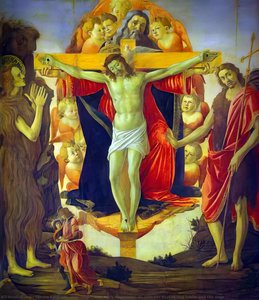
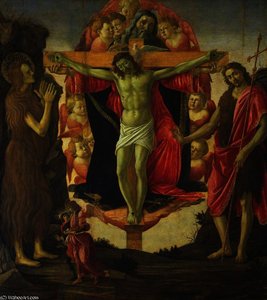
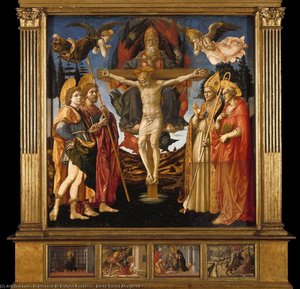
To stand before the Santa Trinità Altarpiece is to step across the threshold of time and into the luminous heart of the Italian Renaissance. Created by Francesco di Stefano Pesellino in 1455, this masterpiece transcends mere decoration; it is a profound theological statement rendered in tempera on panel. The work immediately captivates the viewer with its palpable sense of opulence—the rich interplay of blues, vibrant reds, and shimmering golds speaks to an era when art was considered the highest form of devotion. It is a testament to human genius striving to articulate the infinite.
Mastery in Detail: Technique and Composition
Pesellino’s technique showcases a meticulous attention to detail that defines the Florentine school of this period. The tempera medium allowed him to build up layers of color with an almost jewel-like intensity, giving every fold of drapery and every strand of hair a tangible reality. Compositionally, the piece is anchored by the central figure of Christ, whose depiction evokes both sacrifice and divine serenity. Flanking him are angels, their outstretched arms forming a visual embrace that guides the eye through the narrative. The background landscape, with its suggestion of structured buildings and verdant trees, grounds this celestial event in a recognizable, yet sacred, earthly setting.
Symbolism Woven into Sacred Narrative
The Santa Trinità itself is rich with layers of symbolism that invite endless contemplation. Beyond the central grouping, one observes figures—saints and allegorical representations—each placed with deliberate intention. These elements do not merely fill space; they participate in a grand visual dialogue concerning divinity, humanity, and salvation. The elaborate golden framework surrounding the panel further enhances this sense of sacred importance, echoing the architectural grandeur that defined religious patronage during the Quattrocento.
Echoing Renaissance Spirit in Your Space
For those who seek to infuse a space with the gravitas and beauty of historical artistry, reproductions of works like this offer an unparalleled connection to artistic history. The emotional impact of the Santa Trinità Altarpiece—a blend of awe, piety, and breathtaking craftsmanship—is something that lingers long after one has passed by. Whether adorning a formal hall or serving as a focal point in a richly decorated interior, owning a piece inspired by this work brings with it not just color and form, but the enduring spirit of Renaissance devotion.
関連作品
アーティストの略歴
Francesco di Stefano Pesellino: A Florentine Master of Subtle Detail
Francesco di Stefano Pesellino, a name often whispered in the halls of Renaissance art history, remains a figure of captivating mystery and profound influence. Born in Florence around 1422, he emerged from a lineage steeped in artistic talent – his father, Stefano di Francesco, and his maternal grandfather, Giuliano Pesello, both renowned painters. The diminutive nickname “pesellino,” derived from his grandfather’s name, became inextricably linked to his identity, reflecting not just his familial connection but also the distinctive style he would ultimately forge. His tragically short life, ending in Florence in 1457 at the young age of thirty-five, cut short a career brimming with promise and left behind a legacy characterized by exquisite detail and an uncanny ability to capture the essence of human emotion.
Pesellino’s early artistic development was profoundly shaped by his apprenticeship under Filippo Lippi, one of Florence's most celebrated painters. This association proved pivotal, exposing him to Lippi’s innovative techniques and humanist sensibilities. However, it was his time spent in Giuliano Pesello’s studio that truly molded his unique approach. Pesello, a master of miniature painting and portraiture, instilled in Pesellino a meticulousness and an appreciation for the subtle nuances of form and color – qualities that would become hallmarks of his work. The influence of this apprenticeship is evident in Pesellino's preference for small-scale panels and his remarkable ability to render textures with astonishing realism.
A Style Defined by Precision and Intimacy
Pesellino’s artistic style is immediately recognizable, distinguished by its exceptional refinement and a deliberate avoidance of grand gestures. Unlike the more flamboyant styles prevalent during the early Renaissance, Pesellino favored a restrained elegance, focusing on precise detailing and a profound sense of intimacy. His panels rarely depict large-scale narratives; instead, he excelled at capturing small devotional scenes – predellas for altarpieces, intimate depictions of the Madonna and Child, or portraits of saints – each imbued with a quiet dignity and emotional depth. He was particularly adept at rendering fabrics, jewels, and other decorative elements with breathtaking accuracy, imbuing his works with a tactile quality that invites close examination.
Vasari, in his *Lives of the Most Excellent Painters*, Painter, Sculptors, and Architects*, famously noted Pesellino’s contribution to Lippi's altarpiece for Santa Croce. These predella scenes, now dispersed among the Uffizi Gallery in Florence, the Louvre in Paris, and the Bergamo Civic Museum, offer a compelling glimpse into Pesellino’s artistic vision. They demonstrate his mastery of composition, color harmony, and psychological realism – qualities that set him apart from his contemporaries.
The Trinity Altarpiece: A Monumental Undertaking
Perhaps Pesellino's most significant surviving work is the magnificent altarpiece with predella of the Trinity, commissioned by the confraternity of priests at Pistoia in 1455. This ambitious project, though only partially completed at his death, reveals the full extent of Pesellino’s artistic capabilities. The main panel depicts the Holy Trinity in the iconic throne of mercy motif, flanked by four standing saints and a host of angels. The sheer scale of the work – nearly square at over 1.8 meters per side – is remarkable for an artist working in the mid-fifteenth century. The meticulous detail evident in every brushstroke, from the folds of the drapery to the expressions on the faces of the saints, speaks volumes about Pesellino’s dedication and skill.
The commission itself provides a fascinating insight into the artistic patronage system of Renaissance Florence. Records unearthed by art historians document a protracted legal dispute between Pesellino's widow and his business partner over the outstanding payment for the unfinished work – a testament to the complexities of commercial transactions in that era. These records, meticulously preserved, offer a rare glimpse into the practical realities of an artist’s life and career.
Legacy and Influence
Despite his tragically short life, Francesco Pesellino left an indelible mark on the Florentine art world. His style, characterized by its meticulous detail, subtle color harmonies, and intimate emotionality, anticipated the developments of later Florentine painters such as Verrocchio and the Pollaiuoli family. He demonstrated a remarkable ability to synthesize influences from his predecessors – Lippi’s humanist sensibility, Pesello’s miniature techniques, and the emerging trends in naturalistic representation – creating a distinctly original artistic voice.
His work continues to captivate viewers today, not only for its technical brilliance but also for its profound sense of human dignity and spiritual contemplation. The surviving panels and altarpieces offer a poignant reminder of an artist whose potential was tragically cut short, yet whose legacy endures as one of the most intriguing and accomplished figures of the early Renaissance.
francesco di stefano pesellino
1422 - 1457
基本情報
- Artistic Movement Or Style: Early Renaissance, Florentine
- Artists Or Movements Influenced By This Artist:
- Verrocchio
- Pollaiuolo
- Artists Who Influenced This Artist:
- Stefano di Francesco
- Giuliano Pesello
- Filippo Lippi
- Date Of Birth: 1422
- Date Of Death: 1457
- Full Name: Francesco di Stefano Pesellino
- Nationality: Italian (Florentine)
- Notable Artworks:
- Santa Trinità Altarpiece
- Madonna and Child
- The Annunciation
- Place Of Birth: Florence, Italy
関連記事
Cecco del Caravaggio: Rediscovering the Shadowy Genius of Francesco Buoneri
Explore the captivating world of Cecco del Caravaggio (Francesco Buoneri), a pivotal Baroque artist. Discover his dramatic realism, mysterious life, and lasting legacy with ArtsDot's expert analysis.
Civic Virtue and Artistic Rivalry: Patronage and Innovation in the Italian Renaissance Republics, 1400–1600
Explore the Italian Renaissance! Discover how competitive patronage & humanist ideals fueled artistic innovation in republics like Florence & Venice. Expert insights for art lovers and collectors.
Mario Sironi: A Poetic of Modern Italian Identity Through Symbolism & Social Commentary
Explore the profound works of Mario Sironi, a key figure in Italian Modernism. Discover his evolution from Futurism to Metaphysical painting and his powerful social commentary. Learn about his legacy at ArtsDot.
Francesco Guardi: Venetian Light, Atmospheric Perspective & the Rococo to Neoclassical Transition
Explore the captivating world of Francesco Guardi, master of Venetian light and atmosphere. Discover his transition from Rococo to Neoclassicism, influence on Impressionism & investment potential with ArtsDot.
Giovanni Fattori: Realism, Identity & the Tuscan Landscape – A Macchiaioli Master
Explore the life & art of Giovanni Fattori, a leading figure of the Macchiaioli movement. Discover his revolutionary realism, captivating Tuscan landscapes, and lasting impact on Italian painting. Learn more at ArtsDot.

