

 プレビュー
プレビュー
 シェアする
シェアする シェアする
シェアする
 詳細を見る
詳細を見る

 ダウンロード
 似ている作品
 X線調査
X線調査 スライドショー
 統計情報
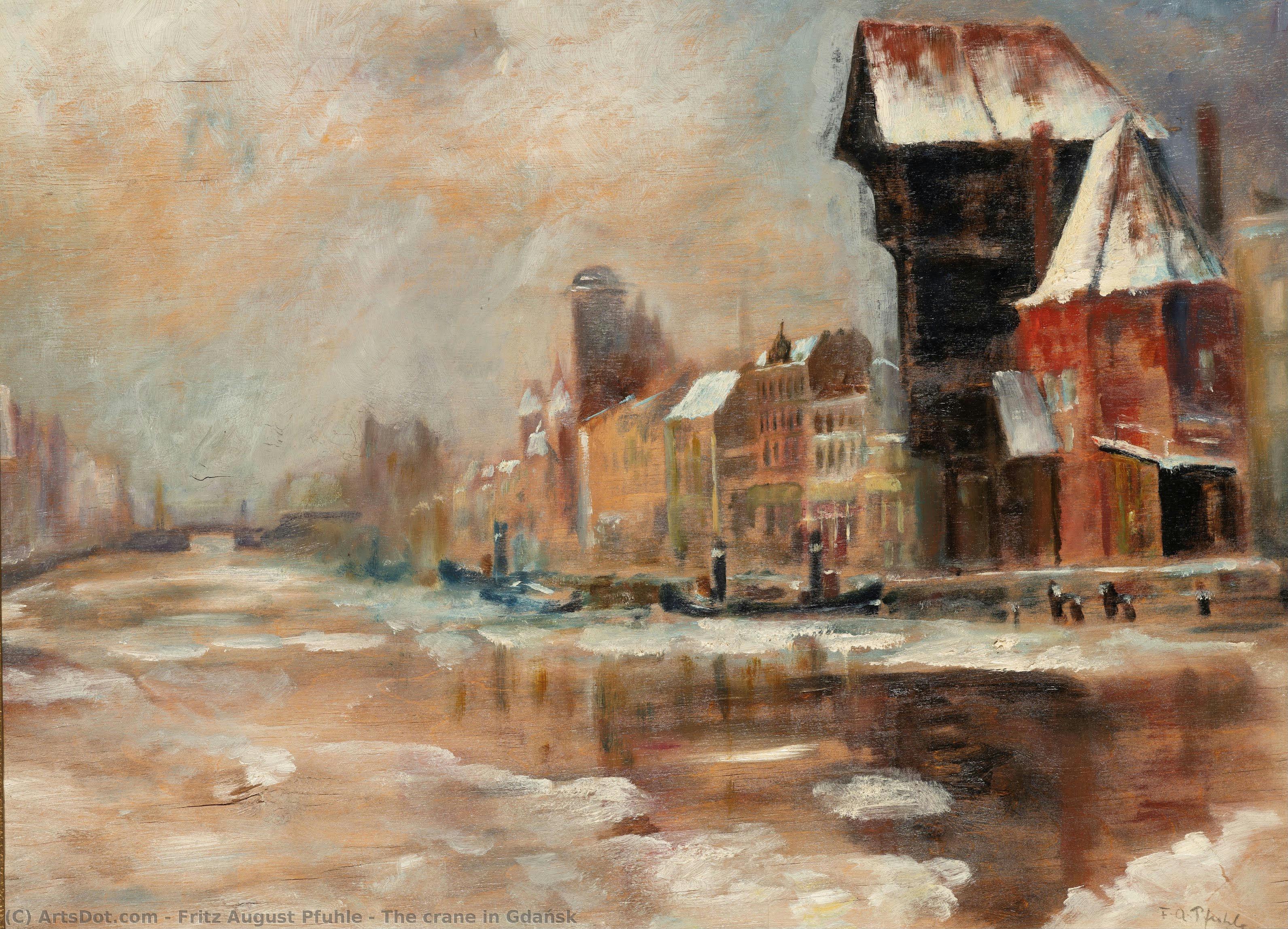
統計情報The crane in Gdańsk
 Oil
Oil- WallArt
- Impressionism
 1945
1945- Modern
 49.0 x 65.0 cm
 Museum of Gdańsk
 詳細を見る
詳細を見る
ジークレー/アートプリント
迅速な制作と多彩な仕上げオプションを備えた、ミュージアムクオリティのジークレーまたはキャンバスプリント。 ( 手描きの絵画を購入 デジタル画像販売へ切り替え)




P118B $10

P118H $10

P118W $10

P438Z $10

P508JH $12

P508YH $12

P805H $10

P805Z $10

P919BZ $10

P919G $10

P919XJ $10

P959ZH $10

P968JZ $12

W106C $8

W218G $10

W218JH $8

W218Y $10

W307PJ $10

W316G $10

W316PJ $8

W316Y $10

W398PJ $8

W4111J $10

W500HY $15

W500JH $15

W692G $12

W849H $8

W940BG $15

W953PJ $8




作品のオリジナル比率に合わせた、当店の規定サイズからお選びください。

特定のフレームやスペースに合わせて、ご自身でサイズを指定することも可能です。選択されたサイズが元の画像の比率と一致しない場合、作品をトリミングするか、鏡面反射または単色での塗りつぶしによって画像を拡張いたします。制作を開始する前に、ご確認用のデジタルモックアップをお送りいたします。
画面上のプレビューには、実際のトリミングや拡張は反映されませんのでご注意ください。最終的な構図を正確に確認できるのは、モックアップのみとなります。
カスタムサイズも承っておりますが、元の比率を維持するためには、あらかじめ用意されたリストからサイズを選択することをお勧めいたします。


 ガラスオプションは、110cm未満のサイズでのみご利用いただけます。

The crane in Gdańsk
ジークレー/アートプリント
複製画のサイズ
-


合計金額
$ 62
A Timeless Winter Sentinel in Gdańsk
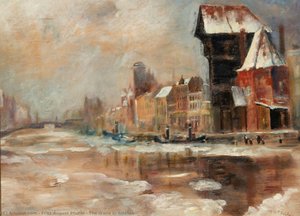
In the quiet, frost-bitten stillness of a mid-century winter, Fritz August Pfuhle captures a moment of profound historical resonance in his evocative work, "The crane in Gdańsk." The painting transports the viewer to the Długie Pobrzeże, where the ice-covered Motława river serves as a frozen mirror to the storied architecture of this Baltic gem. At the heart of the composition stands the iconic medieval gate-crane, a towering silhouette that acts as both a physical landmark and a symbolic guardian of the city's maritime heritage. Through Pfuhle’s lens, the crane is not merely an industrial relic but a majestic presence that anchors the landscape, bridging the gap between the city's ancient roots and the shifting tides of history.
The artist employs a masterful impressionistic technique, utilizing loose, rhythmic brushstrokes that prioritize the atmospheric essence of a cold, overcast day over rigid anatomical precision. This approach allows the light to appear as if it is diffusing through a heavy mist, creating a soft, ethereal glow that warms the otherwise muted palette. Dominated by earthy tones—deep browns, mossy greens, and subtle ochres—the painting evokes a sense of timelessness and tranquility. The interplay between the solid, meticulously rendered historic buildings and the fluid, dynamic movement of the river creates a sophisticated visual tension, making the piece a captivating study in texture and light.
An Emotional Journey Through History and Light
Beyond its technical brilliance, "The crane in Gdańsk" offers a deep emotional resonance that speaks to the soul of any collector or lover of fine art. There is a certain melancholy inherent in the depiction of the frozen river and the heavy clouds, yet it is balanced by an undeniable warmth emanating from the heart of the urban scene. This duality makes the artwork particularly compelling for interior design; it possesses the ability to ground a room with its historical weight while simultaneously providing a serene, contemplative focal point. For those seeking to infuse a space with character, this piece serves as a window into a bygone era, inviting conversation about resilience and the enduring beauty of European heritage.
For the discerning collector, acquiring a high-quality reproduction of this Pfuhle masterpiece means bringing more than just decor into a home; it is an invitation to experience the atmospheric magic of Danzig. The painting’s ability to harmonize industrial strength with quaint, historic charm makes it a versatile addition to both classical and modern interiors. Whether placed in a sunlit gallery or a cozy study, the work continues to tell its story—a narrative of a city that stands tall against the elements, much like the crane itself, preserved forever in the amber of Pfuhle’s impressionistic vision.
関連作品
アーティストの略歴
Fritz August Pfuhle: A Bridge Between Expressionism and Canadian Modernity
Fritz August Pfuhle, born in Danzig (now Gdańsk), Germany, in 1896, remains a quietly significant figure within the landscape of early 20th-century art. While his name might not command the immediate recognition afforded to some of his contemporaries, Pfuhle’s influence extends through his mentorship and the subsequent development of Canadian artistic styles, particularly as embodied by Fritz Brandtner. His life was marked by a dedication to both teaching and creating, weaving together a legacy rooted in German Expressionism with an evolving engagement with the burgeoning modern art movements of North America.
Pfuhle’s early career unfolded within the vibrant, albeit turbulent, artistic environment of Danzig. He began his artistic journey as a student under Franz August Pfuhle at the University of Danzig, absorbing the principles of post-impressionism and developing a keen eye for capturing the emotional intensity characteristic of the era. This formative period instilled in him a deep appreciation for color, light, and the ability to convey subjective experience through visual form. Crucially, he became an assistant to his namesake, further honing his skills and gaining invaluable practical experience. Following World War I, Pfuhle’s commitment to art education led him to take on a role as an educator at the University of Danzig, shaping the artistic sensibilities of a new generation.
The Mentorship and Artistic Legacy of Fritz Brandtner
Pfuhle's most enduring contribution to the Canadian art world lies in his pivotal mentorship of Fritz Brandtner. Brandtner, born Friedrich Wilhelm Brandtner in 1896, was initially a self-taught artist who benefited immensely from Pfuhle’s guidance at the University of Danzig. This relationship proved transformative, providing Brandtner with a foundational understanding of artistic principles and exposing him to the expressive power of German Expressionism – a movement that profoundly influenced his own work. Pfuhle's influence wasn't merely instructional; he fostered in Brandtner a deep commitment to social engagement through art, a characteristic that would become central to Brandtner’s later career.
Brandtner, seeking new horizons and inspired by Pfuhle’s encouragement, emigrated to Canada in 1928. He initially settled in Winnipeg, where his work received mixed reception, prompting him to relocate to Montreal in 1934. It was in Montreal that Brandtner truly flourished, finding a receptive audience for his emotionally charged landscapes and cityscapes – works deeply informed by the principles of Expressionism but infused with a distinctly Canadian sensibility. Pfuhle’s early guidance provided Brandtner with the technical skills and conceptual framework to translate these influences into a unique artistic voice.
A Palette of Emotion: Pfuhle's Artistic Style and Influences
Pfuhle’s artistic style is characterized by a rich, vibrant palette and a masterful use of color to evoke mood and emotion. His landscapes are not merely representations of the natural world; they are imbued with a sense of drama and psychological depth. He employed loose brushstrokes and bold color combinations reminiscent of German Expressionists like Kirchner and Heckel, yet tempered these influences with a sensitivity to light and atmosphere that reflects his time in Danzig. The influence of Impressionism is also discernible in his work, particularly in his ability to capture fleeting moments of beauty and the ephemeral qualities of light.
Beyond technique, Pfuhle’s artistic vision was shaped by broader intellectual currents. He engaged with the philosophical ideas of the time, exploring themes of alienation, social injustice, and the human condition. His work reflects a deep empathy for the struggles of ordinary people and a desire to use art as a means of raising awareness and promoting social change.
Brandtner’s Contributions to Canadian Art History
Fritz Brandtner, profoundly shaped by Pfuhle's teachings, played a crucial role in introducing modern art movements – particularly German Expressionism – to Canada. He didn’t simply adopt these styles wholesale; instead, he adapted them to the Canadian context, creating works that resonated with local audiences and contributed to the development of a distinctly Canadian artistic identity. Brandtner’s work served as a bridge between European avant-garde trends and the emerging art scene in Montreal and beyond.
Furthermore, Brandtner's commitment to social engagement, nurtured by Pfuhle’s influence, manifested in his establishment of the Children’s Art Centre in Montreal. This initiative provided underprivileged children with access to artistic education, demonstrating a belief in the transformative power of art as a tool for social empowerment. Brandtner’s legacy extends beyond his individual artworks; it encompasses his dedication to fostering creativity and promoting social responsibility within the Canadian art community.
A Continuing Legacy
While Fritz August Pfuhle may not be widely celebrated, his impact on the trajectory of Canadian art is undeniable. His mentorship of Fritz Brandtner ensured that the principles of German Expressionism would find fertile ground in Canada, contributing to the development of a vibrant and diverse artistic landscape. His dedication to education and social engagement serves as an enduring inspiration, reminding us of the profound potential of art to shape both individual lives and broader societal values.
fritz august pfuhle
1896 - , Germany
基本情報
- Artistic Movement Or Style: Expressionism, Abstraction
- Artists Or Movements Influenced By This Artist:
- Bauhaus
- German Expressionism
- Artists Who Influenced This Artist: ['Franz August Pfuhle']
- Date Of Birth: 28 July 1896
- Date Of Death: 7 November 1969
- Full Name: Friedrich Wilhelm Brandtner
- Nationality: German-born Canadian
- Notable Artworks:
- Invasion from Space
- Winter #2
- Untitled (Montreal)
- Place Of Birth: Danzig, Germany
関連記事

ロマン派ランドスケープ:時代を彩る巨匠の10選|アートとインテリアの世界
ロマン派絵画の時代を彩る10選。巨匠たちの風景が織りなす感動の世界へ。ターナー、ルーベンスなど、名作の裏話と高精細複製でアートをお部屋に。ArtsDot.comで至福のアート体験を。

ジョン・コンスタブルの傑作25選:英国風景画の巨匠が描く自然と光の詩 | ArtsDot
ジョン・コンスタブルの傑作25選。英国風景画の巨匠が描く自然と光の詩の世界へ。ロマン主義を代表する絵画、デダム・ヴェールやヘイ・ウェインなど、ArtsDotで高品質なアートプリントをお楽しみください。インテリアに深みと感動を。コレクションはこちら。

Evocations of Place: A Historical Journey Through Landscape Art
Explore the rich history of landscape art with ArtsDot. Discover renowned artists, movements like Impressionism & Romanticism, and expert guidance for collecting timeless pieces. Find your perfect serene escape today!

Impressionistic Landscapes: 10 Masterpieces That Changed Art & Decor
Journey into the heart of Impressionism! Explore 10 masterpieces by Monet, Renoir & Degas that revolutionized landscape art. Discover their stories, techniques & find museum-quality reproductions to elevate your home decor on ArtsDot.com.

印象派風景を彩った至宝:アート史に名を刻む10選
印象派風景の革新を彩った10選。モネ、ルノワールら巨匠の名作を紐解き、色彩と光が生み出す感動の世界へ。アートの歴史とインテリアのインスピレーションをArtsDot.comで。高品質な複製画で、あなただけの空間を創造しましょう。