

 プレビュー
プレビュー
 シェアする
シェアする シェアする
シェアする
 詳細を見る
詳細を見る

 ダウンロード
 似ている作品
 X線調査
X線調査 スライドショー
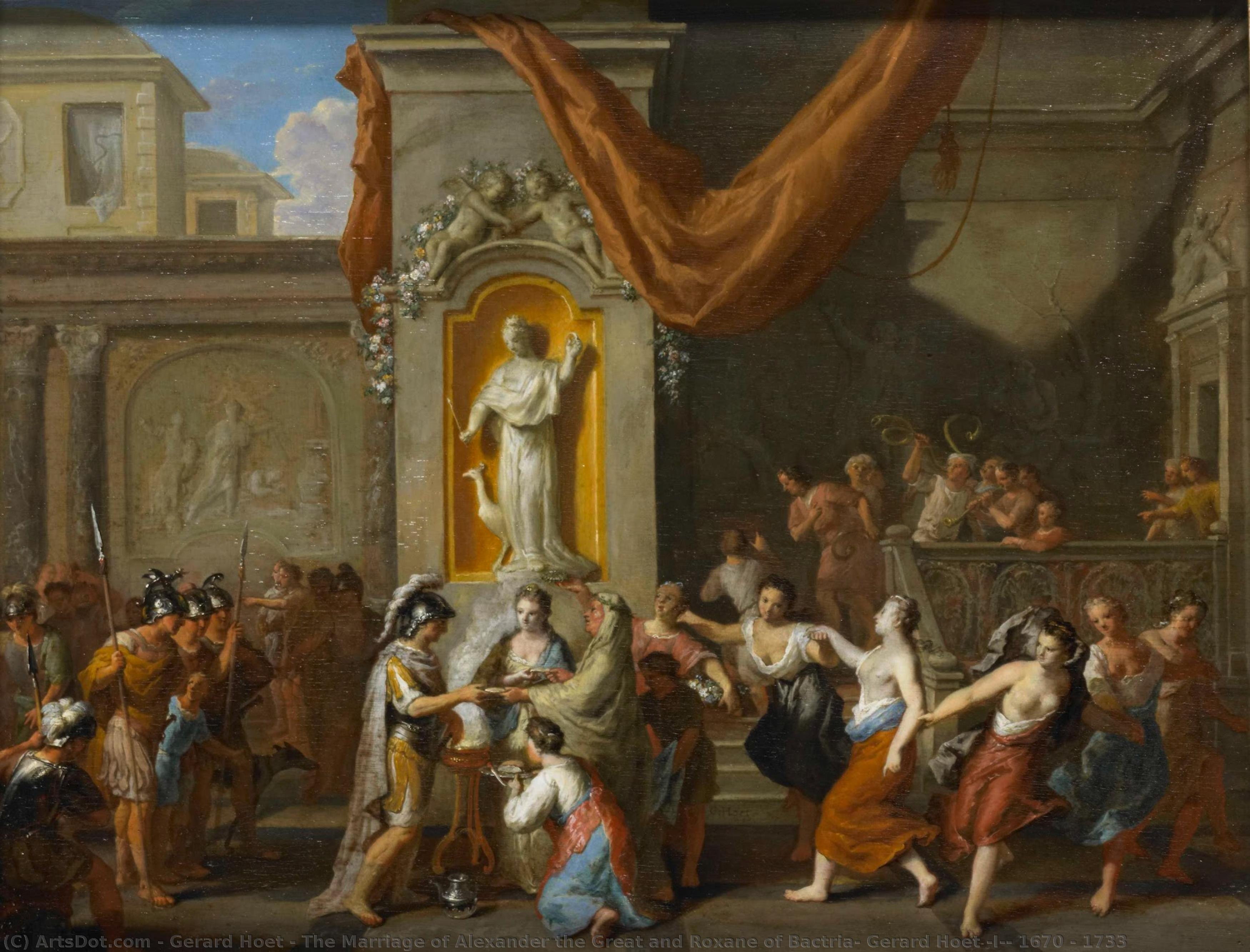
The Marriage of Alexander the Great and Roxane of Bactria, Gerard Hoet (I), 1670 - 1733


 詳細を見る
詳細を見る
ジークレー/アートプリント
迅速な制作と多彩な仕上げオプションを備えた、ミュージアムクオリティのジークレーまたはキャンバスプリント。 ( 手描きの絵画を購入 画像を購入)




































作品のオリジナル比率に合わせた、当店の規定サイズからお選びください。

特定のフレームやスペースに合わせて、ご自身でサイズを指定することも可能です。選択されたサイズが元の画像の比率と一致しない場合、作品をトリミングするか、鏡面反射または単色での塗りつぶしによって画像を拡張いたします。制作を開始する前に、ご確認用のデジタルモックアップをお送りいたします。
画面上のプレビューには、実際のトリミングや拡張は反映されませんのでご注意ください。最終的な構図を正確に確認できるのは、モックアップのみとなります。
カスタムサイズも承っておりますが、元の比率を維持するためには、あらかじめ用意されたリストからサイズを選択することをお勧めいたします。


 ガラスオプションは、110cm未満のサイズでのみご利用いただけます。

The Marriage of Alexander the Great and Roxane of Bactria, Gerard Hoet (I), 1670 - 1733
ジークレー/アートプリント
複製画のサイズ
-


合計金額
$ 62
関連作品
アーティストの略歴
Gerard Hoet (1648 – 1733): A Baroque Visionary Bridging Myth and History
Gerard Hoet was a Dutch Golden Age painter and engraver whose prolific output spanned nearly six decades, leaving an indelible mark on the artistic landscape of his time. Born in Zaltbommel, Netherlands, around 1648, he emerged from a family steeped in glass painting tradition – his father and brother practiced this craft alongside him – fostering an early appreciation for meticulous detail and vibrant color palettes. This formative experience would profoundly shape his artistic sensibilities and contribute to the distinctive style that characterized his oeuvre. Hoet’s formal training encompassed instruction from his father, brother, and Warnard van Rijsen, who himself had studied under Cornelis van Poelenburgh in Utrecht. Recognizing the importance of broadening his horizons, he relocated to The Hague in 1672, where he established connections with fellow artists like Jan van Bunnik and Justus Nieuwpoort, furthering his artistic education within Utrecht’s burgeoning artistic community. A pivotal moment arrived when Count Salis purchased paintings from Hoet's mother’s house in Zaltbommel, prompting him to return to painting for the nobleman – a relationship that would prove influential throughout his career. His journey continued eastward to Rees, Germany, where he encountered Utrecht painters Jan van Bunnik, Justus Nieuwpoort and Andries de Wit, fostering collaborative artistic endeavors and exchanging ideas about Baroque aesthetics. Returning to Utrecht with De Wit, Hoet briefly served Frederick Nassau de Zuylestein before venturing to The Hague and Amsterdam, expanding his professional network and encountering diverse artistic influences. Driven by ambition and fueled by the promise of patronage from Marquis Louis XIV’s court in France – a prospect that ultimately fell through – he embarked on an exploratory trip to England, receiving encouraging news from Lucas Vorsterman regarding potential commissions in Paris. Paris proved to be a transformative period for Hoet, where he spent over a year immersing himself in the vibrant artistic milieu of the French capital. Subsequently, he traveled back to the Netherlands via Brussels, encountering Adrian Frans Boudewyns who persuaded him to remain active in Brussels for eight months. Finally settling in Heemstede, Hoet secured employment with William Nassau de Zuylestein, 1st Earl of Rochford, dedicating himself to artistic pursuits while simultaneously raising a family. Notably, he collaborated with Hendrik Schoock to establish the Utrecht Drawing Academy in 1697 – an initiative that aimed to cultivate talent and advance artistic education within his region. Throughout his career, Hoet produced breathtaking depictions of historical narratives and mythological scenes, notably commissioned for prominent residences in Utrecht’s aristocratic circles—the castles of Slangenborg and Voorst near Zutphen, and the Earl Albemarle's castle. His masterful technique combined meticulous observation with expressive brushwork, resulting in canvases imbued with dramatic lighting and vibrant color harmonies. Furthermore, Hoet’s engravings served as crucial sources for Houbraken’s ‘Schouburg,’ a celebrated biographical dictionary of Dutch artists—demonstrating his contribution to art history beyond his artistic creations. Gerard Hoet died peacefully in 1733, leaving behind a legacy of stunning artwork and an enduring influence on Baroque painting.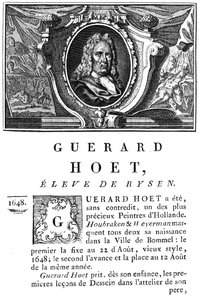
Gerard Hoet
1648 - 1733 , Netherlands
基本情報
- Artistic Movement Or Style: Golden Age
- Artists Or Movements Influenced By This Artist: ['Baroque']
- Artists Who Influenced This Artist: ['Cornelis van Poelenburgh']
- Date Of Birth: 1648
- Full Name: Gerard Hoet
- Nationality: Dutch
- Notable Artworks:
- The Marriage of Alexander the Great and Roxane of Bactria
- Queen Cleophis Offering Wine to Alexander the Great after his Conquest of Mazaka
- Place Of Birth: Zaltbommel, Netherlands
関連記事

葛飾北斎:25の傑作が語る浮世絵の世界 - ArtsDot
葛飾北斎の25選:『神奈川沖浪裏』や『富嶽三十六景』など、浮世絵の世界を深く探求。木版画の技法と日本美術の美をArtsDotで。高品質なアートプリントで空間に感動を。コレクションはこちら。
Gerard ter Borch: Intimacy & Light in the Dutch Golden Age
Explore the captivating world of Gerard ter Borch, a master of Dutch Golden Age genre painting. Discover his intimate scenes, masterful light, and lasting influence on art history. Learn more at ArtsDot.
Gerard van Honthorst: Illuminating the Dutch Golden Age with Caravaggism & Courtly Grace
Explore the captivating world of Gerard van Honthorst, a Dutch Golden Age master renowned for his dramatic chiaroscuro & courtly portraits. Discover his life, art, and lasting influence on Baroque painting.
Alexander Nasmyth: Picturing Scotland's Romantic Landscape – Innovation & Identity
Explore the life & art of Alexander Nasmyth, a pivotal figure in Scottish Romantic landscape painting. Discover his iconic works, including portraits of Robert Burns, and learn about his lasting influence on national identity. Fine art reproductions available.
ヒエロニムス・ボッシュ傑作25選:幻想と寓意の世界 | ArtsDot
ヒエロニムス・ボッシュの傑作25選。中世絵画の幻想的な世界を巡り、寓意と象徴に満ちた作品群を紐解きます。ArtsDotで高品質な油絵複製やアートプリントをお楽しみください。ボッシュの色彩とテーマをあなたの空間に。今すぐコレクションをご覧ください。

