

 プレビュー
プレビュー
 プリントを購入
 シェアする
シェアする シェアする
シェアする
 詳細を見る
詳細を見る

 ダウンロード
 似ている作品
 X線調査
X線調査 スライドショー
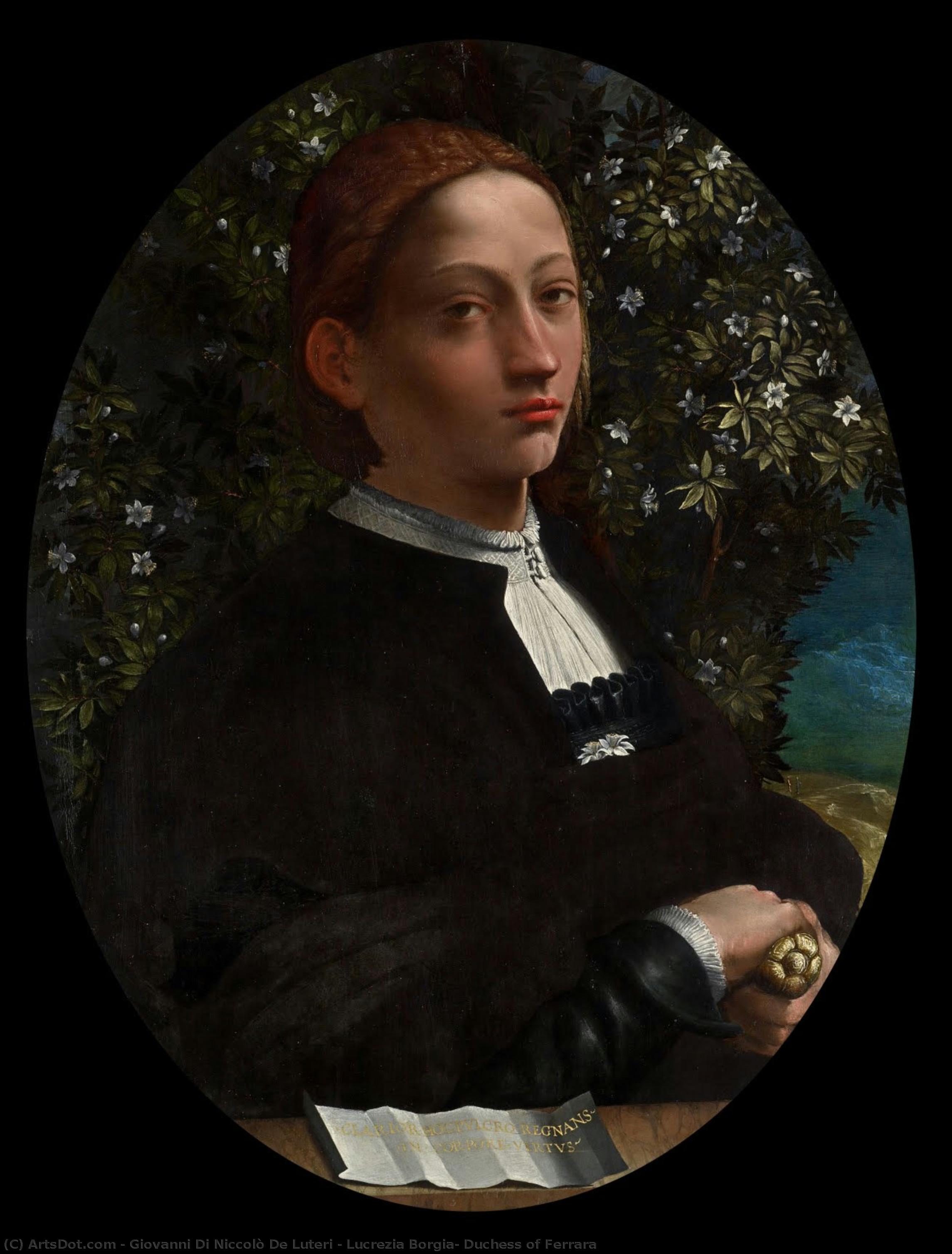
Lucrezia Borgia, Duchess of Ferrara
 1530
1530 74.0 x 57.0 cm
 国立ギャラリー・オブ・ビクトリア
 詳細を見る
詳細を見る
オンラインプレビューをはるかに凌ぐ、高解像度で鮮明なデジタル画像をご購入いただけます。
各ファイルは、社内の専門家が高度なツールと熟練した手作業によるレタッチを用いて、細心の注意を払って準備されています。すべての画像において、卓越した鮮明度、正確な色彩再現性、そして繊細なディテールを保証いたします。
最終ファイルは、プロフェッショナルな編集・印刷環境ですぐにご利用いただけるよう最適化された状態で、72時間以内にメールにてお届けいたします。これは、一流のデザインスタジオ、出版社、ギャラリーから信頼されているものと同等の品質です。
デジタル画像のご注文に付随する特典
高品質なデジタル画像配信を、確かな品質で。
ArtsDot.com を選ぶことは、単に画像を手に入れることではありません。それは、プロの手によって精密に仕上げられ、満足保証が付いた高品質なデジタルアートワークを受け取ることを意味します。ご注文いただいた際に自動的に付随する内容は、以下の通りです:

メールですぐにお届け
ご注文から72時間以内に、高解像度のデジタル画像ファイルがメールでお手元に届きます。すぐにそのままご利用いただけます。

AI技術で最適化されたデジタルファイル
お客様の作品は、高度なAIツールと専門家による手作業の編集を組み合わせてプロフェッショナルに最適化されており、細部のディテール、鮮明さ、そして正確な色再現性を最大限に引き出しています。

一生涯無料の再送サービス
ファイルを誤って削除したり、紛失してしまったりしましたか?ご安心ください。いつでも無料で再送いたします。

輸入手数料は一切かかりません
関税や手数料、配送料を気にすることなく、お気に入りのアートワークをすぐにお楽しみいただけます。デジタルダウンロードは常に免税です。

色彩再現の保証
プロ仕様のツールとカラーマネジメント技術を用いることで、デジタル画像が元の色を最大限に忠実に再現することを保証いたします。

60日間満足保証
ご購入いただいたデジタル画像にご満足いただけない場合は、60日以内であれば、修正または100%の返金(理由を問う必要はありません)をさせていただきます。

100% 返金保証
ご満足いただけない場合は、デジタルファイルを受け取ってから60日以内であれば、理由を問わず全額返金いたします。

まとめ買い割引
3枚購入で10%OFF - 5枚購入で15%OFF - 10枚以上購入で20%OFF。クリエイティブなプロジェクト、ギャラリー、エージェンシーに最適です。
関連作品




作家の略歴
Giovanni di Niccolò de Luteri (Dosso Dossi): A Venetian Dreamer at Ferrara’s Court
Giovanni di Niccolò de Luteri, universally known as Dosso Dossi, stands as a singular figure within the vibrant tapestry of the Italian Renaissance. Born around 1489 in Tramacchio, Italy—a location shrouded in historical obscurity—he ascended to prominence during his lifetime as a court artist for the Este dukes of Ferrara and Modena, leaving behind an oeuvre characterized by unsettling beauty and profound psychological insight. His artistic legacy continues to fascinate scholars and collectors alike, cementing his place among the most influential painters of his era.Early Life and Training
Information regarding Dosso Dossi’s formative years remains scarce. He apprenticed under Lorenzo Costa in Ferrara, absorbing the stylistic precepts of Venetian painting—particularly those championed by Giorgione and Titian—a connection that would profoundly shape his artistic vision. Crucially, he collaborated closely with his younger brother Battista Dossi, who had also trained under Raphael, fostering a creative partnership that yielded remarkable results. This shared training instilled in both brothers a meticulous attention to detail and an understanding of humanist ideals prevalent during the Renaissance.Style and Technique: Venetian Echoes and Distorted Reality
Dosso Dossi’s distinctive style is undeniably rooted in Venetian painting, yet he transcends mere imitation. He skillfully blended Venetian luminosity with Ferrara’s artistic traditions, creating canvases imbued with a dreamlike atmosphere—a hallmark of Giorgione's work—where colors bleed into one another and spatial perspective is deliberately manipulated. His technique involved painstaking layering of oil paint, achieving astonishing textural richness and capturing subtle nuances of emotion. Perhaps most notably, Dosso Dossi employed **cryptic allegorical conceits**, embedding hidden meanings within seemingly simple compositions. Furthermore, he frequently distorted proportions—a characteristic that departed from the conventions of academic art—introducing unsettling visual surprises that challenged viewers’ perceptions of reality.Notable Works and Collaborations
Dosso Dossi's artistic output produced several masterpieces that continue to captivate audiences today. Among these are “Aeneas in the Elysian Fields,” housed at the National Gallery of Canada, Ottawa; “The Virgin Appearing to Sts John the Baptist and John the Evangelist,” residing in the Uffizi Gallery, Florence; and “Jupiter Painting Butterflies, Mercury and the Virtue,” displayed prominently at Wawel Castle, Kraków. These paintings exemplify Dosso Dossi’s ability to evoke profound psychological states through evocative imagery and masterful color palettes. His collaborations with Battista Dossi further enriched his artistic output, resulting in a cohesive stylistic vision that distinguishes him from many of his contemporaries.Legacy and Influence
Dosso Dossi's influence extended beyond his immediate circle of pupils—including Gabriele Capellini and Jacopo Panicciati—who adopted his distinctive style and techniques. He stands as a testament to the transformative power of artistic innovation, demonstrating how artists can push boundaries while simultaneously honoring established traditions. His preoccupation with unsettling distortions of proportion and luminous color palettes anticipated developments in later art movements, establishing him as a precursor to Mannerism and influencing generations of painters who followed. Dosso Dossi’s enduring fascination stems from his ability to capture the elusive realm of human emotion—a feat achieved through meticulous observation and an uncompromising commitment to artistic experimentation.
giovanni di niccolò de luteri
1542 , Italy
プロフィール概要
- Artistic Movement Or Style: Ferrara School
- Artists Or Movements Influenced By This Artist: ['Gabriele Capellini']
- Artists Who Influenced This Artist:
- Giorgio Giorgione
- Titian
- Date Of Birth: c. 1489
- Date Of Death: 1542
- Full Name: Giovanni di Niccolò de Luteri
- Nationality: Italian
- Notable Artworks:
- Aeneas in the Elysian Fields
- Virgin appearing to sts John the Baptist and John the Evangelist
- Jupiter painting butterflies, Mercury and the Virtue
- Place Of Birth: Tramacchio, Italy

