

 プレビュー
プレビュー
 シェアする
シェアする シェアする
シェアする
 詳細を見る
詳細を見る

 ダウンロード
 似ている作品
 X線調査
X線調査 スライドショー
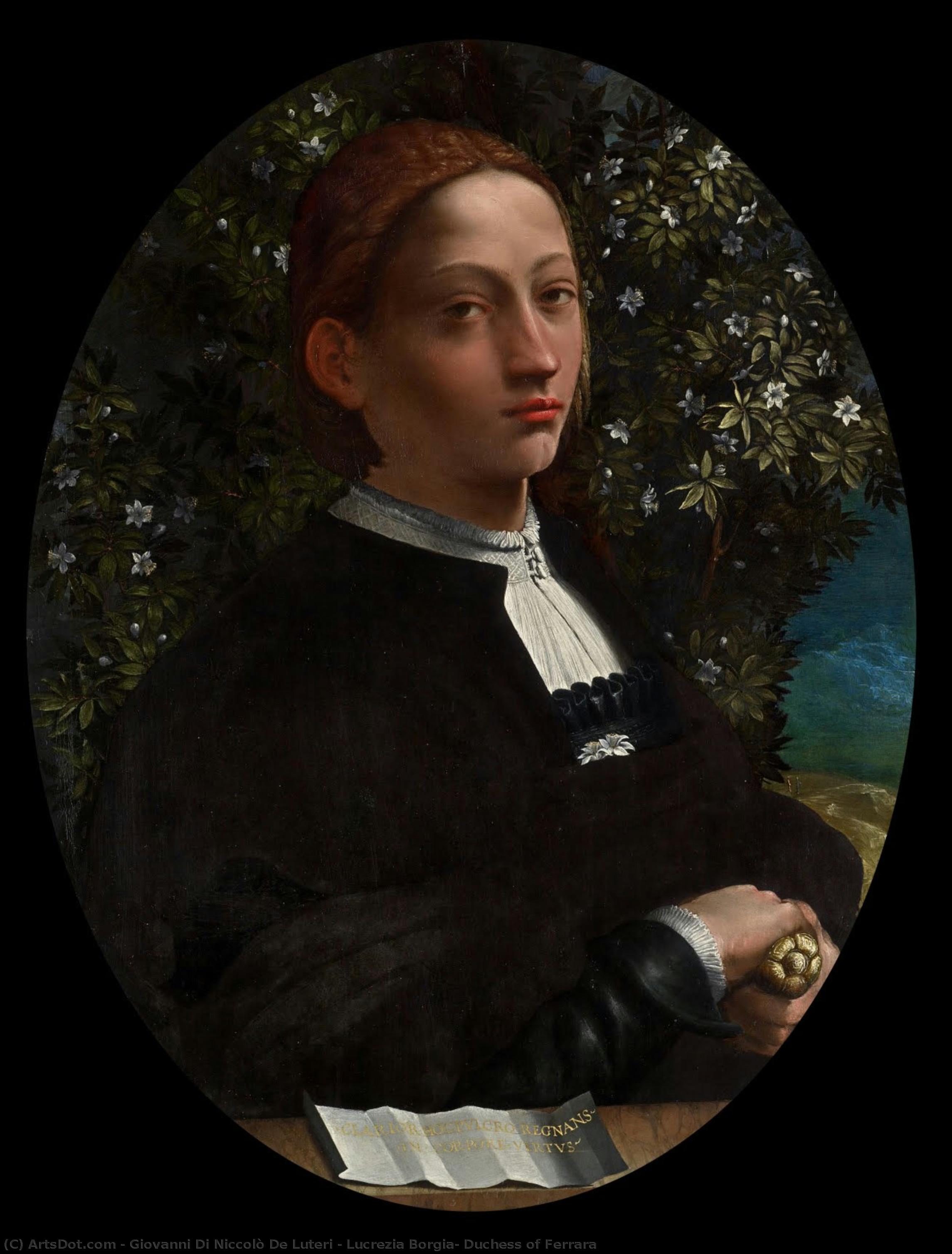
Lucrezia Borgia, Duchess of Ferrara
 1530
1530 74.0 x 57.0 cm
 国立ギャラリー・オブ・ビクトリア
 詳細を見る
詳細を見る
ジークレー/アートプリント
迅速な制作と多彩な仕上げオプションを備えた、ミュージアムクオリティのジークレーまたはキャンバスプリント。 ( 手描きの絵画を購入 画像を購入)




































作品のオリジナル比率に合わせた、当店の規定サイズからお選びください。

特定のフレームやスペースに合わせて、ご自身でサイズを指定することも可能です。選択されたサイズが元の画像の比率と一致しない場合、作品をトリミングするか、鏡面反射または単色での塗りつぶしによって画像を拡張いたします。制作を開始する前に、ご確認用のデジタルモックアップをお送りいたします。
画面上のプレビューには、実際のトリミングや拡張は反映されませんのでご注意ください。最終的な構図を正確に確認できるのは、モックアップのみとなります。
カスタムサイズも承っておりますが、元の比率を維持するためには、あらかじめ用意されたリストからサイズを選択することをお勧めいたします。


 ガラスオプションは、110cm未満のサイズでのみご利用いただけます。

Lucrezia Borgia, Duchess of Ferrara
ジークレー/アートプリント
複製画のサイズ
-


合計金額
$ 62
関連作品




アーティストの略歴
Giovanni di Niccolò de Luteri (Dosso Dossi): A Venetian Dreamer at Ferrara’s Court
Giovanni di Niccolò de Luteri, universally known as Dosso Dossi, stands as a singular figure within the vibrant tapestry of the Italian Renaissance. Born around 1489 in Tramacchio, Italy—a location shrouded in historical obscurity—he ascended to prominence during his lifetime as a court artist for the Este dukes of Ferrara and Modena, leaving behind an oeuvre characterized by unsettling beauty and profound psychological insight. His artistic legacy continues to fascinate scholars and collectors alike, cementing his place among the most influential painters of his era.Early Life and Training
Information regarding Dosso Dossi’s formative years remains scarce. He apprenticed under Lorenzo Costa in Ferrara, absorbing the stylistic precepts of Venetian painting—particularly those championed by Giorgione and Titian—a connection that would profoundly shape his artistic vision. Crucially, he collaborated closely with his younger brother Battista Dossi, who had also trained under Raphael, fostering a creative partnership that yielded remarkable results. This shared training instilled in both brothers a meticulous attention to detail and an understanding of humanist ideals prevalent during the Renaissance.Style and Technique: Venetian Echoes and Distorted Reality
Dosso Dossi’s distinctive style is undeniably rooted in Venetian painting, yet he transcends mere imitation. He skillfully blended Venetian luminosity with Ferrara’s artistic traditions, creating canvases imbued with a dreamlike atmosphere—a hallmark of Giorgione's work—where colors bleed into one another and spatial perspective is deliberately manipulated. His technique involved painstaking layering of oil paint, achieving astonishing textural richness and capturing subtle nuances of emotion. Perhaps most notably, Dosso Dossi employed **cryptic allegorical conceits**, embedding hidden meanings within seemingly simple compositions. Furthermore, he frequently distorted proportions—a characteristic that departed from the conventions of academic art—introducing unsettling visual surprises that challenged viewers’ perceptions of reality.Notable Works and Collaborations
Dosso Dossi's artistic output produced several masterpieces that continue to captivate audiences today. Among these are “Aeneas in the Elysian Fields,” housed at the National Gallery of Canada, Ottawa; “The Virgin Appearing to Sts John the Baptist and John the Evangelist,” residing in the Uffizi Gallery, Florence; and “Jupiter Painting Butterflies, Mercury and the Virtue,” displayed prominently at Wawel Castle, Kraków. These paintings exemplify Dosso Dossi’s ability to evoke profound psychological states through evocative imagery and masterful color palettes. His collaborations with Battista Dossi further enriched his artistic output, resulting in a cohesive stylistic vision that distinguishes him from many of his contemporaries.Legacy and Influence
Dosso Dossi's influence extended beyond his immediate circle of pupils—including Gabriele Capellini and Jacopo Panicciati—who adopted his distinctive style and techniques. He stands as a testament to the transformative power of artistic innovation, demonstrating how artists can push boundaries while simultaneously honoring established traditions. His preoccupation with unsettling distortions of proportion and luminous color palettes anticipated developments in later art movements, establishing him as a precursor to Mannerism and influencing generations of painters who followed. Dosso Dossi’s enduring fascination stems from his ability to capture the elusive realm of human emotion—a feat achieved through meticulous observation and an uncompromising commitment to artistic experimentation.
giovanni di niccolò de luteri
1542 , Italy
基本情報
- Artistic Movement Or Style: Ferrara School
- Artists Or Movements Influenced By This Artist: ['Gabriele Capellini']
- Artists Who Influenced This Artist:
- Giorgio Giorgione
- Titian
- Date Of Birth: c. 1489
- Date Of Death: 1542
- Full Name: Giovanni di Niccolò de Luteri
- Nationality: Italian
- Notable Artworks:
- Aeneas in the Elysian Fields
- Virgin appearing to sts John the Baptist and John the Evangelist
- Jupiter painting butterflies, Mercury and the Virtue
- Place Of Birth: Tramacchio, Italy

