

 プレビュー
プレビュー
 プリントを購入
 シェアする
シェアする シェアする
シェアする
 詳細を見る
詳細を見る

 ダウンロード
 似ている作品
 X線調査
X線調査 スライドショー
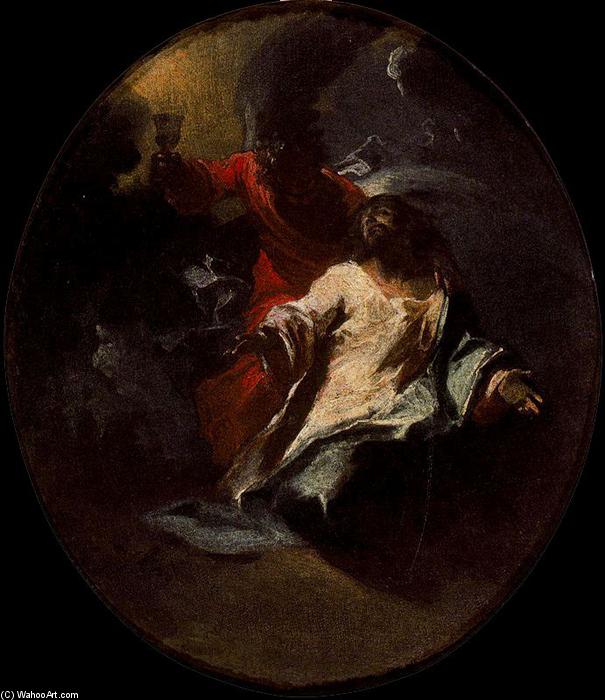
The Agony of Christ in the Garden
 Acrylic On Canvas
- WallArt
- Baroque Rococo Synthesis
 42.0 x 36.0 cm
 ウフィツィ美術館
 詳細を見る
詳細を見る




P118B $10

P118H $10

P118W $10

P438Z $10

P508JH $12

P508YH $12

P805H $10

P805Z $10

P919BZ $10

P919G $10

P919XJ $10

P959ZH $10

P968JZ $12

W106C $8

W218G $10

W218JH $8

W218Y $10

W307PJ $10

W316G $10

W316PJ $8

W316Y $10

W398PJ $8

W4111J $10

W500HY $15

W500JH $15

W692G $12

W849H $8

W940BG $15

W953PJ $8




作品のオリジナル比率に合わせた、当店の規定サイズからお選びください。

特定のフレームやスペースに合わせて、ご希望のサイズをご入力いただけます。選択されたサイズが元の画像の比率と異なる場合、アートワークをトリミングするか、手描きで要素を追加して絵画を拡張いたします。デジタルモックアップ を制作し、制作開始前にご確認(承認)をいただきます。
画面上のプレビューは、実際のトリミングや拡張を正確に反映しているものではありません。最終的な構図は、モックアップによってのみ正確にご確認いただけます。
カスタムサイズもご利用いただけますが、元の比率を維持するためには、あらかじめ用意されたリストからサイズを選択することをお勧めいたします。
ご注文後、ArtsDot.com チームより詳細な指示をお送りするとともに、仕上がりイメージ(モックアップ)をご提供いたします。


 ガラスオプションは、110cm未満のサイズでのみご利用いただけます。

The Agony of Christ in the Garden
複製技法
複製画のサイズ
-


合計金額
$ 263
作品解説
The Agony of Christ in the Garden by Giuseppe Bazzani
Giuseppe Bazzani’s “The Agony of Christ in the Garden,” painted circa 1735, stands as a testament to the enduring power of religious iconography within the Rococo artistic tradition. Produced during Mantua's golden age—a period characterized by opulent patronage and intellectual ferment—the painting embodies the stylistic convergence of Baroque grandeur with the delicate ornamentation emblematic of Venetian influence.
The artwork depicts Jesus Christ kneeling in a desolate landscape, his posture conveying profound sorrow and contemplation. Bazzani meticulously renders Christ’s figure with remarkable realism, capturing subtle nuances of musculature and drapery—a hallmark of Lombard artistic practice. The artist skillfully employs chiaroscuro, utilizing dramatic contrasts between light and shadow to heighten the emotional intensity of the scene and draw viewers' gaze directly to Christ’s face.
- Style: Rococo – Characterized by flowing lines, pastel colors, and an emphasis on decorative elements, “The Agony of Christ” reflects the broader aesthetic sensibilities of its time.
- Technique: Oil on Canvas – Bazzani’s masterful brushwork contributes to a textured surface that enhances the painting's visual depth and conveys a sense of movement despite the stillness of the composition.
- Historical Context: The painting emerged during a period of intense spiritual reflection within Europe, mirroring the anxieties surrounding papal authority and the looming threat of war. It aligns with the Baroque tradition’s exploration of human emotion and divine grace.
Symbolically, “The Agony of Christ” speaks to themes of suffering, humility, and faith—central tenets of Christian theology. The desolate garden setting underscores Christ's isolation and vulnerability as he contemplates his impending crucifixion. The angels flanking Christ symbolize divine compassion and offer solace amidst despair.
Beyond its artistic merits, the painting’s enduring appeal lies in its ability to evoke profound emotional responses. Bazzani’s masterful use of color—primarily muted earth tones punctuated by soft highlights—creates an atmosphere of solemn contemplation. The artist's attention to detail ensures that every element contributes to the overall narrative and reinforces the painting’s poignant portrayal of human suffering and spiritual yearning.
“The Agony of Christ in the Garden” remains a captivating masterpiece, demonstrating Bazzani’s exceptional skill as an artist and cementing his place within the annals of Rococo art history. Its reproduction offers a window into the artistic spirit of its era—a celebration of beauty intertwined with solemn reflection.
関連作品

アーティストの略歴
The Soul of Mantua: The Life and Legacy of Giuseppe Bazzani
In the heart of eighteenth-century Italy, amidst the gilded splendor of Mantua, the brush of Giuseppe Bazzani moved with a singular, restless energy that defied the polite constraints of his era. Born in 1690 into a family of skilled goldsmiths, Bazzani’s early immersion in the meticulous world of precious metals and fine craftsmanship provided him with an innate understanding of texture and light. This foundational intimacy with material beauty would later manifest in his paintings as a profound ability to manipulate pigment, creating surfaces that seem to vibrate with an almost tactile intensity. His formal training under Giovanni Canti served as the gateway to the classical traditions of Parma, yet even in these formative years, one can detect the seeds of a much more turbulent and expressive spirit waiting to bloom.
Bazzani’s artistic journey was never a simple adherence to the prevailing winds of fashion; rather, it was a complex dialogue between the fading grandeur of the Baroque and the emerging lightness of the Rococo. While his contemporaries often sought the airy elegance and decorative charm typical of the period, Bazzani drew deep inspiration from the dramatic shadows of Rubens and the frenetic, atmospheric brushwork of Magnasco. This synthesis allowed him to create works that possessed a unique psychological weight. His compositions frequently feature figures caught in moments of profound spiritual or emotional crisis, where the boundaries between the physical world and the divine seem to dissolve into a haze of light and shadow.
A Master of Emotional Intensity and Technique
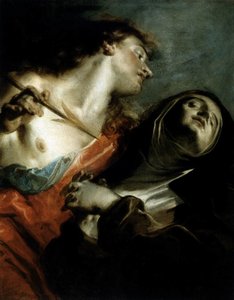
The true brilliance of Bazzani lies in his ability to use technique as a vehicle for emotion. His brushwork is famously loose and spontaneous, often described by historical critics with a polarizing intensity that bordered on the barbaric. Yet, within this perceived roughness lies a sophisticated mastery of movement and atmosphere. In masterpieces such as The Ecstasy of St Therese, he utilizes light not merely to illuminate, but to sanctify, creating a sense of spiritual transcendence that pulls the viewer into the very heart of the miracle. Similarly, in The Agony of Christ in the Garden, his ability to capture sorrowful contemplation through swirling, nebulous forms demonstrates a precursor to the expressive freedom found in much later movements.
His repertoire was as diverse as his influences, ranging from the dramatic biblical narratives of La Fille de Jephthé—where dynamic movement and rich color palettes command the eye—to more intimate religious scenes. This versatility was supported by his prestigious role within the Mantuan court, where he served as a faculty member and eventually the director of the Accademia di Belle Arti. In this capacity, Bazzani was not merely a painter but a guardian of artistic excellence, shaping the next generation of artists while navigating the complex political and cultural landscape of the ducal court.
Historical Significance and Artistic Foreshadowing
Though often categorized within the Rococo movement, Bazzani’s work possesses an idiosyncratic darkness and a psychological depth that sets him apart from the purely decorative artists of his time. His fascination with the interplay of light and shadow, and his willingness to embrace a more rugged, emotive style, suggest a visionary who was looking far beyond the eighteenth century. There is a palpable tension in his canvases—a struggle between order and chaos, tradition and innovation—that resonates with the turbulent spirit of modern art.
The historical importance of Giuseppe Bazzani extends beyond his immediate contributions to the Mantuan school. He stands as a vital link in the evolution of European painting, embodying a bridge between the heavy drama of the Baroque and the more fluid, expressive tendencies that would eventually find their voice in Expressionism. By refusing to settle for the easy grace of his age, Bazzani created a body of work that remains hauntingly relevant, inviting every generation to witness the profound power of the human spirit captured in paint.
Giuseppe Bazzani
1690 - 1769 , Italy
基本情報
- Artistic Movement Or Style: Rococo
- Artists Or Movements Influenced By This Artist: ['Expressionism']
- Artists Who Influenced This Artist:
- Giovanni Canti
- Rubens
- Date Of Birth: 1690
- Full Name: Giuseppe Bazzani
- Nationality: Italian
- Notable Artworks:
- Saint Anthony & Christ
- LA Fille de Jephte
- Place Of Birth: Mantua, Italy
関連記事

華麗なるロココ:芸術史を彩る10大傑作の世界
華麗なるロココ美術の世界へ。バロックから生まれた優雅な芸術、その10大傑作を徹底解説!ブーシェ、フロマンなど巨匠たちの技と物語を紐解き、お部屋を彩るアートを見つけよう。ArtsDot.comで至高の美術館品質レプリカとインテリアアイデアを発見。

The Rococo Aesthetic: Opulence, Rebellion & the Pursuit of Pleasure in 18th-Century Art
Explore the opulent world of Rococo art! Discover its origins, key artists like Watteau & Boucher, and lasting influence on design. Expert insights for collectors & enthusiasts.

The Allure of Elegance in Art: A Historical & Aesthetic Exploration of Refinement & Grace
Explore the exquisite world of Rococo art! Discover its history, masters (Watteau, Boucher & more), and defining elegance. Expert insights for collectors seeking museum-quality reproductions & custom portraits.
The Rococo Style: Aristocratic Leisure & the Pursuit of Delight in 18th-Century Art
Explore the opulent world of Rococo art! Discover Watteau, Boucher & Nattier's masterpieces. Expert insights for collectors seeking museum-quality reproductions and custom portraits at ArtsDot.
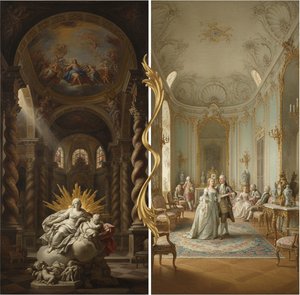
From Grandeur to Grace: Exploring the Evolution of Baroque & Rococo Art
Explore the captivating evolution from Baroque's drama to Rococo's grace! Discover key artists, characteristics & lasting influence of these art movements with expert insights at ArtsDot.

