 プレビュー
プレビュー
 プリントを購入
 シェアする
シェアする シェアする
シェアする
 詳細を見る
詳細を見る

 ダウンロード
 似ている作品
 X線調査
X線調査 スライドショー
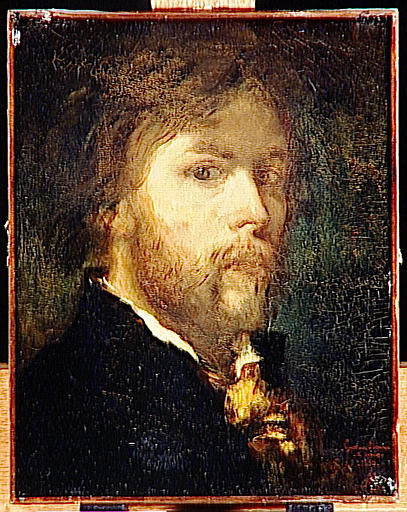
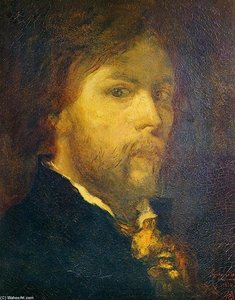
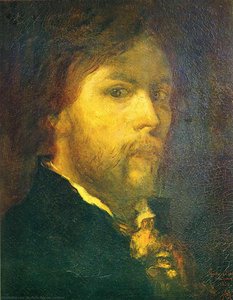
Portrait de Gustave Moreau par lui même

 詳細を見る
詳細を見る




P118B $10

P118H $10

P118W $10

P438Z $10

P508JH $12

P508YH $12

P805H $10

P805Z $10

P919BZ $10

P919G $10

P919XJ $10

P959ZH $10

P968JZ $12

W106C $8

W218G $10

W218JH $8

W218Y $10

W307PJ $10

W316G $10

W316PJ $8

W316Y $10

W398PJ $8

W4111J $10

W500HY $15

W500JH $15

W692G $12

W849H $8

W940BG $15

W953PJ $8




作品のオリジナル比率に合わせた、当店の規定サイズからお選びください。

特定のフレームやスペースに合わせて、ご希望のサイズをご入力いただけます。選択されたサイズが元の画像の比率と異なる場合、アートワークをトリミングするか、手描きで要素を追加して絵画を拡張いたします。デジタルモックアップ を制作し、制作開始前にご確認(承認)をいただきます。
画面上のプレビューは、実際のトリミングや拡張を正確に反映しているものではありません。最終的な構図は、モックアップによってのみ正確にご確認いただけます。
カスタムサイズもご利用いただけますが、元の比率を維持するためには、あらかじめ用意されたリストからサイズを選択することをお勧めいたします。
ご注文後、ArtsDot.com チームより詳細な指示をお送りするとともに、仕上がりイメージ(モックアップ)をご提供いたします。


 ガラスオプションは、110cm未満のサイズでのみご利用いただけます。

Portrait de Gustave Moreau par lui même
複製技法
複製画のサイズ
-


合計金額
$ 263
作品解説
Portrait de Gustave Moreau par lui même: A Dream Weaver’s Self-Reflection
Gustave Moreau's "Portrait de Gustave Moreau par lui même" (Portrait of Gustave Moreau by Himself), a captivating black and white study, offers an intimate glimpse into the mind of one of Symbolism’s most enigmatic figures. Painted around 1879, this self-portrait transcends mere likeness; it’s a carefully constructed tableau of artistic philosophy, intellectual curiosity, and a profound sense of introspection. The image presents Moreau as a man of considerable age – perhaps in his late fifties – seated before an easel, lost in the act of creation. His dark hair is neatly combed back, framing a face etched with lines that speak of years spent contemplating myth, religion, and the hidden currents of the human psyche—themes central to his entire oeuvre.
Moreau’s choice of attire – a simple yet elegant tie – speaks volumes about his personality. He eschews ostentation, favoring instead an understated dignity that reflects his commitment to artistic integrity. The lighting is deliberately soft and diffused, casting subtle shadows across his face and creating a mood of contemplative seriousness. The background is intentionally blurred, drawing the viewer’s attention solely to the artist himself and his immediate surroundings – a visual representation of his focus on the internal world rather than external reality. Moreau wasn't interested in capturing fleeting moments or objective truth; instead, he sought to unlock the hidden realms of myth, religion, and the human psyche through a deeply personal and symbolic visual language.
The Symbolist Vision: Moreau’s Artistic Universe
Gustave Moreau emerged as a pivotal figure within the Symbolist movement in 19th-century Paris. Rejecting the prevailing Realism and Impressionism of his time, he sought to express subjective emotions and spiritual ideas through evocative imagery drawn from mythology, folklore, and religious iconography. Influenced by artists like William Blake and Dante Alighieri, Moreau developed a unique visual language characterized by rich color palettes (though rendered in monochrome here), intricate detail, and a pervasive sense of dreamlike atmosphere. His work wasn’t simply decorative; it was an attempt to tap into the subconscious and explore the deeper mysteries of existence.
Moreau's artistic journey began with formal training at the École des Beaux-Arts, but he quickly diverged from academic conventions. He became fascinated by the works of medieval and Renaissance masters, particularly those depicting biblical scenes and mythological narratives. He meticulously studied these sources, not to replicate them faithfully, but to extract their symbolic essence and re-interpret them through his own distinctive lens. This process is evident in "Portrait de Gustave Moreau par lui même," where elements of classical portraiture are subtly interwoven with the artist’s personal symbolism.
Symbolism Unveiled: Decoding the Portrait
The painting itself is laden with symbolic meaning. The easel, a central element, represents the act of artistic creation—Moreau's ongoing engagement with his subject matter. The unfinished canvas before him symbolizes the perpetual state of artistic exploration and the never-ending quest for beauty and truth. Notice the books stacked on a nearby table; they represent Moreau’s vast intellectual curiosity and his deep engagement with literature, philosophy, and mythology – all crucial components of his creative process.
The artist's gaze, directed directly at the viewer, is particularly significant. It suggests a willingness to share his inner world, inviting us into his contemplative space. There’s a sense of quiet authority and profound understanding in his expression—a testament to a life dedicated to artistic pursuit. The overall effect is one of serene intensity, capturing a moment of intense creative focus within the artist's richly layered symbolic universe.
A Legacy of Dream Weaving
"Portrait de Gustave Moreau par lui même" stands as a powerful self-portrait not just of an artist, but of a visionary. It encapsulates the core tenets of Symbolism—a movement that sought to transcend mere representation and delve into the realm of emotion, imagination, and spiritual experience. Moreau’s influence extended far beyond his own time, inspiring generations of artists, including Matisse and Rouault. Today, reproductions of this iconic work offer a unique opportunity to connect with the mind of one of Symbolism's most compelling figures, inviting us to contemplate the enduring power of art to illuminate the depths of human consciousness.
関連作品
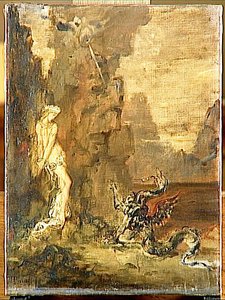
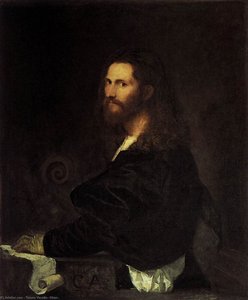
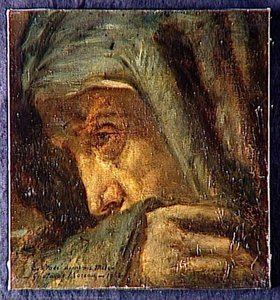
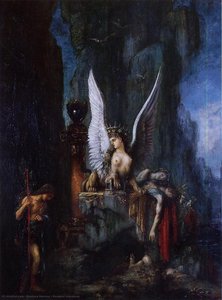
アーティストの略歴
Gustave Moreau (1826 - 1898)
Gustave Moreau, a name synonymous with the ethereal beauty and enigmatic depths of Symbolist painting, emerged from 19th-century Paris as a singular artistic voice. Born in 1826 into a bourgeois family—his father an architect and archivist—Moreau’s early life was steeped in intellectual curiosity and aesthetic sensibility. From a young age, he displayed a remarkable gift for drawing, nurtured through traditional academic training at the École des Beaux-Arts under figures like François-Édouard Picot. However, Moreau's artistic path would diverge sharply from the prevailing Realist and Impressionist currents of his time. He wasn’t interested in capturing fleeting moments or objective reality; instead, he sought to unlock the hidden realms of myth, religion, and the human psyche through a deeply personal and symbolic visual language. His journey was one of inward exploration, translating subjective emotions and spiritual yearnings onto canvas with an obsessive attention to detail and a vibrant, often opulent palette.Early Influences and Artistic Training
Moreau’s artistic development wasn't born in a vacuum. While rejecting the dominant trends of his era, he drew inspiration from diverse sources. The dramatic use of color and exotic subject matter found in the works of Eugène Delacroix ignited a passion for narrative painting imbued with emotional intensity—a fascination that would define much of his oeuvre. He particularly admired Michelangelo’s monumental sculptures and Leonardo da Vinci’s masterful anatomical drawings, recognizing their profound impact on artistic technique and psychological insight. Moreau's formal training at the École des Beaux-Arts solidified these influences, equipping him with the skills necessary to execute ambitious projects and forge a distinctive visual style. However, he quickly distinguished himself from his peers by prioritizing imaginative exploration over mere replication of nature—a decision that would propel him toward the forefront of Symbolist painting.The Italian Journey: Rediscovering Antiquity
Between 1857 and 1859, Moreau embarked on a transformative voyage to Italy—a pilgrimage fueled by an ardent desire to reconnect with the artistic heritage of antiquity and the Renaissance. Guided by his mentor Frédéric de Courcy, he immersed himself in the art of Rome and Florence, meticulously copying Old Master paintings and studying architectural ruins. This experience profoundly shaped his artistic sensibilities, fostering a fascination for Byzantine iconography and inspiring him to synthesize classical and medieval traditions into a wholly original visual language. Moreau’s meticulous observation and unwavering dedication to craft—traits that would characterize his entire career—were honed during this formative period, preparing him for the monumental achievements that lay ahead.Salome Dancing Before Herod: A Symbolist Masterpiece
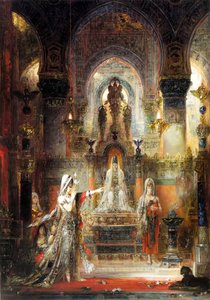
Moreau's artistic breakthrough arrived in 1864 with *Salome Dancing before Herod*, a painting that instantly established his reputation as a visionary artist and cemented his place among the pioneers of Symbolism. Departing radically from the conventions of academic art, Moreau presented a dramatic depiction of the biblical tale—not as a literal recounting of events, but as an exploration of psychological complexities and symbolic resonances. The composition is strikingly asymmetrical, mirroring the fractured psyche of Salome—a figure embodying sensual desire and moral ambiguity—and reflecting the unsettling interplay between light and shadow. Moreau’s masterful use of color—particularly crimson and gold—creates an atmosphere of opulent grandeur and underscores the painting's spiritual dimension. He employed a technique characterized by painstaking layering of paint, achieving remarkable textural detail and capturing the elusive beauty of the human form with unparalleled precision.Legacy and Influence: Shaping Modern Art
Though initially met with skepticism from some critics, Moreau’s work gained recognition in subsequent decades—particularly after the resurgence of interest in Symbolism during the 1960s and 70s. His influence extended far beyond the confines of his own time, inspiring artists across generations—including Henri Matisse and Georges Rouault—to embrace imaginative exploration and challenge conventional artistic norms. Moreau championed the notion that painting should strive to evoke emotion and convey spiritual truths—a conviction that resonated deeply with the existential anxieties of the 20th century. His unwavering commitment to craft—combined with his profound understanding of mythology and psychology—established him as a pivotal figure in the history of art—a testament to the enduring power of Symbolist painting and its capacity to illuminate the complexities of human experience. Gustave Moreau’s legacy continues to inspire artists today, reminding us that true artistic achievement lies not merely in technical virtuosity but in the ability to capture the essence of the soul and transform vision into tangible form.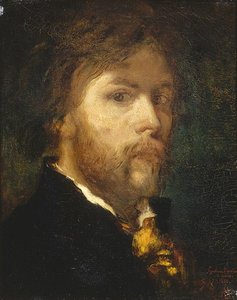
ゴスタヴ・モロー
1826 - 1898 , フランス
基本情報
- Artistic Movement Or Style: シンボリズム
- Artists Who Influenced This Artist:
- エウゲニオ・デルラクロワール
- ミケランジェロ
- レオナルド・ダ・ヴィンチ
- Date Of Birth: 1826年4月6日
- Date Of Death: 1898年4月18日
- Full Name: Gustave Moreau
- Nationality: フランス人
- Notable Artworks:
- ソロモンの踊り før ヘロドス
- ユピテルのセメレ
- オレアフス
- 出現
- デスメドナ
- Place Of Birth: パリ、フランス
関連記事
グスタフ・クリムト傑作25選:華麗なる装飾性と象徴が織りなす世界 | ArtsDot
グスタフ・クリムトの傑作25選。華麗なる装飾性と象徴が織りなす世界を紐解きます。キス、ポートレートなど、美術史に残る名画の物語と技法をArtsDotで。高品質複製画やインテリアアートも豊富に。今すぐコレクションをご覧ください。
Gustave Moreau: Symbolism's Enigmatic Visionary & Precursors of Modern Fantasy Art
Explore the captivating world of Gustave Moreau, the leading Symbolist painter. Discover his iconic masterpieces, influences, and lasting legacy. Expert analysis for collectors & art enthusiasts.
Echoes of Olympus: Mythological Narratives in Western Art Through the Ages
Explore the captivating history of mythological narratives in Western art! From ancient Greece to modern masterpieces, discover iconic artworks & symbolism. Expert analysis and high-quality reproductions at ArtsDot.
Gustave Loiseau: Capturing the Ephemeral Light of French Landscapes
Explore the captivating landscapes of Gustave Loiseau, a key Post-Impressionist painter. Discover his unique 'en treillis' technique and artistic legacy with our comprehensive guide.
François Boucher: Rococo Master of Myth, Sensuality, and the French Court
Explore the captivating world of François Boucher, master of Rococo painting! Discover his iconic works, aristocratic patronage, and lasting influence on French art history. Learn more at ArtsDot.