

 プレビュー
プレビュー
 プリントを購入
 シェアする
シェアする シェアする
シェアする
 詳細を見る
詳細を見る

 ダウンロード
 似ている作品
 X線調査
X線調査 スライドショー
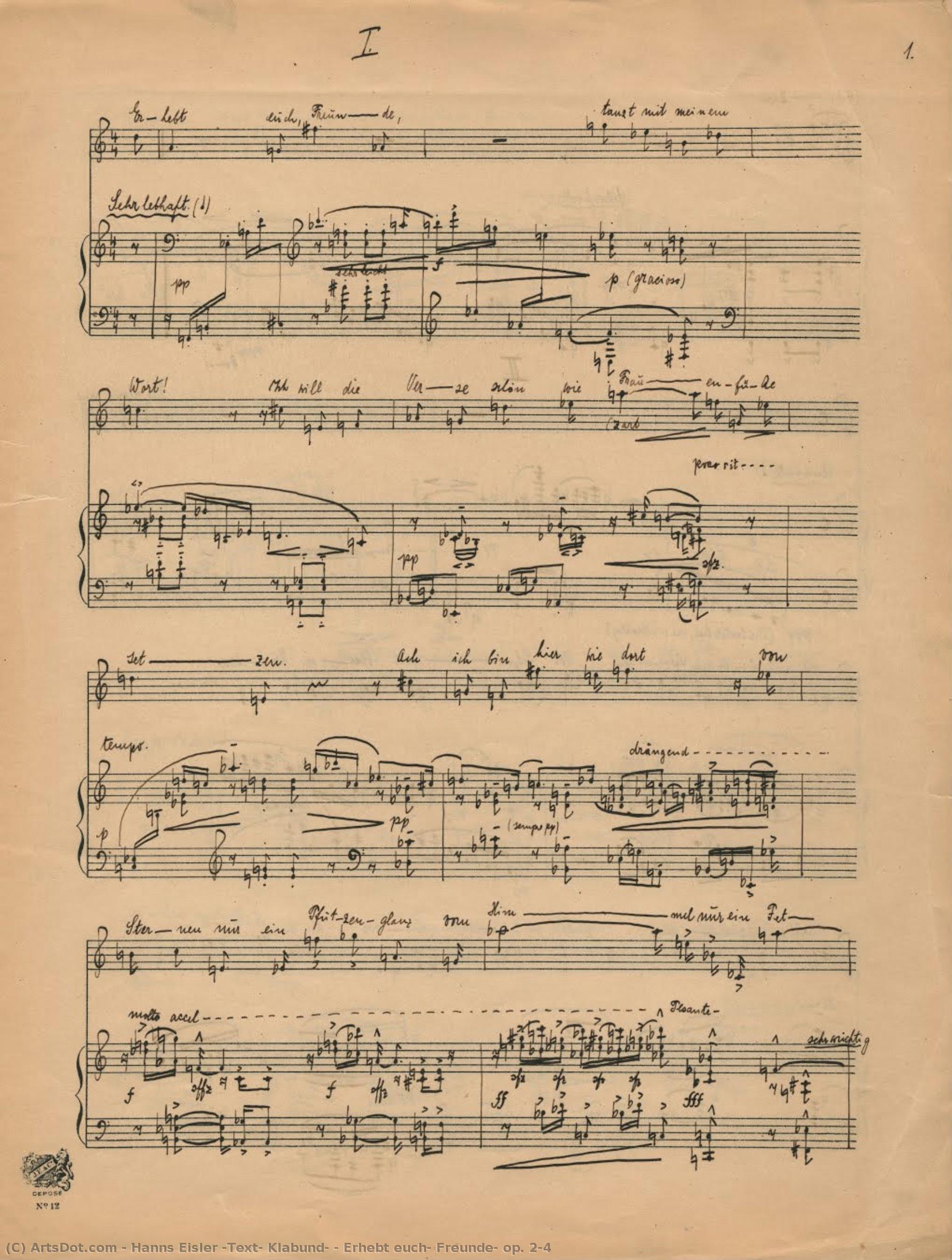
Erhebt euch, Freunde, op. 2/4
 Ink On Paper
- Expressionism
 1922
1922- Modern
 26.0 x 34.0 cm
 Arnold Schönberg Center
 詳細を見る
詳細を見る
オンラインプレビューをはるかに凌ぐ、高解像度で鮮明なデジタル画像をご購入いただけます。
各ファイルは、社内の専門家が高度なツールと熟練した手作業によるレタッチを用いて、細心の注意を払って準備されています。すべての画像において、卓越した鮮明度、正確な色彩再現性、そして繊細なディテールを保証いたします。
最終ファイルは、プロフェッショナルな編集・印刷環境ですぐにご利用いただけるよう最適化された状態で、72時間以内にメールにてお届けいたします。これは、一流のデザインスタジオ、出版社、ギャラリーから信頼されているものと同等の品質です。
デジタル画像のご注文に付随する特典
高品質なデジタル画像配信を、確かな品質で。
ArtsDot.com を選ぶことは、単に画像を手に入れることではありません。それは、プロの手によって精密に仕上げられ、満足保証が付いた高品質なデジタルアートワークを受け取ることを意味します。ご注文いただいた際に自動的に付随する内容は、以下の通りです:

メールですぐにお届け
ご注文から72時間以内に、高解像度のデジタル画像ファイルがメールでお手元に届きます。すぐにそのままご利用いただけます。

AI技術で最適化されたデジタルファイル
お客様の作品は、高度なAIツールと専門家による手作業の編集を組み合わせてプロフェッショナルに最適化されており、細部のディテール、鮮明さ、そして正確な色再現性を最大限に引き出しています。

一生涯無料の再送サービス
ファイルを誤って削除したり、紛失してしまったりしましたか?ご安心ください。いつでも無料で再送いたします。

輸入手数料は一切かかりません
関税や手数料、配送料を気にすることなく、お気に入りのアートワークをすぐにお楽しみいただけます。デジタルダウンロードは常に免税です。

色彩再現の保証
プロ仕様のツールとカラーマネジメント技術を用いることで、デジタル画像が元の色を最大限に忠実に再現することを保証いたします。

100日間満足保証
ご購入いただいたデジタル画像にご満足いただけない場合は、100日以内であれば、修正または100%の返金(理由を問う必要はありません)をさせていただきます。

100% 返金保証
ご満足いただけない場合は、デジタルファイルを受け取ってから100日以内であれば、理由を問わず全額返金いたします。

まとめ買い割引
3枚購入で10%OFF - 5枚購入で15%OFF - 10枚以上購入で20%OFF。クリエイティブなプロジェクト、ギャラリー、エージェンシーに最適です。
A Symphony of Ink and History
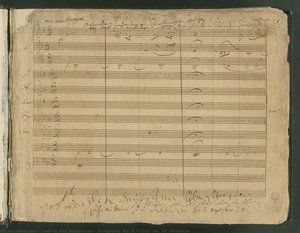
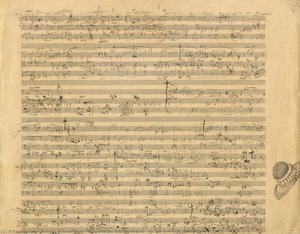
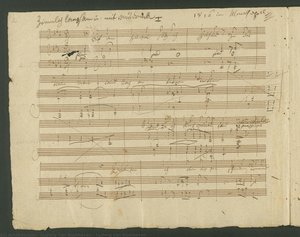
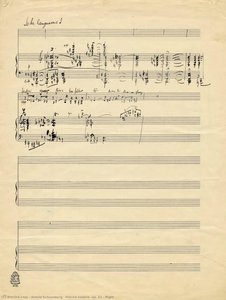
In the delicate, aged fibers of the musical score Erhebt euch, Freunde, op. 2/4, one finds more than mere notation; one encounters a profound dialogue between two titans of twentieth-century modernism. Created in the winter of 1922, this piece serves as a poignant intersection where the lyrical text of Klabund meets the burgeoning musical language of Hanns Eisler. The visual presentation of the score—rendered on paper that has mellowed into a warm, nostalgic tan—evokes the atmosphere of a lost era of European intellectualism. As the eye wanders across the dense, vertical arrangement of black ink, it encounters a rhythmic landscape of clefs, rests, and notes that pulse with the quiet intensity of a composer finding his voice amidst the political and social tremors of post-war Germany.
The aesthetic of this work is defined by its structural elegance and the raw, tactile quality of its medium. The composition is dominated by the meticulous geometry of the musical staff, where every horizontal line acts as a stage for the circular dance of notes. There is a striking contrast between the stark, black precision of the engraving and the organic, weathered texture of the parchment. This interplay creates a sense of depth that belies its two-dimensional nature, inviting the viewer to feel the weight of history held within each measure. The lighting, soft and diffused as if captured in a quiet study, highlights the slight wrinkles and imperfections of the aged paper, lending the piece an authentic, archival soul that resonates with those who appreciate the beauty of antiquity.
The Resonance of Modernist Spirit
To understand this work is to understand the tension between tradition and revolution. During this period, the musical world was grappling with the radical shifts introduced by figures like Arnold Schönberg, whom Eisler famously defended as a true master rather than a mere destroyer of convention. The score itself embodies this duality; while it utilizes the established language of musical notation, the very existence of such a piece in 1922 speaks to a period of intense creative reconfiguration. The symbols on the page are not merely instructions for performance but are artifacts of a movement seeking to create a new material for music—one that could achieve the unity of the classics while embracing the complexities of the modern psyche.
For the discerning collector or interior designer, Erhebt euch, Freunde offers a sophisticated focal point that transcends simple decoration. It brings an air of academic prestige and contemplative calm to any space, whether it be a private library, a contemporary studio, or a refined living area. The piece does not demand attention through loud colors or aggressive forms; instead, it commands respect through its subtle complexity and historical gravity. As a high-quality reproduction, it serves as a window into the heart of the twentieth century, offering an emotional connection to the era of profound musical evolution and providing a timeless element of intellectual elegance to any curated environment.
関連作品
作家の略歴
Early Life and Musical Beginnings
Hanns Eisler (1898-1962), a German-Austrian composer, was born in Leipzig, saxony. His family, of jewish and lutheran descent, moved to vienna in 1901. Eisler’s interest in music wasn't supported by his family due to financial constraints, leading him to self-educate in music. Despite these limitations, he possessed an innate musical talent that propelled him toward a lifelong pursuit of artistic expression.- Johannes Eisler was born in Leipzig in Saxony, the third child of Rudolf Eisler, a professor of philosophy, and Marie Ida Fischer.
- His father was an atheist of jewish descent and his mother was lutheran of swabian descent.
- The family moved to vienna in 1901, marking a significant shift in their upbringing and exposing him to diverse cultural influences.
Musical Education and Influences
At the age of 14, Eisler joined a socialist youth group, reflecting his early inclination towards political ideologies. This formative experience instilled in him a commitment to social justice and fueled his artistic endeavors with a desire to engage with pressing societal issues. He studied under arnold schoenberg from 1919 to 1923, becoming the first of schoenberg’s disciples to compose in the twelve-tone or serial technique. Schoenberg's groundbreaking approach to harmony profoundly impacted Eisler’s musical style and solidified his position at the forefront of avant-garde music.Collaborations and Notable Works
Eisler’s artistic journey took a pivotal turn with his collaboration with bertolt brecht, beginning in 1928. Their partnership produced iconic works that captured the spirit of Weimar Germany—a period marked by intellectual ferment and political turbulence. Together, they crafted protest songs that resonated deeply with audiences and became anthems for social change.- Bertolt Brecht: Eisler collaborated extensively with Brecht on several projects, including “The Decision” (Die Maßnahme) (1930), “The Mother” (1932), and “Schweik in the Second World War” (1957). Their collaboration resulted in protest songs that became popular militant anthems.
- “Solidarity Song”: A testament to their shared commitment, this song was sung in street protests and public meetings throughout europe, demonstrating the power of music to galvanize collective action.
- “Ballad of Paragraph 218”: Eisler’s composition of “The Ballad of Paragraph 218” stands as a landmark achievement—the world's first song protesting laws against abortion and embodying his unwavering advocacy for human rights.
Exile and Later Life
Following the rise of nazi rule in 1933, Eisler’s music and Brecht’s poetry faced censorship and persecution. Both artists bravely sought refuge abroad, preserving their artistic integrity amidst challenging circumstances. Eisler continued to compose during his exile, adapting to new environments while maintaining a steadfast dedication to his craft. He wrote the national anthem of east germany and scores for films, reflecting his adaptability in a changing political landscape. His son Georg Eisler was born during this period, adding another dimension to his personal life amidst the broader context of historical upheaval.Legacy
Hanns Eisler died on september 6, 1962, in east berlin, leaving behind an enduring legacy as a composer who championed social justice and pushed the boundaries of musical innovation. His influence extended beyond his own compositions, shaping generations of musicians and inspiring them to confront societal injustices through artistic expression. He remains a symbol of artistic courage and intellectual integrity—a figure whose music continues to resonate with audiences worldwide.
hanns eisler (text: klabund)
1898 - 1962 , Germany
プロフィール概要
- Artistic Movement Or Style: Twelve-tone music
- Artists Or Movements Influenced By This Artist: ['Expressionism']
- Artists Who Influenced This Artist: ['Arnold Schoenberg']
- Date Of Birth: July 6, 1898
- Date Of Death: September 6, 1962
- Full Name: Hanns Eisler
- Nationality: German-Austrian
- Notable Artworks: ['Erhebt euch, Freunde']
- Place Of Birth: Leipzig, Germany