

 プレビュー
プレビュー
 プリントを購入
 シェアする
シェアする シェアする
シェアする
 詳細を見る
詳細を見る

 ダウンロード
 似ている作品
 X線調査
X線調査 スライドショー
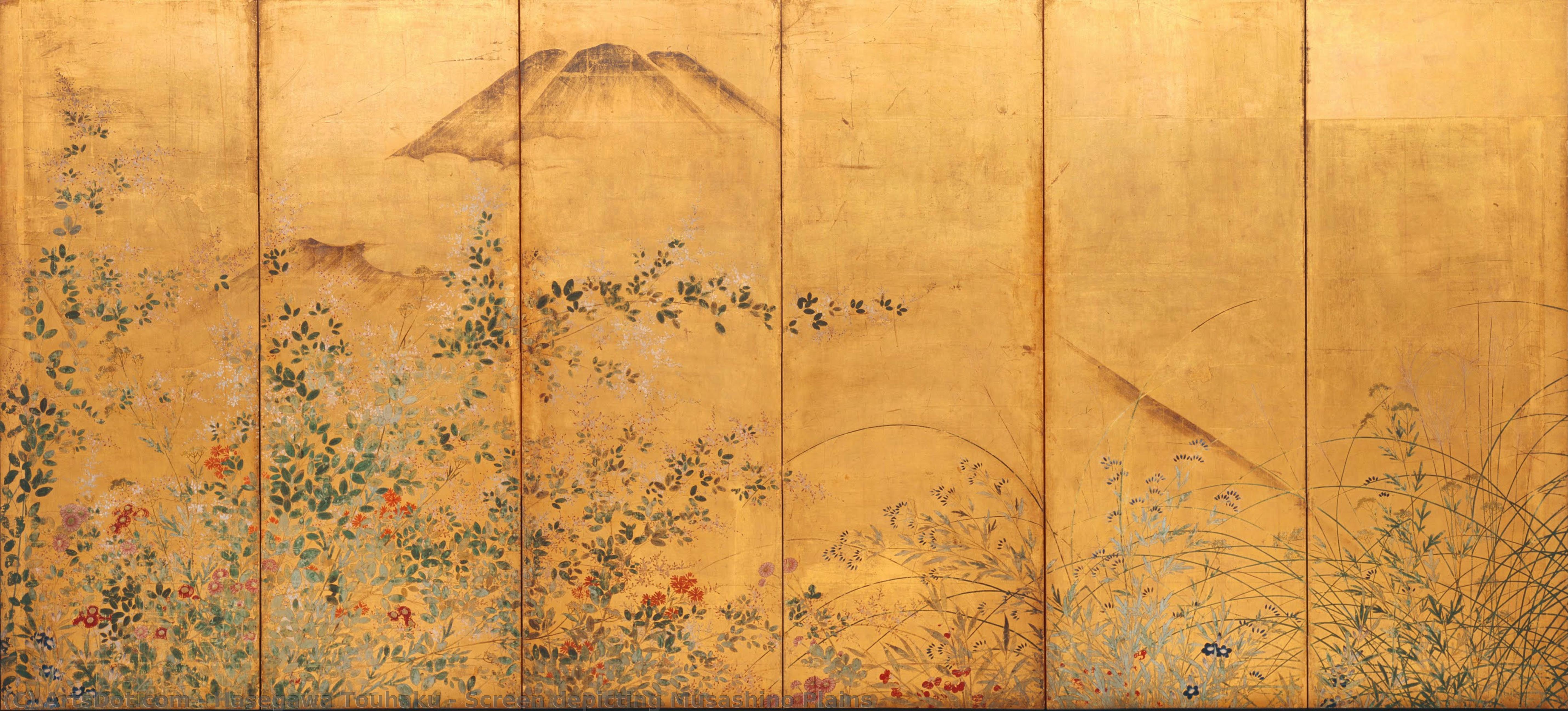
Screen depicting Musashino Plains
 Ink
Ink- WallArt
 Early Modern
 367.0 x 165.0 cm
 Iwami Art Museum
 詳細を見る
詳細を見る
オンラインプレビューをはるかに凌ぐ、高解像度で鮮明なデジタル画像をご購入いただけます。
各ファイルは、社内の専門家が高度なツールと熟練した手作業によるレタッチを用いて、細心の注意を払って準備されています。すべての画像において、卓越した鮮明度、正確な色彩再現性、そして繊細なディテールを保証いたします。
最終ファイルは、プロフェッショナルな編集・印刷環境ですぐにご利用いただけるよう最適化された状態で、72時間以内にメールにてお届けいたします。これは、一流のデザインスタジオ、出版社、ギャラリーから信頼されているものと同等の品質です。
デジタル画像のご注文に付随する特典
高品質なデジタル画像配信を、確かな品質で。
ArtsDot.com を選ぶことは、単に画像を手に入れることではありません。それは、プロの手によって精密に仕上げられ、満足保証が付いた高品質なデジタルアートワークを受け取ることを意味します。ご注文いただいた際に自動的に付随する内容は、以下の通りです:

メールですぐにお届け
ご注文から72時間以内に、高解像度のデジタル画像ファイルがメールでお手元に届きます。すぐにそのままご利用いただけます。

AI技術で最適化されたデジタルファイル
お客様の作品は、高度なAIツールと専門家による手作業の編集を組み合わせてプロフェッショナルに最適化されており、細部のディテール、鮮明さ、そして正確な色再現性を最大限に引き出しています。

一生涯無料の再送サービス
ファイルを誤って削除したり、紛失してしまったりしましたか?ご安心ください。いつでも無料で再送いたします。

輸入手数料は一切かかりません
関税や手数料、配送料を気にすることなく、お気に入りのアートワークをすぐにお楽しみいただけます。デジタルダウンロードは常に免税です。

色彩再現の保証
プロ仕様のツールとカラーマネジメント技術を用いることで、デジタル画像が元の色を最大限に忠実に再現することを保証いたします。

60日間満足保証
ご購入いただいたデジタル画像にご満足いただけない場合は、60日以内であれば、修正または100%の返金(理由を問う必要はありません)をさせていただきます。

100% 返金保証
ご満足いただけない場合は、デジタルファイルを受け取ってから60日以内であれば、理由を問わず全額返金いたします。

まとめ買い割引
3枚購入で10%OFF - 5枚購入で15%OFF - 10枚以上購入で20%OFF。クリエイティブなプロジェクト、ギャラリー、エージェンシーに最適です。
関連作品
作家の略歴
Hasegawa Tohaku: A Master of Serene Landscapes and the Dawn of Rinpa
Hasegawa Tohaku, a name synonymous with understated elegance and profound observation, stands as one of the most pivotal figures in Japanese art history. Born Okumura Tōhaku in 1539 during the tumultuous era of the Sengoku period, he navigated a landscape of war and upheaval to become a foundational artist of the Rinpa school – a movement that would dramatically reshape the aesthetic sensibilities of Japan for centuries to come. More than just a painter, Tohaku was a meticulous scholar of Chinese art, a master of ink techniques, and a subtle innovator who quietly redefined the boundaries of Japanese landscape painting.
His early life remains somewhat shrouded in mystery, though it’s believed he began his artistic journey as a Buddhist icon painter in Noto Province. This formative period instilled within him a deep respect for tradition and a rigorous approach to technique – qualities that would later inform his distinctive style. Crucially, he apprenticed himself to the influential Kanō school, absorbing their sophisticated methods of perspective, color theory, and brushwork. However, Tohaku wasn’t merely a mimic; he skillfully integrated these influences with his own burgeoning artistic vision, forging a unique path that ultimately diverged from the more rigidly formal approach of the Kanō school.
The Rise to Prominence: Kyoto and the Patronage of Power
Around 1571, Tohaku relocated to Kyoto, the cultural heart of Japan, seeking opportunities within the burgeoning artistic circles. It was here that he gained recognition as a court painter, securing commissions from powerful figures like Toyotomi Hideyoshi, the ambitious warlord who would later become Shogun. These commissions – particularly the monumental *Shoheki-ga* (wall paintings) for the Daitoku-ji Temple – showcased his ability to synthesize traditional techniques with innovative composition and a keen understanding of spatial relationships. The scale and ambition of these works demonstrated Tohaku’s growing confidence and established him as a leading artist of his time.
His relationship with Sen no Rikyu, the legendary tea master who profoundly influenced Japanese aesthetics, further elevated his status. Rikyu recognized Tohaku's ability to capture the essence of nature – not through dramatic grandeur, but through subtle details and an appreciation for quiet beauty. This shared sensibility would become a defining characteristic of the Rinpa school, which sought to emulate this understated elegance.
A Distinctive Style: Simplicity, Observation, and the Essence of Nature
Tohaku’s artistic style is immediately recognizable by its remarkable simplicity and profound observation. Unlike many of his contemporaries who favored elaborate detail and vibrant colors, Tohaku masterfully employed a restrained palette – primarily consisting of shades of gray, brown, and black – to create atmospheric landscapes that exude serenity and tranquility. His brushwork is characterized by its fluidity and economy; he used minimal strokes to convey the essence of his subjects with remarkable precision.
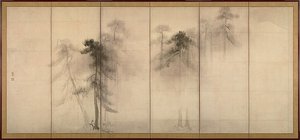
His most celebrated works—the iconic “Pine Trees” (1500), a triptych exploring the interplay of light, shadow, and texture, and the evocative “Eight Views of Ōmi” – exemplify this approach. These paintings are not merely depictions of landscapes; they are meditations on nature’s inherent beauty and the fleeting passage of time. The subtle variations in tone, the delicate rendering of foliage, and the suggestion of depth create a sense of immersive realism that invites contemplation.
- Pine Trees: A triptych showcasing the interplay of light and shadow on pine trees, demonstrating Tohaku’s mastery of *sumi-e* (ink wash painting).
- Eight Views of Ōmi: A series of landscapes capturing the diverse beauty of the region of Ōmi (present-day Shiga Prefecture), reflecting a deep understanding of topography and seasonal changes.
Legacy and Influence: The Foundation of Rinpa
Hasegawa Tohaku’s influence extends far beyond his own lifetime. He is widely considered the founder of the Rinpa school, a movement that profoundly impacted Japanese art for centuries to come. Rinpa artists, building upon Tohaku's principles, rejected the rigid conventions of traditional painting and embraced a more naturalistic approach – emphasizing observation, simplification, and the exploration of light and shadow.
His legacy is firmly established through numerous national treasures, including “Pine Trees” and “Eight Views of Ōmi,” which are housed in museums across Japan. Tohaku’s work continues to inspire artists and art lovers alike, serving as a testament to the power of simplicity, observation, and the enduring beauty of the natural world. His quiet revolution transformed Japanese painting, leaving an indelible mark on its history and shaping the aesthetic sensibilities of generations to come.
Key Achievements
- Founder of the Rinpa School: Established a new artistic movement emphasizing simplicity, observation, and naturalism.
- Master of *Sumi-e*: Perfected the art of ink wash painting, utilizing subtle variations in tone to create atmospheric landscapes.
- Innovative Composition: Developed unique compositional techniques that prioritized clarity, balance, and a sense of spatial depth.
- National Treasures: His works, including “Pine Trees” and “Eight Views of Ōmi,” are recognized as national treasures of Japan.
hasegawa touhaku
1539 - 1610

