

 プレビュー
プレビュー
 プリントを購入
 シェアする
シェアする シェアする
シェアする
 詳細を見る
詳細を見る

 ダウンロード
 似ている作品
 X線調査
X線調査 スライドショー
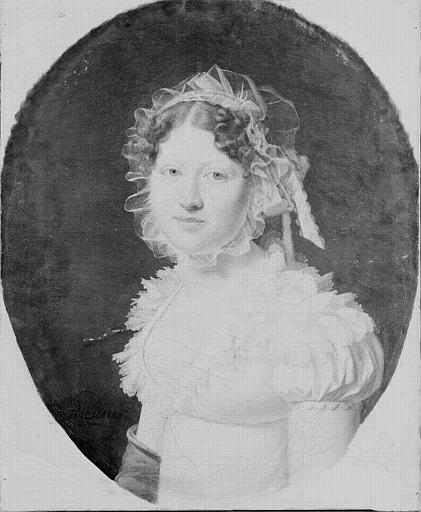
PORTRAIT DE FEMME EN BLANC


 詳細を見る
詳細を見る




P118B $10

P118H $10

P118W $10

P438Z $10

P508JH $12

P508YH $12

P805H $10

P805Z $10

P919BZ $10

P919G $10

P919XJ $10

P959ZH $10

P968JZ $12

W106C $8

W218G $10

W218JH $8

W218Y $10

W307PJ $10

W316G $10

W316PJ $8

W316Y $10

W398PJ $8

W4111J $10

W500HY $15

W500JH $15

W692G $12

W849H $8

W940BG $15

W953PJ $8




作品のオリジナル比率に合わせた、当店の規定サイズからお選びください。

特定のフレームやスペースに合わせて、ご希望のサイズをご入力いただけます。選択されたサイズが元の画像の比率と異なる場合、アートワークをトリミングするか、手描きで要素を追加して絵画を拡張いたします。デジタルモックアップ を制作し、制作開始前にご確認(承認)をいただきます。
画面上のプレビューは、実際のトリミングや拡張を正確に反映しているものではありません。最終的な構図は、モックアップによってのみ正確にご確認いただけます。
カスタムサイズもご利用いただけますが、元の比率を維持するためには、あらかじめ用意されたリストからサイズを選択することをお勧めいたします。
ご注文後、ArtsDot.com チームより詳細な指示をお送りするとともに、仕上がりイメージ(モックアップ)をご提供いたします。


 ガラスオプションは、110cm未満のサイズでのみご利用いただけます。

PORTRAIT DE FEMME EN BLANC
複製技法
複製画のサイズ
-


合計金額
$ 263
Henri François Riesener: A Parisian Portraitist Amidst Napoleonic Splendor
Henri François Riesener (1767 – 1828) stands as a testament to the artistic fervor of the late Enlightenment and early Romantic eras in France. Born in Paris, he descended from a German cabinetmaker lineage—Jean-Henri Riesener—whose craftsmanship instilled in him an appreciation for meticulous detail and refined aesthetics. This heritage profoundly shaped his artistic trajectory, propelling him towards a distinguished career as both a portrait painter and miniaturist, securing his place amongst the luminaries of Parisian art society. His work captures the spirit of its time, reflecting the grandeur of Napoleon’s reign and embodying the ideals of Neoclassical elegance.Subject Matter & Composition
Riesener's artistic focus centered on capturing the essence of prominent figures – nobility, artists, opera singers, and statesmen – primarily during Napoleon I’s ascendancy. His portraits weren’t merely representations; they were carefully constructed narratives designed to convey status, character, and intellectual prowess. The artist skillfully employed a central composition, framing his subjects within an oval boundary—a technique prevalent in Neoclassical portraiture—to emphasize dignity and balance. Often depicted from the bust upwards, with subtle turns of the head, Riesener’s figures engaged directly with the viewer, fostering a sense of intimacy and conveying composure. The inclusion of drapery and accessories served to delineate social standing and enrich the visual storytelling.Style & Technique: Embracing Neoclassical Elegance
Riesener's artistic style firmly rooted itself in the principles of Neoclassicism—a movement that championed rationality, idealized forms, and references to classical antiquity as responses to the turbulent Romanticism burgeoning at the time. Unlike its predecessor, Romanticism prioritized emotion and imagination; Riesener’s approach prioritized precision and realism, striving for an objective portrayal of his subjects' appearances and expressions. He achieved this through masterful use of hatching and cross-hatching—a technique characterized by intersecting lines—to sculpt tonal variations and imbue surfaces with texture. Blending meticulous observation with artistic refinement, Riesener skillfully rendered skin tones, fabrics, and hair textures with remarkable accuracy.Color Palette & Lighting: Restrained Beauty
Despite the stylistic influences of Romanticism, Riesener’s palette remained deliberately restrained, adhering to the monochrome aesthetic favored by Neoclassical painters. Predominantly grayscale—ranging from deep blacks to luminous whites—the color scheme underscored seriousness and solemnity, mirroring the grandeur of Napoleonic art. Strategic use of highlights—particularly on facial features and clothing—created volumetric effects, enhancing depth and simulating natural illumination. This diffused lighting technique conveyed a sense of serenity and nobility, aligning with the movement’s aspiration for refined beauty and intellectual contemplation.Symbolism & Emotional Impact: Capturing Character
Beyond mere visual representation, Riesener's portraits functioned as symbolic expressions of identity and social status. The attire—often opulent fabrics adorned with embellishments—served to communicate wealth and nobility, reinforcing societal hierarchies. Furthermore, the gaze—direct and unwavering—projected confidence and dignity, conveying an inner strength that resonated beyond the canvas. Through careful attention to detail and nuanced tonal gradations, Riesener succeeded in capturing not only physical likeness but also psychological depth, leaving viewers with a profound appreciation for the subject’s character and intellect. His portraits remain treasured artifacts of Parisian artistic heritage—a testament to the enduring power of Neoclassical elegance and observation.Provenance & Legacy
Riesener's work is prominently displayed at the Louvre Museum, where it continues to inspire admiration for its technical mastery and stylistic sophistication. Reproductions of his celebrated pieces are sought after by collectors worldwide, ensuring that Riesener’s artistic legacy persists as a cornerstone of French art history—a symbol of refined taste and intellectual engagement during Napoleon's era.関連作品
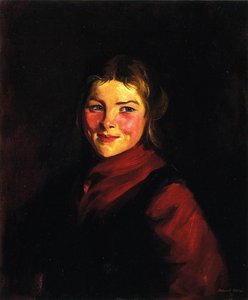
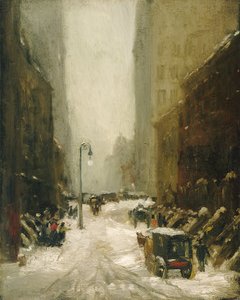
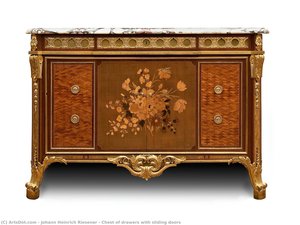
アーティストの略歴
A Legacy of Elegance: The Life and Art of Henri François Riesener
In the grand, sweeping tapestry of French art history, few names evoke the refined grace of the Napoleonic era quite like Henri François Riesener. Born in Paris in 1767, Riesener was a man shaped by both the meticulous precision of craftsmanship and the turbulent winds of revolution. He descended from a prestigious lineage of German cabinetmakers, most notably his father, Jean-Henri Riesener, whose legendary skill in creating exquisite furniture for the French court instilled in the younger Riesener an innate appreciation for fine detail and aesthetic harmony. This heritage provided a foundation of discipline that would later define his approach to the delicate medium of miniature painting and the commanding presence of his larger portraits.
Riesener’s artistic journey was far from a quiet studio existence; it was a life lived amidst the very heart of historical transformation. His formal education brought him under the guidance of masters such as François-André Vincent and the titan of Neoclassicism, Jacques-Louis David. From these mentors, he absorbed the rigorous anatomical accuracy and the dignified, structured compositions that characterized the era. Yet, his horizons were expanded far beyond the borders of Paris. Driven by a spirit of adventure, Riesener joined Napoleon’s army during the Italian campaigns and later traveled to Egypt. These expeditions exposed him to the exoticism of distant cultures and the stark beauty of ancient landscapes, infusing his later work with a subtle psychological depth and a worldly perspective that set him apart from his contemporaries.
Mastery of the Portrait and the Miniature
Upon his return to a post-war Paris, Riesener established himself as a premier portraitist, a role that allowed him to navigate the highest echel's of society. His ability to capture not just the physical likeness, but the very essence of his subjects, made him a favorite among the elite. His canvases served as windows into the Napoleonic age, documenting the faces of power and culture. Whether he was rendering the authoritative presence of Maurice Quay or the intellectual dignity of figures like Charles Maurice de Talleyrand-Périgord, Riesener utilized a Neoclassical technique that emphasized clarity, light, and a sense of timelessness.
Beyond the grand scale of oil portraiture, Riesener found profound success as a miniaturist. This medium required an extraordinary level of patience and a delicate touch, qualities he possessed in abundance. His miniatures were prized for their intimacy, offering a portable piece of art that could be held close to the heart. His repertoire was remarkably diverse, ranging from:
- The commanding portraits of military and political figures such as Eugène de Beauharnais.
- Captivating depictions of celebrated opera singers, which brought a sense of movement and lyricism to his work.
- Intimate studies of the Parisian socialites, including Madame Sallandrouze.
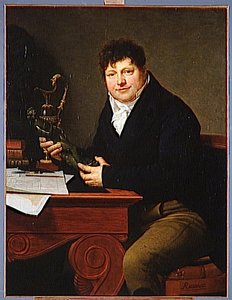
- Tributes to fellow artists, such as his poignant portrait of the sculptor Antoine André Ravrio, now preserved in the Louvre Museum.
Historical Significance and Enduring Impression
The significance of Henri François Riesener lies in his role as a visual chronicler of a pivotal era. As France transitioned from the twilight of the Enlightenment through the fervor of the Revolution and into the grandeur of the First Empire, Riesener’s brush captured the shifting moods of a nation. His work embodies the tension between the structured elegance of Neoclassicism and the burgeoning emotional intensity of Romanticism. Through his portraits, we gain an intimate understanding of the faces that shaped modern Europe, seeing them not merely as historical icons, but as living, breathing individuals caught in the currents of change.
Today, Riesener’s legacy continues to resonate through the prestigious collections of the Louvre and other world-class institutions. His ability to blend the technical precision inherited from his father's craft with the grand stylistic innovations of his teachers ensures that his work remains a vital subject of study for art historians. To look upon a Riesener portrait is to witness the intersection of personal artistry and historical destiny, a testament to a life spent capturing the fleeting beauty and enduring dignity of the human spirit.
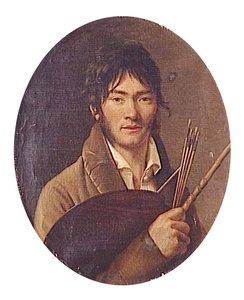
henri françois riesener
1767 - 1828 , France
基本情報
- Artistic Movement Or Style: Neoclassical Portraiture
- Artists Or Movements Influenced By This Artist: ['Classical Portraiture']
- Artists Who Influenced This Artist:
- François-André Vincent
- Jacques-Louis David
- Date Of Birth: Paris, France (1767)
- Date Of Death: 1828
- Full Name: Henri François Riesener
- Nationality: French
- Notable Artworks:
- Portrait de François Adrien Boieldieu
- Portrait of Sofia Apraxina
- Portrait en pied de l’Impératrice Joséphine
- Place Of Birth: Paris
関連記事
アンリ・マティスの傑作25選:色彩と情熱の軌跡|ArtsDot
アンリ・マティスの傑作25選🎨 色彩と情熱が織りなす世界を旅する。フォーヴィスム代表の巨匠、マティスの絵画の魅力と歴史を紐解きます。ArtsDotで高品質なアートプリントや複製画を見つけ、インテリアに芸術的な輝きを✨ Explore the full collection online

White on Canvas: 10 Masterpieces & Timeless Elegance for Your Home Decor
Explore 10 iconic white paintings by Monet, Whistler & Rothko! Discover the stories behind these serene masterpieces and their impact on art history. Find museum-quality reproductions for your home decor at .
The Subtleties of White: Exploring Absence, Light & Symbolism in Art History
Explore the profound symbolism & history of white in art! From ancient purity to modern abstraction, discover how artists have used absence & light. Expert insights from ArtsDot.
Fauvism's Boldest Visions: 10 Masterpieces That Revolutionized Modern Art | ArtsDot
Explore 10 Fauvist masterpieces by Matisse, Derain & Vlaminck that ignited Modern Art! Discover bold colors, expressionist landscapes & the history of this revolutionary movement. Find museum-quality prints at ArtsDot.com.
Henri-Joseph Harpignies: Capturing the Poetic Essence of the French Landscape
Explore the serene landscapes of Henri-Joseph Harpignies, a master of the Barbizon School. Discover his atmospheric paintings, recurring themes & enduring legacy in 19th-century French art. Learn more at ArtsDot.

