

 プレビュー
プレビュー
 プリントを購入
 シェアする
シェアする シェアする
シェアする
 詳細を見る
詳細を見る

 ダウンロード
 似ている作品
 X線調査
X線調査 スライドショー
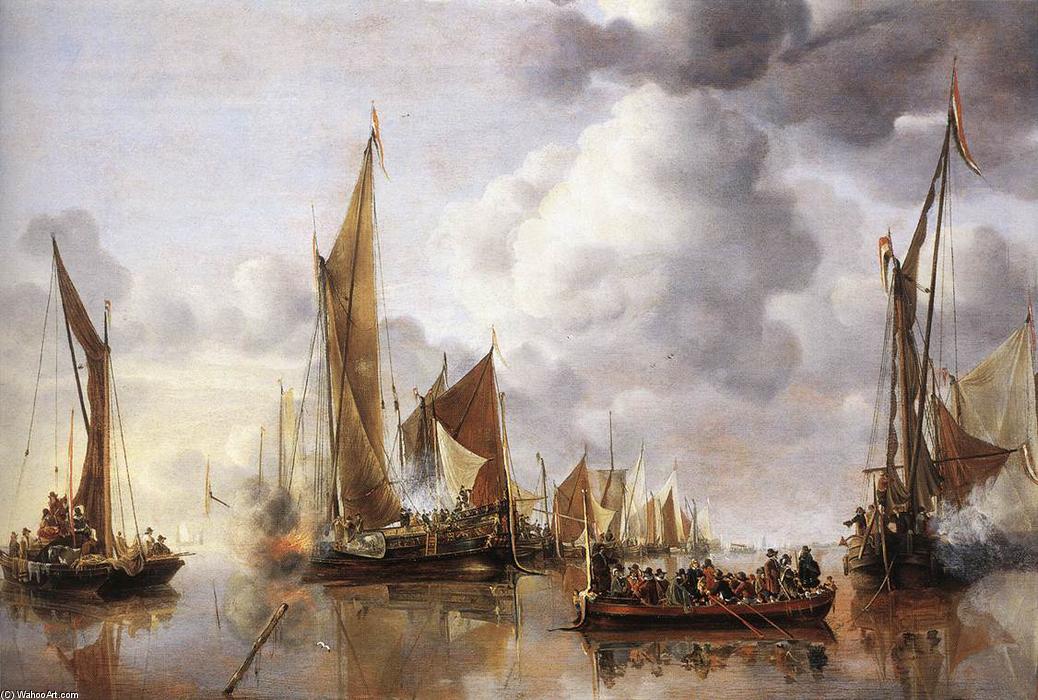
The State Barge Saluted by the Home Fleet
 Oil On Canvas
- WallArt
- Dutch Golden Age
 1650
1650- Early Modern
 64.0 x 93.0 cm
 国立美術館 (Rijksmuseum)
 詳細を見る
詳細を見る
オンラインプレビューをはるかに凌ぐ、高解像度で鮮明なデジタル画像をご購入いただけます。
各ファイルは、社内の専門家が高度なツールと熟練した手作業によるレタッチを用いて、細心の注意を払って準備されています。すべての画像において、卓越した鮮明度、正確な色彩再現性、そして繊細なディテールを保証いたします。
最終ファイルは、プロフェッショナルな編集・印刷環境ですぐにご利用いただけるよう最適化された状態で、72時間以内にメールにてお届けいたします。これは、一流のデザインスタジオ、出版社、ギャラリーから信頼されているものと同等の品質です。
デジタル画像のご注文に付随する特典
高品質なデジタル画像配信を、確かな品質で。
ArtsDot.com を選ぶことは、単に画像を手に入れることではありません。それは、プロの手によって精密に仕上げられ、満足保証が付いた高品質なデジタルアートワークを受け取ることを意味します。ご注文いただいた際に自動的に付随する内容は、以下の通りです:

メールですぐにお届け
ご注文から72時間以内に、高解像度のデジタル画像ファイルがメールでお手元に届きます。すぐにそのままご利用いただけます。

AI技術で最適化されたデジタルファイル
お客様の作品は、高度なAIツールと専門家による手作業の編集を組み合わせてプロフェッショナルに最適化されており、細部のディテール、鮮明さ、そして正確な色再現性を最大限に引き出しています。

一生涯無料の再送サービス
ファイルを誤って削除したり、紛失してしまったりしましたか?ご安心ください。いつでも無料で再送いたします。

輸入手数料は一切かかりません
関税や手数料、配送料を気にすることなく、お気に入りのアートワークをすぐにお楽しみいただけます。デジタルダウンロードは常に免税です。

色彩再現の保証
プロ仕様のツールとカラーマネジメント技術を用いることで、デジタル画像が元の色を最大限に忠実に再現することを保証いたします。

60日間満足保証
ご購入いただいたデジタル画像にご満足いただけない場合は、60日以内であれば、修正または100%の返金(理由を問う必要はありません)をさせていただきます。

100% 返金保証
ご満足いただけない場合は、デジタルファイルを受け取ってから60日以内であれば、理由を問わず全額返金いたします。

まとめ買い割引
3枚購入で10%OFF - 5枚購入で15%OFF - 10枚以上購入で20%OFF。クリエイティブなプロジェクト、ギャラリー、エージェンシーに最適です。
作品の詳細
Jan van de Cappelle: The Mirror of Tranquility
Jan van de Cappelle (1626-1679) stands as a singular figure within the Dutch Golden Age, an artist whose output—a mere handful compared to his contemporaries—commands remarkable distinction. He wasn’t merely a painter; he was an industrial titan and astute collector, inextricably linked to the economic powerhouse of Amsterdam and its burgeoning textile industry. This duality profoundly shaped his artistic vision, resulting in seascapes and winter landscapes imbued with an unparalleled serenity – a stillness that reflects not just the surface waters but also the very heavens above. He is rightfully hailed as “Holland’s outstanding marine painter of 17th century Holland,” a testament to his mastery of capturing atmospheric nuance and conveying profound emotional depth within deceptively simple compositions.- Early Life & Training: Born in Amsterdam in 1624, Jan van de Cappelle possessed an uncommon path to artistic recognition. Unlike many art masters of his time who pursued formal training through academies or apprenticeships, Cappelle’s education was largely self-directed. He honed his skills independently, absorbing influences from artists like Willem van de Velde the Elder and Simon de Vlieger—artists whose stylistic choices he meticulously copied, establishing a foundational connection to the prevailing artistic trends of the era.
- A Dual Career: Cappelle’s life was characterized by remarkable versatility. Alongside his artistic pursuits, he diligently managed his father Franchoy’s expansive dyeworks, specializing in the production of crimson dye—a pigment highly sought after for textiles and considered a symbol of prestige and wealth. This entrepreneurial endeavor provided him with considerable financial stability, allowing him to dedicate himself fully to his art without facing crippling economic pressures.
- The Style of Tranquility: Cappelle’s seascapes are instantly recognizable for their distinctive aesthetic—a profound stillness that dominates the canvases. Unlike many of his peers who depicted turbulent storms and dramatic naval battles, Cappelle favored depictions of calm estuaries or quiet harbor scenes. He skillfully captured the ethereal beauty of dawn or dusk, utilizing muted colors and subtle tonal gradations to convey a sense of contemplative peace.
Technique & Composition: Mastering Atmospheric Illusion
Cappelle’s artistic technique was characterized by meticulous observation and an unwavering commitment to realism—albeit tempered with an expressive sensibility. He achieved his remarkable atmospheric effects through masterful use of glazing, layering translucent washes of pigment over underlying grounds to create luminous surfaces that shimmered with reflected light. This technique allowed him to convincingly reproduce the subtle nuances of weather conditions, particularly the diffused glow of twilight and the hazy expanse of distant horizons. Furthermore, Cappelle’s compositions were carefully balanced, employing geometric principles—such as converging lines—to guide the viewer's eye across the canvas and reinforce the sense of depth. The placement of masts and vessels was deliberate, creating a visual rhythm that mirrored the movement of wind and water.- Glazing & Luminosity: Cappelle’s glazing technique involved applying thin layers of translucent pigment—typically oil paint mixed with resin—over previously painted surfaces. This process created an illusion of depth and luminosity, capturing the way light penetrates through clouds and reflects off the surface of water.
- Converging Lines & Spatial Depth: Cappelle skillfully utilized converging lines—lines that appear to meet at a vanishing point—to create a convincing sense of spatial perspective. By positioning masts and vessels strategically, he drew the viewer’s eye into the scene, reinforcing the impression of distance and grandeur.
Historical Context & Symbolism: Reflecting Dutch Prosperity
Cappelle's artistic output coincided with Amsterdam’s zenith as a global commercial center—a period marked by unprecedented economic growth fueled by trade in textiles and spices. This prosperity permeated all aspects of society, including the arts, fostering an environment of innovation and patronage that nurtured talent like Cappelle’s. His seascapes served not only as aesthetically pleasing representations of nature but also as emblems of Dutch maritime dominance—a reflection of the nation's ambition and confidence during the seventeenth century. The serene stillness depicted in his paintings embodies a philosophical ideal prevalent at the time: a belief in harmony between humanity and the natural world, underpinned by Calvinist piety.- Amsterdam’s Economic Boom: Cappelle’s artistic career flourished amidst Amsterdam's burgeoning economic prosperity—a period characterized by unparalleled trade activity and cultural dynamism.
- Maritime Dominance & Philosophical Ideal: His seascapes conveyed a profound philosophical ideal—the notion of balance between human existence and the natural order—reflecting the spiritual convictions of Calvinist society.
Emotional Impact & Legacy: An Enduring Vision
Despite producing only around 150 paintings during his lifetime, Jan van de Cappelle’s work continues to captivate audiences today with its understated beauty and profound emotional resonance. His seascapes evoke a sense of tranquility and contemplation—a reminder of the sublime grandeur of nature and the importance of inner peace. Cappelle's legacy resides not merely in his technical mastery but also in his ability to convey intangible qualities—such as mood and atmosphere—that transcend time, securing his place among the most revered marine painters of the Dutch Golden Age. His paintings remain treasured examples of artistic excellence, inspiring admiration for their serene compositions and luminous color palettes.関連作品



作家の略歴
The Mirror of Tranquility: The Life and Legacy of Jan van de Cappelle
Jan van de Cappelle stands as a singular, luminous figure within the pantheon of the Dutch Golden Age, an artist whose presence in the art historical canon is defined by a profound, meditative stillness. Unlike many of his contemporaries who produced vast quantities of work, Cappelle’s oeuvre remains remarkably small, yet each piece commands an extraordinary distinction. He was not merely a painter of the sea; he was a man of significant worldly stature, an industrial titan inextricably linked to the economic heartbeat of Amsterdam. As a successful figure in the textile industry and a collector of great taste, his life was a unique duality of commercial prowess and artistic sensitivity. This intersection of wealth and vision allowed him to cultivate a style that does not merely depict the maritime world but captures its very soul—a stillness that reflects both the surface of the water and the infinite heavens above.
Born in Amsterdam in 1624, Jan van de Cappelle followed an unconventional path toward artistic mastery. While many masters of his era were forged in the rigorous fires of formal guild training, Cappelle was largely self-taught, a fact that perhaps contributed to the singular, unburdened quality of his vision. His upbringing was steeped in the technical complexities of industry; his father, Franchoy van de Cappelle, operated a substantial dyeworks specializing in the production of crimson dye. This environment, demanding precision and an intimate understanding of color and chemistry, likely provided Jan with an invaluable foundation for his later explorations of light and atmosphere. While he may have been influenced by the stylistic sensibilities of Simon de Vlieger, whose compositions share a certain structural kinship with his own, Cappelle’s work eventually transcended mere influence to achieve a state of pure, atmospheric grace.
Mastery of Light and Atmospheric Perspective
The true genius of Jan van de Cappelle lies in his ability to manipulate the elements of air and water to create a sense of profound emotional depth. He is often celebrated as Holland’s outstanding marine painter of the 17th century, a title earned through his unparalleled mastery of atmospheric perspective. His technique is most famously realized in the way he mirrors sky formations onto calm, glass-like water surfaces. In works such as Ships at Anchor on a Quiet Sea, the viewer is not merely looking at a maritime scene but is invited into a moment of suspended animation. The subtle gradations of light and the meticulous rendering of clouds create a sense of immense space, where the boundary between the sea and the sky becomes beautifully blurred.
His artistic language draws inspiration from the realism of Willem van de Velde the Elder, yet it possesses a softness that is uniquely his own. Where others might focus on the chaotic energy of naval combat or the ruggedness of the storm, Cappelle sought the quietude found in the aftermath or the anticipation of movement. His compositions often feature:
- The interplay of light and shadow: Capturing the fleeting moments when sunlight pierces through cloud cover to illuminate a single vessel.
- Reflective surfaces: Using the water as a mirror to duplicate the majesty of the Dutch sky, creating a sense of symmetry and peace.
- Atmospheric nuance: A delicate handling of mist, haze, and clarity that gives his landscapes a palpable sense of temperature and humidity.
Historical Significance and Enduring Impact
The historical significance of Jan van de Cappelle extends beyond the aesthetic beauty of his canvases. He represents the pinnacle of the Dutch Golden Age's ability to find the extraordinary within the ordinary. Through his depictions of sailing boats, river scenes, and winter landscapes, he documented the maritime identity of a nation that was then the center of global commerce. Even in his more dynamic works, such as The State Barge Saluted by the Home Fleet, there remains an underlying sense of order and dignity that reflects the structured prosperity of his era.
Though his life ended in 1679, leaving behind a limited collection of masterpieces, his impact on the genre of marine art is immeasurable. He taught subsequent generations how to paint not just what is seen, but what is felt—the weight of the air, the stillness of the tide, and the quiet majesty of the horizon. Today, his works remain essential touchstones for anyone seeking to understand the delicate balance between man, nature, and the light that binds them together. His legacy is one of serenity, a lasting testament to an artist who found the infinite within the tranquil.
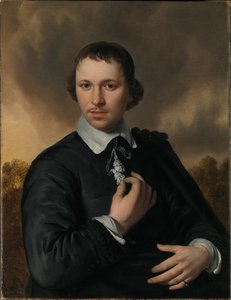
ヤン・ファン・デ・カッペレ
1624 - 1679 , オランダ

