 プレビュー
プレビュー
 シェアする
シェアする シェアする
シェアする
 詳細を見る
詳細を見る

 ダウンロード
 似ている作品
 X線調査
X線調査 スライドショー
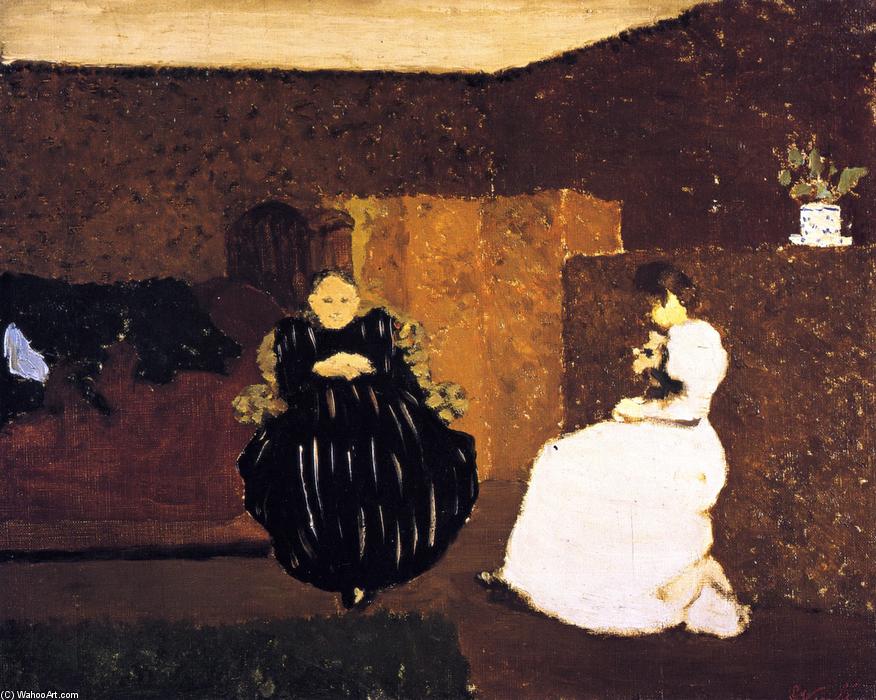
The Chat (also known as Mme Vuillard and Her Daughter - La Causette)


 詳細を見る
詳細を見る
ジークレー/アートプリント
迅速な制作と多彩な仕上げオプションを備えた、ミュージアムクオリティのジークレーまたはキャンバスプリント。 ( 手描きの絵画を購入 画像を購入)




P118B $10

P118H $10

P118W $10

P438Z $10

P508JH $12

P508YH $12

P805H $10

P805Z $10

P919BZ $10

P919G $10

P919XJ $10

P959ZH $10

P968JZ $12

W106C $8

W218G $10

W218JH $8

W218Y $10

W307PJ $10

W316G $10

W316PJ $8

W316Y $10

W398PJ $8

W4111J $10

W500HY $15

W500JH $15

W692G $12

W849H $8

W940BG $15

W953PJ $8




作品のオリジナル比率に合わせた、当店の規定サイズからお選びください。

特定のフレームやスペースに合わせて、ご自身でサイズを指定することも可能です。選択されたサイズが元の画像の比率と一致しない場合、作品をトリミングするか、鏡面反射または単色での塗りつぶしによって画像を拡張いたします。制作を開始する前に、ご確認用のデジタルモックアップをお送りいたします。
画面上のプレビューには、実際のトリミングや拡張は反映されませんのでご注意ください。最終的な構図を正確に確認できるのは、モックアップのみとなります。
カスタムサイズも承っておりますが、元の比率を維持するためには、あらかじめ用意されたリストからサイズを選択することをお勧めいたします。


 ガラスオプションは、110cm未満のサイズでのみご利用いただけます。

The Chat (also known as Mme Vuillard and Her Daughter - La Causette)
ジークレー/アートプリント
複製画のサイズ
-


合計金額
$ 62
作品詳細説明
The Chat (also known as Mme Vuillard and Her Daughter - La Causette)
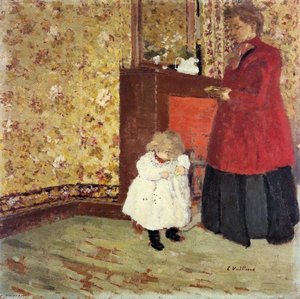
Jean Edouard Vuillard’s “La causette,” painted in 1893, stands as a quintessential example of Post-Impressionism—a movement that fiercely rejected the serene observation of light championed by Impressionists. Instead, Vuillard plunged into the interior world, capturing not just what he saw but also conveying the palpable atmosphere of domestic life and familial connection.
The painting depicts two women seated in a room bathed in soft, diffused light—Vuillard’s mother, Marie Vuillard, and her daughter, Marie Roussel. The composition is deceptively simple: a couch dominates the left side, while a chair occupies the right. However, within this apparent stillness lies a wealth of detail—several vases strategically placed around the room contribute to the overall sense of warmth and intimacy, punctuated by a potted plant on the far right.
Vuillard’s distinctive style is immediately recognizable through his masterful use of color and form. He eschewed Impressionist attempts at capturing fleeting moments of light, opting instead for flattened planes of pigment—a technique heavily influenced by Japanese prints—that create an illusion of depth without resorting to traditional perspective. The palette is muted yet rich, dominated by browns and blacks that serve as a grounding counterpoint to the vibrant hues of the wallpaper.
More than just a depiction of a scene, “La causette” embodies Vuillard’s profound exploration of psychological space. He captures not only the physical arrangement of objects but also the unspoken emotions between the figures—the quiet conversation, the subtle gestures of connection. The artist's keen eye for capturing human emotion is evident in his portrayal of Marie Roussel, who leans awkwardly against the wall, attempting to blend into the room’s background.
The painting’s symbolism resonates deeply with Vuillard’s broader artistic vision. The choice of colors—particularly the yellow of Madame Vuillard’s dress—suggests a radiant presence that commands attention and asserts dominance within the domestic sphere. Similarly, the positioning of the vases serves as a visual anchor, grounding the composition and reinforcing the sense of stability.
Ultimately, “La causette” transcends mere representation; it invites contemplation on themes of motherhood, femininity, and the complexities of human relationships—themes that continue to captivate audiences today. It’s a testament to Vuillard's ability to transform ordinary domestic scenes into canvases brimming with emotion and artistic innovation.
Artist's Background
Jean Edouard Vuillard (1868-1940) was born in Cuiseaux, France—a quiet village nestled in the Jura Mountains. From a young age, he demonstrated an exceptional talent for drawing and painting, honing his skills through self-study and experimentation.
Vuillard’s artistic journey coincided with the rise of Les Nabis—a collective of young French artists who championed a radically new approach to artmaking. Influenced by Japanese prints and seeking to liberate color from Impressionist conventions, Vuillard joined Les Nabis in 1888, forging enduring friendships with fellow visionaries like Maurice Denis and Édouard Vuillard.
Les Nabis’s aesthetic principles—characterized by flattened planes of pigment, muted palettes, and a focus on decorative elements—challenged the prevailing artistic norms of their time. Vuillard embraced these ideas wholeheartedly, developing his own distinctive style that blended observation with imagination—a hallmark of his oeuvre.
Vuillard's prolific output encompassed paintings, prints, decorative commissions, and illustrations—demonstrating his versatility as an artist and cementing his legacy as one of the most influential figures in early modernism. His work continues to inspire artists and collectors alike, securing its place among the masterpieces of French art.
Additional Research
Vuillard’s fascination with Japanese prints profoundly shaped his artistic vision—particularly his exploration of spatial illusion and decorative patterning. He meticulously studied Ukiyo-e compositions, analyzing their use of perspective and color to achieve dramatic effects.
Furthermore, Vuillard's meticulous attention to detail—evident in his depictions of interiors and portraits—reflects a commitment to capturing the nuances of human experience. He sought to convey not just what he saw but also how he felt—a characteristic that distinguishes his work from more purely objective representations.
“La causette” exemplifies Vuillard’s artistic principles—his masterful use of color and form, his exploration of psychological space, and his engagement with symbolic imagery. It stands as a beacon of innovation within the Post-Impressionist movement—a testament to Vuillard's enduring influence on subsequent generations of artists.
Notable Works
Beyond “La causette,” Vuillard produced numerous other celebrated paintings—including “Luncheon at Les Clayes,” “The Child’s Bath 2,” and “Portrait of Madame Matisse”—each showcasing his distinctive style and artistic vision. These works continue to resonate with audiences today, securing Vuillard's place among the most revered artists of the Belle Époque.
関連作品
アーティストの略歴
幼少期と芸術への目覚め
1868年11月11日、フランスのキュイゼーで生まれたジャン=エドゥアール・ヴュイヤールは、画家、装飾家、版画家の道を歩むことになります。彼の人生は、モーリス・ドニやピエール・ボナールらと共に芸術界に革新をもたらした先駆的なグループ「ナビ派」の礎を築くこととなりました。幼い頃から絵を描くことに情熱を注ぎ、その才能を開花させていったヴュイヤールは、伝統的な美術教育を受けながらも、独自の表現を追求し始めます。特に印象主義の影響を受けつつも、より内面的な世界を探求する姿勢が、彼の芸術的特徴を形成していくことになります。ナビ派における活動と色彩の探求
ヴュイヤールは、ナビ派の中心人物として、純粋な色彩の領域に没頭します。日本の浮世絵の影響を受け、装飾的な要素を取り入れながら、平面的な色彩構成を追求しました。彼の室内画は、光と影、パターンとフォルムが織りなす空間効果を探求し、観る者に独特の視覚体験をもたらします。ナビ派の画家たちは、象徴主義やポジティヴィズム哲学の影響を受け、現実世界を直接的に描写するのではなく、内面的な感情や思想を表現することを重視しました。ヴュイヤールの作品は、その色彩と構成によって、単なる写実的な再現を超えた、精神的な深みを持つものとして評価されています。ナビ派解散後と様式の変遷
1900年頃、ナビ派が解散すると、ヴュイヤールはより現実主義的なスタイルへと転換します。風景画や室内画を描きながらも、その色彩は一層鮮やかになり、細部へのこだわりが増していきます。1920年代から30年代にかけては、フランスの産業界や芸術界の著名人たちの肖像画を数多く制作しました。これらの肖像画は、被写体の身近な環境の中で描かれ、その人物の内面的な魅力を引き出すことに成功しています。主要作品と展覧会
ヴュイヤールの作品は、フランス革命に関する美術館であるMusée de la Révolution Françaiseをはじめとする様々な美術館に所蔵されています。代表作には、「危険の中に置かれた祖国」や「ジャン・ド・ラ・バーレ」などがあります。「危険の中に置かれた祖国」は、ギヨーム・ルティエールによって描かれ、アンシャン・レジーム時代に異端の罪で死刑を宣告された若者の姿を描いています。また、「ジャン・ド・ラ・バーレ」は、ジャン・クルーエによって描かれ、宗教的な信念のために処刑された人物の勇気を表現しています。ヴュイヤールの作品は、その色彩と構成、そして主題の深さにおいて、高く評価されています。芸術的遺産と現代への影響
ジャン=エドゥアール・ヴュイヤールのエニグマティックな世界は、革新的な色彩の使い方とフォルムによって、芸術界に多大な足跡を残しました。近代主義の先駆者として、彼の作品は今もなお多くのアーティストにインスピレーションを与え続けています。内面的な感情や思想を表現することを重視したヴュイヤールの姿勢は、キュビズムやフォーヴィスムなどの芸術運動にも影響を与えました。彼の作品を通して、私たちは色彩と光が織りなす美の世界、そして人間の精神の深淵に触れることができるのです。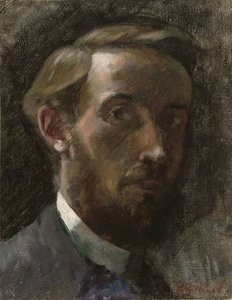
ジャン=エドゥアール・ヴュイヤール
1868 - 1940 , フランス
基本情報
- Artistic Movement Or Style: ナビ派
- Artists Or Movements Influenced By This Artist:
- キュビズム
- フォーヴィスム
- Artists Who Influenced This Artist: ['ポール・ゴーギャン']
- Date Of Birth: 1868年11月11日
- Date Of Death: 1940年6月21日
- Full Name: ジャン=エドゥアール・ヴュイヤール
- Nationality: フランス人
- Notable Artworks:
- 掃く女
- 陽光の室内
- Place Of Birth (City And Country): フランス、キュイゼー
関連記事
Intimate Interiors & Poetic Ambiguity: Exploring the Vision of Jean-Édouard Vuillard
Discover the captivating world of Jean-Édouard Vuillard, a key figure of the Nabis movement. Explore his intimate interiors, unique style & lasting influence on modern art. Learn more at ArtsDot.

葛飾北斎:25の傑作が語る浮世絵の世界 - ArtsDot
葛飾北斎の25選:『神奈川沖浪裏』や『富嶽三十六景』など、浮世絵の世界を深く探求。木版画の技法と日本美術の美をArtsDotで。高品質なアートプリントで空間に感動を。コレクションはこちら。
没後印象派を彩る至宝:時代を定義した10大名作
時代を彩る没後印象派の名作10選。ゴッホ、セザンヌら巨匠の傑作を深く掘り下げ、その物語と技法に迫ります。色彩豊かなアートで空間を演出。ArtsDot.comで至高のアートプリントを見つけませんか?

Giclée Prints: Archival Quality & Aesthetic Nuances for the Discerning Collector
Explore the world of giclée prints with ArtsDot. Learn about archival quality, aesthetic nuances & investment potential. Expert guidance for discerning art collectors seeking museum-quality reproductions and lasting value.
Beyond Impressionism: Exploring the Emotional Depth of Post-Impressionist Painting
Explore the profound emotional depth & innovative techniques of Post-Impressionism with ArtsDot. Discover Cézanne, Van Gogh, Gauguin & more – and their lasting impact on modern art.