

 プレビュー
プレビュー
 プリントを購入
 シェアする
シェアする シェアする
シェアする
 詳細を見る
詳細を見る

 ダウンロード
 似ている作品
 X線調査
X線調査 スライドショー
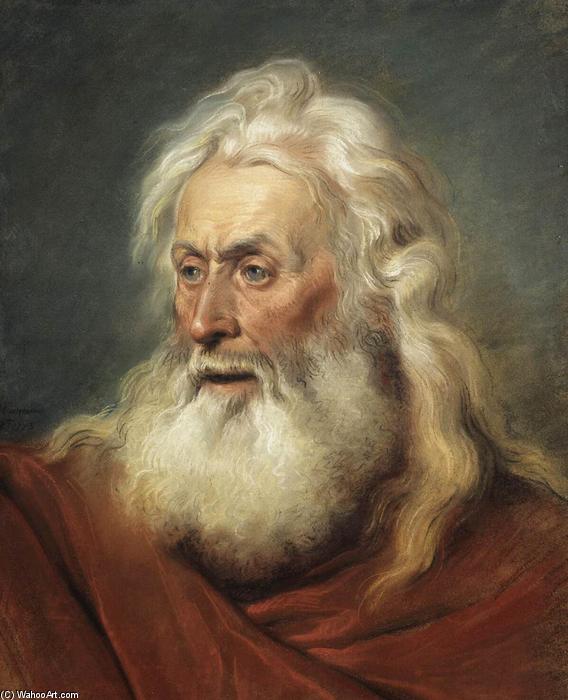
Head of an Apostle
 Pastel
- WallArt
- Symbolist Art
 1773
1773- Early Modern
 60.0 x 50.0 cm
 エルミタージュ美術館
 詳細を見る
詳細を見る




P118B $10

P118H $10

P118W $10

P438Z $10

P508JH $12

P508YH $12

P805H $10

P805Z $10

P919BZ $10

P919G $10

P919XJ $10

P959ZH $10

P968JZ $12

W106C $8

W218G $10

W218JH $8

W218Y $10

W307PJ $10

W316G $10

W316PJ $8

W316Y $10

W398PJ $8

W4111J $10

W500HY $15

W500JH $15

W692G $12

W849H $8

W940BG $15

W953PJ $8




作品のオリジナル比率に合わせた、当店の規定サイズからお選びください。

特定のフレームやスペースに合わせて、ご希望のサイズをご入力いただけます。選択されたサイズが元の画像の比率と異なる場合、アートワークをトリミングするか、手描きで要素を追加して絵画を拡張いたします。デジタルモックアップ を制作し、制作開始前にご確認(承認)をいただきます。
画面上のプレビューは、実際のトリミングや拡張を正確に反映しているものではありません。最終的な構図は、モックアップによってのみ正確にご確認いただけます。
カスタムサイズもご利用いただけますが、元の比率を維持するためには、あらかじめ用意されたリストからサイズを選択することをお勧めいたします。
ご注文後、ArtsDot.com チームより詳細な指示をお送りするとともに、仕上がりイメージ(モックアップ)をご提供いたします。


 ガラスオプションは、110cm未満のサイズでのみご利用いただけます。

Head of an Apostle
複製技法
複製画のサイズ
-


合計金額
$ 263
A Soul Captured in Pastel: The Ethereal Presence of an Apostle
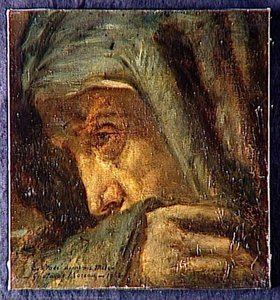
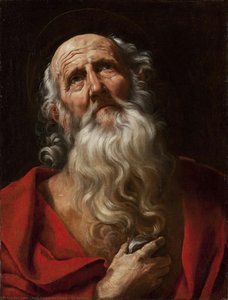
In the quiet, shadowed corners of art history, few mediums possess the ability to capture the flickering light of human emotion quite like pastel. Jean Michel Moreau’s “Head of an Apostle,” completed in 1773, stands as a profound testament to this delicate power. The portrait does not merely present a face; it invites the viewer into a private moment of spiritual introspection. As we gaze upon the apostle, we are met with a countenance etched by wisdom and a palpable sense of sorrow. His deep-set eyes, rendered with remarkable precision, seem to look through the physical realm toward something eternal, while the subtle furrow of his brow suggests an inner struggle between earthly suffering and divine peace. It is a work that transcends simple portraiture, becoming instead a meditation on the weight of faith.
The technical mastery displayed in this piece is nothing short of extraordinary, particularly considering the ephemeral nature of the medium. Moreau utilized pastel crayons to achieve a luminous gradation of tones that oil paints often struggle to replicate. By layering fine pigments, he created a skin texture that feels both remarkably real and hauntingly ethereal. The artist’s deliberate choice to keep the background muted and indistinct serves a vital compositional purpose: it strips away all worldly distractions, forcing an intimate confrontation between the subject and the observer. Every stroke of the pastel contributes to the tactile richness of the work, from the soft, flowing strands of the apostle's white beard to the heavy, dignified folds of his crimson garment, which provides a singular, striking note of color against the surrounding gloom.
Symbolism and the Legacy of the Symbolist Spirit
While the technical execution commands attention, it is the symbolic depth of the work that ensures its enduring relevance for collectors and lovers of fine art. Though Moreau’s life and career are often discussed through the lens of his lineage and his training in the classical traditions of Paris, this particular work anticipates the psychological complexity that would later define the Symbolist movement. The apostle serves as an archetype—a vessel for universal human experiences of contemplation, grief, and reverence. The red drapery, draped heavily over his shoulder, acts as a visual anchor, symbolizing both the passion of his calling and the sacrificial nature of his devotion.
For the discerning interior designer or art enthusiast, "Head of an Apostle" offers more than just aesthetic beauty; it provides a focal point of profound gravity. When placed within a curated space, such as a study, a library, or a sophisticated gallery wall, the painting acts as a silent interlocutor, adding a layer of historical weight and intellectual depth to the environment. It is a piece that rewards prolonged observation, revealing new nuances in its soft shadows and light-drenched highlights each time it is viewed. To possess a reproduction of this masterpiece is to bring a fragment of the Hermitage’s storied collection into one's own home, fostering an atmosphere of timelessness and quiet contemplation.
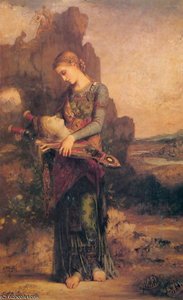
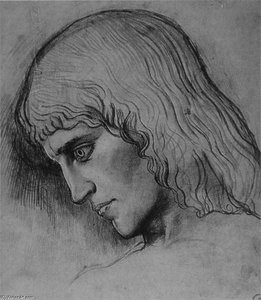
関連作品
アーティストの略歴
A Visionary of the Symbolist Soul
Born in the vibrant, intellectual heart of Paris in 1826, Jean Michel Moreau, often remembered as Moreau le Jeune, emerged as a profound architect of the Symbolist imagination. His life and work were deeply embedded in an era that sought to look beneath the surface of reality, moving away from the literalism of naturalism toward the enigmatic realms of dreams and myth. Descended from a lineage of artistic excellence—his father, Louis Gabriel Moreau, was a celebrated painter himself—Jean Michel was destined for a life defined by the brush and the burin. His early training at the École Supérieure des Beaux-Arts provided him with a rigorous foundation in classical sculpture and drawing, yet his spirit always yearned for something more ethereal than the mere imitation of form.
The trajectory of Moreau’s career was irrevocably shaped by his mentorship under the legendary Gustave Moreau. Under this tutelage, he did not merely learn technique; he learned to perceive the unseen. While many of his contemporaries were captivated by the fleeting, sun-drenched moments of Impressionism, Moreau le Jeune turned his gaze inward and backward, toward the ancient, the esoteric, and the psychological. He became a master of conveying subjective truths, utilizing a visual language that favored allegory over observation. His work serves as a bridge between the classical traditions of his training and the burgeoning modern preoccupation with the subconscious mind.
The Language of Symbolism and Myth
To encounter a work by Moreau is to enter a dreamscape where the boundaries between the physical and the spiritual are perpetually blurred. His aesthetic was a deliberate rebellion against the materialism of the late 19th century, seeking instead to capture the essence of myth and folklore. Through his meticulous engravings and evocative paintings, he explored themes that resonated with the philosophical currents of his time, drawing inspiration from the profound works of Nietzsche and the operatic grandeur of Wagner. His compositions often feature enigmatic figures and haunting landscapes that seem to exist in a state of eternal twilight.
The technical mastery of Moreau le Jeune allowed him to breathe life into these abstract concepts. Whether through the delicate precision of an engraving or the rich, atmospheric layers of a painting, he achieved a sense of profound stillness and mystery. His notable works are characterized by:
- Allegorical Depth: The use of mythological creatures and biblical figures to represent complex human emotions and spiritual struggles.
- Atmospheric Color: A palette that favors evocative, often somber tones to evoke a sense of nostalgia and introspection.
- Intricate Detail: A commitment to fine line work and composition that draws the viewer into the intricate textures of his dreamlike worlds.
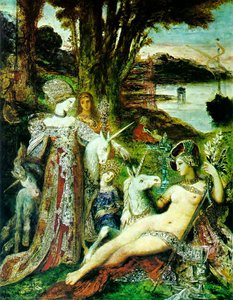
Among his most enduring contributions to the art canon is “The Unicorn,” a piece that exemplifies his ability to marry the fantastical with the tangible, creating an image that lingers in the mind long after the viewer has departed. Similarly, works such as “Head of an Apostle” demonstrate his capacity for intense psychological portraiture, stripping away the external world to reveal the spiritual weight of his subjects.
Legacy and Historical Significance
The historical significance of Jean Michel Moreau lies in his role as a pivotal figure in the development of the Symbolist movement. He helped cultivate an artistic environment where the internal landscape of the human psyche was deemed just as worthy of exploration as the external world. By integrating classical mastery with a modern, subjective sensibility, he paved the way for future generations of artists to explore abstraction and surrealism.
Though his name may sometimes be overshadowed by the more famous Gustave Moreau, the legacy of Moreau le Jeune remains vital. He stands as a testament to the power of art to act as a vessel for the intangible, reminding us that the most profound truths are often found not in what we see with our eyes, but in what we feel within our souls. His life, spanning from the height of French academic tradition to the dawn of modern psychological exploration, remains a cornerstone of 19th-century European art.
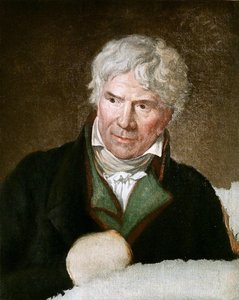
jean michel moreau (moreau le jeune)
1826 - 1898 , France
基本情報
- Artistic Movement Or Style: Symbolist Art
- Artists Who Influenced This Artist: ['Gustave Moreau']
- Date Of Birth: Paris, France (1826)
- Full Name: Jean Michel Moreau le jeune
- Nationality: French
- Notable Artworks:
- Head of an Apostle
- Banquet Given in the Presence of the King
- The Toilet of Bathsheba
- Place Of Birth: Paris
関連記事

Giclée Prints: Archival Quality & Aesthetic Nuances for the Discerning Collector
Explore the world of giclée prints with ArtsDot. Learn about archival quality, aesthetic nuances & investment potential. Expert guidance for discerning art collectors seeking museum-quality reproductions and lasting value.

Echoes of Time: Exploring the Enduring Appeal & Historical Context of Vintage Art Prints
Explore the captivating world of vintage art prints! Discover their history, collecting tips & enduring appeal. Expert insights on chromolithography and building a legacy collection with ArtsDot.

The Enduring Legacy of Fine Art Prints: Technique, History & Aesthetic Impact
Explore the rich history & techniques of fine art prints. Discover investment potential, assess authenticity, and learn how to preserve your collection with expert guidance. Trusted insights for discerning collectors.

The Subtleties of Pastel: A Comprehensive Exploration of Technique, History & Emotional Resonance
Explore the captivating world of pastel art! Discover its rich history, Impressionistic masters like Degas, emotional power & unique techniques. Find museum-quality reproductions at ArtsDot.
The Enduring Legacy of Printmaking: Techniques, Themes & Artistic Innovation Across Centuries
Explore the rich history of printmaking with ArtsDot. Discover techniques from intaglio to lithography, learn about collecting valuable prints & find museum-quality reproductions. Expert insights for art enthusiasts and collectors.

