

 プレビュー
プレビュー
 シェアする
シェアする シェアする
シェアする
 詳細を見る
詳細を見る

 ダウンロード
 似ている作品
 X線調査
X線調査 スライドショー
 統計情報
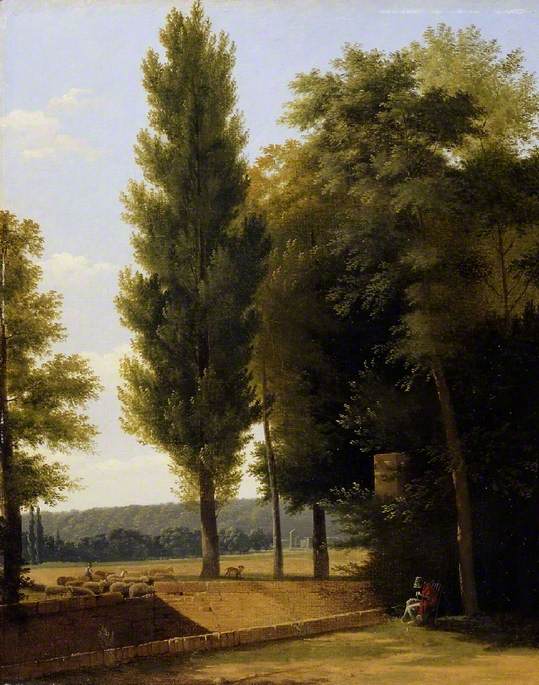
統計情報Landscape with Sheep and a Woman Sewing
 Oil On Canvas
- WallArt
- Romantic Landscape
 1805
1805 41.0 x 31.0 cm
 Fitzwilliam College
 詳細を見る
詳細を見る
ジークレー/アートプリント
迅速な制作と多彩な仕上げオプションを備えた、ミュージアムクオリティのジークレーまたはキャンバスプリント。 ( 手描きの絵画を購入 デジタル画像販売へ切り替え)




P118B $10

P118H $10

P118W $10

P438Z $10

P508JH $12

P508YH $12

P805H $10

P805Z $10

P919BZ $10

P919G $10

P919XJ $10

P959ZH $10

P968JZ $12

W106C $8

W218G $10

W218JH $8

W218Y $10

W307PJ $10

W316G $10

W316PJ $8

W316Y $10

W398PJ $8

W4111J $10

W500HY $15

W500JH $15

W692G $12

W849H $8

W940BG $15

W953PJ $8




作品のオリジナル比率に合わせた、当店の規定サイズからお選びください。

特定のフレームやスペースに合わせて、ご自身でサイズを指定することも可能です。選択されたサイズが元の画像の比率と一致しない場合、作品をトリミングするか、鏡面反射または単色での塗りつぶしによって画像を拡張いたします。制作を開始する前に、ご確認用のデジタルモックアップをお送りいたします。
画面上のプレビューには、実際のトリミングや拡張は反映されませんのでご注意ください。最終的な構図を正確に確認できるのは、モックアップのみとなります。
カスタムサイズも承っておりますが、元の比率を維持するためには、あらかじめ用意されたリストからサイズを選択することをお勧めいたします。


 ガラスオプションは、110cm未満のサイズでのみご利用いただけます。

Landscape with Sheep and a Woman Sewing
ジークレー/アートプリント
複製画のサイズ
-


合計金額
$ 62
Jean-Victor Bertin’s “Landscape with Sheep and a Woman Sewing” – A Moment of Classical Reverie
Jean-Victor Bertin's "Landscape with Sheep and a Woman Sewing," painted circa 1805, isn't merely a depiction of a pastoral scene; it’s a carefully constructed tableau designed to evoke the serenity and intellectual contemplation associated with classical antiquity. Bertin, a student of Pierre-Henri de Valenciennes, skillfully blended the burgeoning Romantic sensibility with a rigorous adherence to Neoclassical principles, creating an image that feels both deeply rooted in tradition and subtly imbued with a sense of quiet introspection. The painting transports us to a sun-drenched hillside, where the muted tones of the landscape—ochres, greens, and blues—establish a harmonious balance, mirroring the idealized beauty championed by artists like Valenciennes.
The composition itself is meticulously arranged. A woman, seated on a simple bench beneath a spreading tree, engages in the quiet act of sewing. Her posture suggests contentment and absorption, while her presence anchors the scene with an element of human connection within the vastness of nature. Scattered across the foreground are several sheep, rendered with a delicate attention to detail that speaks to Bertin’s mastery of observation. They aren't simply livestock; they contribute to the overall sense of tranquility and reinforce the painting’s theme of harmonious coexistence between humanity and the natural world. The inclusion of a chair and potted plant adds subtle domesticity, hinting at a retreat from the outside world into a space of peaceful contemplation.
A Study in Light and Color – Bertin's Technique
Bertin’s technique is characterized by a remarkable restraint and a deep understanding of color theory. He employs a limited palette—primarily earth tones—to create a sense of atmospheric depth and luminosity. The light, diffused and warm, seems to emanate from an unseen source, bathing the scene in a soft glow. Notice how he uses subtle gradations of tone to model the forms of the sheep, the tree branches, and the woman’s garments, creating a convincing illusion of three-dimensionality. Bertin's brushwork is smooth and controlled, reflecting his commitment to classical precision. He avoids dramatic contrasts or overly expressive gestures, opting instead for a more understated approach that emphasizes the beauty of observation and restraint.
The painting’s surface possesses a remarkable sheen, achieved through careful layering of thin glazes of oil paint. This technique not only enhances the luminosity but also contributes to the overall sense of depth and atmosphere. The meticulous detail evident in the rendering of the sheep's wool and the woman’s hands speaks to Bertin’s dedication to capturing the nuances of texture and form.
Historical Context and Symbolism
“Landscape with Sheep and a Woman Sewing” was created during a period of significant social and political upheaval in France—the aftermath of the French Revolution. Despite the turbulence of the era, artists like Bertin sought to create works that offered solace and inspiration through the celebration of beauty and harmony. The painting’s emphasis on nature, contemplation, and human connection can be interpreted as a reaction against the chaos and violence of the revolution, representing a yearning for stability and order.
The woman sewing holds particular symbolic significance. It's a timeless image—a representation of domesticity, industry, and the quiet dignity of everyday life. The act of sewing itself is laden with meaning, suggesting creation, repair, and the continuity of tradition. It’s a subtle reminder that even in the midst of grand landscapes and idealized scenes, the simple pleasures of human existence are equally worthy of celebration.
A Legacy of Classical Reverie
Jean-Victor Bertin's "Landscape with Sheep and a Woman Sewing" stands as a testament to his skill as a landscape painter and his deep appreciation for classical art. It’s a painting that invites the viewer to slow down, observe carefully, and contemplate the beauty of the natural world—a timeless reminder of the enduring power of art to transport us to another place and time.
関連作品
アーティストの略歴
A Master of Classical Reverie: The World of Jean-Victor Bertin
Jean-Victor Bertin, a name perhaps less immediately recognized than some of his contemporaries, occupies a significant and fascinating niche in the landscape painting of late 18th and early 19th century France. Born in Paris in 1767, Bertin’s artistic journey unfolded against a backdrop of revolutionary upheaval and shifting aesthetic ideals. He wasn't merely documenting scenery; he was crafting evocative atmospheres steeped in classical allusion and imbued with a distinctly Romantic sensibility. His canvases weren’t simply views, but portals to imagined worlds where the grandeur of antiquity resonated within the natural world.
Bertin’s formal training began under Pierre-Henri de Valenciennes, a pivotal figure in establishing landscape painting as a respected genre within the French Académie Royale de Peinture et de Sculpture. Valenciennes instilled in his pupil a rigorous approach to observation and composition, emphasizing direct study from nature – a practice that would become central to Bertin’s method. In 1785, he furthered his education under Gabriel-François Doyen, solidifying his academic foundation. This early grounding proved crucial as Bertin navigated the competitive landscape of the Salon exhibitions, participating regularly from 1793 until his death in 1842. His work consistently demonstrated a mastery of technique and an unwavering commitment to classical principles, even as artistic tastes began to evolve.
Influences and Artistic Development
The shadow of Nicolas Poussin looms large over Bertin’s oeuvre. Poussin's influence is not merely stylistic; it represents a philosophical alignment with the ideals of order, clarity, and intellectual rigor that characterized classical art. Bertin absorbed Poussin’s penchant for carefully constructed compositions, populated with architectural ruins and figures engaged in contemplative activities. However, Bertin didn’t simply imitate his predecessor. He infused Poussin's cool rationality with a burgeoning Romantic sensibility – a heightened emotional response to nature and a fascination with the sublime. His landscapes are not cold or sterile; they possess an atmospheric depth and a sense of melancholy that foreshadow the Romantic movement’s embrace of emotion and individual experience.
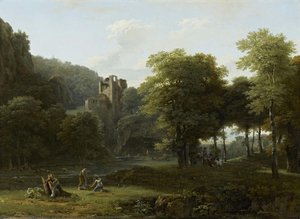
Bertin’s travels, particularly his inspiration drawn from Italy, played a crucial role in shaping his artistic vision. The Italian landscape – with its ancient ruins, dramatic light, and evocative atmosphere – provided him with a wealth of motifs and themes. He wasn't interested in simply replicating the scenery; he sought to capture the *spirit* of these places, imbuing them with historical resonance and emotional weight. This is evident in works like Paysage, where Roman ruins are seamlessly integrated into a sweeping vista, creating a sense of timelessness and poetic contemplation.
Recognition and Legacy
Bertin’s talent was recognized during his lifetime, though perhaps not to the extent it deserved. He received a ‘prix d'encouragement’ in 1799, followed by a first-class gold medal in 1808 – accolades that affirmed his standing within the artistic establishment. In 1822, he was honored with the Légion d'honneur, a testament to his contributions to French art. Despite these honors, Bertin faced financial difficulties in his later years, continuing to paint and exhibit even as his circumstances became more challenging.
Beyond his own artistic achievements, Bertin’s legacy lies in his role as a teacher. He mentored several prominent artists who would go on to shape the course of French painting, including Michallon, Cogniet, Boisselier, and perhaps most notably, Jean-Baptiste Camille Corot. He instilled in these students not only technical skill but also a deep appreciation for the classical tradition and a commitment to direct observation from nature. His influence can be seen in their works – a shared emphasis on composition, atmosphere, and a reverence for the natural world.
A Lasting Impression
Bertin’s paintings, such as Classical Landscape and Le château de la Reine Blanche aux étangs de Commelles, continue to captivate viewers with their serene beauty and evocative power. They offer a glimpse into a world where classical ideals coexist harmoniously with Romantic sensibilities – a testament to Bertin’s unique artistic vision. He stands as a bridge between two eras, embodying the transition from Neoclassicism to Romanticism while remaining firmly rooted in the traditions of French landscape painting. His work reminds us of the enduring power of art to transport us to other times and places, inviting us to contemplate the beauty and mystery of the world around us.
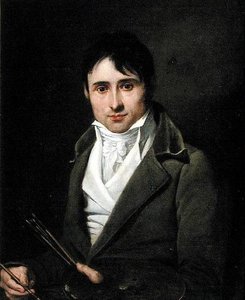
Jean-Victor Bertin
1767 - 1842 , France
基本情報
- Artistic Movement Or Style: Neoclassicism, Romanticism
- Artists Or Movements Influenced By This Artist:
- Michallon
- Cogniet
- Boisselier
- Corot
- Artists Who Influenced This Artist: ['Nicolas Poussin']
- Date Of Birth: 1767
- Date Of Death: 1842
- Full Name: Jean-Victor Bertin
- Nationality: French
- Notable Artworks:
- Festival of Pan
- Offering to Venus
- Cicero's return
- Flight of Angelica
- Festival of Bacchus
- Place Of Birth: Paris, France
関連記事

Evocations of Place: A Historical Journey Through Landscape Art
Explore the rich history of landscape art with ArtsDot. Discover renowned artists, movements like Impressionism & Romanticism, and expert guidance for collecting timeless pieces. Find your perfect serene escape today!

ロマン派ランドスケープ:時代を彩る巨匠の10選|アートとインテリアの世界
ロマン派絵画の時代を彩る10選。巨匠たちの風景が織りなす感動の世界へ。ターナー、ルーベンスなど、名作の裏話と高精細複製でアートをお部屋に。ArtsDot.comで至福のアート体験を。
Neo-Classicism's Greatest Hits: 10 Masterpieces for Your Home |
Journey through Neo-Classicism's finest! Explore 10 iconic masterpieces by David, Ingres & Canova. Discover art history, techniques & timeless beauty – perfect for inspiring your home decor. Find museum-quality reproductions at

ジョン・コンスタブルの傑作25選:英国風景画の巨匠が描く自然と光の詩 | ArtsDot
ジョン・コンスタブルの傑作25選。英国風景画の巨匠が描く自然と光の詩の世界へ。ロマン主義を代表する絵画、デダム・ヴェールやヘイ・ウェインなど、ArtsDotで高品質なアートプリントをお楽しみください。インテリアに深みと感動を。コレクションはこちら。
Paul Huet: Capturing the Essence of French Romanticism Through Light and Landscape
Explore the captivating world of Paul Huet (1803-1869), a master of French Romantic landscape painting. Discover his influence on Barbizon & Impressionism, and browse high-quality reproductions at ArtsDot.