

 プレビュー
プレビュー
 プリントを購入
 シェアする
シェアする シェアする
シェアする
 詳細を見る
詳細を見る

 ダウンロード
 似ている作品
 X線調査
X線調査 スライドショー
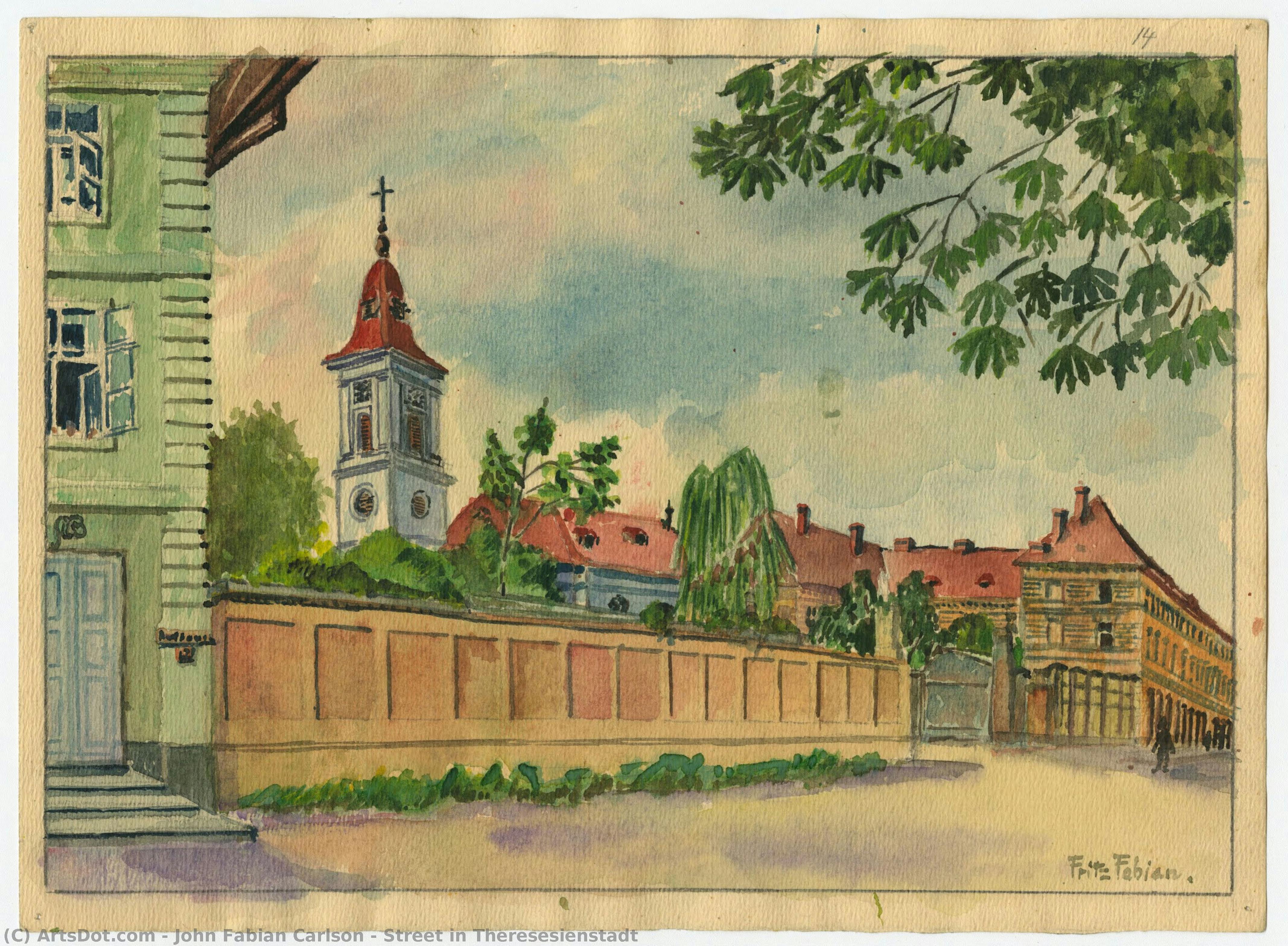
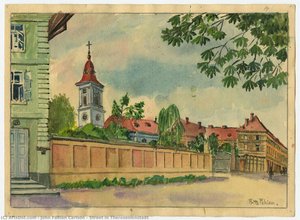
Street in Theresesienstadt
 Watercolor
- WallArt
- Impressionism
 1944
1944- Modern
 30.0 x 22.0 cm
 Leo Baeck Institute
 詳細を見る
詳細を見る
オンラインプレビューをはるかに凌ぐ、高解像度で鮮明なデジタル画像をご購入いただけます。
各ファイルは、社内の専門家が高度なツールと熟練した手作業によるレタッチを用いて、細心の注意を払って準備されています。すべての画像において、卓越した鮮明度、正確な色彩再現性、そして繊細なディテールを保証いたします。
最終ファイルは、プロフェッショナルな編集・印刷環境ですぐにご利用いただけるよう最適化された状態で、72時間以内にメールにてお届けいたします。これは、一流のデザインスタジオ、出版社、ギャラリーから信頼されているものと同等の品質です。
デジタル画像のご注文に付随する特典
高品質なデジタル画像配信を、確かな品質で。
ArtsDot.com を選ぶことは、単に画像を手に入れることではありません。それは、プロの手によって精密に仕上げられ、満足保証が付いた高品質なデジタルアートワークを受け取ることを意味します。ご注文いただいた際に自動的に付随する内容は、以下の通りです:

メールですぐにお届け
ご注文から72時間以内に、高解像度のデジタル画像ファイルがメールでお手元に届きます。すぐにそのままご利用いただけます。

AI技術で最適化されたデジタルファイル
お客様の作品は、高度なAIツールと専門家による手作業の編集を組み合わせてプロフェッショナルに最適化されており、細部のディテール、鮮明さ、そして正確な色再現性を最大限に引き出しています。

一生涯無料の再送サービス
ファイルを誤って削除したり、紛失してしまったりしましたか?ご安心ください。いつでも無料で再送いたします。

輸入手数料は一切かかりません
関税や手数料、配送料を気にすることなく、お気に入りのアートワークをすぐにお楽しみいただけます。デジタルダウンロードは常に免税です。

色彩再現の保証
プロ仕様のツールとカラーマネジメント技術を用いることで、デジタル画像が元の色を最大限に忠実に再現することを保証いたします。

60日間満足保証
ご購入いただいたデジタル画像にご満足いただけない場合は、60日以内であれば、修正または100%の返金(理由を問う必要はありません)をさせていただきます。

100% 返金保証
ご満足いただけない場合は、デジタルファイルを受け取ってから60日以内であれば、理由を問わず全額返金いたします。

まとめ買い割引
3枚購入で10%OFF - 5枚購入で15%OFF - 10枚以上購入で20%OFF。クリエイティブなプロジェクト、ギャラリー、エージェンシーに最適です。
A Somber Glimpse into History: Street in Theresesienstadt
In the delicate, translucent layers of John Fabian Carlson’s 1944 watercolor, Street in Theresesienstadt, we encounter a scene that transcends mere landscape painting to become a profound historical witness. While Carlson is celebrated as a master of luminous winter landscapes and the ethereal glow of American Impressionism, this particular work carries a weight far heavier than the soft snowfall of his more famous compositions. The watercolor captures a street scene within the confines of the Theresienstadt concentration camp, presenting a view that is simultaneously mundane and hauntingly significant. Through his expert command of the medium, Carlson invites the viewer to walk alongside the figures in the street, navigating a world defined by both architectural permanence and human fragility.
The composition is structured around the stark reality of enclosure, where a formidable brick wall serves as a boundary between the town and the unknown. A church rises above the skyline, its presence offering a silent, spiritual sentinel over the inhabitants below. Carlson utilizes the fluid nature of watercolor to create a sense of atmosphere that feels both airy and oppressive. The light, though captured with his signature impressionistic touch, does not merely illuminate; it exposes the quiet movement of people traversing the cobblestones. Small details, such as the two birds caught in flight and the subtle presence of a clock in the lower corner, ground the piece in a fleeting moment of time, reminding us that even within the most harrowing historical contexts, life continues its rhythmic, albeit shadowed, progression.
Technically, the painting showcases Carlson’s ability to balance fine detail with broad, emotive washes. The way the pigment settles into the paper creates a textured depth that mimics the grit of the street and the weathered surfaces of the architecture. For the collector or interior designer, this piece offers more than just aesthetic beauty; it provides a conversational centerpiece that demands reflection. It is an artwork of immense emotional gravity, suitable for spaces dedicated to contemplation, history, or the preservation of memory. To possess a reproduction of this work is to hold a fragment of a difficult truth, rendered with the grace and technical mastery of a pioneer of the American Impressionist movement.
関連作品
作家の略歴
The Luminous Silence: The Life and Legacy of John Fabian Carlson
In the quietude of a frozen landscape, where the world seems to hold its breath beneath a heavy blanket of white, one finds the true essence of John Fabian Carlson. A Swedish-born American Impressionist, Carlson possessed a rare, meditative ability to translate the biting chill of winter into a visual symphony of light and texture. Born on May 5, 1874, in the pastoral landscapes of Kolsebo, Sweden, his early years were steeped in the folklore and rugged natural beauty of his homeland. This foundational connection to the earth would later manifest in his American works as a profound sensitivity to the atmospheric shifts of the seasons, particularly the ethereal, crystalline moments that define the winter solstice.
After emigrating to the United States in 1884 and settling in Buffalo, New York, Carlson began a rigorous artistic journey that would bridge European tradition with American innovation. His education at the Art Students League of Buffalo under Lucius Wolcott Hitchcock—a student of the great masters Renoir and Degas—provided him with a meticulous foundation in observation. This training instilled in him a lifelong dedication to capturing the fleeting nuances of light. As his talent blossomed, Carlson sought further refinement, eventually securing a scholarship to the Byrdcliffe Colony in Woodstock, New and York. It was within this vibrant artistic community, alongside luminaries such as Robert Henri, that Carlson’s fascination with the grandeur of nature solidified, setting the stage for his emergence as a master of the landscape.
A Mastery of Light and Texture
Carlson’s technical prowess lay in his ability to manipulate medium and movement to evoke the tactile reality of snow and ice. Whether working in the fluid, translucent layers of watercolor or the robust, impasto textures of oil, his work remained anchored in the Tonalist tradition. He did not merely paint a scene; he built an atmosphere. His technique often involved layering thin washes of color to create depth, followed by vigorous, textured brushstrokes that mimicked the uneven crust of a snow-covered mountainside or the delicate frost clinging to a woodland branch.
His repertoire was as diverse as the landscapes he traversed. While most celebrated for his serene, snow-laden vistas, Carlson also explored the rugged majesty of the Canadian Rockies and the sweeping expanses of the American Far West. His ability to balance fine detail with broad, emotive washes allowed him to capture both the microscopic beauty of a frozen leaf and the overwhelming scale of a mountain range. This duality made his work deeply engaging, inviting viewers to wander through his compositions, discovering quiet details hidden within the vast, white silence.
The Educator and the Historical Witness
Beyond the canvas, Carlson was a pivotal figure in the American art landscape as a teacher and author. He was a co-founder of the Woodstock School of Landscape Painting and established his own namesake school, leaving an indelible mark on generations of aspiring artists. His 1928 publication, Elementary Principles of Landscape Painting (later known as Carlson's Guide to Landscape Painting), remains a testament to his deep understanding of the mechanics of light, color, and composition.
Yet, there is a poignant depth to Carlson’s legacy that extends beyond the tranquil beauty of his winter scenes. In the twilight of his life, his work took on a somber, historical weight. His 1944 watercolor, Street in Theresesienstadt, serves as a haunting departure from his usual pastoral themes. In this piece, the artist’s mastery of light is used to expose the stark reality of a concentration camp street, where the architectural permanence of brick walls meets the fragile movement of human life. This ability to pivot from the sublime beauty of nature to the profound gravity of human history cements John Fabian Carlson not just as a painter of landscapes, but as a profound witness to the enduring complexity of the human experience.
プロフィール概要
- Artistic Movement Or Style: Impressionism
- Artists Or Movements Influenced By This Artist: ['American Impressionism']
- Artists Who Influenced This Artist: ['Lucius Wolcott Hitchcock']
- Date Of Birth: May 5, 1874
- Date Of Death: May 19, 1945
- Full Name: John Fabian Carlson
- Nationality: Swedish-American
- Notable Artworks:
- Winter, Woodstock
- Snowy Waters
- Street in Theresesienstadt
- Place Of Birth: Kolsebo, Sweden

