

 プレビュー
プレビュー
 プリントを購入
 シェアする
シェアする シェアする
シェアする
 詳細を見る
詳細を見る

 ダウンロード
 似ている作品
 X線調査
X線調査 スライドショー
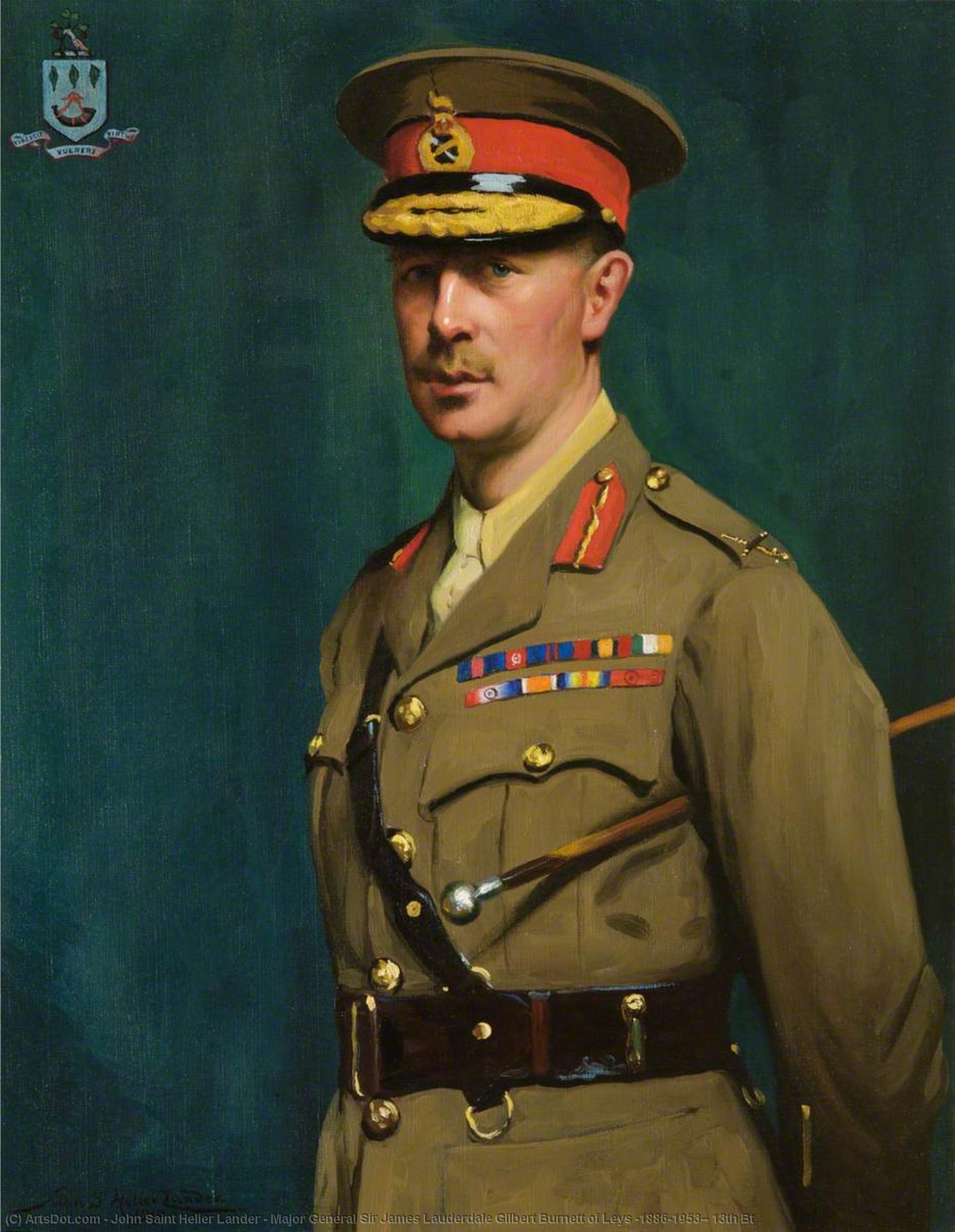
Major General Sir James Lauderdale Gilbert Burnett of Leys (1886–1953), 13th Bt
 1919
1919 90.0 x 70.0 cm
 The National Trust For Scotland
 詳細を見る
詳細を見る




































作品のオリジナル比率に合わせた、当店の規定サイズからお選びください。

特定のフレームやスペースに合わせて、ご希望のサイズをご入力いただけます。選択されたサイズが元の画像の比率と異なる場合、アートワークをトリミングするか、手描きで要素を追加して絵画を拡張いたします。デジタルモックアップ を制作し、制作開始前にご確認(承認)をいただきます。
画面上のプレビューは、実際のトリミングや拡張を正確に反映しているものではありません。最終的な構図は、モックアップによってのみ正確にご確認いただけます。
カスタムサイズもご利用いただけますが、元の比率を維持するためには、あらかじめ用意されたリストからサイズを選択することをお勧めいたします。
ご注文後、ArtsDot.com チームより詳細な指示をお送りするとともに、仕上がりイメージ(モックアップ)をご提供いたします。


 ガラスオプションは、110cm未満のサイズでのみご利用いただけます。

Major General Sir James Lauderdale Gilbert Burnett of Leys (1886–1953), 13th Bt
複製技法
複製画のサイズ
-


合計金額
$ 263
関連作品



アーティストの略歴
Early Life and Influences – A Channel Island Beginnings
John Saint Helier Lander, later simply known as John Lander, emerged from the picturesque setting of Saint Helier, a small island within the Channel Islands, to become a respected portrait painter in Victorian Britain. Born in 1868, his early life was deeply intertwined with the unique character of Jersey – a place renowned for its maritime heritage and close-knit community. His name itself reflects this origin; “Saint Helier” acknowledging the island’s namesake saint, while "Lander" likely denoting his family's connection to the sea. A pivotal moment in his formative years occurred when he received a paint box as a gift from Lillie Langtry, the celebrated beauty, actress, and mistress of the Prince of Wales – later Edward VII. This early patronage, bestowed upon a young boy, signaled an extraordinary trajectory for a future artist. His initial training took place at Calderon’s School, a local institution that provided a foundational understanding of artistic principles. However, fate intervened when he was unexpectedly assigned to watchmaking at the age of fifteen – a stark contrast to his burgeoning artistic inclinations. Remarkably, this seemingly mundane task allowed him ample time for drawing and sketching, nurturing his talent in secret. The desire to pursue painting fully manifested itself as he began selling his artwork, leading him to London at seventeen with the ambition of formal training.London Studies and Parisian Refinement
Despite a brief stint at an art school in London, where he found the environment stifling, Lander quickly recognized the need for a more expansive artistic education. A crucial turning point arrived through the encouragement of Sir John Everett Millais, a fellow Jerseyman and a prominent figure in the Royal Academy. Millais’ advice to pursue his artistic career in Paris proved invaluable. There, under the tutelage of William-Adolphe Bouguereau and Fleury at the Académie Julian, Lander honed his skills in academic portraiture – a style characterized by meticulous detail, classical composition, and a focus on capturing idealized beauty. This Parisian sojourn provided him with technical mastery and exposure to established artistic traditions. Returning to London after a year, he entered the Royal Academy Schools, dedicating three years to rigorous training before ultimately choosing to return to his roots in Jersey. This decision reflected a desire for greater creative autonomy and a connection to his island home.Jerseyan Identity and Major Works
Upon returning to Jersey, Lander established a studio and consciously cultivated an artistic identity rooted in the local landscape and its people. He drew inspiration from both Millais and Walter William Ouless, another distinguished Jerseyman artist, adopting their meticulous approach to portraiture while injecting his own distinctive style. His most ambitious work, “The Sitting” (also known as the Assize d’Héritage), stands as a testament to his dedication and skill. This monumental group portrait, depicting members of the Jersey legal system, consumed four years of his life and ultimately became a cherished symbol of the island's heritage. Purchased for £400 in 1897 by Julia Westaway and presented to the Royal Court of Jersey, it now hangs prominently within the island’s historic buildings. The Lieutenant-Governor at the time, Major General Henry Richard Abadie, played a significant role in fostering Lander’s career, introducing him to influential London society through his connections with Colonel Sir Malcolm Fox – a network that included many leading British generals before the outbreak of World War I. This social circle provided invaluable opportunities for exhibition and commissions.A Legacy of Portraits and Island Pride
Throughout his career, John Saint Helier Lander produced numerous portraits of prominent Jersey residents, capturing their likenesses with remarkable accuracy and sensitivity. He also embraced the beauty of the Channel Islands themselves, creating evocative scenes that celebrated the island’s unique character. His work was regularly exhibited at the Royal Academy of Jersey, solidifying his reputation as a skilled and respected artist within the local community. Beyond his artistic achievements, Lander played an important role in nurturing young talent, teaching privately at the Jersey Ladies' College (now Jersey College for Girls) and the Guernsey Ladies’ College. His dedication to art education ensured that his legacy would continue through subsequent generations of artists. John Saint Helier Lander died in 1944, leaving behind a body of work that reflects both his artistic training and his deep connection to the Channel Islands – a testament to a life dedicated to capturing beauty and preserving a unique cultural heritage.
john saint helier lander
1868 - 1944
基本情報
- Artistic Movement Or Style: Portraiture
- Artists Or Movements Influenced By This Artist:
- Bougereau
- Fleury
- Artists Who Influenced This Artist:
- Millais
- Walter William Ouless
- Date Of Birth: 1868
- Date Of Death: 1944
- Full Name: John Saint Helier Lander
- Nationality: British
- Notable Artworks:
- The Sitting (Assize d'Héritage)
- Jersey scenes
- Place Of Birth: Saint Helier, Channel Islands

