

 プレビュー
プレビュー
 シェアする
シェアする シェアする
シェアする
 詳細を見る
詳細を見る

 ダウンロード
 似ている作品
 X線調査
X線調査 スライドショー
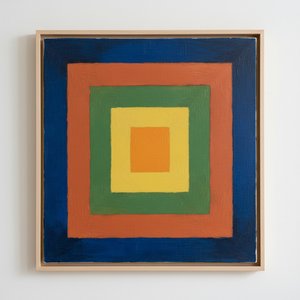
Homage to the Square (La Tehuana)


 詳細を見る
詳細を見る
ジークレー/アートプリント
迅速な制作と多彩な仕上げオプションを備えた、ミュージアムクオリティのジークレーまたはキャンバスプリント。 ( 手描きの絵画を購入 画像を購入)




P118B $10

P118H $10

P118W $10

P438Z $10

P508JH $12

P508YH $12

P805H $10

P805Z $10

P919BZ $10

P919G $10

P919XJ $10

P959ZH $10

P968JZ $12

W106C $8

W218G $10

W218JH $8

W218Y $10

W307PJ $10

W316G $10

W316PJ $8

W316Y $10

W398PJ $8

W4111J $10

W500HY $15

W500JH $15

W692G $12

W849H $8

W940BG $15

W953PJ $8




作品のオリジナル比率に合わせた、当店の規定サイズからお選びください。

特定のフレームやスペースに合わせて、ご自身でサイズを指定することも可能です。選択されたサイズが元の画像の比率と一致しない場合、作品をトリミングするか、鏡面反射または単色での塗りつぶしによって画像を拡張いたします。制作を開始する前に、ご確認用のデジタルモックアップをお送りいたします。
画面上のプレビューには、実際のトリミングや拡張は反映されませんのでご注意ください。最終的な構図を正確に確認できるのは、モックアップのみとなります。
カスタムサイズも承っておりますが、元の比率を維持するためには、あらかじめ用意されたリストからサイズを選択することをお勧めいたします。


 ガラスオプションは、110cm未満のサイズでのみご利用いただけます。

Homage to the Square (La Tehuana)
ジークレー/アートプリント
複製画のサイズ
-


合計金額
$ 62
作品詳細説明
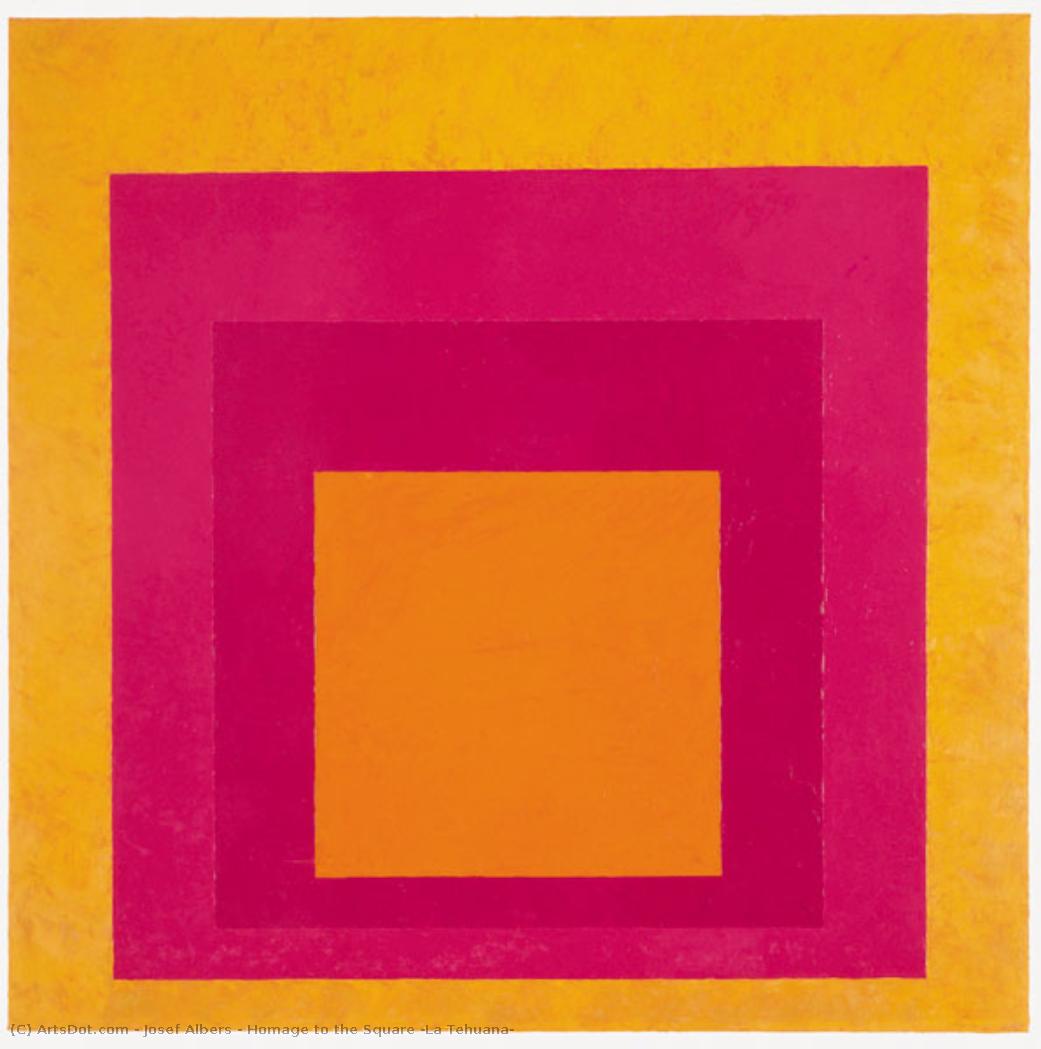
Homage to the Square (La Tehuana): A Meditation on Color and Geometry
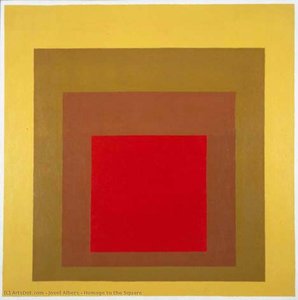
Josef Albers’s “Homage to the Square (La Tehuana)” transcends mere visual representation; it embodies a profound philosophical exploration of perception and color interaction—a cornerstone of his artistic legacy. Painted in 1951 during his formative years at Black Mountain College, this deceptively simple composition reveals layers of intellectual rigor and aesthetic sensitivity that continue to resonate with audiences today. The artwork’s enduring appeal lies not just in its striking chromatic harmony but also in its ability to provoke contemplation on fundamental questions about how we experience the world around us.The Hard Edge Aesthetic: Precision and Clarity
“Homage to the Square” firmly establishes Albers within the influential Hard Edge Painting movement, which emerged in the mid-1950s as a reaction against Impressionism’s blurred edges and atmospheric effects. Rejecting subjective interpretation, Hard Edge artists prioritized geometric forms—primarily squares and rectangles—rendered with meticulous accuracy using oil paint on fiberboard. This technique demanded absolute flatness of surface and unwavering adherence to precise lines, prioritizing clarity and objectivity over illusionistic depth. Albers's masterful execution exemplifies this aesthetic ideal, demonstrating a dedication to material control and visual precision that distinguishes him from many of his contemporaries.A Dialogue Between Color Planes: Exploring Visual Perception
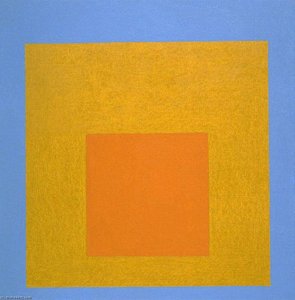
At first glance, the painting presents two squares—one large, dominant yellow against a muted magenta background; and another smaller square nestled within it, filled with a warm orange hue. However, Albers’s genius resides in recognizing that these squares don't exist as separate entities but rather engage in an ongoing dialogue, influencing each other’s appearance. As Albers himself meticulously documented through his experiments with color perception, adjacent colors create subtle shifts in hue and saturation—a phenomenon known as simultaneous contrast. The yellow square subtly alters the magenta background, while the orange square modifies the yellow hue, resulting in a dynamic interplay that captivates the viewer's eye.Symbolism Rooted in Minimalism: Beyond Representation
Despite its austere geometric form, “Homage to the Square” carries significant symbolic weight. The square itself represents stability, order, and rationality—concepts central to Albers’s philosophical worldview. Furthermore, the choice of colors—yellow, magenta, orange—is deliberately understated yet evocative. Yellow symbolizes optimism and enlightenment, magenta conveys passion and spirituality, while orange embodies warmth and vitality. These hues are not intended to depict specific objects or landscapes but rather to evoke emotional responses and stimulate imaginative associations. Albers’s aim was to strip away extraneous detail, focusing instead on the fundamental building blocks of visual experience—color itself—to achieve a profound aesthetic statement.Legacy and Influence: Shaping Modern Art
“Homage to the Square” stands as a testament to Albers's pioneering contribution to 20th-century art. Its influence extends far beyond the Hard Edge movement, inspiring artists across disciplines—including sculpture, architecture, and graphic design—to embrace simplicity and explore the transformative power of color. The painting’s enduring fascination stems from its ability to communicate complex ideas through deceptively simple means—a principle that continues to inform contemporary artistic practice. It remains a cornerstone of Albers's oeuvre and an exemplar of minimalist art's commitment to intellectual rigor and aesthetic beauty.関連作品
アーティストの略歴
素材と共に築かれた生涯:初期の歩みとバウハウスの形成
ヨーゼフ・アルバースの芸術的な旅路は、名声あるアカデミーの洗練された空気の中ではなく、ドイツのボトロップにある父の請負業という、極めて実利的な世界から始まりました。1888年に生まれた若き日のアルバースは、大工仕事、配管、塗装といった素材に対する深い敬意をその身に吸収していきました。これらの技術は、後に彼の美意識を根本的に形作ることになります。それは単なる職業訓練ではありませんでした。形がいかにして具現化されるのか、そしてそれぞれの媒体が持つ固有の性質とは何かを理解するという、ものづくりの本質への没入だったのです。芸術に身を捧げる前、アルバースは5年間の教師生活を送り、忍耐強さと教育的スキルを磨きました。これらの資質は、後に彼が築き上げるほど影響力のある教育者としてのキャリアを決定づけることになります。1913年から1915年にかけてベルリンの王立美術学校で受けた正式な芸術教育において、彼は版画、絵画、そして極めて重要なステンドグラスの技法を探求しました。初期の依頼作品である「Rosa Mystica Ora Pro Nobis」(1918年)の美しいステンドグラスは、光と色の相互作用に対する彼の生涯にわたる情熱を予兆させ、後に続く抽象的な探求への手がかりとなりました。この初期の作品は単なる装飾品ではなく、光がいかにして素材を「変容」させるかという探求であり、そのテーマは彼のキャリアを通じて響き続けることになります。バウハウスという試練:主題としての色彩
転機が訪れたのは1922年、アルバースがすべての芸術分野の統合を目指した革命的な学校、バウハウスの教員に加わった時でした。当初は予備課程である「Werklehre(工房実習)」の指導を任された彼は、機能主義、幾何学的抽象、そして素材の探求という、バウハウスの核心的な原則に没頭しました。この時期は、彼にとって変革をもたらすものでした。アルバースは色彩知覚への体系的な調査を開始し、具象的な芸術から、より抽象的な語彙へと移行していったのです。彼は単に「どのような色が存在するか」に関心があったのではなく、「色がどのように相互作用し、互いにどのような影響を与え、私たちの目がそれをどのように捉えるか」を追求しました。初期の作品にはパウル・クレーやヴァシリ・カンディンスキーといったバウエアの巨匠たちの影響が見て取れますが、アルバースは形而上学的な解釈よりも経験的な観察を優先するという、独自の道を切り拓きました。彼は色彩を通じて精神的な真理を追い求めたのではなく、その物理的な効果を緻密に記録しようとしたのです。この科学的な厳格さは、彼の芸術的手法の代名詞となりました。「何が見えているか」ではなく「いかに見るか」という知覚への集中が、彼を際立たせ、未来の探求への礎を築いたのです。正方形へのオマージュ:知覚の実験室
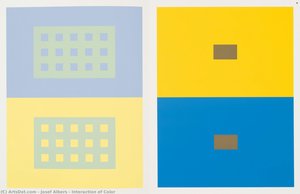
ロバート・ラウシェンバーグやサイ・トゥオンブリーといったアメリカの芸術家世代を育成したブラック・マウンテン・カレッジでの指導期間を経て、アルバースは1949年、彼の最も象徴的なシリーズとなる「正方形へのオマージュ」に着手しました。この継続的なプロジェクトは、入れ子状になった正方形を描いた一連の絵画で構成され、各反復において色彩の関係性の微妙な変化を探求するものでした。その前提は一見すると非常に単純ですが、そこには驚くほど複雑で厳格な調査が隠されています。このシリーズは幾何学を称えるためのものではなく、むしろ色彩知覚を研究するための実験室でした。アルバースは自身の実験を細かく記録し、色は静止した存在ではなく、互いに内的な論理によって支配し合う動的な力であり、しばしば目に錯覚を引き起こすものであることを明らかにしました。一見明るい正方形が後退して見え、逆に暗い正方形が前進して見えるといった現象は、直感的な理解を裏切るものです。この研究は、1963年の記念碑的な著書『色彩の相互作用』へと結実し、今日でもアーティストやデザイナーに学ばれる基礎的なテキストとなりました。この本は色彩理論の論文ではなく、私たちの色彩知覚がいかに相対的で文脈に依存するかを示すための一連の演習です。それは、「見る」という行為は受動的なものではなく、能動的な解釈のプロセスであるというアルバースの信念の証なのです。遺産と永続する影響力
ヨーゼフ・アルバースの影響は、彼の絵画を遥かに超えて広がっています。1950年から1958年の退職まで、イェール大学のデザイン学部長を務めたことは、深く影響力のある教育者としての彼の名声を確固たるものにしました。彼は実践的な実験、批判的な観察、そして既成概念に対する絶え間ない疑い、これらを強調しました。学生たちは単に「何を描くか」を教わったのではなく、「いかに見るか」――分析し、解体し、視覚体験を支配する根本的な原理を理解する方法――を教え込まれたのです。彼の教育的アプローチは独立した思考を育み、学生たちが独自の芸術的な声を確立することを促しました。色彩の相互作用は今なお美術教育の礎であり続け、世代を超えて色彩の関係性の理解に影響を与えています。アルバースは現在、抽象芸術、特に幾何学的抽象とミニマリズム美学の発展における重要人物として認められています。「正方形へのオマージュ」シリーズは、知覚現象の探求において象徴的な存在であり続けており、一見単純な形態の中にも、発見を待つ無限の複雑さが存在することを示しています。彼は1976年3月25日、コネチカット州ニューヘイブンでその生涯を閉じましたが、観察、実験、そして色彩が持つ永遠の神秘の力を示す遺産は、今もなおアーティスト、デザイナー、教育者たちにインスピレーションを与え、挑戦を続けています。主な作品
- Gray Instrumentation I Prospectus (1975): 幾何学的な均衡と微妙な色調の変化を体現した、ミニマリズム的なモノクローム絵画。
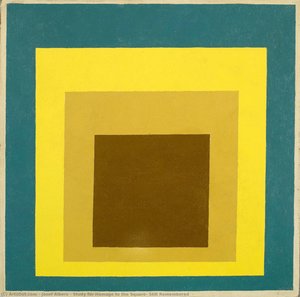
- Study for Homage to the Square – Beaming (制作年不明): 入れ子状の正方形における色彩の相互作用を探求した古典的な例であり、静寂と空間的な奥行きを感じさせる作品。
- Rosa Mystica Ora Pro Nobis (1918): 初期のステンドグラス依頼作品。光と色彩に対する彼の生涯にわたる情熱を予兆させている。
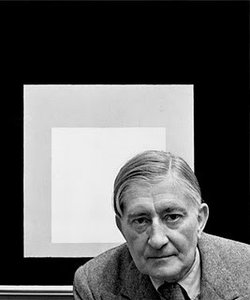
ヨーゼフ・アルベルス
1888 - 1976 , ドイツ
基本情報
- Artistic Movement Or Style: 幾何学的抽象
- Artists Or Movements Influenced By This Artist:
- ミニマリズム
- カラーフィールド・ペインティング
- Artists Who Influenced This Artist:
- パウル・クレー
- ヴァシリー・カンディンスキー
- Date Of Birth: 1888年3月19日
- Date Of Death: 1976年3月25日
- Full Name: ヨーゼフ・アルベルス
- Nationality: ドイツ系アメリカ人
- Notable Artworks:
- 正方形へのオマージュ
- Gray Instrumentation I Prospectus
- Rosa Mystica Ora Pro Nobis
- Place Of Birth: ドイツ、ボトロップ
関連記事
Josef Albers: A Homage to Color Interaction & the Foundations of Visual Perception
Explore Josef Albers's groundbreaking color theory & the 'Homage to the Square' series. Discover how his work revolutionized visual perception and influenced modern art movements like Minimalism & Op Art. Learn about his Bauhaus roots & lasting legacy.
ヴェネツィア・ビエンナーレ厳選25作品:芸術と歴史が織りなす至高のコレクション | ArtsDot
ヴェネツィア・ビエンナーレの至宝25選。印象派から現代アートまで、名画の背景にある物語と芸術家の情熱を紐解きます。ArtsDotで、キャンバスアートや油絵複製をお楽しみください。今すぐコレクションをご覧ください。
Roger de la Fresnaye: Cubism, Tradition & the Search for Order in Early 20th-Century French Painting
Explore the captivating world of Roger de la Fresnaye, a pivotal French Cubist painter. Discover his unique blend of tradition & modernity, influences, and lasting legacy with ArtsDot.
Águeda Ruiz de la Prada: A Study of Eclecticism & Emotional Resonance in Contemporary Spanish Painting
Discover the vibrant world of Ágatha Ruiz de la Prada, a leading figure in contemporary Spanish art. Explore her eclectic style, emotional depth & legacy – a must-read for discerning collectors.

John La Farge: Pioneering American Colorism & Japonisme's Influence
Explore the groundbreaking work of John La Farge, a pioneer of American colorism and stained glass. Discover his captivating Japonisme-inspired murals & lasting legacy in 19th-century art. Expert insights for collectors.

