

 プレビュー
プレビュー
 シェアする
シェアする シェアする
シェアする
 詳細を見る
詳細を見る

 ダウンロード
 似ている作品
 X線調査
X線調査 スライドショー
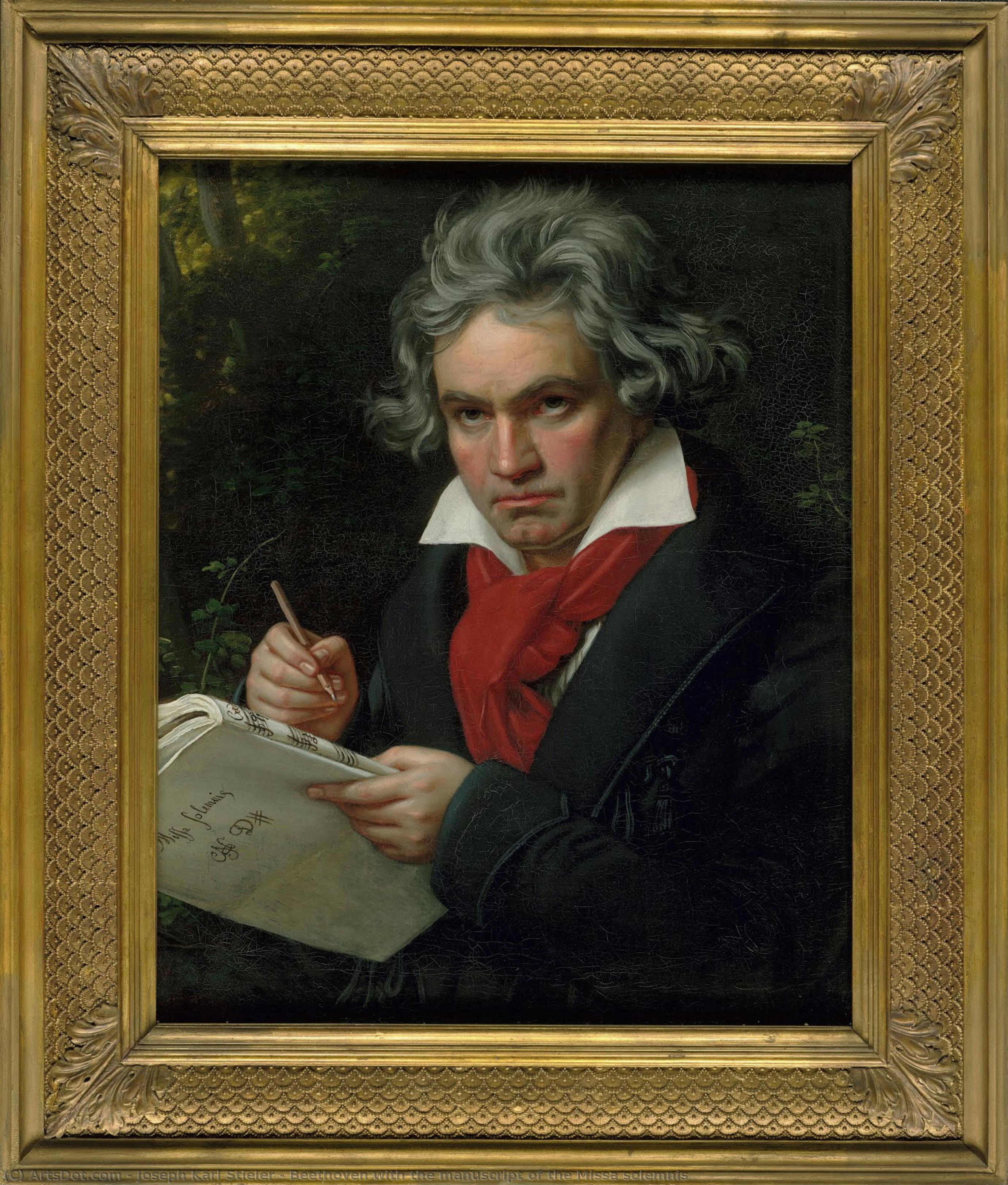
Beethoven with the manuscript of the Missa solemnis
 Oil On Canvas
- WallArt
- Neoclassicism
 1820
1820- 19th Century
 72.0 x 58.0 cm
 Beethoven-Haus Bonn
 詳細を見る
詳細を見る
ジークレー/アートプリント
迅速な制作と多彩な仕上げオプションを備えた、ミュージアムクオリティのジークレーまたはキャンバスプリント。 ( 手描きの絵画を購入 画像を購入)




P118B $10

P118H $10

P118W $10

P438Z $10

P508JH $12

P508YH $12

P805H $10

P805Z $10

P919BZ $10

P919G $10

P919XJ $10

P959ZH $10

P968JZ $12

W106C $8

W218G $10

W218JH $8

W218Y $10

W307PJ $10

W316G $10

W316PJ $8

W316Y $10

W398PJ $8

W4111J $10

W500HY $15

W500JH $15

W692G $12

W849H $8

W940BG $15

W953PJ $8




作品のオリジナル比率に合わせた、当店の規定サイズからお選びください。

特定のフレームやスペースに合わせて、ご自身でサイズを指定することも可能です。選択されたサイズが元の画像の比率と一致しない場合、作品をトリミングするか、鏡面反射または単色での塗りつぶしによって画像を拡張いたします。制作を開始する前に、ご確認用のデジタルモックアップをお送りいたします。
画面上のプレビューには、実際のトリミングや拡張は反映されませんのでご注意ください。最終的な構図を正確に確認できるのは、モックアップのみとなります。
カスタムサイズも承っておりますが、元の比率を維持するためには、あらかじめ用意されたリストからサイズを選択することをお勧めいたします。


 ガラスオプションは、110cm未満のサイズでのみご利用いただけます。

Beethoven with the manuscript of the Missa solemnis
ジークレー/アートプリント
複製画のサイズ
-


合計金額
$ 62
A Moment Frozen in Genius
In the quiet intensity of this 1820 masterpiece by Joseph Karl Stieler, we are invited into the private, cerebral world of one of history's most formidable minds. Beethoven with the manuscript of the Missa solemnis is far more than a mere portrait; it is a profound psychological study of Ludwig van Beethoven during his later years. The composer is captured in a moment of deep contemplation, surrounded by the physical remnants of his creative struggle. Stieler, a master of Neoclassical precision, uses light and shadow to pull the viewer into the composer's orbit, making us feel like silent witnesses to the birth of musical greatness. The presence of scattered books and a solitary pencil suggests a mind that never rests, an intellect constantly navigating the complex architecture of sound and notation.
The composition is rich with symbolic weight, grounding the legendary figure in his scholarly environment. As Beethoven sits amidst his manuscripts, the Missa solemnis—one of his most monumental choral works—serves as a silent protagonist in the scene. The red cravat around his neck provides a striking splash of color against the more muted, academic tones of the room, drawing the eye toward the subject's face and the intensity of his gaze. This careful arrangement of objects—the books positioned at the corners and the center of the frame—creates a sense of depth and intellectual density, suggesting that for Beethoven, music was not merely an art form but a profound philosophical pursuit.
The Mastery of Stieler’s Neoclassical Vision
Technically, the painting exemplifies the refined elegance that made Joseph Karl Stieler the preferred portraitist for the Bavarian monarchy. His ability to render textures—the heavy paper of the manuscripts, the soft fabric of the clothing, and the weathered skin of the aging composer—demonstrates a virtuosity that transcends simple representation. The lighting is particularly evocative, casting a soft glow that highlights the furrowed brow of Beethoven, emphasizing the weight of his genius and the physical toll of his deafness. This mastery of light creates an atmosphere of reverence, transforming a studio portrait into a monumental tribute to human perseverance.
For collectors and interior designers, this work offers a sophisticated focal point that commands attention through its historical gravity and emotional depth. A high-quality reproduction of this piece brings a sense of timelessness and intellectual prestige to any space, whether it be a private library, a formal study, or an elegant living area. It is a conversation piece that speaks of legacy, the enduring power of art, and the beautiful struggle of the creative spirit. To hang this portrait is to invite the presence of greatness into one's home, surrounding oneself with the echoes of Beethoven’s eternal melodies.
関連作品

アーティストの略歴
The Master of Bavarian Elegance
In the grand tapestry of nineteenth-century European art, few threads shine with as much refined luster as the works of Joseph Karl Stieler. Born in November 1781 in the historic city of Mainz, Stieler was destined for a life steeped in the meticulous traditions of craftsmanship. His father, August Friedrich Stieler, was a respected engraver and punchcutter, providing the young artist with an early education in the precision and delicate detail that would later become the hallmarks of his Neoclassical mastery. This foundation in printmaking allowed Stieler to develop an extraordinary eye for line and texture, qualities that would eventually elevate him from a skilled craftsman to the most prestigious portraitist of the Bavarian court.
Stieler’s artistic evolution was shaped by the great intellectual and aesthetic currents of his era. His journey took him from the rigorous academic environment of the Vienna Academy of Fine Arts, where he studied under Heinrich Füger, to the vibrant, revolutionary atmosphere of Paris. It was in the Parisian atelier of François Gérard that Stieler truly found his voice. Immersed in the Neoclassical style and influenced by the monumental legacy of Jacques-Louis David, he learned to balance classical idealism with a profound sense of psychological depth. This period of intense study allowed him to master the subtle interplay of light and shadow, a technique he would later use to breathe life into the faces of royalty and luminaries alike.
A Legacy of Beauty and Brilliance
The zenith of Stieler’s career was defined by his unparalleled relationship with the Bavarian monarchy. Serving as the Royal Court Painter from 1820 until 1855, he became the visual chronicler of an era. His most enduring achievement remains the Schönheitengalerie, or the Gallery of Beauties, housed within the Nymphenburg Palace in Munich. This breathtaking collection of portraits, featuring the most notable noblewomen of the age, stands as a testament to his ability to capture not just physical grace, but a sense of timeless, aristocratic dignity. Through these works, Stieler achieved a level of Neoclassical grandeur that remains unparalleled in German portraiture.
Beyond the halls of royalty, Stieler possessed a unique ability to capture the essence of the era's most iconic figures. His portrait of Ludwig van Beethoven, depicting the composer with the manuscript of his Missa solemnis, remains one of the most recognizable and emotionally resonant depictions in musical history. In this work, Stieler moves beyond mere likeness to capture the very intensity and late-period struggle of the maestro. Whether portraying the scandalous allure of Lola Montez or the serene elegance of aristocratic ladies like Maria Amalia, Stieler’s brushwork consistently achieved a delicate balance of technical perfection and soulful expression.
The historical significance of Joseph Karl Stieler extends far beyond the borders of Bavaria. His works are preserved today in some of the world's most esteemed institutions, including:
- The Hermitage Museum in St. Petersburg
- The Neue Pinakothek in Munich
- The Walters Art Museum in Baltimore
- The Finnish National Gallery in Helsinki
As we look back upon his life, we see an artist who did more than simply record faces; he captured the spirit of a century. Through his precise draughtsmanship and subtle tonal gradations, Stieler transformed the ephemeral beauty of his subjects into permanent icons of art history, ensuring that the elegance of the Bavarian court would never fade from the collective memory of the world.

Joseph Karl Stieler
1781 - 1858
基本情報
- Artistic Movement Or Style: Neoclassical
- Artists Or Movements Influenced By This Artist: ['Jacques-Louis David']
- Artists Who Influenced This Artist: ['Heinrich Füger']
- Date Of Birth: 1781
- Date Of Death: 1858
- Full Name: Joseph Karl Stieler
- Nationality: German
- Notable Artworks:
- Gallery of Beauties
- Beethoven Portrait
- Place Of Birth: Mainz, Germany
関連記事
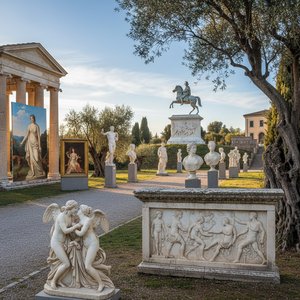
至高の芸術:新古典主義を象徴する10選 – 華麗なる巨匠と時代を彩る傑作の世界
新古典主義を代表する10選!ダビッド、アンジェリカーら巨匠の傑作を紐解き、時代を超えた美と知性を探求。油絵、版画など高精細なアートプリントで、お部屋を華やかに彩りませんか?ArtsDot.comで至高の芸術を体験してください。

Karl Bodmer: Capturing Indigenous Life & Landscapes of the American West
Explore the captivating art of Karl Bodmer, whose detailed paintings documented Indigenous life along the Missouri River in the 19th century. Discover his legacy and lasting impact on Western art history.

The Enduring Legacy of Neoclassical Art: Order, Reason & Antiquity's Revival
Explore the enduring legacy of Neoclassical art! Discover masterpieces by David, Girodet & Garnier. Expert analysis, custom reproductions & art appraisal at ArtsDot.

The Revival of Antiquity: Exploring Neoclassical Art's Ideals & Enduring Legacy
Explore the revival of classical ideals in Neoclassical art! Discover Jacques-Louis David & the movement's impact on painting, sculpture & architecture. Expert insights & high-quality reproductions at ArtsDot.

Karl Bryullov: Romanticism's Dramatic Vision & Shaping Russian Historical Painting
Explore the dramatic world of Karl Bryullov, a pivotal figure in Russian Romanticism. Discover his masterpieces like 'The Last Day of Pompeii' and learn about his lasting influence on 19th-century art history.

