

 プレビュー
プレビュー
 プリントを購入
 シェアする
シェアする シェアする
シェアする
 詳細を見る
詳細を見る

 ダウンロード
 似ている作品
 X線調査
X線調査 スライドショー
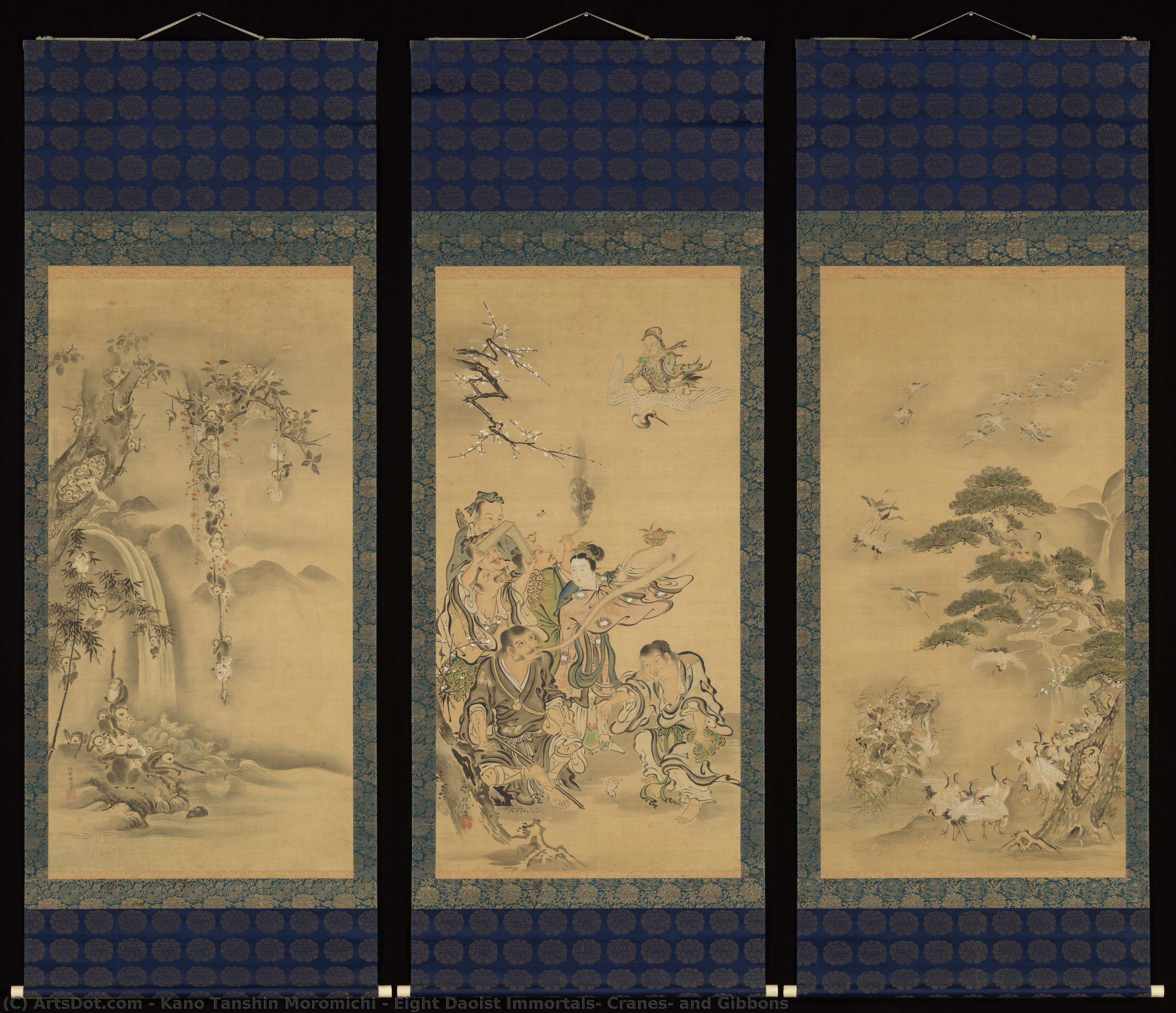
Eight Daoist Immortals, Cranes, and Gibbons
 701
701 241.0cm x 95.0cm
 詳細を見る
詳細を見る




































作品のオリジナル比率に合わせた、当店の規定サイズからお選びください。

特定のフレームやスペースに合わせて、ご希望のサイズをご入力いただけます。選択されたサイズが元の画像の比率と異なる場合、アートワークをトリミングするか、手描きで要素を追加して絵画を拡張いたします。デジタルモックアップ を制作し、制作開始前にご確認(承認)をいただきます。
画面上のプレビューは、実際のトリミングや拡張を正確に反映しているものではありません。最終的な構図は、モックアップによってのみ正確にご確認いただけます。
カスタムサイズもご利用いただけますが、元の比率を維持するためには、あらかじめ用意されたリストからサイズを選択することをお勧めいたします。
ご注文後、ArtsDot.com チームより詳細な指示をお送りするとともに、仕上がりイメージ(モックアップ)をご提供いたします。


 ガラスオプションは、110cm未満のサイズでのみご利用いただけます。

Eight Daoist Immortals, Cranes, and Gibbons
複製技法
複製画のサイズ
-


合計金額
$ 263
作品解説
関連作品










アーティストの略歴
A Legacy of Serenity: The Life and Art of Kano Tanshin Moromichi
Kano Tanshin Moromichi, a name resonating with the refined elegance of Edo-period Japan, was born in Kyoto in 1785. He wasn’t simply an artist; he was a custodian of tradition, inheriting a lineage steeped in the prestigious Kano school—a dynasty that had shaped Japanese painting for centuries. His life unfolded against a backdrop of relative peace and flourishing arts under the Tokugawa shogunate, yet it was also a period witnessing subtle shifts in artistic sensibilities, a tension Tanshin navigated with remarkable skill. As the seventh generation leader of the Kajibashi branch of the Kano family, he bore the weight of expectation while simultaneously forging his own distinct path within the established conventions. His full name, Kano Tanshin Morimichi, reflects this dual role—a connection to ancestral mastery and a personal identity as a painter of considerable talent.The Weight of Tradition: Early Life and Training
Tanshin’s father was Kano Tan'yū, and his mother was Tan'yū’s second wife. This familial context immediately positioned him within the heart of the Kano school’s Kyoto branch. The Kano school wasn’t merely a style; it was an institution—a network of workshops, patrons, and established techniques. Tanshin’s early training would have been rigorous, focused on mastering the brushwork, composition, and subject matter favored by the school. This included meticulous copying of earlier masters, not as rote imitation but as a means of internalizing their principles. The Kano style, known for its dynamic compositions, bold colors, and often monumental scale, served official commissions—decorating castles, temples, and aristocratic residences. However, Tanshin’s artistic development wasn't solely confined to replicating the past. He demonstrated an early inclination towards a more lyrical approach, subtly infusing his work with elements reminiscent of the Tosa school, a rival style celebrated for its delicate lines and refined elegance. This blending of influences would become a hallmark of his mature work.A Delicate Balance: Style and Influences
Tanshin’s paintings are characterized by a serene beauty—a harmonious blend of power and grace. While firmly rooted in the Kano tradition, he subtly moved away from its more rigid formality. His landscapes possess a remarkable sense of atmosphere, achieved through delicate washes of ink and subtle gradations of color. He excelled at depicting birds and flowers, imbuing them with a quiet vitality that resonated deeply with Zen Buddhist aesthetics. The influence of the Tosa school is evident in his refined linework and attention to detail, yet he never abandoned the Kano school’s dynamic compositions. This delicate balance—between tradition and innovation—was both praised and criticized during his lifetime. Some lauded his ability to breathe new life into established forms, while others viewed his departure from strict Kano conventions as a betrayal of its core principles. Hanabusa Itchō, a prominent art critic of the period, recognized Tanshin’s “rare talent,” attributing it to his keen observation of nature and his ability to capture its essence in his paintings.Major Achievements and Artistic Legacy
Although documentation of his complete oeuvre remains incomplete, several works attributed to Kano Tanshin Moromichi stand as testaments to his skill and artistic vision. His depictions of the Seven Lucky Gods, particularly *Jurōjin*, are celebrated for their serene beauty and symbolic richness. Jurōjin, the god of longevity, embodies auspiciousness and good fortune—a fitting subject for celebratory paintings commissioned during the New Year season. Other notable works include landscapes featuring cranes and gibbons, and delicate depictions of doves on plum branches. These paintings showcase his mastery of ink wash techniques and his ability to create a sense of depth and atmosphere. Tanshin’s influence extended beyond his own artistic production. As head of the Kajibashi branch, he oversaw the training of numerous students, perpetuating the Kano school’s legacy while subtly shaping its future direction. His work represents a pivotal moment in the history of Japanese painting—a transition between tradition and innovation, power and grace.Historical Significance
Kano Tanshin Moromichi lived during a period of increasing social and political change in Japan. The Edo period was characterized by relative stability, but also by growing economic disparities and the rise of a merchant class with its own distinct aesthetic preferences. This led to a diversification of artistic styles and a questioning of established conventions. Tanshin’s work reflects this changing landscape—a subtle rebellion against rigid formality and an embrace of more lyrical and expressive forms. While he remained committed to the Kano school’s core principles, he also demonstrated a willingness to experiment and incorporate new influences. This made him a controversial figure during his lifetime, but it also ensured his lasting legacy as one of the most important painters of the Edo period. His paintings continue to be admired for their serene beauty, technical mastery, and symbolic richness—a testament to the enduring power of tradition and the transformative potential of artistic innovation. He passed away in 1835, leaving behind a body of work that continues to inspire and captivate audiences today.
kano tanshin moromichi
1785 - 1835 , Japan
基本情報
- Artistic Movement Or Style: kanō school
- Artists Or Movements Influenced By This Artist: ['kanō school']
- Artists Who Influenced This Artist: ["kanō tan'yū"]
- Date Of Birth: 1785
- Date Of Death: 1835
- Full Name: kano tanshin moromichi
- Nationality: japanese
- Notable Artworks: ['jurōjin']
- Place Of Birth: kyoto, japan

