 プレビュー
プレビュー
 シェアする
シェアする シェアする
シェアする
 詳細を見る
詳細を見る

 ダウンロード
 似ている作品
 X線調査
X線調査 スライドショー
 統計情報
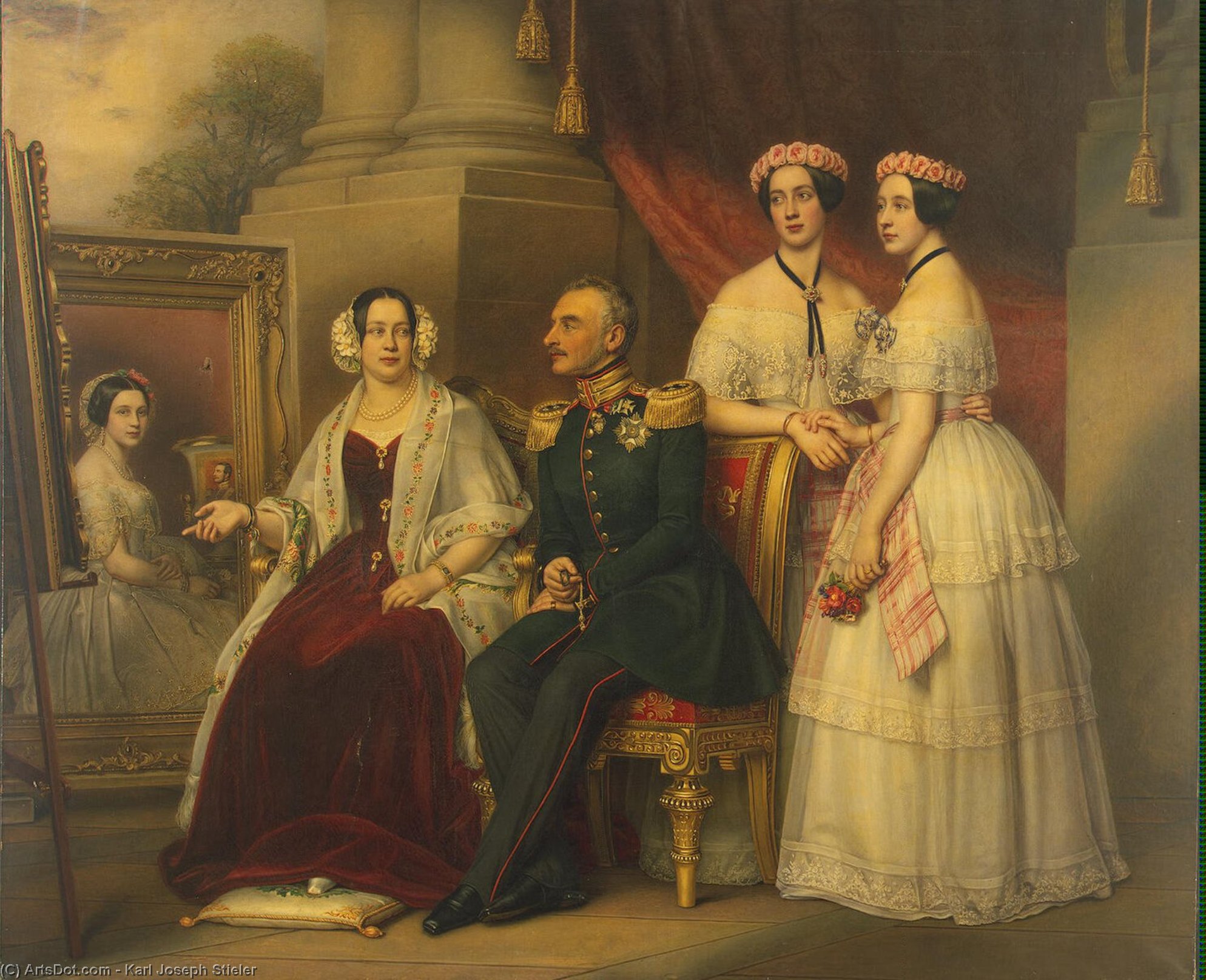
統計情報Portrait of the Family of Joseph, Duke of Saxe-Altenburg
 Oil On Canvas
- WallArt
- Neoclassicism
 1848
1848 229.0 x 277.0 cm
 エルミタージュ美術館
 詳細を見る
詳細を見る
ジークレー/アートプリント
迅速な制作と多彩な仕上げオプションを備えた、ミュージアムクオリティのジークレーまたはキャンバスプリント。 ( 手描きの絵画を購入 デジタル画像販売へ切り替え)




P118B $10

P118H $10

P118W $10

P438Z $10

P508JH $12

P508YH $12

P805H $10

P805Z $10

P919BZ $10

P919G $10

P919XJ $10

P959ZH $10

P968JZ $12

W106C $8

W218G $10

W218JH $8

W218Y $10

W307PJ $10

W316G $10

W316PJ $8

W316Y $10

W398PJ $8

W4111J $10

W500HY $15

W500JH $15

W692G $12

W849H $8

W940BG $15

W953PJ $8




作品のオリジナル比率に合わせた、当店の規定サイズからお選びください。

特定のフレームやスペースに合わせて、ご自身でサイズを指定することも可能です。選択されたサイズが元の画像の比率と一致しない場合、作品をトリミングするか、鏡面反射または単色での塗りつぶしによって画像を拡張いたします。制作を開始する前に、ご確認用のデジタルモックアップをお送りいたします。
画面上のプレビューには、実際のトリミングや拡張は反映されませんのでご注意ください。最終的な構図を正確に確認できるのは、モックアップのみとなります。
カスタムサイズも承っておりますが、元の比率を維持するためには、あらかじめ用意されたリストからサイズを選択することをお勧めいたします。


 ガラスオプションは、110cm未満のサイズでのみご利用いただけます。

Portrait of the Family of Joseph, Duke of Saxe-Altenburg
ジークレー/アートプリント
複製画のサイズ
-


合計金額
$ 62
Exquisite Representation of Nobility and Family Bonds
This remarkable 19th-century portrait captures a distinguished noble family, radiating elegance, authority, and intimate familial connection. Crafted with meticulous attention to detail, the scene portrays a moment of regal dignity and personal warmth, inviting viewers into a world of aristocratic tradition and social hierarchy. The composition emphasizes the importance of family unity, status, and legacy, making it a compelling centerpiece for collectors and connoisseurs of historical portraiture.Masterful Style and Technique
Executed in the classical realism style, this oil painting exemplifies technical mastery and refined craftsmanship. The artist employs smooth brushwork and layered glazing techniques to achieve luminous skin tones, intricate textures, and rich fabric details. The balanced composition and controlled use of light and shadow create a three-dimensional effect, enhancing the realism and depth of each figure. The warm, muted palette—featuring golds, creams, deep reds, and dark greens—evokes a sense of luxury and timeless elegance, characteristic of high-quality 19th-century portraiture.Historical Context and Artistic Significance
Painted in 1848 by the renowned German artist Karl Joseph Stieler, this work reflects the societal values and aesthetic ideals of the period. Stieler, court painter to the Bavarian monarchy, was celebrated for his neoclassical approach and ability to capture the nobility’s grandeur with subtle emotional depth. This portrait likely commemorates a significant family milestone or alliance, serving as a visual testament to their social standing and enduring legacy within the aristocratic hierarchy of the time.Symbolism and Emotional Depth
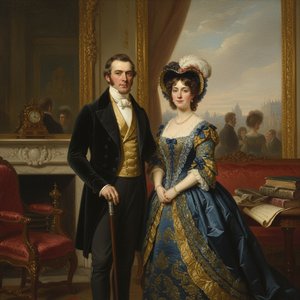
Every element in this composition is thoughtfully chosen to symbolize familial bonds, societal status, and continuity. The regal attire, jewelry, and floral crowns highlight celebration and prestige, while the seated central figures exude confidence and authority. The inclusion of a mirror reflecting a younger family member introduces an introspective element, hinting at legacy and the passage of time. The gentle expressions and composed postures evoke pride, dignity, and a profound sense of connection, resonating emotionally with viewers.Perfect for Interior Elegance and Artistic Inspiration
This high-quality reproduction is an ideal addition to sophisticated interiors, offering a touch of historical grandeur and artistic refinement. Whether displayed in a private collection, a luxurious living space, or an elegant office, it elevates the ambiance with its timeless beauty and storytelling power. Art lovers and collectors will appreciate its exquisite craftsmanship, while interior designers will find it a versatile statement piece that complements classic and contemporary decor alike.Invest in a Masterpiece of Cultural Heritage
Owning this portrait means more than possessing a beautiful artwork; it is an investment in cultural history and artistic excellence. Its detailed execution, historical significance, and emotional resonance make it a treasured heirloom and a conversation starter. Perfect for those who value craftsmanship, tradition, and the enduring power of portraiture, this piece promises to inspire admiration and admiration for generations to come.関連作品

アーティストの略歴
The Master of Bavarian Elegance
Joseph Karl Stieler stands as a pivotal figure in the grand tapestry of nineteenth-century German art, a painter whose brush captured the very essence of Neoclassical refinement. Born in 1781 in the historic city of Mainz, Stieler was destined for a life steeped in the meticulous traditions of craftsmanship. He was born into a family deeply rooted in the precision of engraving and printmaking; his father, August Friedrich Stieler, was a respected engraver and punchcutter. This early exposure to the delicate art of fine lines and intricate detail provided the young artist with an foundational education in precision, instilling a stylistic sensibility that would later become the hallmark of his monumental portraiture.
The trajectory of Stieler’s life was irrevocably altered by the political tremors of the era. Following the French revolutionary upheaval of 1792, which saw Mainz fall under French control, Stieler relocated to Aschaffenburg. It was here that he encountered Archbishop Karl Theodor Anton Maria von Dalberg, a figure who would become his most influential patron. Under Dalberg’s benevolent support, Stieler’s artistic ambitions were fueled, allowing him to pursue formal training at the Academy of Fine Arts in Vienna under the tutelage of Heinrich Füger. In the halls of the Viennese Academy, he absorbed the stylistic precepts of Neoclassicism, a movement that emphasized clarity, order, and an idealized grace.
A Journey Through the Heart of Europe
Stieler’s artistic evolution was not confined to the classroom; it was forged through extensive travel and the pursuit of masters across the continent. In 1808, after establishing a studio in Frankfurt, he embarked on a profound pilgrimage to Italy, an experience that breathed new life into his vision. His travels further led him to encounter the grandeur of Parisian art, where he honed his technique under François Gérard, a student of the legendary Jacques-Louis David. This connection to the French Neoclassical tradition infused Stieler’s work with a certain dynamism and monumental scale, blending German precision with a sophisticated, international elegance.
As his reputation grew, so did his proximity to power. From 1820 until 1855, Stieler served as the royal court painter for the Bavarian kings, a position that placed him at the very center of European aristocratic life. His studio became a site of significant historical encounters, where he translated the dignity of the monarchy into enduring visual legacies. Perhaps his most enduring contribution to musical iconography is his 1820 portrait of Ludwig van Beethoven. In this masterpiece, Stieler moved beyond mere likeness to capture the composer's intellectual intensity and palpable emotional depth, creating an image that remains a cornerstone of biographical art.
Legacy of the Gallery of Beauties
The zenith of Stieler’s career is perhaps most beautifully realized in his celebrated Gallery of Beauties at Nymphenburg Palace in Munich. This collection of portraits, commissioned by King Ludwig I, showcases Stieler's unparalleled ability to blend idealized Neoclassical beauty with a profound sense of individual character. Through these works, he achieved a level of technical mastery that allowed him to render luminous skin tones, intricate textures of silk and lace, and the subtle play of light with breathtaking realism.
Stieler’s significance extends far beyond the borders of Bavaria. His work represents a bridge between the rigid structures of early Neoclassicism and the more emotive, detailed portraiture that would follow. His achievements can be summarized through several key pillars of his career:
- Technical Precision: A lifelong dedication to detail inherited from his engraver lineage, allowing for exquisite textures in fabric and jewelry.
- Royal Patronage: His long-standing role as the Bavarian court painter, which allowed him to document the nobility of his era with unparalleled access.
- Iconic Imagery: The creation of world-renowned portraits, most notably the Beethoven portrait and the Gallery of Beauties.
- Stylistic Synthesis: The successful blending of German meticulousness with the grand, dynamic influences of French and Italian Neoclassicism.
When Joseph Karl Stieler passed away in 1858, he left behind a visual record of an era defined by elegance, hierarchy, and the pursuit of classical perfection. His portraits remain more than mere historical documents; they are windows into a vanished world of regal dignity and refined grace.

Karl Joseph Stieler
1781 - 1858 , Germany
基本情報
- Artistic Movement Or Style: Neoclassical
- Artists Or Movements Influenced By This Artist: ['Jacques-Louis David']
- Artists Who Influenced This Artist: ['Heinrich Füger']
- Date Of Birth: 1781 Mainz Germany
- Date Of Death: 1858 Munich Germany
- Full Name: Joseph Karl Stieler
- Nationality: German
- Notable Artworks:
- Gallery of Beauties
- Portrait of Beethoven
- Place Of Birth: Mainz Germany
関連記事
Reflections of an Era: Identity & Status in 19th-Century Portraiture
Explore the fascinating world of 19th-century portraiture! Discover how art revealed identity, social status & legacy. Expert analysis & insights into masterpieces and artists.

Evolving Portraits: Personalized Art as a Chronicle of Family Life Across Generations
Create a timeless family legacy with custom portraits! ArtsDot connects you with skilled artists for heirloom-quality paintings & prints. Explore styles, commission your unique artwork today.
レガシーポートレートで家族の絆を永遠に:歴史と未来を結ぶアートの物語
レガシーポートレートで家族の絆を永遠に。ArtsDotは歴史と未来を結ぶ手描き油絵の専門家です。高品質・信頼性、100日返金保証付き。あなたの大切な瞬間を芸術へ変える価値ある選択です。
The Enduring Legacy of Family Portraiture: A Historical & Artistic Exploration
Explore the rich history of family portraiture with ArtsDot. Discover artistic styles, symbolism & collecting insights. Commission a custom oil painting or appraise your existing artwork today!
19th Century Masterpieces: 10 Paintings That Defined an Era | ArtsDot
Journey through 19th century art with ArtsDot! Explore 10 iconic paintings – from Monet & Renoir to Courbet – and discover the stories behind Romanticism, Realism & Impressionism. Find museum-quality reproductions for your home decor. Explore the full collection online!