

 プレビュー
プレビュー
 プリントを購入
 シェアする
シェアする シェアする
シェアする
 詳細を見る
詳細を見る

 ダウンロード
 似ている作品
 X線調査
X線調査 スライドショー
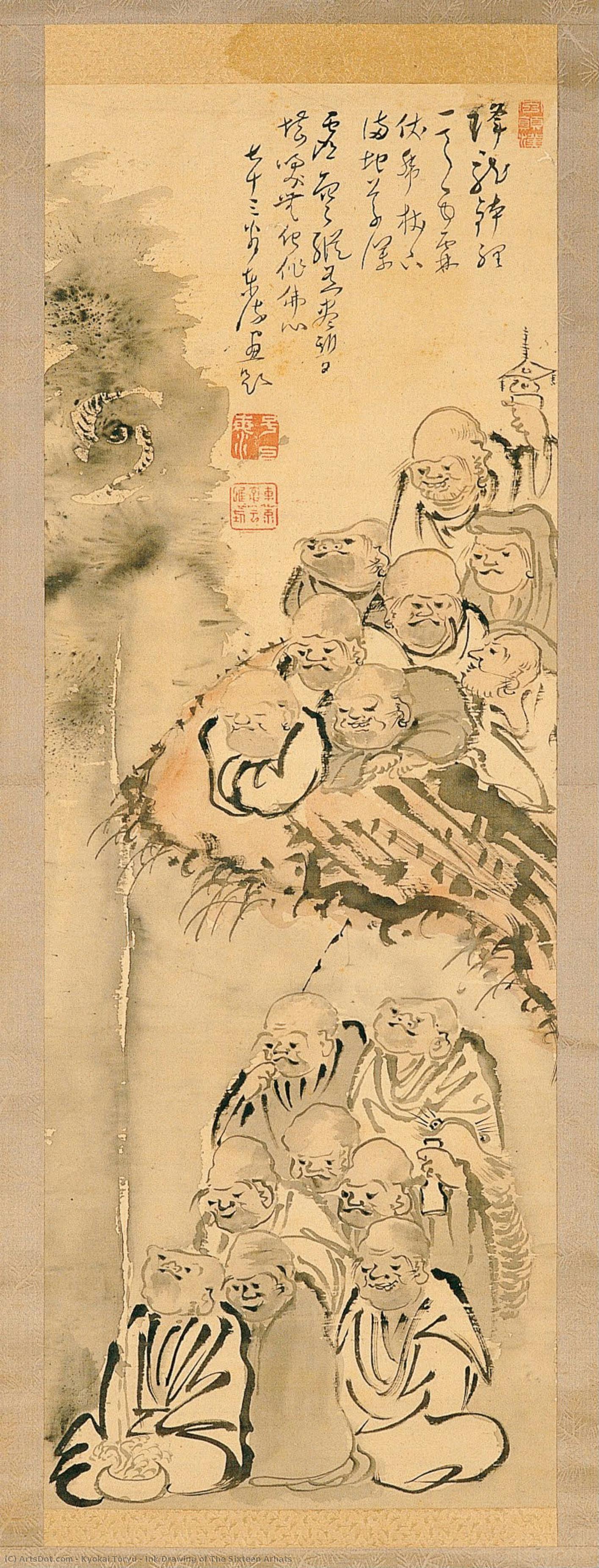
Ink Drawing of The Sixteen Arhats


 詳細を見る
詳細を見る




































作品のオリジナル比率に合わせた、当店の規定サイズからお選びください。

特定のフレームやスペースに合わせて、ご希望のサイズをご入力いただけます。選択されたサイズが元の画像の比率と異なる場合、アートワークをトリミングするか、手描きで要素を追加して絵画を拡張いたします。デジタルモックアップ を制作し、制作開始前にご確認(承認)をいただきます。
画面上のプレビューは、実際のトリミングや拡張を正確に反映しているものではありません。最終的な構図は、モックアップによってのみ正確にご確認いただけます。
カスタムサイズもご利用いただけますが、元の比率を維持するためには、あらかじめ用意されたリストからサイズを選択することをお勧めいたします。
ご注文後、ArtsDot.com チームより詳細な指示をお送りするとともに、仕上がりイメージ(モックアップ)をご提供いたします。


 ガラスオプションは、110cm未満のサイズでのみご利用いただけます。

Ink Drawing of The Sixteen Arhats
複製技法
複製画のサイズ
-


合計金額
$ 263
関連作品
アーティストの略歴
Kyokai Tōryū (Kaiten Ekō): A Silent Witness to Edo Japan
Kyokai Tōryū, also known as Kaiten Ekō, stands as a singular figure in the annals of Edo-period Japanese art—a testament to monastic devotion interwoven with artistic mastery. Born in Echigo Prefecture around 1779, he ascended to abbatial leadership at Gōtokuji Temple in Musashi in 1832, dedicating his life to spiritual practice while simultaneously cultivating a distinctive visual idiom that continues to resonate today. His legacy rests primarily upon a single masterpiece: the monumental ink drawing of the Sixteen Arhats, completed in 1851—a work imbued with profound symbolism and executed with unparalleled skill.- Early Life & Spiritual Formation
- Abbotship at Gōtokuji Temple
- The Sixteen Arhats: A Symbol of Enlightenment
- Style and Technique – The Chigo Style
- Historical Significance & Legacy
Early Life & Spiritual Formation
Details surrounding Kyokai Tōryū’s formative years remain somewhat elusive, reflecting the customary privacy of monastic life. However, he emerged from a lineage deeply rooted in Soto Zen Buddhism—a tradition emphasizing meditation and contemplation as pathways to liberation. His upbringing instilled within him a profound appreciation for stillness, simplicity, and the pursuit of inner harmony – values that would undoubtedly inform his artistic sensibilities. While biographical information is scarce, scholarly consensus suggests he received extensive training in calligraphy and painting techniques, foundational skills necessary for mastering the Chigo style.Abbotship at Gōtokuji Temple
Kyokai Tōryū’s appointment as the 22nd abbot of Gōtokuji Temple marked a pivotal moment in his life and solidified his position within Japanese Buddhist society. Situated in Musashi Province, Gōtokuji was renowned for its serene landscapes and its role as a center for Zen meditation—a setting perfectly suited to Kyokai Tōryū’s contemplative inclinations. During his tenure, he oversaw temple affairs with unwavering dedication, fostering spiritual growth among his monks and upholding the temple's traditions. His abbatial duties provided him with invaluable experience in managing complex administrative responsibilities alongside maintaining a deep connection to Buddhist philosophy.The Sixteen Arhats: A Symbol of Enlightenment
The Sixteen Arhats—Buddhist figures who have attained enlightenment through meditation and renunciation—represent the pinnacle of spiritual achievement. Kyokai Tōryū’s depiction of these revered saints is arguably his most celebrated work, embodying the essence of Chigo style art. The drawing showcases sixteen arhats arranged in a dynamic composition that captures both stillness and movement—a deliberate juxtaposition reflecting the paradoxical nature of enlightenment itself. Each arhat is rendered with meticulous detail, conveying not merely physical likeness but also psychological depth—a hallmark of Kyokai Tōryū’s artistic vision.Style and Technique – The Chigo Style
Kyokai Tōryū's artistic style—commonly referred to as Chigo—is characterized by its distinctive aesthetic qualities. This technique prioritizes a restrained palette of muted tones, primarily browns and blacks, creating an atmosphere of profound tranquility and contemplation. Lines are executed with remarkable precision and fluidity, conveying both strength and grace—a testament to Kyokai Tōryū’s mastery of brushwork. The Chigo style eschews elaborate ornamentation, focusing instead on capturing the subtle nuances of form and texture—resulting in images that evoke a sense of timeless beauty and spiritual resonance.Historical Significance & Legacy
Kyokai Tōryū's contribution to Edo-period art transcends mere stylistic innovation; it represents a profound engagement with Buddhist ideals. The Sixteen Arhats stands as an enduring symbol of enlightenment—a visual embodiment of Soto Zen’s core teachings. His work continues to inspire admiration for its serene beauty and intellectual depth, securing his place among Japan's most revered artists. Furthermore, Kyokai Tōryū’s legacy extends beyond the canvas, serving as a reminder of the harmonious coexistence between artistic creativity and spiritual devotion—a testament to the enduring power of Buddhist art to illuminate the human condition.
kyokai tōryū
1779 - 1853 , Japan
基本情報
- Artistic Movement Or Style: Sōtō Zen
- Date Of Birth: 1779
- Full Name: Kyokai Tōryū
- Nationality: Japanese
- Notable Artworks: ['Ink Drawing of The Sixteen Arhats']
- Place Of Birth: Echigo Prefecture, Japan