

 プレビュー
プレビュー
 プリントを購入
 シェアする
シェアする シェアする
シェアする
 詳細を見る
詳細を見る

 ダウンロード
 似ている作品
 X線調査
X線調査 スライドショー
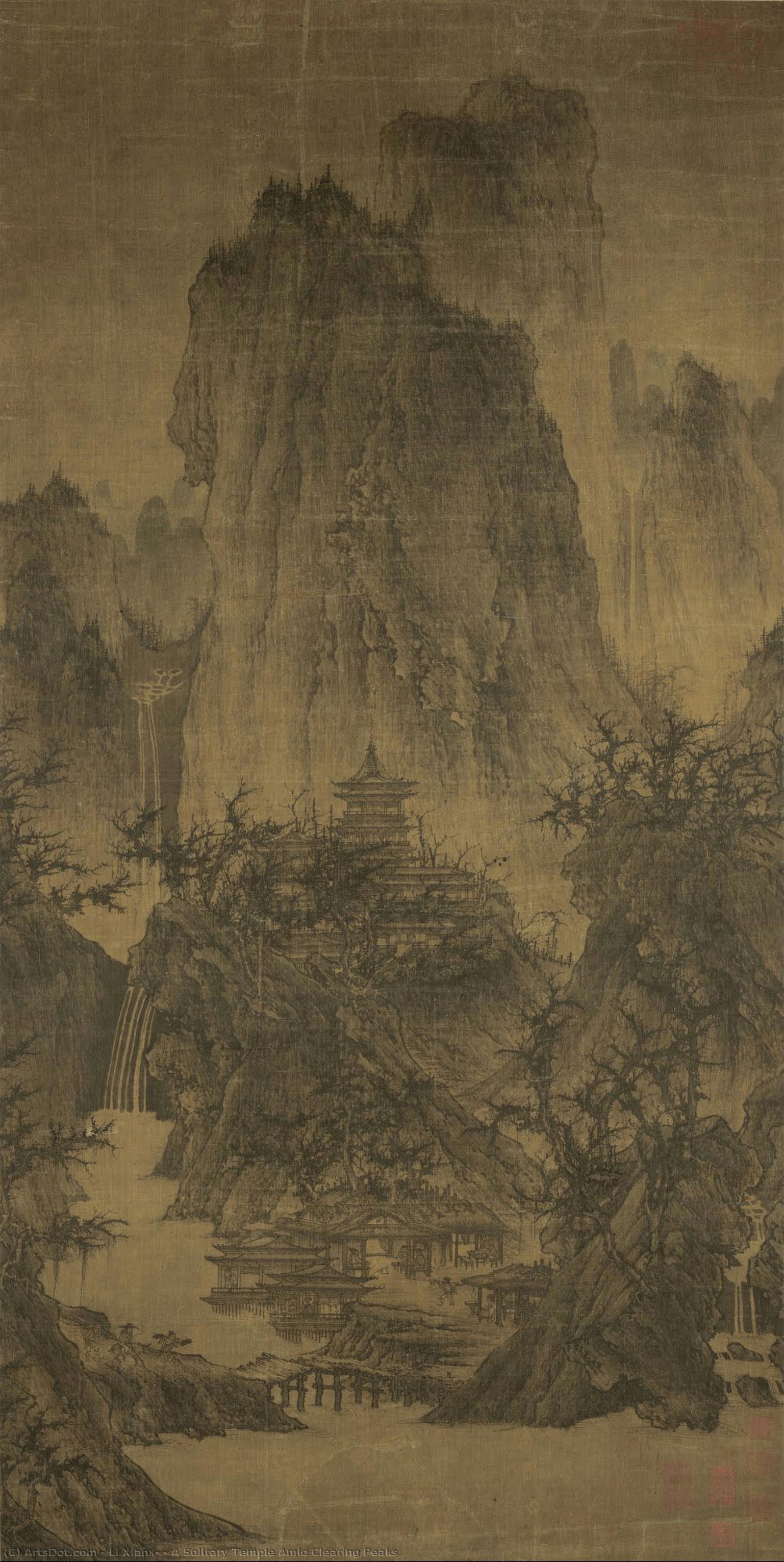
A Solitary Temple Amid Clearing Peaks


 詳細を見る
詳細を見る




































作品のオリジナル比率に合わせた、当店の規定サイズからお選びください。

特定のフレームやスペースに合わせて、ご希望のサイズをご入力いただけます。選択されたサイズが元の画像の比率と異なる場合、アートワークをトリミングするか、手描きで要素を追加して絵画を拡張いたします。デジタルモックアップ を制作し、制作開始前にご確認(承認)をいただきます。
画面上のプレビューは、実際のトリミングや拡張を正確に反映しているものではありません。最終的な構図は、モックアップによってのみ正確にご確認いただけます。
カスタムサイズもご利用いただけますが、元の比率を維持するためには、あらかじめ用意されたリストからサイズを選択することをお勧めいたします。
ご注文後、ArtsDot.com チームより詳細な指示をお送りするとともに、仕上がりイメージ(モックアップ)をご提供いたします。


 ガラスオプションは、110cm未満のサイズでのみご利用いただけます。

A Solitary Temple Amid Clearing Peaks
複製技法
複製画のサイズ
-


合計金額
$ 263
関連作品







アーティストの略歴
A Master of Mist: The Life and Legacy of Li Xianxī
Li Xianxī, a name resonating through the annals of Chinese art history, stands as a pivotal figure in the landscape painting tradition of the Song Dynasty (960-1279). Born in Qingzhou, Shandong province around 919 CE – a period marked by political upheaval transitioning from the Five Dynasties to the early Song – Li Cheng’s life was steeped in an atmosphere that profoundly shaped his artistic vision. He wasn't merely documenting scenery; he was capturing a feeling, a sense of solitude and contemplation born from a world undergoing constant change. His family boasted a lineage tracing back to the Tang imperial clan, though diminished by the dynasty’s fall, instilled within him a deep appreciation for scholarship and refined conduct. This background fostered an introspective nature that would become central to his artistic expression. Unlike many artists of his time seeking official positions, Li Xianxī deliberately eschewed government service, prioritizing instead the pursuit of artistic perfection and a life immersed in the natural world. Stories abound of nobles clamoring for his work, even resorting to theft when direct commissions were refused – testament to the burgeoning reputation he cultivated during his lifetime. He ultimately passed away in Huaiyang County around 967 CE, leaving behind a legacy that would inspire generations of painters.The Shaping of a Style: Influences and Early Development
Li Xianxī’s artistic journey began under the tutelage of two prominent masters: Jing Hao and Guan Tong. Both were pioneers in establishing Northern Song landscape painting conventions, but Li Cheng didn't simply replicate their styles. He absorbed their foundational principles – particularly their emphasis on conveying philosophical ideas through natural forms – while forging his own unique path. Jing Hao’s focus on the grandeur of mountains and the interplay between human figures and nature resonated with Li, yet he moved away from overtly dramatic compositions. Guan Tong’s detailed depictions of trees and rivers also influenced him, but Li Xianxī refined this approach, prioritizing a more subtle and atmospheric rendering of the landscape. He became known for his meticulous brushwork and innovative use of ink washes, earning the moniker “treating ink like gold” – a testament to his economical yet profoundly expressive application of the medium. This technique allowed him to create scenes veiled in mist and shadow, evoking a sense of distance and tranquility that was previously unseen in Chinese landscape painting.Landscapes of Shandong: A Personal Vision
The landscapes of Shandong province became Li Xianxī’s primary subject matter, not merely as geographical locations but as vessels for expressing his inner world. He didn't seek to recreate exact topographical features; instead, he distilled the essence of the region – its rolling hills, sparse vegetation, and often harsh winters – into a series of evocative compositions. His paintings are characterized by their simplicity: towering trees silhouetted against vast expanses of land, solitary temples nestled amongst peaks, and winding rivers disappearing into the distance. These elements weren’t merely aesthetic choices; they were imbued with symbolic meaning. The rugged trees represented resilience and longevity, while the mist symbolized the elusiveness of truth and the impermanence of all things. “Reading Stele Nest Stone”, a collaborative work with Wang Xiao, exemplifies this approach – a quiet scene that invites contemplation rather than grand spectacle. While few original works definitively attributed to Li Xianxī survive today, his style is readily identifiable in paintings bearing the influence of his disciples and followers.The “Three Greats” and Lasting Impact
Li Xianxī’s prominence was cemented by his inclusion among the “three great rival artists” – alongside Fan Kuan and Guan Tong – who dominated landscape painting during the Five Dynasties and early Song periods. This designation wasn't simply a matter of artistic skill; it reflected their shared commitment to elevating landscape painting as a vehicle for philosophical expression. While each artist possessed a distinct style, they collectively pushed the boundaries of the genre, establishing conventions that would shape Chinese art for centuries to come. His influence extended far beyond his own lifetime. Guo Xi, a later master and prominent art theorist, explicitly modeled his teaching methods on Li Xianxī’s principles, emphasizing the importance of careful observation, meticulous brushwork, and the use of ink washes to create atmospheric effects. The serene, foggy landscapes that define Li Xianxī's oeuvre continue to captivate audiences today, serving as a testament to his enduring legacy as one of China’s most important landscape painters.A Timeless Standard
Li Xianxī’s contribution transcends mere technical skill; he fundamentally altered the way artists approached landscape painting. He moved away from overtly dramatic compositions and embraced subtlety, atmosphere, and philosophical depth. His paintings weren't simply representations of nature; they were invitations to contemplate the human condition and our place within the vastness of the universe.- His emphasis on ink washes created a sense of distance and tranquility.
- He prioritized simplicity and symbolic meaning over topographical accuracy.
- His influence extended through generations of painters, shaping the course of Chinese art history.

li xianxī
China
基本情報
- Artistic Movement Or Style: Song Dynasty landscape painting
- Artists Or Movements Influenced By This Artist: ['Guo Xi']
- Artists Who Influenced This Artist:
- Jing Hao
- Juran
- Date Of Birth: 919
- Date Of Death: 967
- Full Name: Li Xianxī
- Nationality: Chinese
- Notable Artworks:
- Jigger
- Joy in Fishing
- Cold crow
- Landscape
- Reading Stele Nest Stone
- Other Names: Li Cheng
- Place Of Birth: Qingzhou, China