

 プレビュー
プレビュー
 プリントを購入
 シェアする
シェアする シェアする
シェアする
 詳細を見る
詳細を見る

 ダウンロード
 似ている作品
 X線調査
X線調査 スライドショー
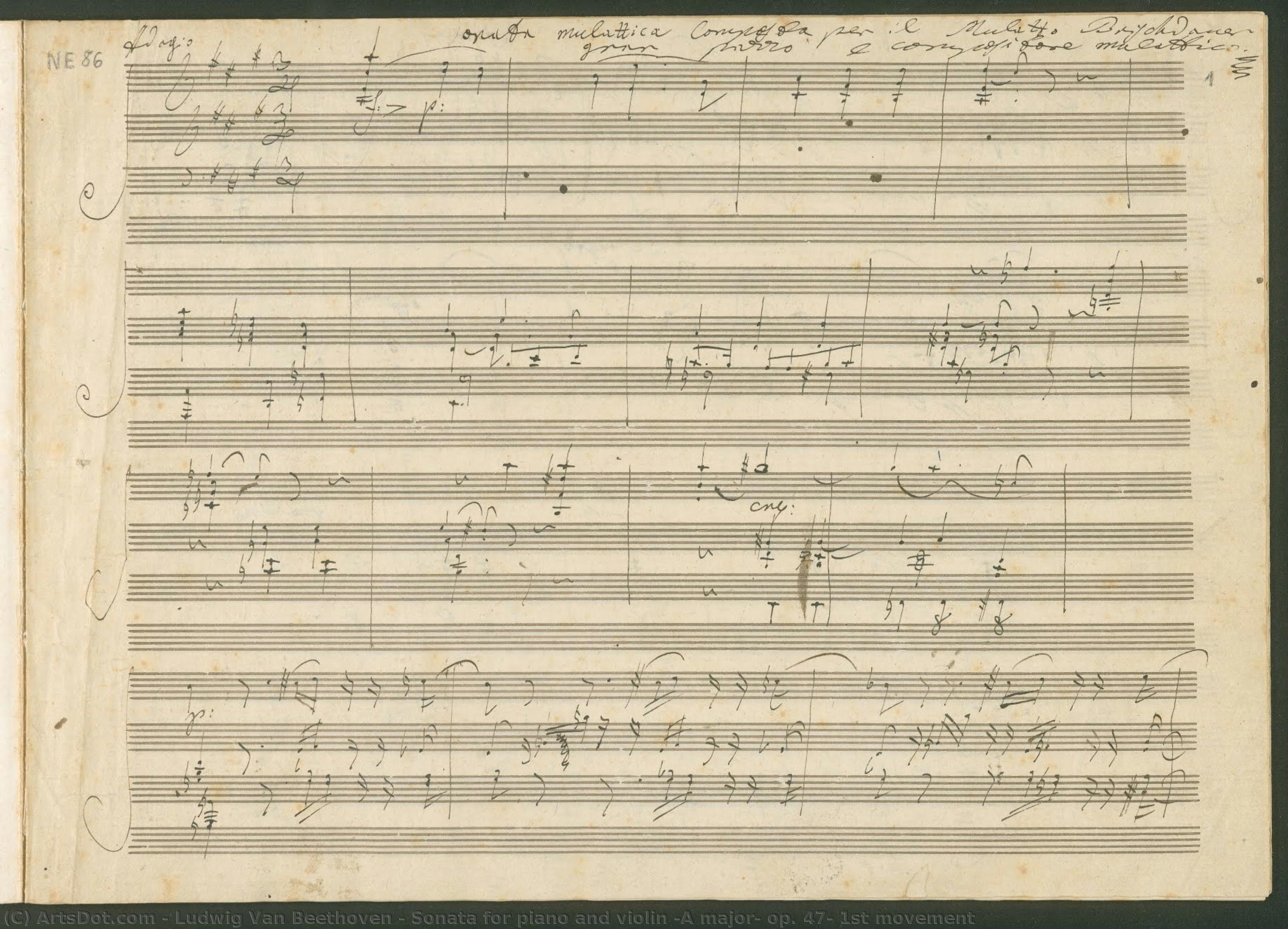
Sonata for piano and violin (A major) op. 47, 1st movement


 詳細を見る
詳細を見る




P118B $10

P118H $10

P118W $10

P438Z $10

P508JH $12

P508YH $12

P805H $10

P805Z $10

P919BZ $10

P919G $10

P919XJ $10

P959ZH $10

P968JZ $12

W106C $8

W218G $10

W218JH $8

W218Y $10

W307PJ $10

W316G $10

W316PJ $8

W316Y $10

W398PJ $8

W4111J $10

W500HY $15

W500JH $15

W692G $12

W849H $8

W940BG $15

W953PJ $8




作品のオリジナル比率に合わせた、当店の規定サイズからお選びください。

特定のフレームやスペースに合わせて、ご希望のサイズをご入力いただけます。選択されたサイズが元の画像の比率と異なる場合、アートワークをトリミングするか、手描きで要素を追加して絵画を拡張いたします。デジタルモックアップ を制作し、制作開始前にご確認(承認)をいただきます。
画面上のプレビューは、実際のトリミングや拡張を正確に反映しているものではありません。最終的な構図は、モックアップによってのみ正確にご確認いただけます。
カスタムサイズもご利用いただけますが、元の比率を維持するためには、あらかじめ用意されたリストからサイズを選択することをお勧めいたします。
ご注文後、ArtsDot.com チームより詳細な指示をお送りするとともに、仕上がりイメージ(モックアップ)をご提供いたします。


 ガラスオプションは、110cm未満のサイズでのみご利用いただけます。

Sonata for piano and violin (A major) op. 47, 1st movement
複製技法
複製画のサイズ
-


合計金額
$ 263
Beethoven’s Sonata for Piano and Violin: A Journey Through Passion and Innovation
Ludwig van Beethoven's "Sonata for Piano and Violin in A major, Op. 47," often known as the “Kreutzer Sonata,” isn’t merely a musical composition; it’s a visceral experience, a window into the turbulent soul of one of history’s most transformative composers. Completed in 1803 during a period of intense personal and professional upheaval for Beethoven – marked by increasing deafness and shifting patronage – this sonata stands as a testament to his unwavering artistic vision and his ability to translate profound emotion into sound.
The piece immediately captivates with its dramatic opening, eschewing the typical elegance of early Classical sonatas. Instead, it plunges directly into a chromatic introduction in D minor, a stark departure that establishes an atmosphere of brooding intensity. This initial darkness serves as a powerful counterpoint to the subsequent movements, creating a dynamic tension that defines the entire work. The first movement, marked “Adagio sostenuto – Presto,” unfolds with a deliberate slowness, building gradually towards a frenzied climax—a whirlwind of notes and rhythms that mirrors the composer’s own inner turmoil. The interplay between the piano and violin is not one of simple accompaniment; rather, it's a passionate dialogue, a push and pull of ideas and emotions.
A Tale of Rivalry and Dedication
The story behind the “Kreutzer Sonata” is as compelling as the music itself. Initially dedicated to the celebrated violinist George Bridgetower, the sonata’s creation was intertwined with a scandalous affair and a bitter dispute. Beethoven, deeply attached to a woman, became embroiled in a quarrel with Bridgetower, fueled by jealousy and resentment. The resulting estrangement led Beethoven to ultimately dedicate the work to Rodolphe Kreutzer, a fellow violinist known for his virtuosity and connections within the Viennese musical circles. This act of dedication, born from conflict, adds another layer of intrigue to the sonata’s narrative.
Interestingly, Kreutzer himself reportedly found the piece baffling and refused to perform it, suggesting that its complexity and emotional intensity were beyond his capabilities. This reluctance further cemented the “Kreutzer Sonata”’s reputation as a challenging and demanding work—a testament to Beethoven's willingness to push the boundaries of musical expression.
Form and Technique: A Masterclass in Duo Performance
Structurally, the sonata is divided into three distinct movements. The second movement, an “Andante,” offers a brief respite from the intensity of the first, presenting a more lyrical and contemplative theme. However, even here, Beethoven employs unexpected harmonic shifts and rhythmic irregularities, preventing it from becoming overly sentimental. The final movement, a spirited “Presto” in A major, is a whirlwind of energy and virtuosity—a dazzling display of technical skill and compositional ingenuity.
Beethoven’s use of dynamics and orchestration is particularly noteworthy. He masterfully employs contrasting levels of volume to heighten the emotional impact of each movement, creating moments of overwhelming power and delicate beauty. The interplay between the piano and violin is meticulously crafted, with each instrument taking turns to dominate the texture—a testament to Beethoven's understanding of duo performance.
Symbolism and Emotional Resonance
Beyond its technical brilliance, the “Kreutzer Sonata” resonates deeply with listeners due to its profound emotional content. The sonata’s turbulent energy reflects the composer’s own struggles with deafness and his personal relationships—a poignant exploration of love, loss, jealousy, and ambition. The story of the sonata's dedication is itself imbued with symbolism, representing not only a musical work but also a complex human drama.
Listening to the “Kreutzer Sonata” is akin to embarking on a journey through the depths of the human psyche—a powerful reminder of the enduring capacity for both beauty and suffering within the creative spirit. It remains a cornerstone of the classical repertoire, captivating audiences with its dramatic intensity and timeless emotional resonance.
関連作品
アーティストの略歴
幼少期と音楽の黎明期
ルートヴィヒ・ヴァン・ベートーヴェン、ドイツが生んだ偉大なる作曲家でありピアニストである彼は、1770年にドイツのボンで産声を上げました。幼い頃から類まれな音楽的才能を見せていた彼は、数々の師に師事して研鑽を積み、その後、その生涯の大部分を過ごすことになるウィーンへと舞台を移しました。音楽的革新と、静寂の中での闘い
キャリアの大部分において聴覚障害という過酷な運命に見舞われながらも、ベートーヴェンは決して屈することはありませんでした。交響曲第9番や月光ソナタといった、クラシック音楽史上最も象徴的な傑作を次々と生み出し続けたのです。彼の革新的な楽曲は、声楽と器楽を融合させ、何世紀にもわたって数え切れないほどの音楽家たちに影響を与え続けている唯一無二の響きを創り上げました。主要な作品とその遺産
ベートーヴェンの輝かしい名作には、以下のようなものがあります:- ピアノとチェロのためのソナタ(イ長調)作品69 第1楽章(ArtsDot.comにて閲覧可能)
- ベートーヴェンのミサ・ソレムニスの手稿(Wikipediaにて閲覧可能)
- リヒノフスキー公カール・アロイスの庇護を受けた、3つの作品Op.1 ピアノ・ソナタ
影響力と不朽の名声
ベートーヴェンの最大の功績は、それまで声楽に劣ると見なされていた器楽を、芸術の最高到達点へと引き上げたことにあります。クラシック音楽における彼の存在感は計り知れず、彼の作品は今日でもレパートリーの中で最も頻繁に演奏されるものの一つとして君臨しています。 ArtsDot.comでベートーヴェンのさらなる作品を探求する: ルートヴィヒ・ヴァン・ベートーヴェン | 30の芸術作品 Wikipediaでベートーヴェンの生涯と音楽について詳しく学ぶ: ルートヴィヒ・ヴァン・ベートーヴェン - Wikipedia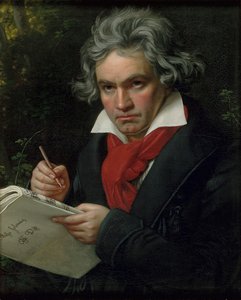
ルートヴィヒ・ヴァン・ベートーヴェン
1770 - 1827 , ドイツ
基本情報
- Artistic Movement Or Style: 古典派・ロマン派
- Artists Or Movements Influenced By This Artist:
- ヨハネス・ブラームス
- ロベルト・シューマン
- Artists Who Influenced This Artist:
- フランツ・ヨーゼフ・ハイドン
- クリスティアン・ゴットロープ・シュルツ
- Date Of Birth: 1770年 ドイツ、ボン
- Date Of Death: 1827年 オーストリア、ウィーン
- Full Name: ルートヴィヒ・ヴァン・ベートーヴェン
- Nationality: ドイツ
- Notable Artworks:
- 月光ソナタ
- 交響曲第9番
- Place Of Birth: ドイツ、ボン
関連記事
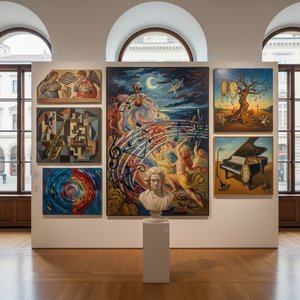
Harmonies on Canvas: Exploring the Visual Representation of Music in Art History
Explore the fascinating history of music's visual representation in art! From ancient symbolism to modern abstraction, discover how artists have captured sound and emotion on canvas. Expert insights & stunning examples.
Neo-Classicism's Greatest Hits: 10 Masterpieces for Your Home |
Journey through Neo-Classicism's finest! Explore 10 iconic masterpieces by David, Ingres & Canova. Discover art history, techniques & timeless beauty – perfect for inspiring your home decor. Find museum-quality reproductions at
The Enduring Legacy of Classicism: Principles, Evolution & Influence in Western Art
Explore the enduring legacy of Classicism in Western art! Discover its historical context, key principles, iconic masterpieces & lasting influence. Learn about Renaissance and Neoclassical movements with ArtsDot.
Timeless Resonance: Exploring Classic Vibe in Art – A Historical & Aesthetic Analysis
Explore the rich history & enduring aesthetic of Classicism art! Discover key movements, iconic artists like Raphael & David, and its lasting influence on Western art. Deepen your appreciation today.

The Enduring Legacy of Classical Style: Form, Narrative & Influence in Art
Explore the enduring legacy of classical art – from ancient Greece & Rome to Neoclassicism. Discover key artists, philosophical roots & build a timeless collection with ArtsDot's expert guidance.