

 プレビュー
プレビュー
 プリントを購入
 シェアする
シェアする シェアする
シェアする
 詳細を見る
詳細を見る

 ダウンロード
 似ている作品
 X線調査
X線調査 スライドショー
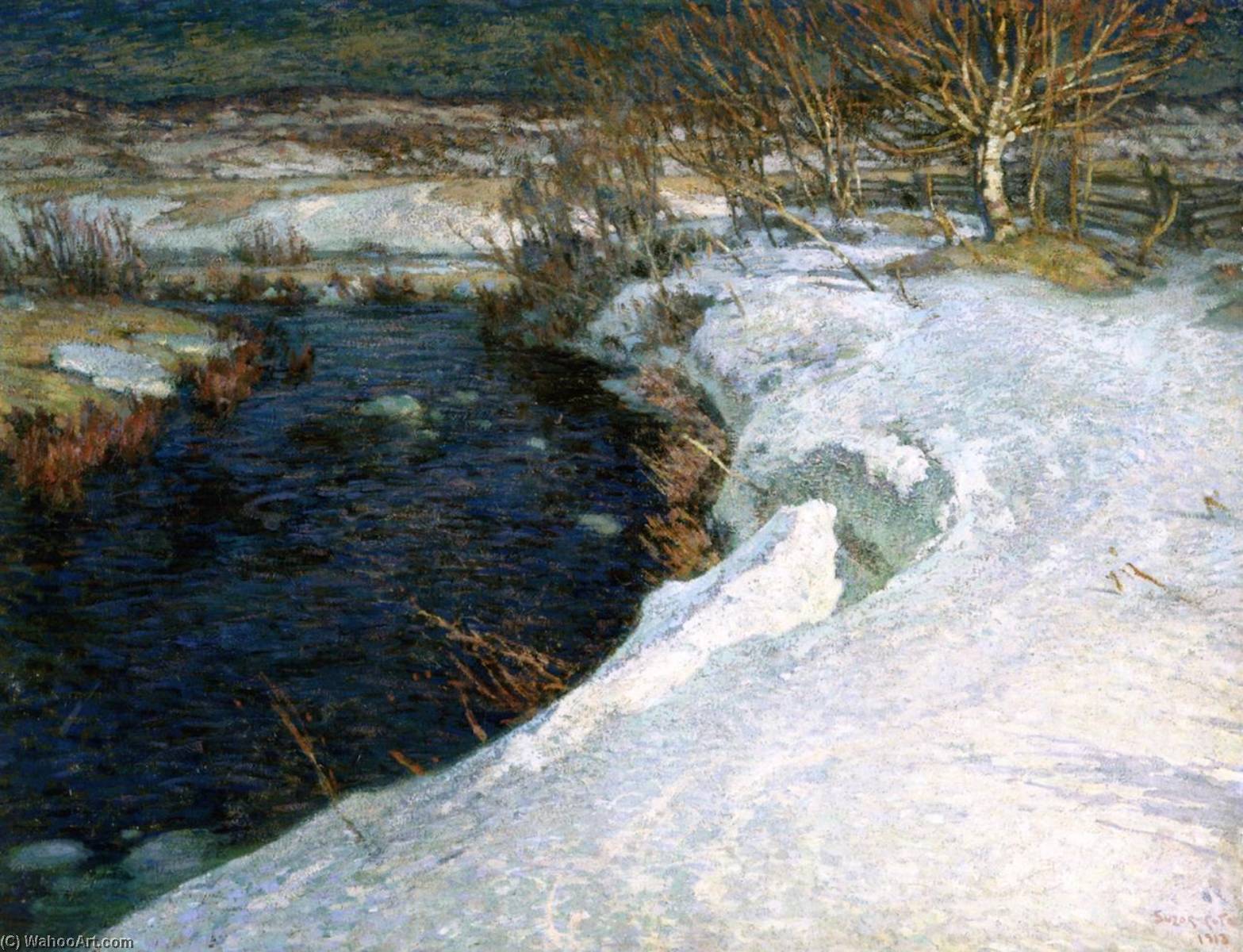
End of Winter, Gosselin River


 詳細を見る
詳細を見る
オンラインプレビューをはるかに凌ぐ、高解像度で鮮明なデジタル画像をご購入いただけます。
各ファイルは、社内の専門家が高度なツールと熟練した手作業によるレタッチを用いて、細心の注意を払って準備されています。すべての画像において、卓越した鮮明度、正確な色彩再現性、そして繊細なディテールを保証いたします。
最終ファイルは、プロフェッショナルな編集・印刷環境ですぐにご利用いただけるよう最適化された状態で、72時間以内にメールにてお届けいたします。これは、一流のデザインスタジオ、出版社、ギャラリーから信頼されているものと同等の品質です。
デジタル画像のご注文に付随する特典
高品質なデジタル画像配信を、確かな品質で。
ArtsDot.com を選ぶことは、単に画像を手に入れることではありません。それは、プロの手によって精密に仕上げられ、満足保証が付いた高品質なデジタルアートワークを受け取ることを意味します。ご注文いただいた際に自動的に付随する内容は、以下の通りです:

メールですぐにお届け
ご注文から72時間以内に、高解像度のデジタル画像ファイルがメールでお手元に届きます。すぐにそのままご利用いただけます。

AI技術で最適化されたデジタルファイル
お客様の作品は、高度なAIツールと専門家による手作業の編集を組み合わせてプロフェッショナルに最適化されており、細部のディテール、鮮明さ、そして正確な色再現性を最大限に引き出しています。

一生涯無料の再送サービス
ファイルを誤って削除したり、紛失してしまったりしましたか?ご安心ください。いつでも無料で再送いたします。

輸入手数料は一切かかりません
関税や手数料、配送料を気にすることなく、お気に入りのアートワークをすぐにお楽しみいただけます。デジタルダウンロードは常に免税です。

色彩再現の保証
プロ仕様のツールとカラーマネジメント技術を用いることで、デジタル画像が元の色を最大限に忠実に再現することを保証いたします。

60日間満足保証
ご購入いただいたデジタル画像にご満足いただけない場合は、60日以内であれば、修正または100%の返金(理由を問う必要はありません)をさせていただきます。

100% 返金保証
ご満足いただけない場合は、デジタルファイルを受け取ってから60日以内であれば、理由を問わず全額返金いたします。

まとめ買い割引
3枚購入で10%OFF - 5枚購入で15%OFF - 10枚以上購入で20%OFF。クリエイティブなプロジェクト、ギャラリー、エージェンシーに最適です。
A Canvas Steeped in Light and Memory – Marc Aurèle Suzor-Coté’s Gosselin River
“To paint is to transcribe the soul,” declared Marc Aurèle de Foy Suzor-Coté, encapsulating his artistic philosophy and embodying the spirit of a generation grappling with defining Canadian identity. This monumental landscape painting, housed at the Art Gallery of Alberta in Edmonton, transcends mere depiction; it’s an immersive experience into the serene beauty of Quebec's Gosselin River during the twilight hours of winter – 1918.
The Impressionist Echoes of New France
Suzor-Coté’s artistic lineage traces back to French Impressionism, spearheaded by Monet and Renoir. However, he skillfully blended these influences with a profound understanding of Canadian history and folklore. The Gosselin River itself serves as a conduit for narratives of early colonial settlements and the enduring spirit of Quebecois culture. Unlike purely academic renderings, Suzor-Coté prioritized capturing fleeting moments of light and color—a hallmark of Impressionist technique—resulting in an ethereal palette dominated by blues and whites.
Technique: Layered Brushstrokes and Atmospheric Depth
The painting’s remarkable depth is achieved through meticulous layering of brushstrokes. Suzor-Coté employed a glazing method, applying thin washes of color over textured underlayers to build up tonal variations and create an atmospheric haze that envelops the landscape. This technique lends itself beautifully to reproducing high-quality reproductions, allowing viewers to appreciate the subtle nuances of light and shadow—elements crucial to conveying the painting’s emotional resonance.
Symbolism: Bare Branches and Silent Witness
Beyond its aesthetic appeal, Gosselin River is laden with symbolic significance. The starkly bare branches of the trees represent resilience amidst hardship – a visual metaphor for Canada's perseverance through turbulent times. Simultaneously, they evoke a sense of melancholy, reflecting the quiet contemplation inherent in winter landscapes and prompting reflection on cycles of life and death. Suzor-Coté’s masterful composition directs the viewer’s gaze towards the distant fence, symbolizing boundaries—both physical and metaphorical—and reinforcing the painting's contemplative mood.
Emotional Resonance: Tranquility Amidst Transition
Ultimately, Gosselin River succeeds in capturing a profound emotional state – tranquility interwoven with awareness of change. It’s a painting that invites viewers to pause, breathe deeply, and contemplate the beauty of nature at its most vulnerable. Like many Impressionist masterpieces, it prioritizes feeling over factual representation, leaving an indelible impression on anyone fortunate enough to encounter its luminous surface. Suzor-Coté's legacy resides not merely in his artistic skill but also in his ability to distill complex ideas into a single, unforgettable image.
関連作品
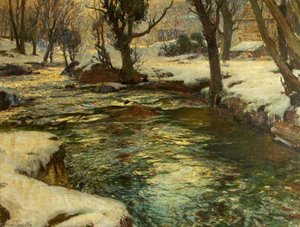
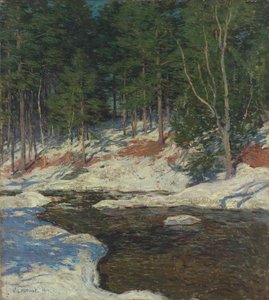
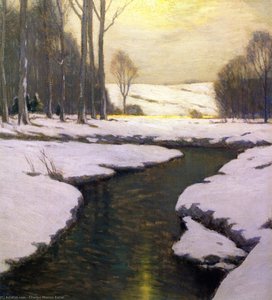
作家の略歴
A Life Immersed in Light and Legacy
Marc-Aurèle de Foy Suzor-Coté, a name resonant within the annals of Canadian art history, stands as a pivotal figure who bridged the gap between academic tradition and the burgeoning currents of French Impressionism and Post-Impressionism. Born Hypolite Wilfrid Marcaurèle Côté on April 6th, 1869, in Arthabaska, Quebec – now Victoriaville – his journey was one of artistic exploration, a dedication to capturing both the beauty of the Canadian landscape and the spirit of its history. Suzor-Coté wasn’t merely a painter and sculptor; he was a chronicler of a nation finding its voice, a ‘painter national par excellence,’ as proclaimed by *La Presse* in 1929. His life, spanning until January 29th, 1937, when he passed away in Daytona Beach, Florida, was a testament to the power of artistic vision and unwavering commitment.From Rural Beginnings to Parisian Studios
Suzor-Coté’s artistic inclinations were nurtured from his earliest years within an artistically inclined family. His initial exposure came through assisting local artist Joseph-Thomas Rousseau with decorative painting projects for churches, a formative experience that instilled in him a foundational understanding of technique and composition. However, his talents weren't confined to the visual arts; he demonstrated a remarkable aptitude for music, pursuing studies at the Conservatory of Music in Paris in 1890. This period reveals a versatile spirit, one capable of excelling in multiple creative disciplines. It was ultimately painting that claimed his devotion, leading him to immerse himself in formal artistic training within the vibrant Parisian art scene of the 1890s. He attended the prestigious École des Beaux-Arts under the tutelage of Léon Bonnat and further honed his skills at the Julian and Colarossi Academies. These institutions provided a rigorous grounding in classical techniques, shaping his early academic works – approximately one hundred pieces produced during this period. Notably, “Le Grand Nu,” featuring a model who was also a friend of Auguste Rodin, exemplifies this phase, showcasing his mastery of form and anatomy. During his time in Paris, he found inspiration in the sculptures of Swedish artist Carl Milles, particularly those depicting indigenous peoples, an influence that would subtly manifest in some of his later sculptural creations.Embracing Impressionism and a Canadian Identity
Around 1906, Suzor-Coté underwent a significant artistic shift, embracing the principles of Impressionism. This transformation was characterized by a loosening of brushwork, an exploration of vibrant color palettes, and a focus on capturing fleeting moments of light and atmosphere. His travels through Brittany during this time proved particularly influential, imbuing his canvases with a sense of luminosity and atmospheric depth. In 1908, he returned to Quebec, establishing studios in both Montreal and Arthabaska, determined to translate his newfound artistic sensibilities onto the Canadian landscape. He developed a distinctive style that seamlessly blended Impressionistic techniques with a uniquely Canadian sensibility – a way of seeing and representing the land that was distinctly his own. Beyond landscapes, Suzor-Coté embarked on ambitious historical paintings, most famously “Jacques Cartier rencontre les Indiens à Stadaconé en 1535” (Jacques Cartier Meets the Indians at Stadacona in 1535). This monumental work, initially met with resistance from the Canadian government, now resides proudly within the Musée national des beaux-arts du Québec, a testament to its enduring artistic and historical significance. Later in his career, he revisited themes explored during his academic training, creating nudes that he affectionately termed “primitives,” revealing a continuous dialogue between his past and present artistic explorations.Recognition and Enduring Influence
Suzor-Coté’s contributions to Canadian art were widely recognized throughout his lifetime. His election as a member of the Royal Canadian Academy of Arts in 1914 solidified his position within the national artistic community, while numerous exhibitions showcased his evolving body of work. A major retrospective organized by the Quebec government in 1929 celebrated his achievements, and another significant exhibition followed in 2002, presenting over 140 of his works to a new generation of admirers. His painting “Return from the Harvest Field” (1903) further cemented his national importance when it was featured on Canadian postage stamps issued in 1969. He is often referred to as the "chanteur (singer) of the epopee of New France" and a historian of Canada, reflecting his dedication to portraying Canadian history and identity through his art. Suzor-Coté’s legacy extends beyond individual paintings; he played a crucial role in establishing a distinctly Canadian artistic voice, moving beyond European influences while embracing modern techniques like Impressionism. His prolific output – an estimated 1500 works throughout his career – demonstrates remarkable productivity and versatility. Even after suffering a stroke in 1927 that limited his physical capabilities, he continued to champion his work until his death, leaving behind a rich artistic inheritance that continues to inspire and captivate audiences today.A Lasting Impression
Marc-Aurèle de Foy Suzor-Coté’s impact on Canadian art is undeniable. He wasn't simply an artist who painted beautiful pictures; he was a cultural force, a storyteller who used his brush to weave narratives of Canada’s past and present. His ability to synthesize European artistic movements with the unique character of the Canadian landscape created a style that was both modern and deeply rooted in national identity. His works remain powerful reminders of a pivotal moment in Canadian art history, a time when artists were striving to define what it meant to be uniquely Canadian through their creative expression. Suzor-Coté’s legacy continues to resonate today, inspiring generations of artists and reminding us of the enduring power of art to capture the spirit of a nation.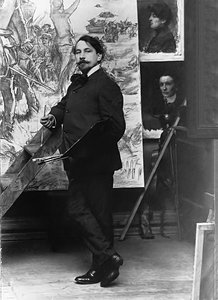
Marc-Aurèle de Foy Suzor-Coté
1869 - 1937 , Canada
プロフィール概要
- Artistic Movement Or Style: Impressionism, Post-Impressionism
- Artists Or Movements Influenced By This Artist: Canadian Art
- Artists Who Influenced This Artist:
- Léon Bonnat
- Carl Milles
- Date Of Birth: April 6, 1869
- Date Of Death: January 29, 1937
- Full Name: Hypolite Wilfrid Marcaurèle Côté
- Nationality: Canadian (French-Canadian)
- Notable Artworks:
- Jacques Cartier meets the Indians...
- Hazy Morning, Lombardy Poplars
- Winter Landscape
- End of Winter, Gosselin River
- Place Of Birth: Bathurst, Canada

