

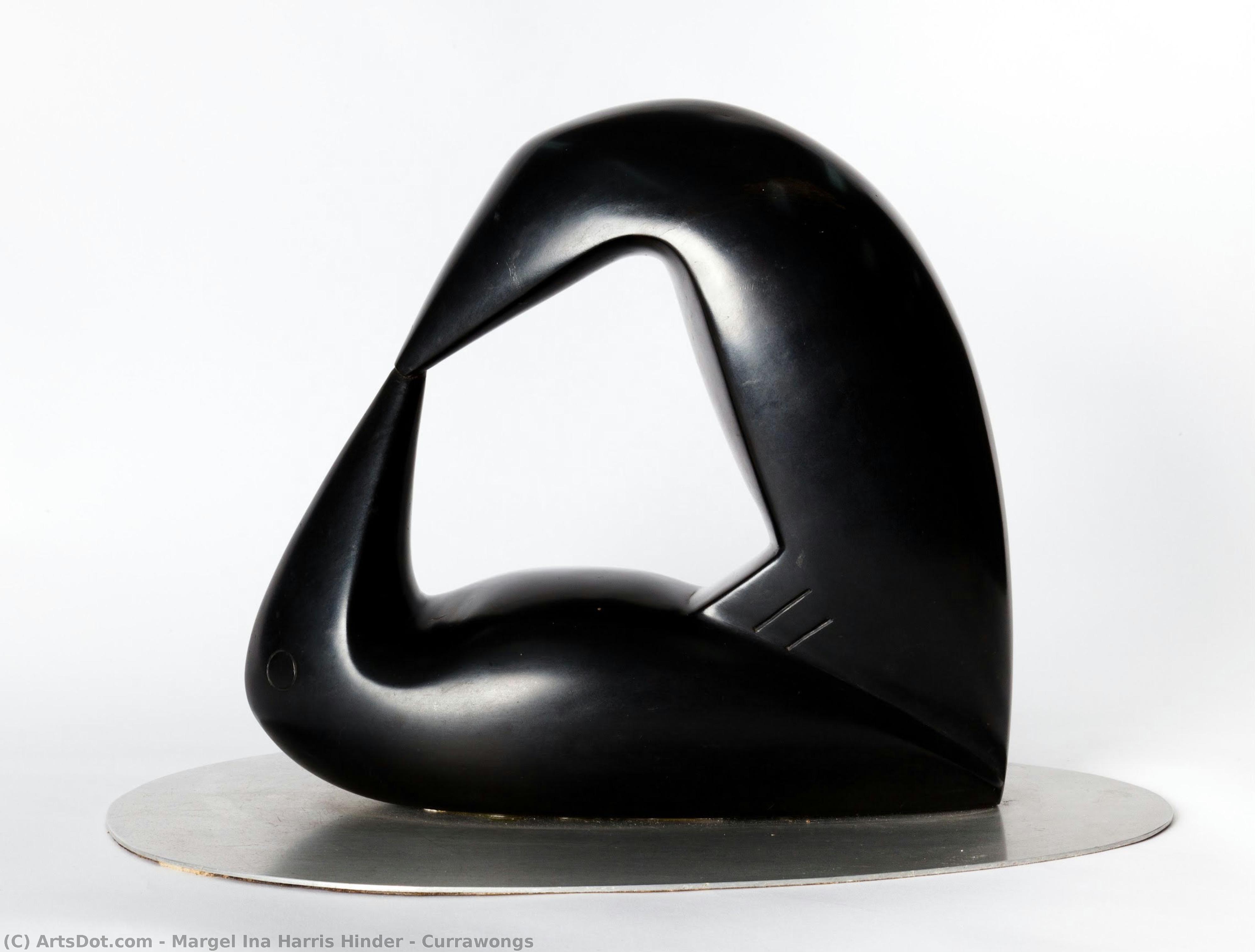
 プレビュー
プレビュー
 シェアする
シェアする シェアする
シェアする
 詳細を見る
詳細を見る

 ダウンロード
 似ている作品
 X線調査
X線調査 スライドショー
 Stats
StatsCurrawongs
 1947
1947 25.0 x 27.0 cm
 Penrith Regional Gallery - Home of the Lewers Bequest
 詳細を見る
詳細を見る
手描き油彩複製画
当社のアーティストが、お客様のご希望のサイズと額縁に合わせて、キャンバスに手描きで制作する油彩画です。 ( Switch to Print Switch to Digital Image)




































作品のオリジナル比率に合わせた、当店の規定サイズからお選びください。

特定のフレームやスペースに合わせて、ご希望のサイズをご入力いただけます。選択されたサイズが元の画像の比率と異なる場合、アートワークをトリミングするか、手描きで要素を追加して絵画を拡張いたします。デジタルモックアップ を制作し、制作開始前にご確認(承認)をいただきます。
画面上のプレビューは、実際のトリミングや拡張を正確に反映しているものではありません。最終的な構図は、モックアップによってのみ正確にご確認いただけます。
カスタムサイズもご利用いただけますが、元の比率を維持するためには、あらかじめ用意されたリストからサイズを選択することをお勧めいたします。
ご注文後、ArtsDot.com チームより詳細な指示をお送りするとともに、仕上がりイメージ(モックアップ)をご提供いたします。


 ガラスオプションは、110cm未満のサイズでのみご利用いただけます。

Currawongs
複製技法
複製画のサイズ
-


合計金額
$ 263
関連作品






アーティストの略歴
A Life Forged in Motion: The Sculptural Vision of Margel Hinder
Margel Ina Harris Hinder, born in Brooklyn, New York, on January 4th, 1906, was an artist whose life became a compelling testament to the power of artistic reinvention and the enduring allure of modernist abstraction. Her journey, spanning continents and evolving aesthetic philosophies, culminated in a significant body of work that continues to grace public spaces across Australia. Hinder’s story isn't simply one of sculptural creation; it is a narrative interwoven with personal resilience, intellectual curiosity, and a dedication to exploring the dynamic relationship between form, space, and movement. Her early life offered little indication of the path she would ultimately forge. While raised in New York City, a burgeoning center for artistic experimentation, her formal training began later in life, after relocating to Australia with her husband, artist John Hinder, in 1938. This move proved pivotal, not only altering the geographical landscape of her creative practice but also profoundly shaping its thematic concerns and stylistic direction. The initial years were marked by a collaborative spirit with John, as they established a studio and began exhibiting their work. However, Margel soon distinguished herself, developing a unique voice characterized by an increasingly abstract vocabulary and a fascination with kinetic sculpture – works that literally breathed with motion.From Collaboration to Kinetic Exploration
The 1940s witnessed Hinder’s emergence as a leading figure in Australian modernist sculpture. Initially working in more traditional materials like stone and wood, she quickly gravitated towards metal, recognizing its potential for expressing the fluidity and dynamism that captivated her imagination. This period saw the development of her signature style: complex arrangements of welded steel forms, often incorporating elements of balance and counter-balance to create sculptures that responded to air currents or even human interaction. Her early kinetic works were groundbreaking in Australia, challenging conventional notions of static form and introducing a new dimension of perceptual engagement. These weren’t merely objects to be viewed; they were experiences to be witnessed, subtly shifting and changing with the environment. The influence of Constructivism and other European modernist movements is evident in her work, yet Hinder never simply replicated these styles. She infused them with a distinctly Australian sensibility, drawing inspiration from the vastness of the landscape and the unique light conditions of the region. Her sculptures began to reflect an interest in natural forces – wind, water, gravity – and their impact on form. This fascination wasn’t purely aesthetic; it also stemmed from a broader philosophical inquiry into the nature of change and impermanence.Public Art & Monumental Statements
The post-war era saw Hinder increasingly focused on creating large-scale public sculptures, believing that art should be accessible to all and integrated into the fabric of everyday life. This commitment led to several landmark commissions, most notably her iconic work outside the Reserve Bank building in Martin Place, Sydney (1986). This sculpture, a towering assemblage of steel forms, became an instant symbol of the city, embodying both its modernity and its connection to the natural world. The Martin Place sculpture is not simply a decorative element; it’s a powerful statement about economic stability and growth, reflecting the building's function while simultaneously offering a visually arresting experience for passersby. Other significant public works include memorials in Newcastle, New South Wales, and Canberra, ACT, each tailored to its specific context and imbued with symbolic meaning. Hinder’s ability to create monumental sculptures that were both aesthetically compelling and conceptually resonant solidified her reputation as one of Australia's most important sculptors. She skillfully navigated the challenges of working on a large scale, ensuring that her works remained elegant and refined despite their imposing size.Influences & Artistic Development
While Hinder’s artistic journey was marked by independent exploration, several key influences shaped her development. The Constructivist movement, with its emphasis on geometric abstraction and industrial materials, provided a foundational framework for her early work. She admired the sculptures of Naum Gabo and Antoine Pevsner, whose pioneering use of space and transparency resonated deeply with her own aesthetic sensibilities.- The Bauhaus school’s principles of functionalism and integration of art and technology also played a role in her thinking.
- Her husband, John Hinder, was a constant source of intellectual stimulation and artistic dialogue, although their styles diverged over time.
- Perhaps most importantly, the Australian landscape itself served as a profound inspiration, influencing her choice of materials and thematic concerns.
Legacy & Historical Significance
Margel Hinder passed away in Roseville, New South Wales, on May 29th, 1995, leaving behind a rich legacy of sculptural innovation and public art. Her work continues to be celebrated for its elegance, dynamism, and conceptual depth. She was a pioneer in the field of kinetic sculpture in Australia, challenging conventional notions of form and introducing a new dimension of perceptual engagement. Her commitment to creating accessible public art ensured that her sculptures would reach a wide audience, enriching the lives of countless individuals. Today, Hinder’s work is held in several Australian public collections, including the National Gallery of Australia and the Art Gallery of New South Wales. She remains an important figure in the history of Australian modernism, inspiring generations of artists to explore the dynamic relationship between form, space, and movement. Her sculptures stand as enduring testaments to her vision – a life forged in motion, dedicated to creating art that breathes with the spirit of innovation and resonates with the pulse of the world around us.
margel ina harris hinder
1906 - 1995 , United States of America