

 プレビュー
プレビュー
 プリントを購入
 シェアする
シェアする シェアする
シェアする
 詳細を見る
詳細を見る

 ダウンロード
 似ている作品
 X線調査
X線調査 スライドショー
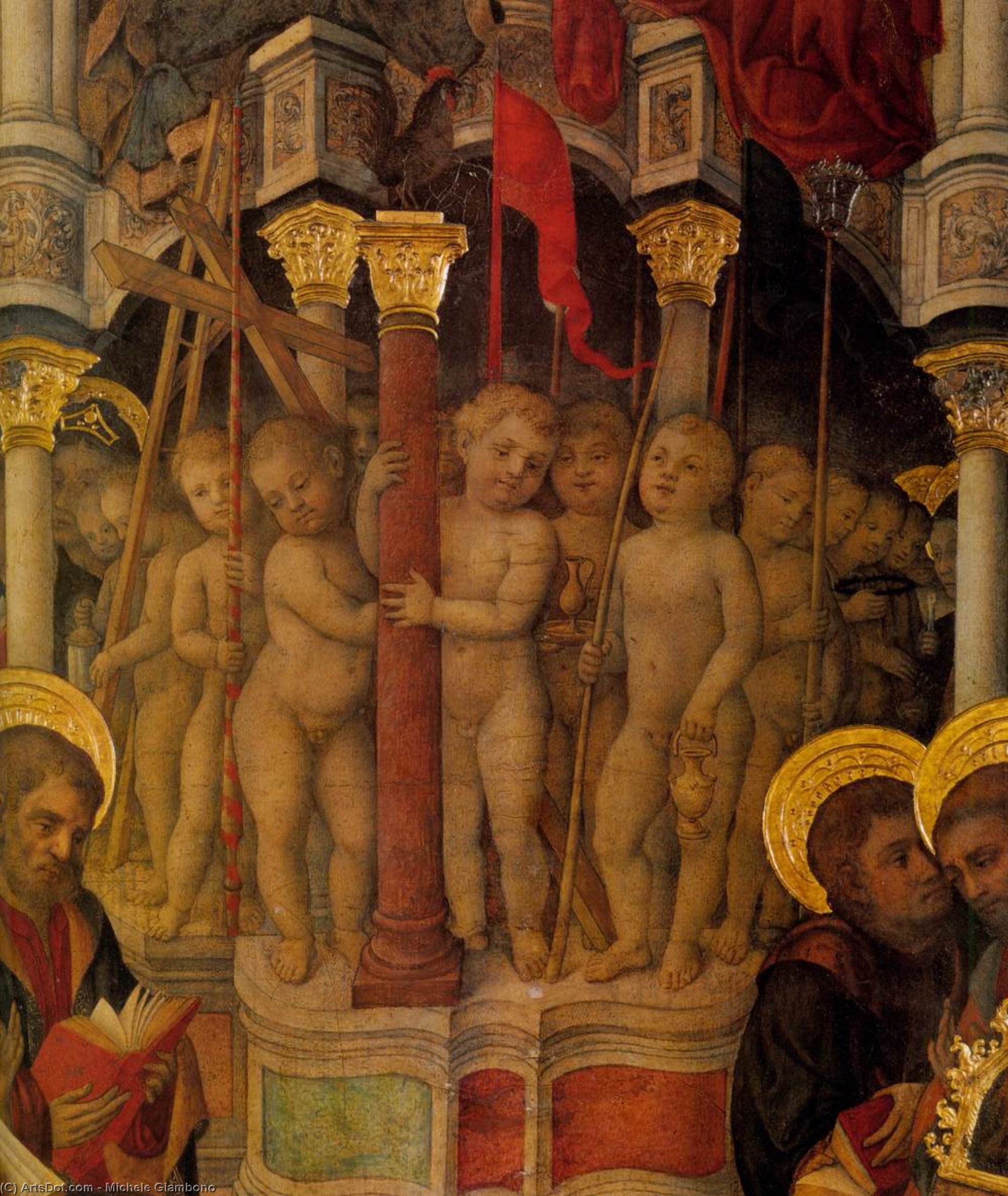
Coronation of the Virgin (detail)


 詳細を見る
詳細を見る




P118B $10

P118H $10

P118W $10

P438Z $10

P508JH $12

P508YH $12

P805H $10

P805Z $10

P919BZ $10

P919G $10

P919XJ $10

P959ZH $10

P968JZ $12

W106C $8

W218G $10

W218JH $8

W218Y $10

W307PJ $10

W316G $10

W316PJ $8

W316Y $10

W398PJ $8

W4111J $10

W500HY $15

W500JH $15

W692G $12

W849H $8

W940BG $15

W953PJ $8




作品のオリジナル比率に合わせた、当店の規定サイズからお選びください。

特定のフレームやスペースに合わせて、ご希望のサイズをご入力いただけます。選択されたサイズが元の画像の比率と異なる場合、アートワークをトリミングするか、手描きで要素を追加して絵画を拡張いたします。デジタルモックアップ を制作し、制作開始前にご確認(承認)をいただきます。
画面上のプレビューは、実際のトリミングや拡張を正確に反映しているものではありません。最終的な構図は、モックアップによってのみ正確にご確認いただけます。
カスタムサイズもご利用いただけますが、元の比率を維持するためには、あらかじめ用意されたリストからサイズを選択することをお勧めいたします。
ご注文後、ArtsDot.com チームより詳細な指示をお送りするとともに、仕上がりイメージ(モックアップ)をご提供いたします。


 ガラスオプションは、110cm未満のサイズでのみご利用いただけます。

Coronation of the Virgin (detail)
複製技法
複製画のサイズ
-


合計金額
$ 263
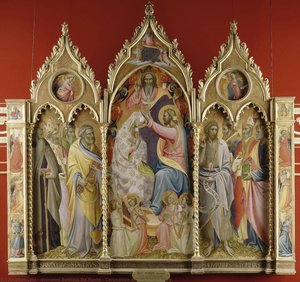
A Coronation Reverberating Through Time: Exploring Giambono’s ‘Coronation of the Virgin’
The Venetian Renaissance witnessed an extraordinary confluence of artistic currents—the humanist spirit of Florence battling against the Gothic grandeur of Northern Europe—and Michele Giambono's “Coronation of the Virgin” embodies this dynamic tension with breathtaking precision. Painted in 1448, this monumental altarpiece transcends mere visual representation; it’s a profound meditation on faith, majesty, and divine grace, meticulously crafted by Giambono and his workshop.Style and Technique: The Legacy of International Gothic
Giambono's artistic vision firmly adheres to the tenets of International Gothic style, a movement that flourished across Europe during the mid-fifteenth century. Unlike its Florentine counterpart, which prioritized linear perspective and anatomical realism—though Giambono certainly possessed an understanding of these principles—International Gothic championed decorative splendor and stylized figures imbued with spiritual significance. Observe how Giambono employs flattened planes of color, creating a luminous surface that captures the ethereal glow emanating from the angelic choirs. The drapery folds are rendered with intricate detail, conveying movement and texture while simultaneously adhering to established conventions of Gothic art. This deliberate stylistic choice underscores the importance of symbolic representation over literal accuracy—a hallmark of Giambono’s oeuvre.Historical Context: Venice at the Height of Its Power
The painting's commission reflects Venice’s position as a dominant maritime republic and cultural powerhouse during the Quattrocento. The Venetian Doge, Francesco Gonzaga, sought to elevate his prestige through opulent artistic patronage—Gonzaga was a fervent supporter of humanist scholarship and commissioned numerous artworks intended to glorify his family lineage and reaffirm Venetian identity. “Coronation of the Virgin” served not only as a devotional centerpiece for Gonzaga’s palazzo but also as a potent symbol of Venetian piety and artistic excellence, aligning seamlessly with the broader cultural ambitions of the era. The artwork's placement within Gonzaga’s palace underscores its role in shaping public perception and reinforcing social hierarchies—a testament to Giambono’s ability to capture the zeitgeist of his time.Symbolism: Angels, Light, and Divine Majesty
The composition overflows with symbolic imagery designed to convey profound theological concepts. The central figures—the Virgin Mary and Saint Bernard—represent humility and piety, respectively, embodying the virtues deemed essential for spiritual ascension. Surrounding them are twelve angels, each meticulously rendered in shimmering gold leaf—a technique characteristic of International Gothic—symbolizing divine guardianship and illuminating the sacred narrative. The radiant light emanating from the heavens underscores God’s omnipresence and illuminates the Virgin Mary's coronation, signifying her exaltation into heavenly glory. Furthermore, the intricate floral motifs adorning the drapery convey fertility and renewal—references to Mary’s role as Mother of God and the promise of eternal life.Emotional Impact: A Vision of Transcendental Beauty
“Coronation of the Virgin” transcends mere aesthetic pleasure; it evokes a visceral response rooted in contemplation and reverence. Giambono's masterful manipulation of color, texture, and composition creates an immersive experience that transports viewers into the realm of divine majesty. The luminous gold leaf imparts an aura of otherworldly splendor—capturing the viewer’s gaze and fostering a sense of awe. The serene expressions of the figures convey tranquility and spiritual devotion—inspiring contemplation on themes of faith, grace, and redemption. Ultimately, Giambono's masterpiece succeeds in communicating the profound beauty and transformative power inherent in Christian iconography—a legacy that continues to resonate with audiences centuries later.関連作品


アーティストの略歴
The Golden Splendor of Michele Giambono
In the heart of fifteenth-century Venice, a city defined by its shimmering lagoons and unparalleled maritime wealth, the artistry of Michele Giambono emerged as a luminous bridge between the medieval past and the dawning Renaissance. Born around 1400 into a lineage of painters, Giambono was destined to become a master of the International Gothic style, an aesthetic characterized by courtly elegance, intricate ornamentation, and a profound sense of spiritual devotion. His life and work reflect the opulent atmosphere of a Venice that sought to manifest divine glory through gold, pigment, and mosaic, creating a visual language that remains as captivating today as it was during the Quattrocento.
The development of Giamblustre’s technique was deeply rooted in the Venetian tradition of craftsmanship. As a follower of luminaries such as Jacobello del Fiore and Gentile da Fabriano, Giambono inherited a fascination with delicate line work and the use of precious materials to evoke the celestial realm. His training likely involved the rigorous mastery of tempera on wood panels and the complex, architectural demands of mosaic application. This dual expertise allowed him to navigate both the intimate scale of devotional panel paintings and the monumental requirements of ecclesiastical decorations, ensuring that his artistic voice could resonate within the quiet corners of private chapels and the vast, echoing naves of great basilicas alike.
Mastery of Light and Devotion
Giambono’s oeuvre is a testament to the power of symbolic storytelling through color and light. His most significant contributions to the Venetian landscape can be found in his monumental mosaic commissions within the San Marco Basilica, specifically the decoration of the Birth of the Virgin and Presentation in the Temple chapels. In these works, he utilized the reflective properties of glass and gold leaf to create a sense of spatial illusion, where the flickering light of candles would breathe life into the sacred narratives. This mastery of mosaic artistry allowed him to transform stone and glass into ethereal visions of divine grace.
Beyond the mosaics, his panel paintings offer a more intimate glimpse into his stylistic nuances. In works such as Virgin and Child, Giambono employs a striking palette—often utilizing elegant black and white motifs set against radiant gold backgrounds—to focus the viewer's attention on the sanctity of the figures. His ability to balance the heavy, decorative traditions of the Gothic era with an emerging interest in more naturalistic detail is evident in masterpieces like Madonna and Child Enthroned and the detailed Coronation of the Virgin. These paintings are not merely religious icons but are sophisticated compositions where every fold of drapery and every gilded accent serves to elevate the soul.
Legacy within the Venetian Renaissance
The historical significance of Michele Giambono lies in his role as a custodian of beauty during a period of profound cultural transition. While the broader Renaissance would eventually move toward the anatomical realism and linear perspective of masters like Bellini, Giambono’s dedication to the International Gothic aesthetic provided the essential foundation of splendor upon which later Venetian art was built. He captured a specific moment in history where the decorative and the divine were indistinguishable.
To study Giambono is to encounter the very essence of Venetian elegance. His legacy survives through:
- The preservation of the International Gothic spirit: Maintaining the intricate, courtly beauty that defined early 15th-century Europe.
- Architectural integration: His ability to harmonize large-scale mosaic works with the complex liturgical spaces of Venice.
- Iconographic influence: Establishing enduring visual templates for themes such as the Man of Sorrows and the Coronation of the Virgin that would inspire generations of Italian painters.
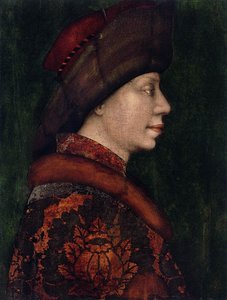
Michele Giambono
1400 - 1462 , Italy
基本情報
- Artistic Movement Or Style: International Gothic
- Artists Or Movements Influenced By This Artist: ['Renaissance']
- Artists Who Influenced This Artist:
- Jacobello del Fiore
- Gentile da Fabriano
- Date Of Birth: c. 1400 Venice
- Date Of Death: c. 1462 Venice
- Full Name: Michele Taddeo di Giovanni Bono
- Nationality: Italian
- Notable Artworks:
- Man of Sorrows
- St. Peter
- Birth of the Virgin
- The Visitation
- Place Of Birth: Venice, Italy
関連記事

Jacob Henricus Maris: A Master of Dutch Atmospheric Realism & the Intimate Landscape
Explore the captivating world of Jacob Henricus Maris, a leading figure of the Dutch Hague School. Discover his atmospheric landscapes, signature brushstrokes & lasting influence on 19th-century art. Learn more at ArtsDot.
フラ・アンジェリコの傑作25選:ルネサンス美術の神髄と至高の装飾 | ArtsDot
フラ・アンジェリコの傑作25選。ルネサンス美術の神髄を紐解き、天使のような静謐な色彩と宗教画の世界へ誘います。壁画やフレスコ画の技法、修道院に息づく祈りの絵…ArtsDotで至高のアートプリントをお手軽に。コレクションを探索する。

ジョット・ディ・ボンドーネ:至高の25選 - ルネサンスの夜明けを彩る傑作たち | ArtsDot
ジョット・ディ・ボンドーネの至高の25選。ルネサンス美術を牽引した巨匠の傑作と、その感動的な物語を紐解きます。高品質な絵画複製やインテリアアートで、名画の世界をあなたの空間に。ArtsDot.com でコレクションをご覧ください。
Mario Sironi: A Poetic of Modern Italian Identity Through Symbolism & Social Commentary
Explore the profound works of Mario Sironi, a key figure in Italian Modernism. Discover his evolution from Futurism to Metaphysical painting and his powerful social commentary. Learn about his legacy at ArtsDot.

Mary Vaux Walcott: Botanical Precision & Artistic Vision in American Conservation
Discover the exquisite botanical watercolors of Mary Vaux Walcott, celebrated as the 'Audubon of Botany.' Explore her life, art, and lasting impact on American conservation through detailed illustrations & Smithsonian contributions.

