

 プレビュー
プレビュー
 プリントを購入
 シェアする
シェアする シェアする
シェアする
 詳細を見る
詳細を見る

 ダウンロード
 似ている作品
 X線調査
X線調査 スライドショー
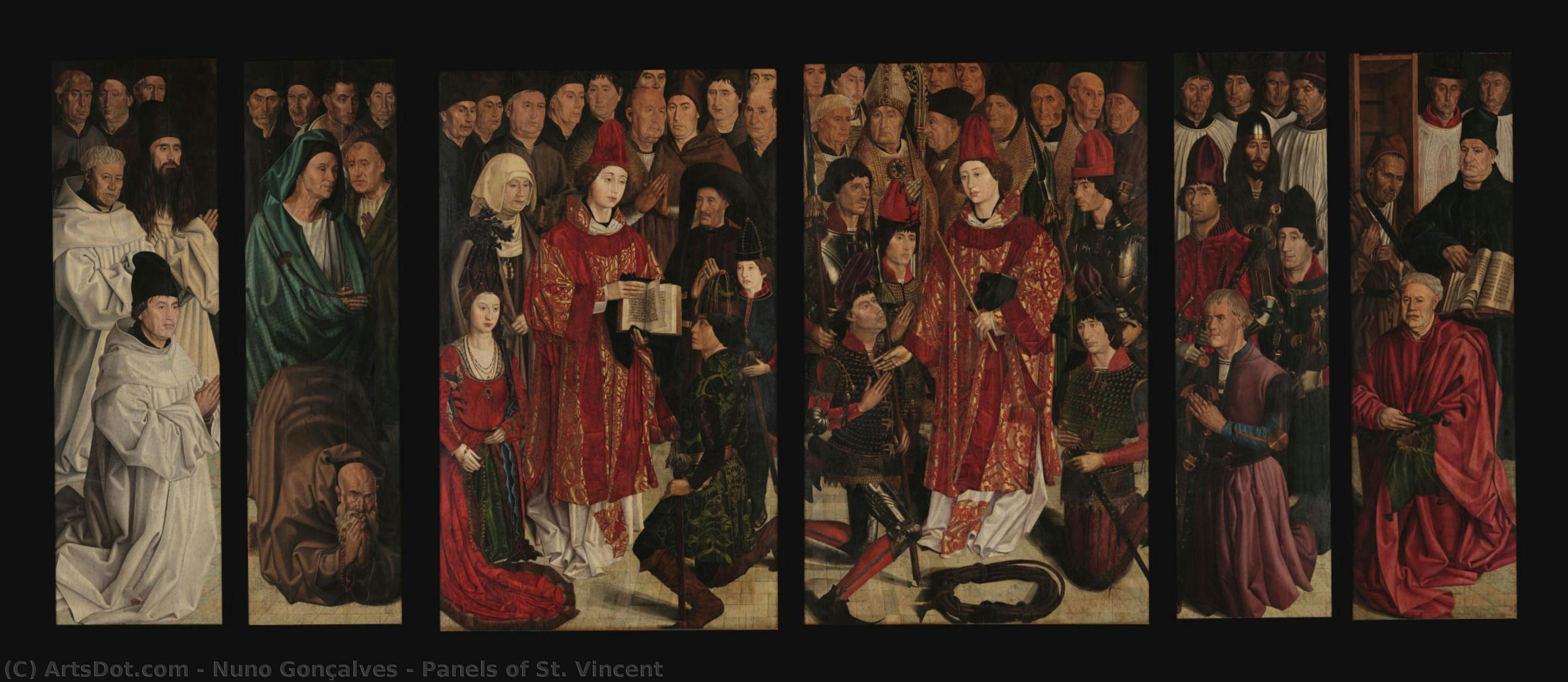
Panels of St. Vincent
 Tempera On Panel
- Portuguese Renaissance
 1400
1400- Late Medieval
 207.0 x 64.0 cm
 国立古美術館
 詳細を見る
詳細を見る
オンラインプレビューをはるかに凌ぐ、高解像度で鮮明なデジタル画像をご購入いただけます。
各ファイルは、社内の専門家が高度なツールと熟練した手作業によるレタッチを用いて、細心の注意を払って準備されています。すべての画像において、卓越した鮮明度、正確な色彩再現性、そして繊細なディテールを保証いたします。
最終ファイルは、プロフェッショナルな編集・印刷環境ですぐにご利用いただけるよう最適化された状態で、72時間以内にメールにてお届けいたします。これは、一流のデザインスタジオ、出版社、ギャラリーから信頼されているものと同等の品質です。
デジタル画像のご注文に付随する特典
高品質なデジタル画像配信を、確かな品質で。
ArtsDot.com を選ぶことは、単に画像を手に入れることではありません。それは、プロの手によって精密に仕上げられ、満足保証が付いた高品質なデジタルアートワークを受け取ることを意味します。ご注文いただいた際に自動的に付随する内容は、以下の通りです:

メールですぐにお届け
ご注文から72時間以内に、高解像度のデジタル画像ファイルがメールでお手元に届きます。すぐにそのままご利用いただけます。

AI技術で最適化されたデジタルファイル
お客様の作品は、高度なAIツールと専門家による手作業の編集を組み合わせてプロフェッショナルに最適化されており、細部のディテール、鮮明さ、そして正確な色再現性を最大限に引き出しています。

一生涯無料の再送サービス
ファイルを誤って削除したり、紛失してしまったりしましたか?ご安心ください。いつでも無料で再送いたします。

輸入手数料は一切かかりません
関税や手数料、配送料を気にすることなく、お気に入りのアートワークをすぐにお楽しみいただけます。デジタルダウンロードは常に免税です。

色彩再現の保証
プロ仕様のツールとカラーマネジメント技術を用いることで、デジタル画像が元の色を最大限に忠実に再現することを保証いたします。

60日間満足保証
ご購入いただいたデジタル画像にご満足いただけない場合は、60日以内であれば、修正または100%の返金(理由を問う必要はありません)をさせていただきます。

100% 返金保証
ご満足いただけない場合は、デジタルファイルを受け取ってから60日以内であれば、理由を問わず全額返金いたします。

まとめ買い割引
3枚購入で10%OFF - 5枚購入で15%OFF - 10枚以上購入で20%OFF。クリエイティブなプロジェクト、ギャラリー、エージェンシーに最適です。
A Monumental Gathering of Souls
In the hallowed halls of the National Museum of Ancient Art in Lisbon, there exists a masterpiece that transcends the boundaries of mere portraiture to become a living window into the fifteenth century. The Panels of St. Vincent, attributed to the enigmatic master Nuno Gonçalves, is not simply a painting; it is a profound, solemn assembly of humanity. This monumental work, composed of six distinct panels, presents a breathtaking "group portrait" that captures fifty-eight individuals from the diverse strata of Portuguese society. As one gazes upon this assembly, there is an immediate sense of being present at a sacred moment, caught in the quiet, intense gravity of a religious ceremony. The figures—ranging from the high nobility and clergy to commoners and merchants—are rendered with such psychological depth that their individual gazes seem to pierce through the centuries, inviting the viewer into their shared act of veneration.
The composition is anchored by the double figuration of St. Vincent, the patron saint of Lisbon, serving as the spiritual North Star for this gathered crowd. The sheer scale of the work, measuring an imposing 207 x 64 cm, creates a panoramic effect that mimics the breadth of the kingdom itself. There is a rhythmic flow to the arrangement of the figures; some stand with a regal, upright posture, while others sit in contemplative repose, creating a visual tapestry of movement and stillness. This careful orchestration of bodies leads the eye across a landscape of faces, each one etched with a unique expression of concentration, piety, or quiet dignity.
The Mastery of Tempera and Texture
Technically, the Panels represent a pinnacle of late medieval and early Renaissance craftsmanship. Utilizing tempera on panel, Nuno Gonçalves achieved a level of sophisticated pictorial definition that was remarkably advanced for his time. The artist’s ability to render the tactile reality of the era is nothing short of extraordinary. One can almost feel the weight of the heavy velvet robes, the crispness of the linen, and the intricate metallic sheen of the ceremonial accessories. Every fold in a garment and every glint of light on a piece of jewelry is executed with a meticulous precision that suggests a profound understanding of both light and material.
The color palette is both rich and somber, dominated by deep reds, earthy ochres, and regal blues, which lend the work its monumental and authoritative character. This use of color does more than just decorate; it defines social hierarchy and adds to the atmospheric weight of the scene. The technique allows for a sculptural quality in the figures, giving them a palpable volume that makes them appear less like painted icons and more like flesh-and-blood participants in a historical event. For the collector or interior designer, this level of detail ensures that a high-quality reproduction retains the soul of the original, offering a centerpiece that commands attention through its sheer complexity and textural richness.
A Legacy of Identity and Devotion
Beyond its aesthetic brilliance, the Panels of St. Vincent serve as an invaluable historical document. Created during the era of King Afonso V, the work captures Portugal at a pivotal moment—on the precipice of the Age of Discovery. The assembly reflects a nation finding its identity, fueled by the religious and military expansion into the Maghreb. There is a palpable sense of purpose in the eyes of the figures, a collective spirit that mirrors the burgeoning ambitions of the Portuguese Crown. The symbolism embedded within the costumes, the heraldry, and the very arrangement of the crowd speaks to a deeply structured society bound together by faith and loyalty.
To possess or display a reproduction of this work is to bring a piece of profound historical narrative into a contemporary space. It offers an emotional impact that is both humbling and inspiring, providing a sense of continuity between the medieval past and the modern world. Whether placed in a grand library, a formal dining room, or a curated gallery space, the Panels evoke a sense of timelessness and intellectual depth. They remind us of the enduring power of collective identity and the beauty found in the quiet, shared moments of human devotion.
関連作品
![Legend Of St Francis - [23] - St Francis Mourned By St Clare — ジョット, Gothic](/media/artworks/images-thumb/17/1c/171c284c41dc3ef8bca83e51c1e1e531.jpg)
作家の略歴
Nuno Gonçalves: The Soul of 15th-Century Portugal
Nuno Gonçalves, a name largely shrouded in the mists of time yet resonating powerfully within Portuguese art history, stands as a pivotal figure bridging the late Middle Ages and the burgeoning Renaissance. Born around 1420 in Portugal – precise dates remain elusive, lost to the vagaries of historical record – he served as court painter to King Afonso V, leaving behind a legacy embodied most strikingly by the “Saint Vincent Panels.” These monumental works offer an unparalleled glimpse into the social fabric and artistic sensibilities of 15th-century Portugal, a nation poised on the brink of its Age of Discovery. His life remains remarkably obscure, yet his art speaks volumes, demanding our attention and inviting us to contemplate the man behind the brush.
Early speculation suggests Gonçalves’s training may have been rooted in the artistic traditions of Flanders, possibly under the tutelage of a master working in Brussels. The striking resemblance between his work – particularly the Saint Vincent Panels – and the meticulous realism, dramatic lighting, and emotional depth characteristic of Jan van Eyck, Hugo van der Goes, and Dieric Bouts strongly supports this theory. The influence of Flemish painting is undeniable, yet Gonçalves skillfully adapted these techniques to forge a distinctly Portuguese style, imbuing his work with a uniquely national character.
The Saint Vincent Panels: A Chronicle in Paint
At the heart of Gonçalves’s artistic achievement lies the “Saint Vincent Panels,” a polyptych housed within the Museu Nacional de Arte Antiga in Lisbon. These twelve panels, created primarily between 1460 and 1470, are not merely religious depictions; they are vibrant chronicles of Portuguese society. The scenes unfold with astonishing detail, portraying clergy, nobility, merchants, artisans, peasants – a microcosm of the nation’s diverse population. The figures are rendered with remarkable psychological depth, each face conveying a wealth of emotion and character.
The panels' narrative structure is complex and layered. They depict Saint Vincent of Fora, a local Portuguese saint, but simultaneously function as a social commentary. Gonçalves masterfully captures the hierarchy of power – the regal bearing of the nobility, the solemnity of the clergy, and the industriousness of the commoners. The inclusion of Prince Henry the Navigator, a key figure in Portugal’s maritime expansion, within the third panel has fueled decades of debate among art historians. While some argue for its authenticity, others suggest it may have been added later, reflecting the importance of this patron to the royal court. The very existence of the panels themselves is a testament to Gonçalves's skill and influence; they are considered the pinnacle of Portuguese antique art.
Historical Context and Artistic Influences
Gonçalves’s work emerged during a period of immense transformation in Portugal. The reign of Afonso V witnessed a surge in national pride, fueled by successful voyages of exploration and the establishment of trading posts along the African coast. This era fostered a desire to document and celebrate Portuguese achievements – a sentiment powerfully expressed through Gonçalves's art. He was deeply embedded within the royal court, serving as a visual recorder of its ceremonies, portraits, and political events.
Beyond his Flemish influences, Gonçalves’s work also reflects elements of Gothic painting, particularly in its use of color and decorative detail. However, he transcends these earlier styles by imbuing his paintings with a sense of realism and psychological depth that was largely absent in contemporary art. The meticulous observation of human anatomy, the subtle nuances of expression, and the dramatic lighting all contribute to the panels’ enduring power.
Legacy and Enduring Mystery
Despite the considerable scholarly attention devoted to Nuno Gonçalves, many aspects of his life remain shrouded in mystery. The lack of biographical details – birthdate, death date, even a confirmed portrait – adds to the aura of intrigue surrounding this enigmatic artist. The debate over the authorship of the Saint Vincent Panels continues to this day, with some scholars suggesting that Hugo van der Goes may have collaborated on their creation.
Nevertheless, Nuno Gonçalves’s legacy is firmly established as one of Portugal's greatest artistic figures. The “Saint Vincent Panels” stand as a testament to his skill, vision, and profound understanding of the Portuguese people. They offer an invaluable window into a pivotal moment in Portuguese history – a time of exploration, expansion, and artistic innovation. Gonçalves’s work continues to captivate viewers centuries after its creation, reminding us of the enduring power of art to illuminate the past and shape our understanding of the present.
nuno gonçalves
1420 - 1490 , Portugal
プロフィール概要
- Artistic Movement Or Style: Renaissance painting
- Artists Who Influenced This Artist: ['Jan van Eyck, Hugo van der Goes, Dieric Bouts],\n "Artists or movements influenced by this artist": ["Portuguese Renaissance"]\n}']
- Date Of Birth: c. 1420, Portugal
- Date Of Death: 1490
- Full Name: Nuno Gonçalves
- Nationality: Portuguese
- Notable Artworks:
- Saint Vincent Panels
- Franciscan Saint
- St. Theotonius (?)
- Altarpiece of Saint Vincent
- Place Of Birth: Portugal

