メニュー
無料アート相談
プレビュープレビュー ARで試着ARで試着 プリントを購入 プリントを購入手描きの絵画を購入 手描きの絵画を購入 シェアするシェアする
詳細を見る詳細を見る お気に入りに追加 お気に入りに追加 ダウンロードダウンロード 似ている作品似ている作品 X線調査X線調査 スライドショースライドショー

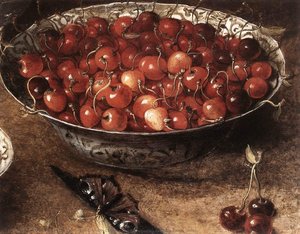
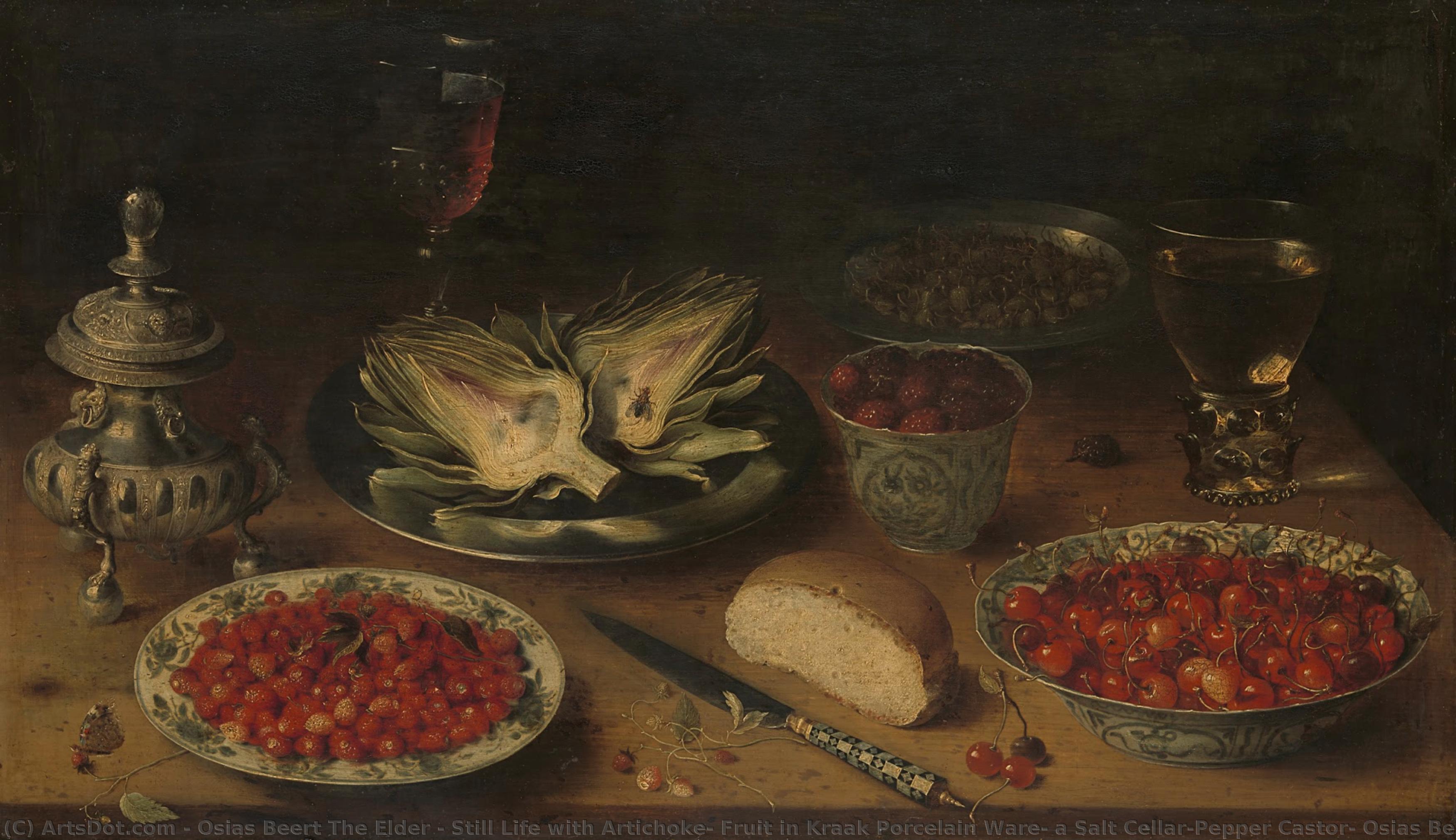
Still Life with Artichoke, Fruit in Kraak Porcelain Ware, a Salt Cellar/Pepper Castor, Osias Beert (I), c. 1605 - c. 1615

Osias Beert I’s 1615 still life showcases opulent fruit & tableware in Kraak porcelain. Explore this Dutch Golden Age masterpiece, rich in symbolism and detail.

Explore the early Flemish still lifes of Osias Beert the Elder! Known for opulent banquet scenes & floral arrangements, he pioneered a unique perspective in Northern European art.

オンラインプレビューをはるかに凌ぐ、高解像度で鮮明なデジタル画像をご購入いただけます。

各ファイルは、社内の専門家が高度なツールと熟練した手作業によるレタッチを用いて、細心の注意を払って準備されています。すべての画像において、卓越した鮮明度、正確な色彩再現性、そして繊細なディテールを保証いたします。

最終ファイルは、プロフェッショナルな編集・印刷環境ですぐにご利用いただけるよう最適化された状態で、72時間以内にメールにてお届けいたします。これは、一流のデザインスタジオ、出版社、ギャラリーから信頼されているものと同等の品質です。

デジタルアート

個人での鑑賞、印刷、クリエイティブなプロジェクト用に、高解像度ファイルをダウンロードできます。 (プリントを購入 プリントを購入手描きの絵画を購入 手描きの絵画を購入)

最終合計金額

$ 24.00

デジタル画像のご注文に付随する特典

高品質なデジタル画像配信を、確かな品質で。

ArtsDot.com を選ぶことは、単に画像を手に入れることではありません。それは、プロの手によって精密に仕上げられ、満足保証が付いた高品質なデジタルアートワークを受け取ることを意味します。ご注文いただいた際に自動的に付随する内容は、以下の通りです:

shipping_icon
メールですぐにお届け

ご注文から72時間以内に、高解像度のデジタル画像ファイルがメールでお手元に届きます。すぐにそのままご利用いただけます。

canvas_icon
AI技術で最適化されたデジタルファイル

お客様の作品は、高度なAIツールと専門家による手作業の編集を組み合わせてプロフェッショナルに最適化されており、細部のディテール、鮮明さ、そして正確な色再現性を最大限に引き出しています。

insurance_icon
一生涯無料の再送サービス

ファイルを誤って削除したり、紛失してしまったりしましたか?ご安心ください。いつでも無料で再送いたします。

tax_icon
輸入手数料は一切かかりません

関税や手数料、配送料を気にすることなく、お気に入りのアートワークをすぐにお楽しみいただけます。デジタルダウンロードは常に免税です。

color_icon
色彩再現の保証

プロ仕様のツールとカラーマネジメント技術を用いることで、デジタル画像が元の色を最大限に忠実に再現することを保証いたします。

return_icon
60日間満足保証

ご購入いただいたデジタル画像にご満足いただけない場合は、60日以内であれば、修正または100%の返金(理由を問う必要はありません)をさせていただきます。

guarantee_icon
100% 返金保証

ご満足いただけない場合は、デジタルファイルを受け取ってから60日以内であれば、理由を問わず全額返金いたします。

discount_icon
まとめ買い割引

3枚購入で10%OFF - 5枚購入で15%OFF - 10枚以上購入で20%OFF。クリエイティブなプロジェクト、ギャラリー、エージェンシーに最適です。

Like other related compositions by Osias Beert I, this painting has in the past been attributed to Louise Moillon (1610-1696) and to Georg Flegel (1566-1638).15 Its attribution to Beert was due to Benedict in 1938, who stated that it was the the most beautiful non-signed replica (plus belle réplique non signé) of a work in a private collection, Paris, which was signed with his initials.16 That painting was identified as being with the Galerie Mestrallet in 1938 by Greindl in her list of signed works by Beert.17 She also accepted as autograph another replica in a Belgian private collection which is slightly larger than the present picture.18 Benedict already listed variants in 1938: with the dealer P. de Boer, Amsterdam, in the museums at Kassel and St Omer19 and in a private collection in Paris. In his 1996 catalogue of the Kassel Gemäldegalerie Alte Meister, Schnackenburg accepted the Rijksmuseum picture as the prototype.20 Meijer had also accepted it in 1994.21 But whether it is Beert’s prime original would depend on examination of the Mestrallet version and that referred to as in a Belgian private collection by Greindl in 1983. Many of the motifs appear in other table top still lifes by Beert; for instance the cluster of three cherries, the stem of the wild strawberries with the knife and the bowls of cherries and strawberries occur in the Still Life of Cherries and Strawberries in Porcelain Bowls at Berlin;22 the bread, diagonally placed, was a favourite motif of his. The fruit is contained in three Kraak porcelain pieces, products of the reign of the Chinese Emperor Wanli (1573-1619). Rinaldi has identified the wild strawberries as placed in a flat-rimmed dish, the mulberries in a bell (or crow) cup and the cherries in a klapmuts.23 No similar decorative motifs are found in Rinaldi’s survey, but that on the rim of the bowl of strawberries, of equidistant flower sprigs, can perhaps be dated circa 1580-1600 by analogy with her ‘Border III’.24 The bell cup is, according to Rinaldi, a rare type perhaps to be dated from circa 1620-35;25 if such a dating is correct, it would rule out the presence of the object here because the painting was probably executed fairly early in the century as is argued below. It may be that the object is a ‘crow cup’ (c. 1595-1645), which seems to have been slightly larger than a bell cup;26 however, the decoration of a flower spray in an ogival panel seems more akin to that on a differently shaped category of bowl of circa 1575-1600.27 The knife is probably a ‘Whitsun knife’; Marquardt illustrates an example described as probably German of the second half of the sixteenth century, whose handle is decorated with scales of dark horn and natural coloured mother-of-pearl.28 The handle of that in the present picture is more elaborate. Similar knives appear in still lifes by Pieter Claesz executed in Haarlem in the 1620s.29 The wine glass is façon de Venise, while the vessel on the right is a typical rummer. Unusual is the silver object on the left seemingly found only in still lifes by Beert. It has been described both as a sugar bowl30 and as a salt cellar, but is in fact a salt cellar topped by a pepper castor, and quite different to the rectangular shaped salt cellars depicted, for instance, by the Antwerp-based Clara Peeters (active 1607-after 1634; see biography under SK-A-2111) in her 1608/09 Still Life of Oysters, Bread and a Salt.31 In Beert’s art it would also function as an egg ‘cup’,32 in which the egg replaced the lid with the pepper castor and rested in the salt. The design of the object derived from the series of engravings of vessels published by Hans Vredeman de Vries (1527-c. 1607) in 1563; the engraving of one is entitled: ‘A vessel whose upper part will furnish pepper and whose lower part in truth salt’, another ‘a vessel whose lower part carried salt and upper part pepper’.33 Fuhring states that there is no extant object that can be related to the designs in the Vessels series;34 however, Baudouin, Colman and Goethals describe silversmiths’ development of the De Vries design in a way which seems not dissimilar to the object depicted by Beert, but without any specific reference.35 Indeed a simplified version of the design and without the top is depicted by Frans Snijders (1579-1657) in his banquet still life at Dublin, dated by Oldfeld and Robels to the late 1620s36 and is also found on the table at which the Prodigal Son feasts with a lady of easy virtue in the decoration by Frans Francken III (1607-1667) of the wing of a painted cabinet showing the story of the Prodigal Son (BK-NM-4190). In the absence of any dated extant work by Beert, other factors have to be brought to bear in suggesting a date for the Rijksmuseum still life. The view point is relatively high – not as high as the Still Life with Dives and Lazarus in which the background scene depends on a print executed before 1611,37 but higher than in the still life painted on a copper stamped by Pieter ../..

作家の略歴

Osias Beert the Elder: Pioneer of Flemish Still Life

Osias Beert (c. 1580 – 1623) stands as a pivotal figure in the burgeoning field of Northern European still life painting during the Dutch Golden Age, specifically recognized for his groundbreaking approach to depicting floral arrangements and banquet scenes—a style that would come to be known as “breakfast paintings.” Born around 1580 in Antwerp, Beert’s artistic journey began under the tutelage of Andries van Baseroo, establishing him firmly within the influential Antwerp art milieu. This formative period instilled in him a meticulous attention to detail and a masterful command of chiaroscuro—the dramatic interplay of light and shadow—techniques that would characterize his distinctive oeuvre.
  • Early Influences: Beert’s artistic sensibilities were undoubtedly shaped by the prevailing Baroque aesthetic, which emphasized grandeur, theatricality, and emotional intensity. However, he distinguished himself from many contemporaries through a subtle yet profound exploration of naturalism, prioritizing accurate representation over mere decorative embellishment.
  • Technique & Style: Beert's signature style involved layering textures—fruit skins glistening with dew, velvety petals unfurling—to create immersive visual experiences for the viewer. He skillfully employed atmospheric perspective to convey depth and realism, capturing fleeting moments of beauty with remarkable precision.

Notable Works & Artistic Development

Beert’s artistic output spanned approximately 40 paintings, primarily focused on opulent banquet scenes populated by exquisitely rendered fruit, flowers, and tableware—a genre that anticipated the later developments championed by artists like Willem van Hemsterhuysen. His celebrated “Dishes with Oysters” exemplifies this style perfectly, showcasing a lavish display of seafood alongside vibrant blossoms arranged in Kraak porcelain ware. The painting’s dramatic lighting enhances the sumptuousness of the composition, conveying both visual splendor and symbolic richness. Similarly, "Still Life with Artichoke, Fruit in Kraak Porcelain Ware, a Salt Cellar/Pepper Castor" demonstrates Beert's dedication to capturing naturalistic detail and masterful chiaroscuro.
  • Key Paintings: Among his most recognizable works are “Fruit Still Life,” “Bouquet of Flowers,” and “Still Life with Wine Bottles.” These paintings exemplify Beert’s ability to distill complex emotions into carefully constructed visual narratives.

Symbolism & Artistic Significance

Beert's work transcends mere aesthetic pleasure; it engages in a sophisticated dialogue with humanist philosophical concepts prevalent during the Renaissance and Baroque eras. The inclusion of symbolic elements—such as skulls representing mortality—underscores the contemplation of human existence and the ephemeral nature of beauty. Like many artists of his time, Beert utilized still life to convey moral lessons and explore themes of vanitas—the futility of earthly pursuits in contrast to spiritual salvation.

Legacy & Influence

Osias Beert’s contribution to Flemish art history is undeniable. He established himself as a pioneer in the development of flower paintings, influencing subsequent generations of artists who embraced his meticulous observation and expressive use of light and shadow. His work continues to inspire admiration for its beauty and intellectual depth, cementing his place among the most important figures of the Dutch Golden Age—a period characterized by unparalleled artistic innovation and cultural flourishing.
プロフィール概要

  • Artistic Movement Or Style: Dutch Golden Age
  • Artists Or Movements Influenced By This Artist: ['Baroque']
  • Artists Who Influenced This Artist: ['Andries van Baseroo']
  • Date Of Death: 1623
  • Full Name: Osias Beert the Elder
  • Nationality: Flemish
  • Notable Artworks:
    • Dishes with Oysters,
    • Still-Life with Oysters and Pastries
    • Still Life with Artichoke, Fruit in Kraak Porcelain Ware,
  • Place Of Birth: Antwerp