

 プレビュー
プレビュー
 プリントを購入
 シェアする
シェアする シェアする
シェアする
 詳細を見る
詳細を見る

 ダウンロード
 似ている作品
 X線調査
X線調査 スライドショー
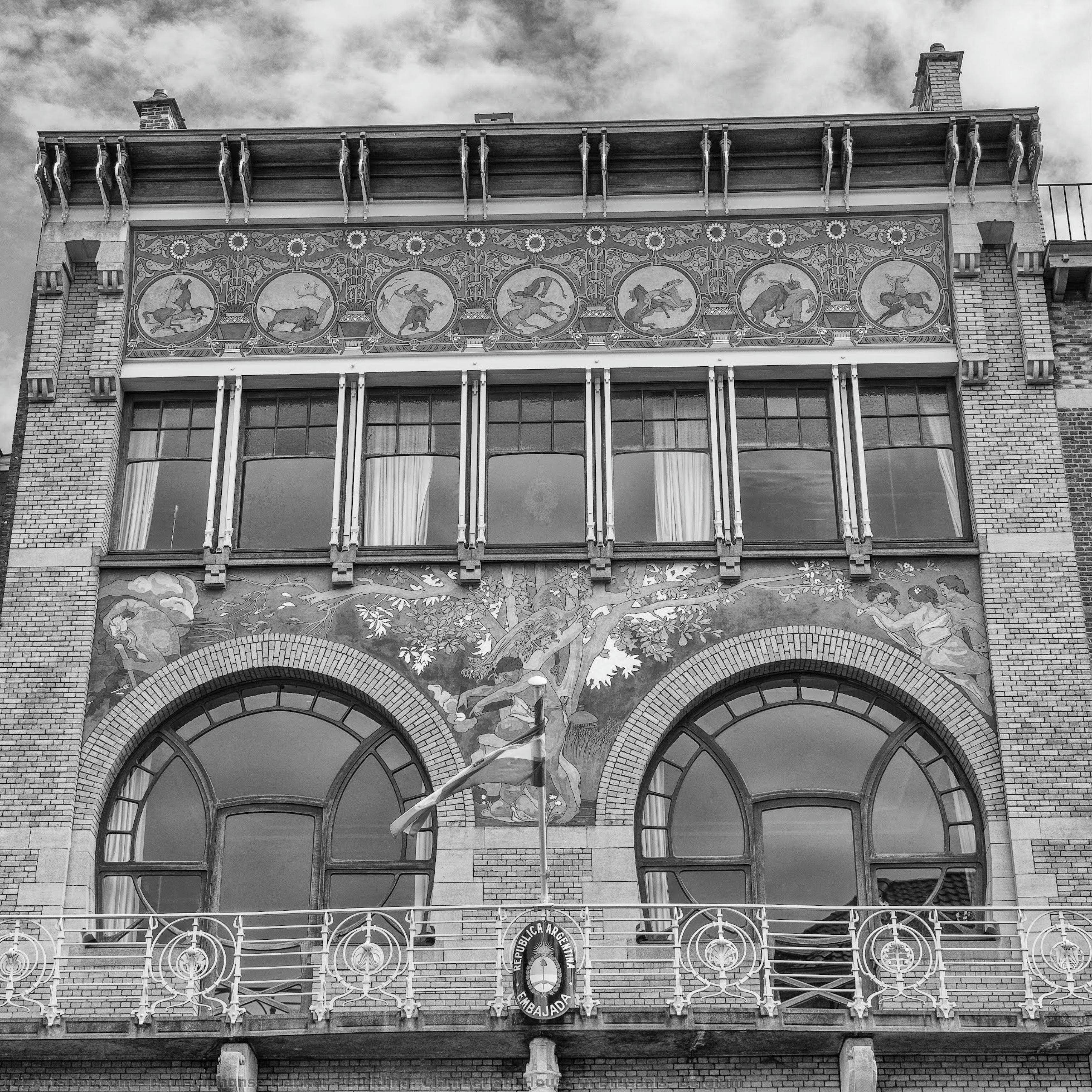
Building. Ciamberlani House in Brussels, Belgium

 詳細を見る
詳細を見る




































作品のオリジナル比率に合わせた、当店の規定サイズからお選びください。

特定のフレームやスペースに合わせて、ご希望のサイズをご入力いただけます。選択されたサイズが元の画像の比率と異なる場合、アートワークをトリミングするか、手描きで要素を追加して絵画を拡張いたします。デジタルモックアップ を制作し、制作開始前にご確認(承認)をいただきます。
画面上のプレビューは、実際のトリミングや拡張を正確に反映しているものではありません。最終的な構図は、モックアップによってのみ正確にご確認いただけます。
カスタムサイズもご利用いただけますが、元の比率を維持するためには、あらかじめ用意されたリストからサイズを選択することをお勧めいたします。
ご注文後、ArtsDot.com チームより詳細な指示をお送りするとともに、仕上がりイメージ(モックアップ)をご提供いたします。


 ガラスオプションは、110cm未満のサイズでのみご利用いただけます。

Building. Ciamberlani House in Brussels, Belgium
複製技法
複製画のサイズ
-


合計金額
$ 313
関連作品









アーティストの略歴
The Architect of Organic Elegance: The Life and Legacy of Paul Hankar
In the heart of late nineteenth-century Brussels, a revolution was quietly unfolding, etched into the very stone, iron, and glass of the city's expanding streets. At the forefront of this metamorphosis stood Paul Hankar, a visionary whose work would breathe life into the burgeoning Art Nouveau movement. Born in 1859 to a stonemason in Frameries, Belgium, Hankar’s early connection to the raw, tactile elements of construction was more than mere coincidence; it was the foundation of his artistic soul. His upbringing instilled in him a profound respect for craftsmanship and an intimate understanding of how material innovation could redefine the boundaries of beauty. Before he ever drafted a blueprint for a grand edifice, Hankar honed his skills as a decorative sculptor, learning to manipulate stone with a sensitivity that would later allow him to treat architecture not merely as shelter, but as a living, breathing sculpture.
Hankar’s journey toward architectural mastery led him to the Royal Academy of Fine Arts in Brussels, an institution where his creative trajectory was irrevocably altered. It was here that he forged a legendary intellectual and professional bond with Victor Horta. Together, these two pioneers shared a fascination for the transformative potential of modern materials. Influenced by the theories of Eugène Viollet-le-Duc, who championed the marriage of historical inspiration with industrial progress, Hankar looked toward the future. He saw in wrought iron and glass not just structural necessities, but poetic tools capable of mimicking the undulating, organic rhythms found in nature. This period of study and collaboration laid the groundwork for a style that would reject the rigid, heavy symmetries of the past in favor of something far more fluid and evocative.
A Symphony of Iron and Stone
The true brilliance of Hankar’s work emerged when he began to apply these avant-garde principles to the domestic landscape. His architectural achievements were characterized by a daring use of asymmetrical compositions and surfaces that seemed to ripple with movement. The Hankar House, completed in 1893, served as a manifesto for his personal aesthetic—a structure that utilized brick and bluestone with a rhythmic precision that felt entirely new. However, it was the Hôtel Ciamberlani that truly cemented his reputation as a master of the Art Nouveau idiom. In this masterpiece, Hankar demonstrated an unparalleled ability to integrate intricate ironwork into the very fabric of the building, creating mesmerizing patterns that danced across facades and interiors alike.
Beyond the grand scale of residential architecture, Hankar’s genius extended into the intimate details of daily life through his exquisite furniture design. He possessed a rare ability to blend functional necessity with high art, ensuring that every chair, table, or cabinet echoed the organic motifs of his larger structures. His work was never purely decorative; it was an integrated experience of space and object. This holistic approach—often referred to as Gesamtkunstwerk, or a total work of art—meant that a Hankar interior was a cohesive environment where the curve of a window bar might find its echo in the leg of a wooden chair. His shopfront designs, such as the celebrated Niguet's Shirt Shop, further showcased his ability to bring this flamboyant, Japanese-inspired elegance to the public eye, captivating passersby with curved mahogany tracery and astonishingly detailed decorations.
The Enduring Echo of a Visionary
Though his life was tragically short, ending in 1901 at the age of forty-one, Paul Hankar left behind an indelible mark on the history of European design. He did not merely participate in a movement; he helped define its very essence. His ability to navigate the tension between industrial modernity and organic naturalism allowed him to create a language of architecture that felt both cutting-edge and timelessly beautiful. The historical significance of his work lies in this very duality—the way he utilized economical materials like wood, brick, and iron to achieve an atmosphere of unparalleled luxury and artistic depth.
Today, the legacy of Paul Hankar remains etched into the urban fabric of Brussels, serving as a testament to a man who saw the potential for poetry in every structural element. His contributions can be summarized through several key pillars of his impact:
- Material Innovation: The pioneering use of wrought iron and glass to create fluid, organic architectural forms.
- Architectural Revolution: The introduction of asymmetrical compositions that challenged the neoclassical traditions of the nineteenth century.
- Integrated Design: A seamless mastery over both large-scale architecture and fine furniture design, creating unified aesthetic environments.
- Art Nouveau Leadership: Establishing Brussels as a global epicenter for the Art Nouveau movement alongside contemporaries like Victor Horta.
As we look back upon his career, we see more than just an architect; we see a dreamer who understood that the built environment is a reflection of our deepest connection to the natural world. Through his hands, stone became soft, iron became vine-like, and the city itself began to bloom.
paul-alphonse hankar
1859 - 1901 , Belgium
基本情報
- Artistic Movement Or Style: Art Nouveau
- Artists Or Movements Influenced By This Artist: ['Victor Horta']
- Artists Who Influenced This Artist:
- Henri Beyaert
- Eugène Viollet-le-Duc
- Date Of Birth: December 11, 1859
- Date Of Death: January 17, 1901
- Full Name: Paul Alphonse Hankar
- Nationality: Belgian
- Notable Artworks:
- Courtesan with necklace of gems
- Building. Ciamberlani House in Brussels
- Place Of Birth: Frameries, Belgium

