

 プレビュー
プレビュー
 プリントを購入
 シェアする
シェアする シェアする
シェアする
 詳細を見る
詳細を見る

 ダウンロード
 似ている作品
 X線調査
X線調査 スライドショー
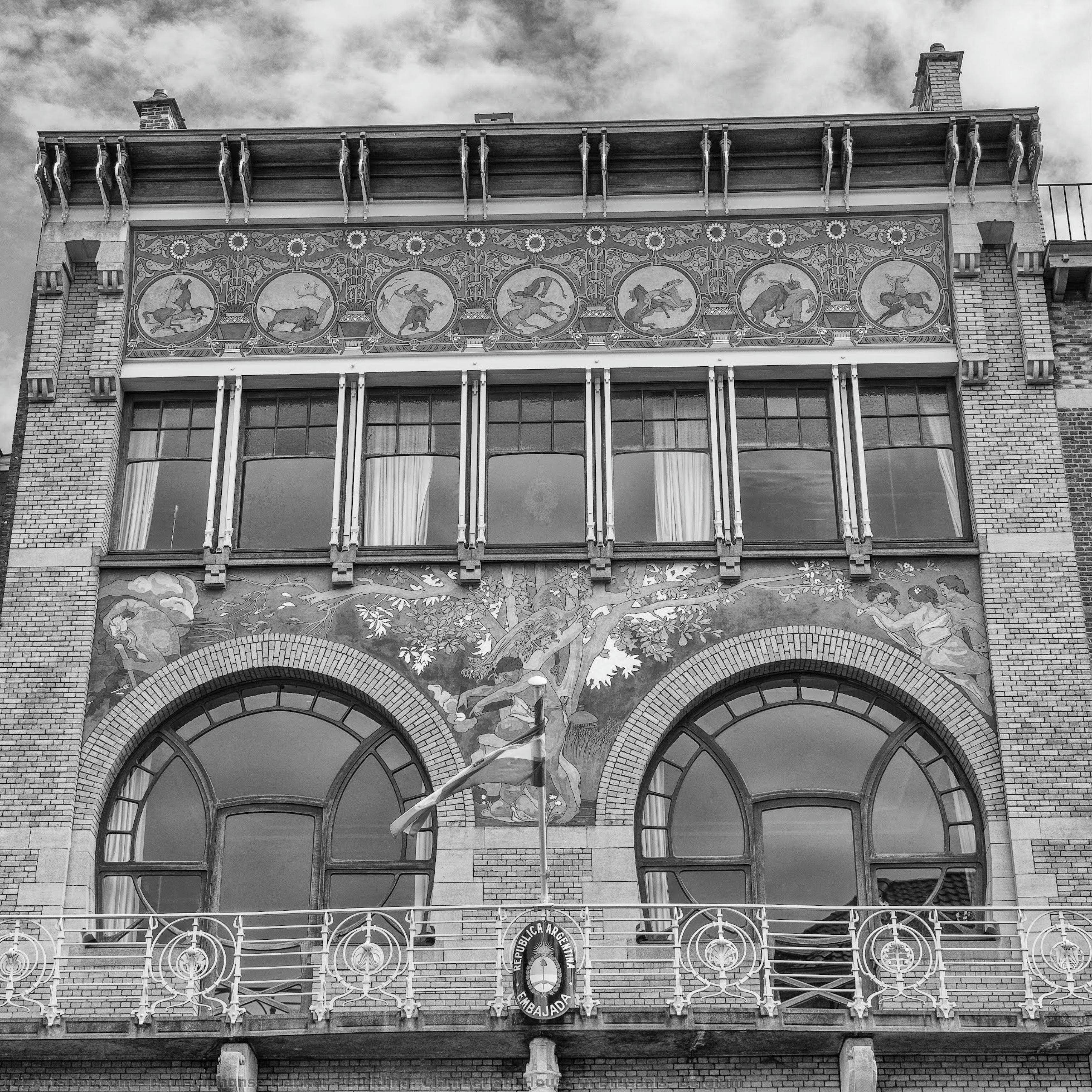
Building. Ciamberlani House in Brussels, Belgium

 詳細を見る
詳細を見る
オンラインプレビューをはるかに凌ぐ、高解像度で鮮明なデジタル画像をご購入いただけます。
各ファイルは、社内の専門家が高度なツールと熟練した手作業によるレタッチを用いて、細心の注意を払って準備されています。すべての画像において、卓越した鮮明度、正確な色彩再現性、そして繊細なディテールを保証いたします。
最終ファイルは、プロフェッショナルな編集・印刷環境ですぐにご利用いただけるよう最適化された状態で、72時間以内にメールにてお届けいたします。これは、一流のデザインスタジオ、出版社、ギャラリーから信頼されているものと同等の品質です。
デジタル画像のご注文に付随する特典
高品質なデジタル画像配信を、確かな品質で。
ArtsDot.com を選ぶことは、単に画像を手に入れることではありません。それは、プロの手によって精密に仕上げられ、満足保証が付いた高品質なデジタルアートワークを受け取ることを意味します。ご注文いただいた際に自動的に付随する内容は、以下の通りです:

メールですぐにお届け
ご注文から72時間以内に、高解像度のデジタル画像ファイルがメールでお手元に届きます。すぐにそのままご利用いただけます。

AI技術で最適化されたデジタルファイル
お客様の作品は、高度なAIツールと専門家による手作業の編集を組み合わせてプロフェッショナルに最適化されており、細部のディテール、鮮明さ、そして正確な色再現性を最大限に引き出しています。

一生涯無料の再送サービス
ファイルを誤って削除したり、紛失してしまったりしましたか?ご安心ください。いつでも無料で再送いたします。

輸入手数料は一切かかりません
関税や手数料、配送料を気にすることなく、お気に入りのアートワークをすぐにお楽しみいただけます。デジタルダウンロードは常に免税です。

色彩再現の保証
プロ仕様のツールとカラーマネジメント技術を用いることで、デジタル画像が元の色を最大限に忠実に再現することを保証いたします。

60日間満足保証
ご購入いただいたデジタル画像にご満足いただけない場合は、60日以内であれば、修正または100%の返金(理由を問う必要はありません)をさせていただきます。

100% 返金保証
ご満足いただけない場合は、デジタルファイルを受け取ってから60日以内であれば、理由を問わず全額返金いたします。

まとめ買い割引
3枚購入で10%OFF - 5枚購入で15%OFF - 10枚以上購入で20%OFF。クリエイティブなプロジェクト、ギャラリー、エージェンシーに最適です。
関連作品









作家の略歴
The Architect of Organic Elegance: The Life and Legacy of Paul Hankar
In the heart of late nineteenth-century Brussels, a revolution was quietly unfolding, etched into the very stone, iron, and glass of the city's expanding streets. At the forefront of this metamorphosis stood Paul Hankar, a visionary whose work would breathe life into the burgeoning Art Nouveau movement. Born in 1859 to a stonemason in Frameries, Belgium, Hankar’s early connection to the raw, tactile elements of construction was more than mere coincidence; it was the foundation of his artistic soul. His upbringing instilled in him a profound respect for craftsmanship and an intimate understanding of how material innovation could redefine the boundaries of beauty. Before he ever drafted a blueprint for a grand edifice, Hankar honed his skills as a decorative sculptor, learning to manipulate stone with a sensitivity that would later allow him to treat architecture not merely as shelter, but as a living, breathing sculpture.
Hankar’s journey toward architectural mastery led him to the Royal Academy of Fine Arts in Brussels, an institution where his creative trajectory was irrevocably altered. It was here that he forged a legendary intellectual and professional bond with Victor Horta. Together, these two pioneers shared a fascination for the transformative potential of modern materials. Influenced by the theories of Eugène Viollet-le-Duc, who championed the marriage of historical inspiration with industrial progress, Hankar looked toward the future. He saw in wrought iron and glass not just structural necessities, but poetic tools capable of mimicking the undulating, organic rhythms found in nature. This period of study and collaboration laid the groundwork for a style that would reject the rigid, heavy symmetries of the past in favor of something far more fluid and evocative.
A Symphony of Iron and Stone
The true brilliance of Hankar’s work emerged when he began to apply these avant-garde principles to the domestic landscape. His architectural achievements were characterized by a daring use of asymmetrical compositions and surfaces that seemed to ripple with movement. The Hankar House, completed in 1893, served as a manifesto for his personal aesthetic—a structure that utilized brick and bluestone with a rhythmic precision that felt entirely new. However, it was the Hôtel Ciamberlani that truly cemented his reputation as a master of the Art Nouveau idiom. In this masterpiece, Hankar demonstrated an unparalleled ability to integrate intricate ironwork into the very fabric of the building, creating mesmerizing patterns that danced across facades and interiors alike.
Beyond the grand scale of residential architecture, Hankar’s genius extended into the intimate details of daily life through his exquisite furniture design. He possessed a rare ability to blend functional necessity with high art, ensuring that every chair, table, or cabinet echoed the organic motifs of his larger structures. His work was never purely decorative; it was an integrated experience of space and object. This holistic approach—often referred to as Gesamtkunstwerk, or a total work of art—meant that a Hankar interior was a cohesive environment where the curve of a window bar might find its echo in the leg of a wooden chair. His shopfront designs, such as the celebrated Niguet's Shirt Shop, further showcased his ability to bring this flamboyant, Japanese-inspired elegance to the public eye, captivating passersby with curved mahogany tracery and astonishingly detailed decorations.
The Enduring Echo of a Visionary
Though his life was tragically short, ending in 1901 at the age of forty-one, Paul Hankar left behind an indelible mark on the history of European design. He did not merely participate in a movement; he helped define its very essence. His ability to navigate the tension between industrial modernity and organic naturalism allowed him to create a language of architecture that felt both cutting-edge and timelessly beautiful. The historical significance of his work lies in this very duality—the way he utilized economical materials like wood, brick, and iron to achieve an atmosphere of unparalleled luxury and artistic depth.
Today, the legacy of Paul Hankar remains etched into the urban fabric of Brussels, serving as a testament to a man who saw the potential for poetry in every structural element. His contributions can be summarized through several key pillars of his impact:
- Material Innovation: The pioneering use of wrought iron and glass to create fluid, organic architectural forms.
- Architectural Revolution: The introduction of asymmetrical compositions that challenged the neoclassical traditions of the nineteenth century.
- Integrated Design: A seamless mastery over both large-scale architecture and fine furniture design, creating unified aesthetic environments.
- Art Nouveau Leadership: Establishing Brussels as a global epicenter for the Art Nouveau movement alongside contemporaries like Victor Horta.
As we look back upon his career, we see more than just an architect; we see a dreamer who understood that the built environment is a reflection of our deepest connection to the natural world. Through his hands, stone became soft, iron became vine-like, and the city itself began to bloom.
paul-alphonse hankar
1859 - 1901 , Belgium
プロフィール概要
- Artistic Movement Or Style: Art Nouveau
- Artists Or Movements Influenced By This Artist: ['Victor Horta']
- Artists Who Influenced This Artist:
- Henri Beyaert
- Eugène Viollet-le-Duc
- Date Of Birth: December 11, 1859
- Date Of Death: January 17, 1901
- Full Name: Paul Alphonse Hankar
- Nationality: Belgian
- Notable Artworks:
- Courtesan with necklace of gems
- Building. Ciamberlani House in Brussels
- Place Of Birth: Frameries, Belgium

