

 プレビュー
プレビュー
 シェアする
シェアする シェアする
シェアする
 詳細を見る
詳細を見る

 ダウンロード
 似ている作品
 X線調査
X線調査 スライドショー
 統計情報
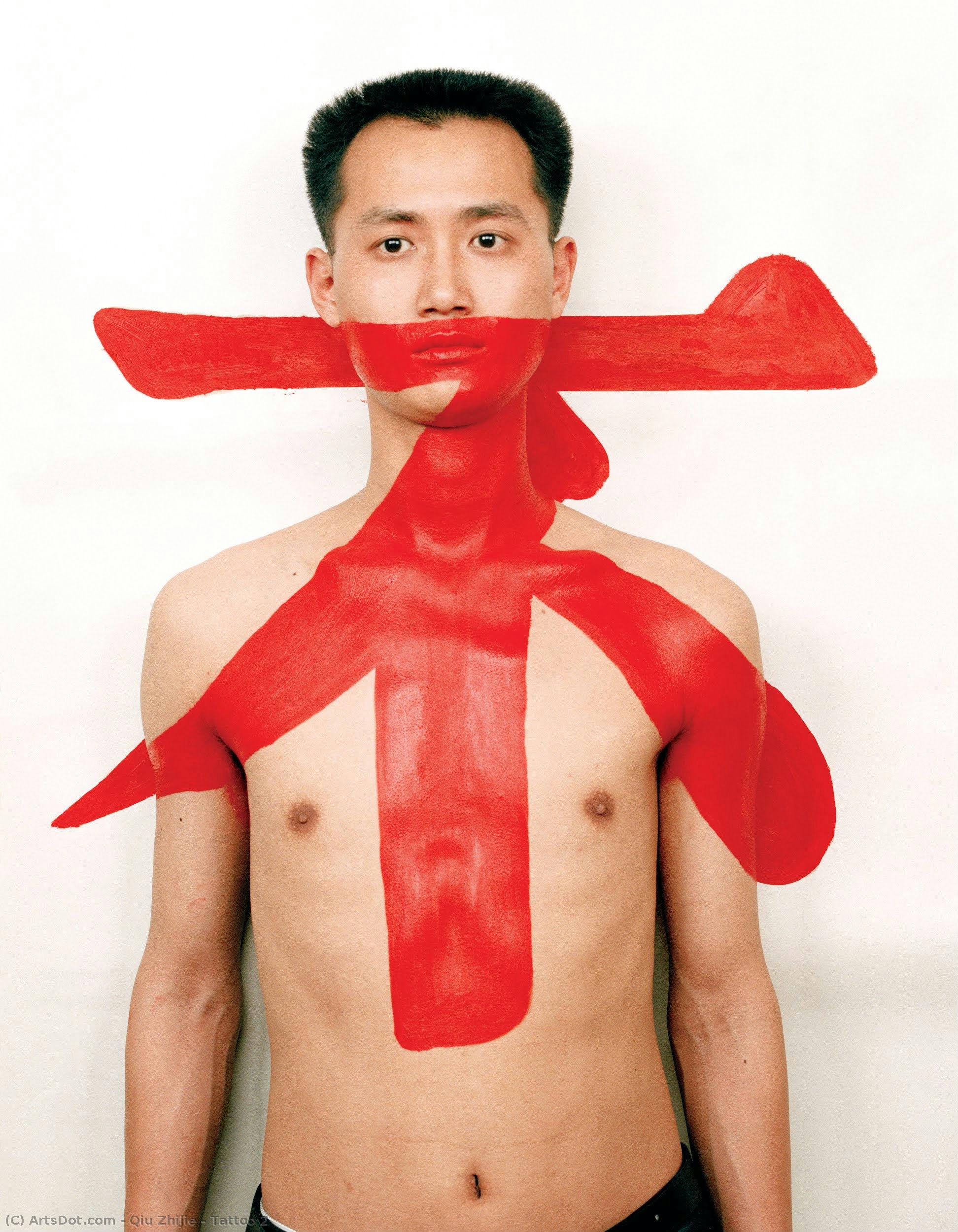
統計情報Tattoo 2

 詳細を見る
詳細を見る
ジークレー/アートプリント
迅速な制作と多彩な仕上げオプションを備えた、ミュージアムクオリティのジークレーまたはキャンバスプリント。 ( 手描きの絵画を購入 デジタル画像販売へ切り替え)




































作品のオリジナル比率に合わせた、当店の規定サイズからお選びください。

特定のフレームやスペースに合わせて、ご自身でサイズを指定することも可能です。選択されたサイズが元の画像の比率と一致しない場合、作品をトリミングするか、鏡面反射または単色での塗りつぶしによって画像を拡張いたします。制作を開始する前に、ご確認用のデジタルモックアップをお送りいたします。
画面上のプレビューには、実際のトリミングや拡張は反映されませんのでご注意ください。最終的な構図を正確に確認できるのは、モックアップのみとなります。
カスタムサイズも承っておりますが、元の比率を維持するためには、あらかじめ用意されたリストからサイズを選択することをお勧めいたします。


 ガラスオプションは、110cm未満のサイズでのみご利用いただけます。

Tattoo 2
ジークレー/アートプリント
複製画のサイズ
-


合計金額
$ 62
関連作品
アーティストの略歴
The Tension of Destiny: The Artistic Vision of Qiu Zhijie
In the vast, shifting landscape of contemporary Chinese art, few voices resonate with as much profound introspection and structural complexity as Qiu Zhijie. Born in 1969 in China's Fujian Province, Qiu has emerged as a master of visual storytelling, utilizing the ephemeral mediums of video and photography to navigate the turbulent waters of modern identity. His work is far more than mere documentation; it is a visceral exploration of the human condition, caught perpetually between the crushing weight of predetermined destiny and the fierce, unyielding impulse toward self-assertion. Through his lens, we witness a world grappling with social fragmentation and the haunting transience of existence, reflecting the broader anxieties of a nation undergoing rapid, often jarring, transformation.
Qiu’s artistic journey began in earnest at the Zhejiang Academy of Fine Arts in Hangzhou, where he graduated from the printmaking department in 1992. This foundational training provided him with a meticulous technical discipline that would later manifest in his highly symbolic and graphic compositions. His early breakthrough came almost immediately, as part of the seminal exhibition China's New Art, Post-1989, which positioned him at the forefront of a new generation of artists seeking to redefine Chinese aesthetics in a post-reform era. As his practice evolved, he moved beyond the boundaries of printmaking to embrace installations and cinematic techniques, creating works that allow the viewer to inhabit the very spaces of uncertainty he describes.
Symbolism and the Language of Restriction
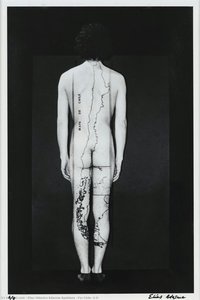
The power of Qiu Zhijie’s work lies in his ability to transform simple graphic elements into profound philosophical inquiries. He often employs a stark, deliberate vocabulary of symbols—most notably red tape and prohibition signs—to confront the viewer with themes of control and societal restriction. In his celebrated Tattoo series, such as Tattoo 1 and Tattoo 3, Qiu uses the human body as a canvas to explore how signs and codes in our media-saturated age have begun to overpower actual human beings. By inscribing characters like bu—meaning "no"—across his own skin, he creates a haunting illusion where the body becomes a mere vehicle for externaled authority, illustrating the struggle for autonomy in an increasingly regulated world.
This preoccupation with the boundaries of the self extends into his more large-scale, investigative projects. His work A Suicidology of the Nanjing Yangtze River Bridge serves as a poignant meditation on vulnerability and the weight of history. By researching the construction of this iconic symbol of "New China" and interviewing those touched by its tragedies, Qiu weaves together personal grief and national narrative. The project does not merely observe; it mourns and reflects, using symbolic elements to present a complex triptych of time, memory, and the human condition. In these works, the artist demonstrates an extraordinary ability to harness cinematic and installation-based techniques to elicit deep emotional responses, forcing us to confront difficult truths about life and loss.
A Legacy of Resistance and Reflection
As Qiu Zhijie continues to work from Beijing, his significance within the global art community remains undiminished. His ability to bridge the gap between traditional Chinese elements—such as calligraphy and historical references like the Orchid Pavilion Preface—and contemporary conceptual practices ensures that his work remains both culturally rooted and universally relevant. He has successfully navigated the transition from a local talent to an internationally recognized figure, with exhibitions spanning from the Institute of Contemporary Arts in London to the Victoria and Albert Museum.
Ultimately, the enduring impact of Qiu’s oeuvre lies in its refusal to provide easy answers. Whether he is exploring the translucent labyrinths of his early installations or the stark, photographic portraits of his later years, he remains a steadfast investigator of the forces that shape us. His art stands as a testament to the resilience of the human spirit, documenting the eternal struggle to find meaning and agency within the complex, often fragmented, tapestry of modern existence.
Qiu Zhijie
1969 - , China
基本情報
- Artistic Movement Or Style: Video & Photography
- Date Of Birth: 1969
- Full Name: Qiu Zhijie
- Nationality: Chinese
- Notable Artworks:
- Orchid Pavilion Preface
- A Suicidology of the Nanjing Yangtze River Bridge
- Tattoo 3
- Tattoo 1
- Place Of Birth: Fujian Province, China