

 プレビュー
プレビュー
 プリントを購入
 シェアする
シェアする シェアする
シェアする
 詳細を見る
詳細を見る

 ダウンロード
 似ている作品
 X線調査
X線調査 スライドショー
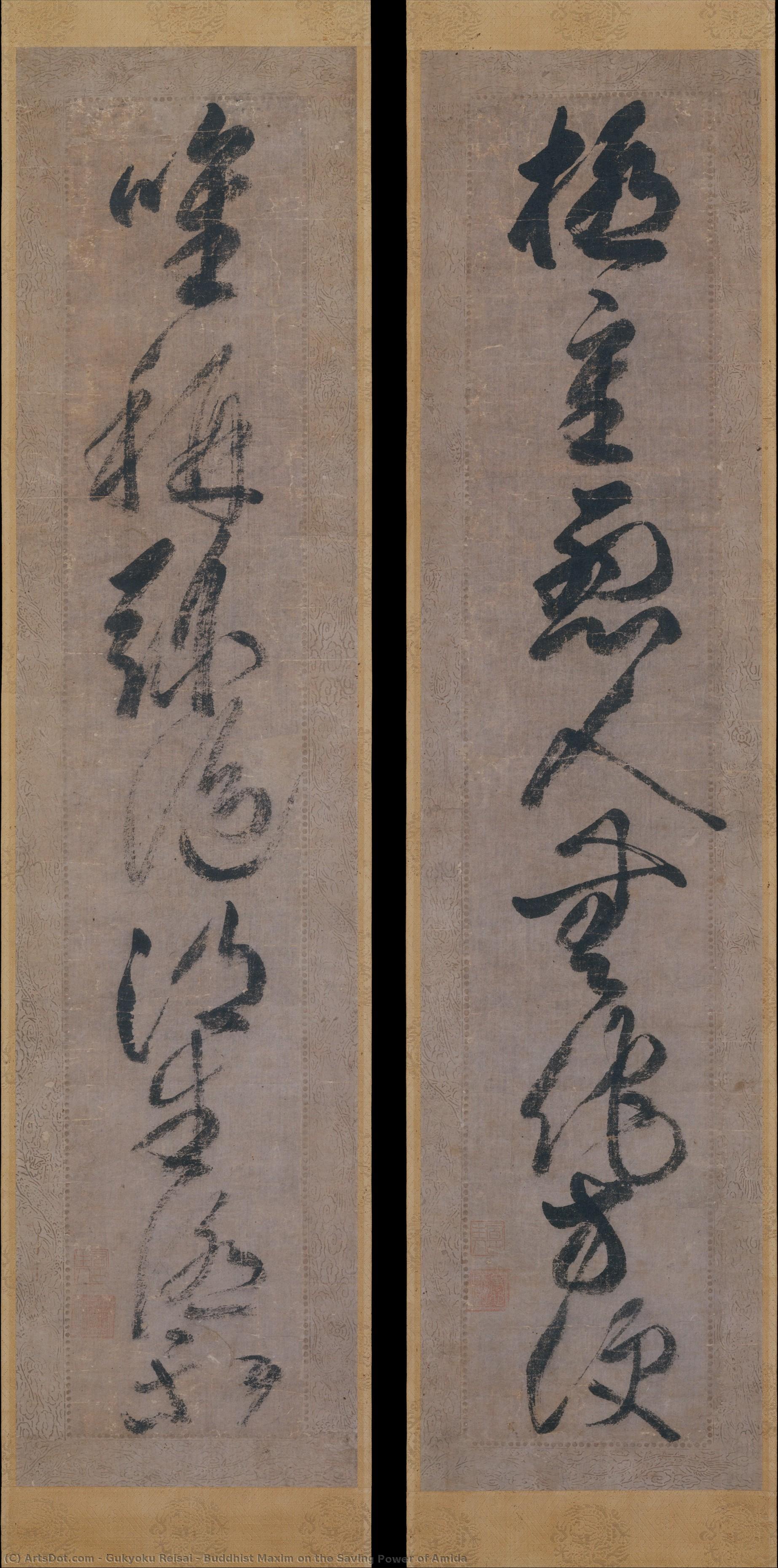
Buddhist Maxim on the Saving Power of Amida
 401
401 93.0cm x 22.0cm
 詳細を見る
詳細を見る




































作品のオリジナル比率に合わせた、当店の規定サイズからお選びください。

特定のフレームやスペースに合わせて、ご希望のサイズをご入力いただけます。選択されたサイズが元の画像の比率と異なる場合、アートワークをトリミングするか、手描きで要素を追加して絵画を拡張いたします。デジタルモックアップ を制作し、制作開始前にご確認(承認)をいただきます。
画面上のプレビューは、実際のトリミングや拡張を正確に反映しているものではありません。最終的な構図は、モックアップによってのみ正確にご確認いただけます。
カスタムサイズもご利用いただけますが、元の比率を維持するためには、あらかじめ用意されたリストからサイズを選択することをお勧めいたします。
ご注文後、ArtsDot.com チームより詳細な指示をお送りするとともに、仕上がりイメージ(モックアップ)をご提供いたします。


 ガラスオプションは、110cm未満のサイズでのみご利用いただけます。

Buddhist Maxim on the Saving Power of Amida
複製技法
複製画のサイズ
-


合計金額
$ 263
作品解説
関連作品










アーティストの略歴
The Silent Brush of Zen: The Life and Legacy of Reisai Gukyoku
In the quiet corridors of Japan’s Muromachi period, where the spiritual and the aesthetic were inextricably linked, the figure of Reisai Gukyostu emerges as a profound voice of meditative stillness. A Japanese Buddhist monk-painter active during the late 14th and early 15th centuries, Gukyoku did not merely create art; he practiced a form of visual prayer. His life, though partially veiled by the mists of monastic anonymity, was deeply embedded in the most significant spiritual centers of his era. Born in the Yamashiro Province—the heart of modern-day Kyoto—he moved through the prestigious landscapes of Kencho-ji in Kamakura and Nanzen-ji in Kyoto, eventually rising to lead the venerable Tofuku-ji temple. This journey through the great Zen bastions provided him with more than just a religious education; it offered a profound immersion into the Rinzai Zen tradition, which would become the very soul of his brushwork.
The artistry of Gukyoku was an extension of his monastic discipline, characterized by a rejection of the superfluous in favor of the essential. As a skilled calligrapher and painter of Buddhist subjects, he mastered the art of conveying complex theological truths through remarkably restrained movements. His technique often utilized rapid, ink-driven brushstrokes to capture the divine essence of figures such as Tenjin and Monju. In these works, there is no room for ornamentation; instead, the viewer encounters a directness that mirrors the Zen pursuit of sudden enlightenment. His mastery extended to the creation of hengaku—horizontal wooden plaques—which were so highly regarded for their spiritual potency that they were sought after as talismans believed to ward off fire, embodying the belief that his very calligraphy held protective, sacred power.
A Tapestry of Ink and Spirit
To observe a work by Gukyoku is to witness a dialogue between the hand and the void. His contributions to the genres of scroll painting and calligraphy represent a pinnacle of Zen expression, where every stroke carries the weight of intention. He often engaged in deep intellectual and spiritual exchanges with his contemporaries, such as the priest Zuikei Shuho, discussing the nuances of Buddhist literature and the profound paradoxes found within koans. This scholarly depth is reflected in his more complex compositions, such as his celebrated folding screens featuring Chinese poetry. In these pieces, the calligraphy does not merely sit upon the surface; it breathes with the rhythm of the poem, using large, commanding characters to evoke the rigorous training and sudden awakenings described in the lives of Zen masters like Linji Yixuan.
The historical significance of Reisai Gukyoku lies in his ability to translate the intangible principles of shikantaza—the practice of "just sitting"—into a visual language. While other artists of the era might have pursued more flamboyant or decorative styles, Gukyoku remained committed to an aesthetic of understated elegance and spiritual clarity. His legacy is found in the way his ink captures the concept of impermanence and the beauty of the unadorned. Through his disciplined use of monochrome ink and his focus on the spiritual weight of the character, he helped define a period of Japanese art where the ultimate goal was not to depict the world as it appears to the eye, but as it is experienced by the awakened mind.
reisai gukyoku
1363 - 1452 , Japan
基本情報
- Artistic Movement Or Style: Zen buddhism art
- Date Of Birth: 1363
- Full Name: reisai gukyoku
- Nationality: Japanese
- Notable Artworks:
- Fenggan, Hanshan, and Shide
- Buddhist Maxim on the Saving Power of Amida
- Place Of Birth: Yamashiro, Japan

