メニュー
プレビュープレビュー ARで試着ARで試着 プリント版に切り替え プリント版に切り替え手描きの絵画を購入 手描きの絵画を購入 シェアするシェアする
詳細を見る詳細を見る お気に入りに追加 お気に入りに追加 ダウンロードダウンロード 似ている作品似ている作品 X線調査X線調査 スライドショースライドショー 統計情報統計情報

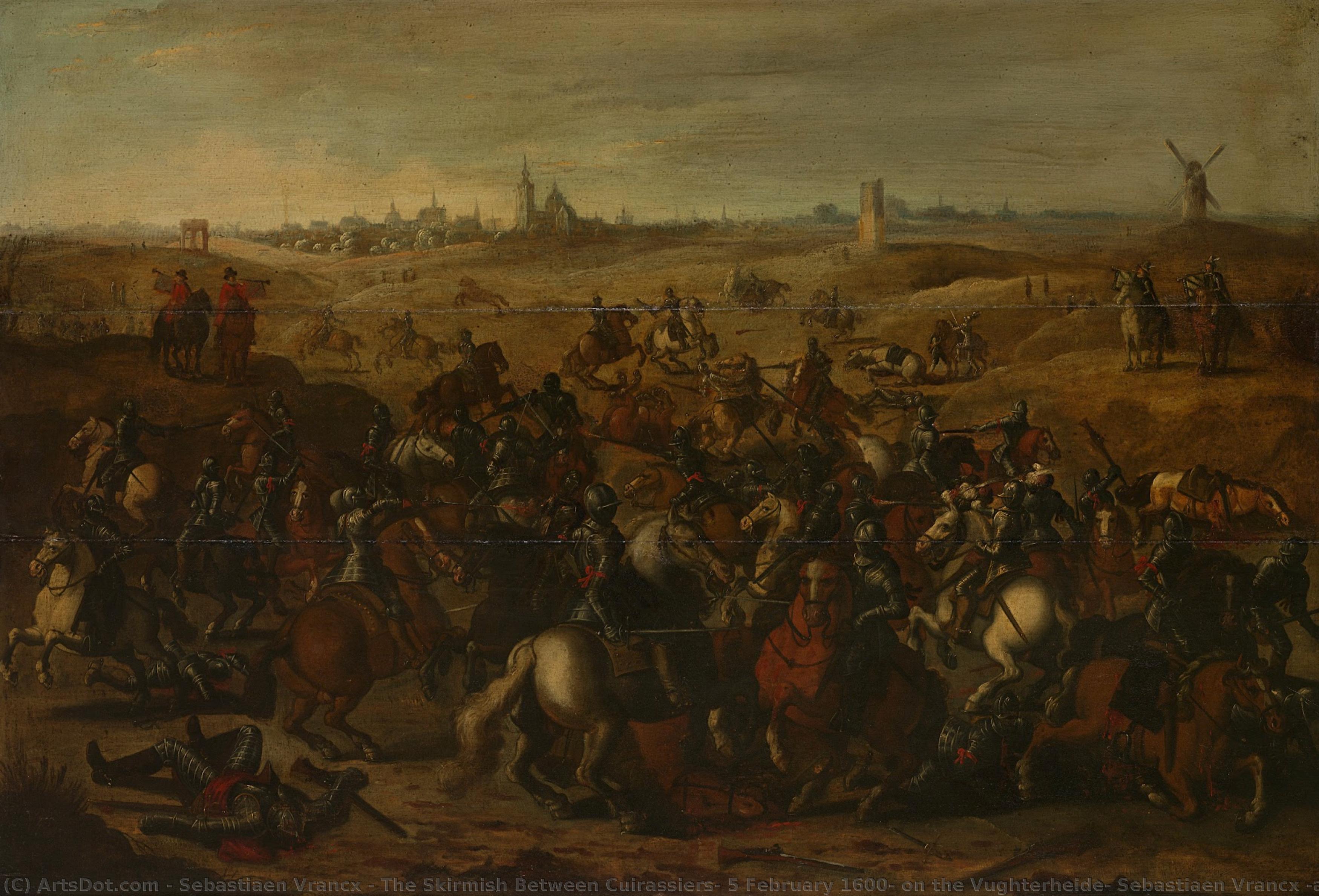
The Skirmish Between Cuirassiers, 5 February 1600, on the Vughterheide, Sebastiaen Vrancx (after), c. 1635

  • 制作日1635
  • 寸法72.0 x 106.0 cm

セバスティアン・フランクスによる先駆的な戦場風景と風景画を探索しましょう!強烈な感情と細部まで描き出すフランドル・バロックの巨匠であり、その芸術はアントウェルペン派の精神を反映しています。

オンラインプレビューをはるかに凌ぐ、高解像度で鮮明なデジタル画像をご購入いただけます。

各ファイルは、社内の専門家が高度なツールと熟練した手作業によるレタッチを用いて、細心の注意を払って準備されています。すべての画像において、卓越した鮮明度、正確な色彩再現性、そして繊細なディテールを保証いたします。

最終ファイルは、プロフェッショナルな編集・印刷環境ですぐにご利用いただけるよう最適化された状態で、72時間以内にメールにてお届けいたします。これは、一流のデザインスタジオ、出版社、ギャラリーから信頼されているものと同等の品質です。

デジタルアート

個人での鑑賞、印刷、クリエイティブなプロジェクト用に、高解像度ファイルをダウンロードできます。 (プリント版に切り替え プリント版に切り替え手描きの絵画を購入 手描きの絵画を購入)

最終合計金額

$ 24.00

デジタル画像のご注文に付随する特典

高品質なデジタル画像配信を、確かな品質で。

ArtsDot.com を選ぶことは、単に画像を手に入れることではありません。それは、プロの手によって精密に仕上げられ、満足保証が付いた高品質なデジタルアートワークを受け取ることを意味します。ご注文いただいた際に自動的に付随する内容は、以下の通りです:

shipping_icon
メールですぐにお届け

ご注文から72時間以内に、高解像度のデジタル画像ファイルがメールでお手元に届きます。すぐにそのままご利用いただけます。

canvas_icon
AI技術で最適化されたデジタルファイル

お客様の作品は、高度なAIツールと専門家による手作業の編集を組み合わせてプロフェッショナルに最適化されており、細部のディテール、鮮明さ、そして正確な色再現性を最大限に引き出しています。

insurance_icon
一生涯無料の再送サービス

ファイルを誤って削除したり、紛失してしまったりしましたか?ご安心ください。いつでも無料で再送いたします。

tax_icon
輸入手数料は一切かかりません

関税や手数料、配送料を気にすることなく、お気に入りのアートワークをすぐにお楽しみいただけます。デジタルダウンロードは常に免税です。

color_icon
色彩再現の保証

プロ仕様のツールとカラーマネジメント技術を用いることで、デジタル画像が元の色を最大限に忠実に再現することを保証いたします。

return_icon
100日間満足保証

ご購入いただいたデジタル画像にご満足いただけない場合は、100日以内であれば、理由を問わず修正または100%の返金対応をさせていただきます。

guarantee_icon
100% 返金保証

ご満足いただけない場合は、デジタルファイルを受け取ってから100日以内であれば、理由を問わず全額返金いたします。

discount_icon
まとめ買い割引

3枚購入で10%OFF - 5枚購入で15%OFF - 10枚以上購入で20%OFF。クリエイティブなプロジェクト、ギャラリー、エージェンシーに最適です。

This notorious incident took place on the Vughterheide not far from ’s-Hertogenbosch on 5 February 1600.11 It resulted from a challenge by Pierre (or François) de Bréauté (1580-1600), a Norman cavalry officer based in Geertruidenberg, in the service of Prince Maurits of Orange, the Dutch stadholder, offered to Anton Schetz (1564-1640), from 1619 2nd Baron Grobbendonck and from 1598 governor of ’s-Hertogenbosch, which city remained under Spanish suzerainty until 1629.12 He appointed a native of Brabant from the city, Gerard Abramsz van Houwelingen (c. 1560-1600), his lieutenant, to answer the summons. Houwelingen had an odd nickname, Leckerbeetje, which has had various interpretations; Vander Auwera has recently suggested that the Dutch nickname should mean ‘he who likes tasty things’.13 The formalities seem to have followed those of the traditional, medieval tournament.14 Settled beforehand by the heralds would have been the place and time of the encounter – the Vughterheide between the Vught windmill and the ’s-Hertogenbosch gallows on the 5 February 1600 – and the numbers on each side, twenty-two. The cuirassiers are wearing three-quarter length, heavy armour and are fighting with pistols/bludgeons and armour piercing swords. Houwelingen wears a red sash and his comrades the red armband of the Spanish army (their opponents’ armbands should be green). The Rijksmuseum picture, which is on an oak support that has not been dated, is a copy of the print, designed by Sebastiaen Vrancx and engraved by Joannes van Doetecum II (by 1587-1630), of which there appear to be no extant examples.15 It has been suggested that the engraver worked from a painting by Vrancx,16 but this is unlikely as the latter is described as the ‘inventor’ and this in spite of there being a record of a painting of the skirmish (mêlée) by Vrancx of 1601.17 The plates, which made up the print, were purchased after Van Doetecum’s death by Claes Jansz Visscher (1587-1652) and republished by him in 1631 as Batalie van Breaute ende Leckerbeetien.XXII.Tegens XXII. Inscriptions on Visscher’s print identify the town, centre, as ‘shertogenbos’ (’s-Hertogenbosch) and the villages to the left and right as ‘Orten’ (Orthen) and ‘Vucht’ (Vught) respectively. The present copy is not accurate; in particular the gallows in the middle distance, left, was misunderstood and the tower to the left of the windmill differs, as do the buildings along the horizon. There are far fewer spectators in the middle ground. Dendrochronological analysis of the three pieces of oak timber which make up the support might provide a terminus post quem for its execution. Hofstede de Groot suggested that it was the work of Gerrit van Santen (1609/11-1687/1700),18 but it seems rather to be the work of a not very skilful, journeyman hand active very probably in the Netherlands in the first half of the seventeenth century. Depicted is the moment after the impact of the first charge, which would have been signalled by each sides’ trumpet-blowing heralds on raised ground to the left and right. At this first encounter, De Bréauté shot Houwelingen dead and his own horse was killed. The former, identified as Lieutenant Lackbeetken (Leckerbeetje), is shown lying prone in the left foreground of the print, while De Bréauté is identified in the print as the cuirassier remounting by his dead charger, to the left of the heralds on the right. Whether these identifications are as Vrancx intended is an open question, but it seems likely. As is shown in the print (and painted copy), this skirmish was to the death (a mêlée à outrance) and thus fiercely contested.19 Nineteen of De Bréauté’s companions were killed as were four Brabanters and thirty horses. Among the Brabanters to die were Houwelingen’s brother and brother-in-law. De Bréauté was himself captured and then murdered as he was brought into ’s-Hertogenbosch. An account of the mêlée in Dutch and French is given at the base of Visscher’s print. Although Houwelingen is prominently depicted in the foreground, and De Bréauté is inconspicuous in the middle ground, the accounts are sympathetic to him and condemn his murder in cold blood, after his surrender and disarming, by a cornet, Jan van Mil, acting on the orders of the governor, who had been driven by hatred and revenge (haet en wraeck). This was to be expected as the print was published in the northern Netherlands; the narratives were probably the work of, or commissioned by, Visscher as the governor is referred to by his title, inherited in 1619. The prototype of the image is one of the few prints engraved by Van Doetecum when he was working independently in Rotterdam (1598-1603).20 Vrancx only became a master in the Antwerp guild in 1600/01; how the two came into contact and whether the design was commissioned by the engraver remains unknown, as do the sources on which Vrancx relied for the design. An earlier depiction of a mêlée à outrance is the print by Lucas Cranach I (1472-1553) of 1../..

作家の略歴

フランドル・バロック絵画が遺した足跡

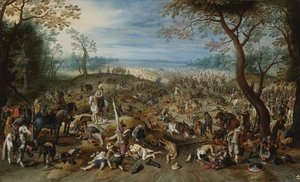
セバスティアン・ヴランクス(Sebastiaan Vrancx)は、先駆的な戦闘場面の描写によって美術史に消えることのない足跡を残した、フランドル・バロックを代表する画家です。1573年に生を受け、1647年にその生涯を閉じたヴランクスの作品は、ネーデルラント絵画のジャンルを席巻しただけでなく、風景画、神話的場面、そして都市の祝祭に至るまで、その驚くべき多才さを世に示しました。

芸術的貢献

ヴランクスの卓越した技量は、激しい戦いの瞬間を捉えた作品群に色濃く反映されています。例えば、ヴフテールハイデでの出来事を描いた「キュイラッスィエ(胸甲騎兵)の小競り合い、1600年2月5日」は、緊迫した戦闘のドラマを鮮烈に描き出した傑作です。一方で、「村のカーニバル(Kermesse)」では、寓意的な要素を織り交ぜながら、活気あふれる村の情景を見事に表現しています。さらに、「凍った運河とスケーターの冬の風景」に見られるように、激動の戦場とは対照的な、静謐で穏やかな風景を描き出す卓越した技術も持ち合わせていました。

ヴランクスの作品を収蔵する美術館

彼の芸術的遺産は、現在も重要な美術館で大切に守られています。ブリュッセルのイクセル美術館(Musée d'Ixelles)には、ヴランクスの作品を含む1万点を超える膨大なコレクションが収蔵されています。また、ブルージュのオンゼ・リューフェ・ヴローウェ教会も、宗教画で知られるゴシック様式の聖堂でありながら、ヴランクスをはじめとするフランドル絵画の至宝を今に伝えています。

主要な芸術運動と技法

  • バロック:ドラマチックな光の演出と強烈な感情表現を特徴とし、ヴランクスの戦闘場面においてその真価を発揮しています。
  • アントウェルペン派:ヴランクスが活動した都市の影響を受け、鮮やかで細密な描写スタイルとして知られています。
  • 油彩とグラファイト:ヴランクスが自らのビジョンを具現化するために用いた主要な画材です。


ArtsDot.comでのさらなる探求


セバスティアン・ヴランクスの芸術に秘められた神秘を解き明かす

フランドル・バロックの巨匠が描いた世界に深く入り込み、彼の作品を通じてネーデルラント絵画の進化をArtsDot.comで体験してください。
セバスティアン・フランクス

セバスティアン・フランクス

1573 - 1647 , ベルギー

プロフィール概要

  • Artistic Movement Or Style: バロック
  • Artists Who Influenced This Artist:
    • ピーテル・パウル・ルーベンス
    • アンソニー・ヴァン・ダイク
  • Date Of Birth: 1573年1月22日
  • Date Of Death: 1647年5月19日
  • Full Name: セバスティアン・フランクス
  • Nationality: フランドル
  • Notable Artworks:
    • 騎兵隊の一団
    • レッカーベイトの戦い
    • 1月
  • Place Of Birth: ベルギー、アントワープ