

 プレビュー
プレビュー
 シェアする
シェアする シェアする
シェアする
 詳細を見る
詳細を見る

 ダウンロード
 似ている作品
 X線調査
X線調査 スライドショー
The Adventures of Hamza


 詳細を見る
詳細を見る
ジークレー/アートプリント
迅速な制作と多彩な仕上げオプションを備えた、ミュージアムクオリティのジークレーまたはキャンバスプリント。 ( 手描きの絵画を購入 画像を購入)




































標準サイズ
オーダーメイド
CM
INCH
作品のオリジナル比率に合わせた、当店の規定サイズからお選びください。
Loading sizes...

幅
高さ
特定のフレームやスペースに合わせて、ご自身でサイズを指定することも可能です。選択されたサイズが元の画像の比率と一致しない場合、作品をトリミングするか、鏡面反射または単色での塗りつぶしによって画像を拡張いたします。制作を開始する前に、ご確認用のデジタルモックアップをお送りいたします。
画面上のプレビューには、実際のトリミングや拡張は反映されませんのでご注意ください。最終的な構図を正確に確認できるのは、モックアップのみとなります。
カスタムサイズも承っておりますが、元の比率を維持するためには、あらかじめ用意されたリストからサイズを選択することをお勧めいたします。


 ガラスオプションは、110cm未満のサイズでのみご利用いただけます。

The Adventures of Hamza
ジークレー/アートプリント
複製画のサイズ
-


合計金額
$ 62
作品詳細説明
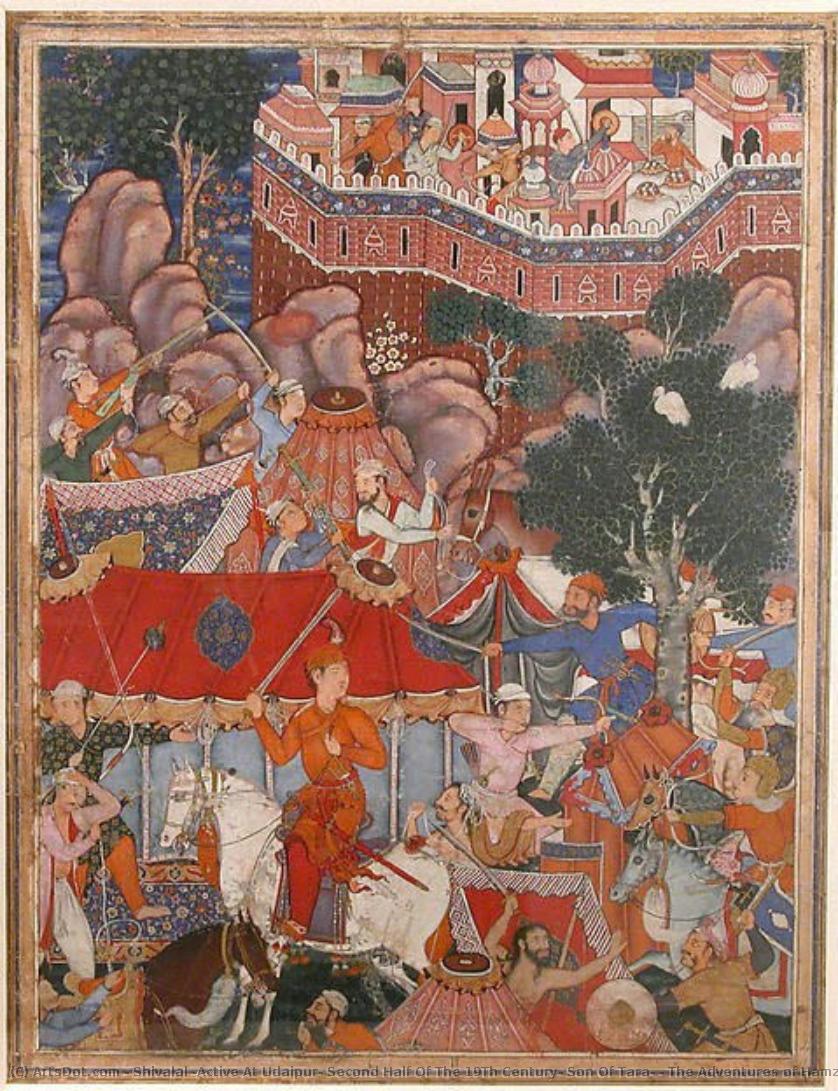
The Hamzanama relates the story of Hamza, an uncle of the prophet Mohammad and an ardent defender of the Muslim faith. In this scene, Assad ibn Kariba, a supporter of Hamza shown dressed in an orange jama, takes an army of unbelievers (non-Muslims) by surprise in a night attack. In the midst of the chaos, the unbelievers attack and kill one another. The drama-filled story of the Hamzanama was a favorite of the Mughal emperor Akbar, who commissioned this magnificent manuscript in 1562. Composed of 1400 illustrations and bound into several volumes, the work took nearly one hundred artists fifteen years to complete.
関連作品









アーティストの略歴
The Enigmatic Brush of Tara’s Son: A Life Dedicated to Miniature Painting
The late 19th century in Udaipur, Rajasthan, was a crucible of artistic tradition, and within this vibrant milieu emerged the painter known simply as the son of Tara. While biographical details remain frustratingly scarce – a common fate for artists working within established court styles – his legacy is etched vividly onto the delicate surfaces of countless miniature paintings. He wasn’t a revolutionary figure seeking to overturn convention; rather, he was a master craftsman who embodied and refined the existing aesthetic principles of the Mewar school, inheriting a lineage stretching back generations. His father, Tara, himself a respected artist, undoubtedly provided the foundational training that allowed his son to flourish. The lack of extensive personal documentation forces us to understand him through his work – a testament to the power of artistic expression to transcend the limitations of historical record. He lived and worked during a period of significant change in India, witnessing the increasing influence of British colonialism, yet his art remained steadfastly rooted in indigenous narratives and visual languages.A Legacy Forged in Tradition: Influences and Early Development
The son of Tara’s artistic development was deeply intertwined with the patronage system prevalent in Udaipur. The Mewar court, though diminished in political power compared to its zenith, continued to commission paintings for religious ceremonies, historical chronicles, and personal enjoyment. These commissions provided a crucial training ground, exposing him to a diverse range of subjects and stylistic demands. Early works reveal a strong adherence to the established conventions of Mewar painting: bold colors, flattened perspectives, intricate detailing, and an emphasis on narrative clarity.- The Bhagavata Purana: A significant portion of his early output focused on illustrating episodes from the *Bhagavata Purana*, a Hindu text recounting the life and deeds of Lord Krishna. These paintings demonstrate his skill in depicting emotive figures, lush landscapes, and dynamic compositions.
- Ragamala Paintings: He also excelled in painting *ragamalas* – visual representations of musical modes or “melodies.” Each *raga* was associated with a specific mood, time of day, and season, which the artist conveyed through symbolic imagery and color palettes.
- Courtly Life: Scenes depicting courtly life – hunting expeditions, royal processions, and intimate moments within the zenana (women’s quarters) – showcase his ability to capture the elegance and refinement of Mewar society.
Mastering the Miniature: Technique and Artistic Characteristics
The son of Tara’s technical prowess was remarkable. Miniature painting demanded an extraordinary level of precision, patience, and skill. He worked primarily on paper, using natural pigments derived from minerals, plants, and precious stones. The process involved meticulously layering colors to create depth and luminosity, often employing techniques like *kajli*, a method of outlining figures with black ink to enhance their definition.- Color Palette: His color palette was typically rich and vibrant, featuring shades of gold, crimson, indigo, emerald green, and ochre. He skillfully balanced these colors to create harmonious compositions that evoked specific moods and emotions.
- Detailed Composition: The intricate detailing in his paintings is particularly noteworthy – the delicate patterns on textiles, the elaborate jewelry adorning figures, and the lush foliage of landscapes all testify to his exceptional craftsmanship.
- Narrative Focus: Despite the small scale of his works, he managed to convey complex narratives with clarity and precision. His paintings are not merely decorative; they tell stories, evoke emotions, and offer insights into the cultural beliefs and values of Mewar society.
Historical Significance: Preserving a Tradition in a Changing World
The son of Tara’s work occupies a crucial position in the history of Mewar painting. He lived during a period when traditional art forms were facing increasing competition from Western artistic styles and mass-produced prints. His dedication to preserving the established conventions of miniature painting – while subtly refining them – helped ensure the survival of this unique artistic tradition.- Patronage Decline: The decline in royal patronage towards the end of the 19th century posed a significant challenge for artists like him. He likely relied on commissions from wealthy merchants and private collectors to sustain his livelihood.
- Cultural Preservation: His paintings serve as invaluable historical documents, providing insights into the religious beliefs, social customs, and artistic tastes of Mewar society during this period.
- Artistic Legacy: Although he did not establish a large workshop or train numerous disciples, his influence can be seen in the work of later Mewar painters who continued to uphold the traditions he embodied. His paintings are now highly sought after by collectors and museums worldwide, testament to their enduring artistic merit.
基本情報
- Artistic Movement Or Style: Rajasthan School
- Artists Or Movements Influenced By This Artist: ['(Unknown)']
- Artists Who Influenced This Artist: ['Tara (Father)']
- Date Of Birth: (Unknown)
- Date Of Death: Living
- Full Name: Shivalal
- Nationality: Indian
- Notable Artworks: ['(Unknown Titles)']
- Place Of Birth: Udaipur, India

