

 プレビュー
プレビュー
 プリントを購入
 シェアする
シェアする シェアする
シェアする
 詳細を見る
詳細を見る

 ダウンロード
 似ている作品
 X線調査
X線調査 スライドショー
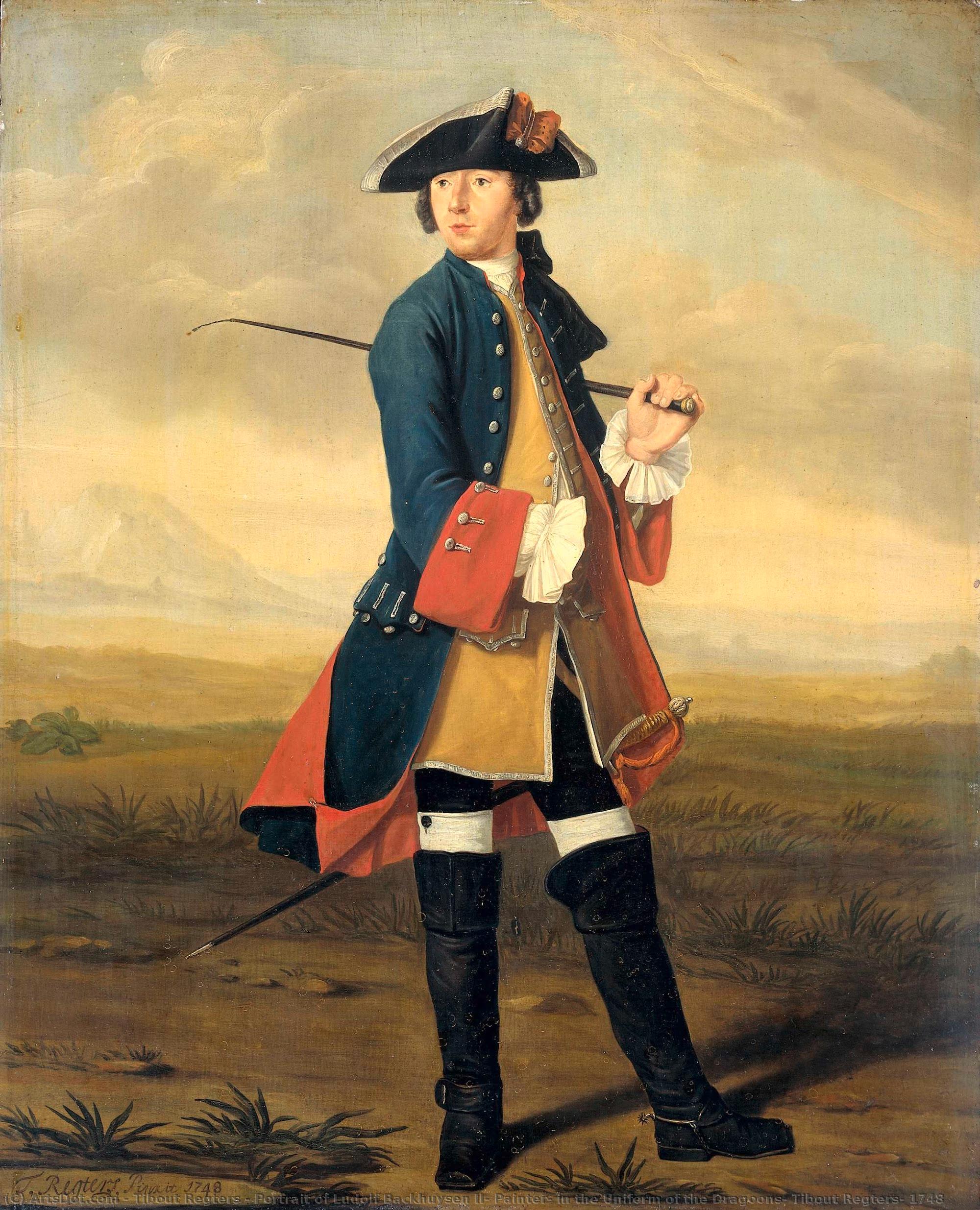
Portrait of Ludolf Backhuysen II, Painter, in the Uniform of the Dragoons, Tibout Regters, 1748
 1748
1748 53.0 x 43.0 cm
 詳細を見る
詳細を見る




































作品のオリジナル比率に合わせた、当店の規定サイズからお選びください。

特定のフレームやスペースに合わせて、ご希望のサイズをご入力いただけます。選択されたサイズが元の画像の比率と異なる場合、アートワークをトリミングするか、手描きで要素を追加して絵画を拡張いたします。デジタルモックアップ を制作し、制作開始前にご確認(承認)をいただきます。
画面上のプレビューは、実際のトリミングや拡張を正確に反映しているものではありません。最終的な構図は、モックアップによってのみ正確にご確認いただけます。
カスタムサイズもご利用いただけますが、元の比率を維持するためには、あらかじめ用意されたリストからサイズを選択することをお勧めいたします。
ご注文後、ArtsDot.com チームより詳細な指示をお送りするとともに、仕上がりイメージ(モックアップ)をご提供いたします。


 ガラスオプションは、110cm未満のサイズでのみご利用いただけます。

Portrait of Ludolf Backhuysen II, Painter, in the Uniform of the Dragoons, Tibout Regters, 1748
複製技法
複製画のサイズ
-


合計金額
$ 263
関連作品




アーティストの略歴
Early Life and Artistic Foundations
Tibout Regters, born on December 24th, 1710, in the bustling Dutch city of Dordrecht, embarked on a journey that would establish him as a notable portrait painter of the 18th century. His early life took an itinerant turn; when he was just two years old, his family relocated to Arnhem, where he spent his formative years. This move proved pivotal, setting the stage for his artistic development. Initially, young Tibout received instruction from Ten Haeg, a local artist who laid the groundwork for his future endeavors. At the age of twenty, Regters ventured to Rotterdam, dedicating two years to honing his skills under the tutelage of Meyer, further refining his technique and broadening his understanding of the craft. However, it was his subsequent relocation to Amsterdam that truly ignited his artistic trajectory. Amsterdam in the 18th century was a vibrant hub of commerce, culture, and artistic innovation. Regters initially found employment with Wannenberg before securing a coveted apprenticeship with Jan Maurits Quinkhard—a master whose influence would profoundly shape his style. For five years, he immersed himself in Quinkhard’s studio, absorbing the nuances of portraiture and developing into a skilled artist capable of capturing not just likenesses but also the essence of his subjects. It was during this period that Regters began to demonstrate a particular aptitude for depicting the refined elegance and social standing characteristic of Northern Netherlands society.A Portraitist of Amsterdam’s Elite
Regters quickly established himself as a sought-after portraitist in Amsterdam, catering to the burgeoning merchant class and affluent regents who desired to immortalize their status and lineage. His work is characterized by a meticulous attention to detail, a subtle yet effective use of color, and an ability to convey both the physical appearance and the inner character of his sitters. Unlike some of his contemporaries who favored grand, ostentatious displays of wealth in their portraits, Regters often opted for more intimate and restrained compositions. His paintings exude a sense of quiet dignity and refined taste, reflecting the values of the Dutch bourgeoisie. A key aspect of Regters’ success lay in his ability to capture the *conversation piece*—group portraits that depicted families or prominent citizens engaged in everyday activities. These works weren't merely records of individuals; they were carefully constructed narratives that showcased social harmony, familial bonds, and intellectual pursuits. The portrait of the Brak Family (1752), now held in the Rijksmuseum collection, exemplifies this approach—a harmonious depiction of a prosperous Mennonite family within their domestic sphere. Similarly, his painting *The Regents of the Aalmoezeniersweeshuis* (1751) demonstrates his skill in portraying civic leaders and contributing to institutional art.Influences and Artistic Development
While Quinkhard’s influence is undeniable—evident in Regters' refined style and attention to domestic settings—his artistic development wasn’t solely confined to the teachings of a single master. He absorbed elements from other prominent Dutch painters, notably those associated with the Leiden *fijnschilders*—artists known for their meticulous detail and smooth brushwork. This influence is visible in the precise rendering of fabrics, textures, and architectural details within his portraits. Regters’ early works, dating around 1741, reveal a preference for smaller-scale individual and family portraits characterized by casual poses and intimate interiors. As he matured, however, his compositions grew larger and more complex, reflecting the increasing demand for group portraits that showcased the social dynamics of Amsterdam's elite. He skillfully blended realism with a sense of naturalism, creating paintings that were both accurate representations and evocative portrayals of 18th-century life.Legacy and Historical Significance
Tibout Regters’ career spanned a period of economic challenges within the Dutch art market. Despite these difficulties, he managed to maintain a steady stream of commissions—a testament to his accessible style and ability to cater to the tastes of the middle class. His paintings offer valuable insights into the social customs, material culture, and values of 18th-century Amsterdam. He wasn’t merely documenting appearances; he was chronicling a way of life. Over 140 documented works attest to his prolific output, though fewer genre scenes survive—suggesting that portraiture remained his primary focus throughout his career. His later experiments with mythological subjects and market scenes demonstrate a willingness to explore different themes, but it is for his portraits that he is best remembered today. Regters’ legacy lies in his ability to capture the elegance, status, and inner lives of Northern Netherlands society—creating paintings that continue to resonate with viewers centuries later. He died in Amsterdam on January 26th, 1768, leaving behind a body of work that stands as a testament to his skill, dedication, and artistic vision. His portraits are not just historical records; they are windows into the world of 18th-century Dutch life—a world brought to life with meticulous detail, subtle emotion, and enduring grace.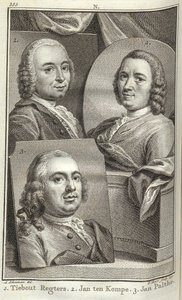
tibout regters
1710 - 1768 , Netherlands
基本情報
- Artistic Movement Or Style: Portraiture, Rococo
- Artists Who Influenced This Artist: ['Jan Maurits Quinkhard']
- Date Of Birth: 1710
- Date Of Death: 1768
- Full Name: Tibout Regters
- Nationality: Dutch
- Notable Artworks:
- Portrait of L. Backhuysen II
- Portrait of J. Rendorp
- Portrait of P. Rendorp
- Portrait of J. ten Compe
- Place Of Birth: Dordrecht, Netherlands

