

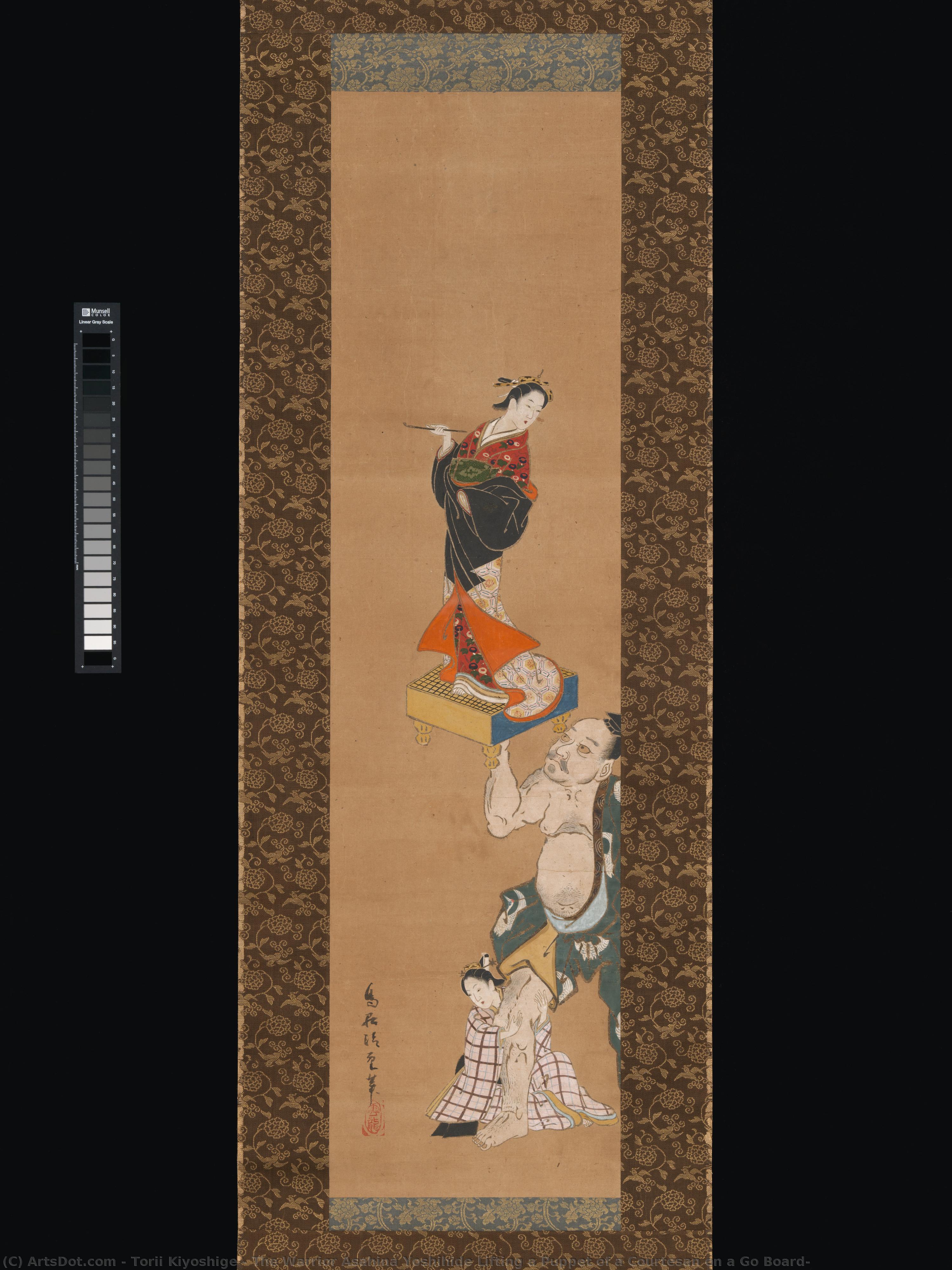
 プレビュー
プレビュー
 シェアする
シェアする シェアする
シェアする
 詳細を見る
詳細を見る

 ダウンロード
 似ている作品
 X線調査
X線調査 スライドショー
The Warrior Asahina Yoshihide Lifting a Puppet of a Courtesan on a Go Board
 701
701 76.0cm x 20.0cm
 詳細を見る
詳細を見る
ジークレー/アートプリント
迅速な制作と多彩な仕上げオプションを備えた、ミュージアムクオリティのジークレーまたはキャンバスプリント。 ( 手描きの絵画を購入 画像を購入)




































作品のオリジナル比率に合わせた、当店の規定サイズからお選びください。

特定のフレームやスペースに合わせて、ご自身でサイズを指定することも可能です。選択されたサイズが元の画像の比率と一致しない場合、作品をトリミングするか、鏡面反射または単色での塗りつぶしによって画像を拡張いたします。制作を開始する前に、ご確認用のデジタルモックアップをお送りいたします。
画面上のプレビューには、実際のトリミングや拡張は反映されませんのでご注意ください。最終的な構図を正確に確認できるのは、モックアップのみとなります。
カスタムサイズも承っておりますが、元の比率を維持するためには、あらかじめ用意されたリストからサイズを選択することをお勧めいたします。


 ガラスオプションは、110cm未満のサイズでのみご利用いただけます。

The Warrior Asahina Yoshihide Lifting a Puppet of a Courtesan on a Go Board
ジークレー/アートプリント
複製画のサイズ
-


合計金額
$ 62
関連作品










アーティストの略歴
The Vibrant Pulse of the Floating World: The Legacy of Torii Kiyoshige
In the bustling, neon-lit spirit of Edo-period Japan, where the boundaries between reality and theater often blurred, Torii Kiyoshige emerged as a master of the ephemeral. Born in Tokyo around 1716, Kiyoshige was not merely an observer of his era but a vital architect of its visual identity. As a prominent member of the Torii School, he belonged to a lineage of artists tasked with capturing the electric energy of the Kabuki stage and the transient delights of the "floating world." While biographical records from this period are often as fleeting as the subjects he painted, his artistic footprint is indelible, marked by a profound ability to translate the muscular tension of a dramatic performance into the delicate medium of woodblock printing.
The Torii School itself held a unique position in the cultural landscape of Edo. Originally serving as the primary creators of Kabuki theater signboards and promotional materials, the school’s style was inherently tied to the spectacle of the stage. Kiyoshige inherited this tradition of theatricality, yet he elevated it beyond mere advertisement. His work moved past the functional requirements of promotion to explore the psychological depth of his subjects. Unlike some of his contemporaries who favored serene or static compositions, Kiyoshige infused his prints with a sense of dynamic movement and structural complexity that mirrored the climactic moments of a Kabuki play.
A Symphony of Color and Dramatic Tension
What truly distinguishes Kiyoshige from other Ukiyo-e masters is his unparalleled command over a dramatic color palette. He did not use color simply to decorate; he used it to narrate. His prints are celebrated for their bold, often startling contrasts between light and shadow, a technique that served to amplify the emotional stakes of his scenes. By manipulating hues, he could evoke the heavy atmosphere of a tragic confrontation or the bright, fleeting joy of a festival. This mastery of color allowed him to communicate the internal struggles of his characters—primarily famous actors—making the viewer feel the weight of their dramatic poses.
His technical prowess is perhaps most evident in his ability to capture mie, those iconic, frozen moments of intense emotion where an actor strikes a powerful pose. Through meticulous line work and strategic use of negative space, Kiyoshige could direct the eye through a composition, ensuring that the viewer’s gaze followed the arc of a story. His work often featured:
- Dynamic Compositions: Utilizing diagonal lines and overlapping figures to create a sense of depth and action.
- Theatrical Realism: A dedication to capturing the specific costumes, makeup, and physical intensity of Kabuki performers.
- Atmospheric Depth: Using color gradients to suggest the smoky air of a theater or the twilight of an Edo street.
Historical Significance and Artistic Endurance
The significance of Torii Kiyoshige lies in his role as a bridge between the functional art of the early Torii masters and the highly refined, independent art forms that followed. He took the foundational elements of theater promotion—the focus on action and recognizable icons—and transformed them into sophisticated works of fine art that could stand alone without the context of a playbill. His ability to blend the muscularity of historical legends with the elegance of contemporary fashion helped define the aesthetic standards of the mid-18th century.
Even today, as we look back upon the "floating world," Kiyoshige’s work remains a window into the soul of old Japan. He captured a culture that found profound meaning in the temporary, teaching us that beauty is most potent precisely because it cannot last. Through his bold strokes and vibrant pigments, the echoes of the Edo stage continue to resonate, inviting modern audiences to experience the timeless magic of a world caught in a moment of eternal motion.
Torii Kiyoshige
Japan
基本情報
- Artistic Movement Or Style: Ukiyo-e School
- Artists Or Movements Influenced By This Artist: ['Western Art']
- Artists Who Influenced This Artist:
- Torii Kiyonaga
- Komatsuya Hyakki
- Full Name: Torii Kiyoshige
- Nationality: Japanese
- Notable Artworks:
- Ichikawa Yaozö I as Soga-no-gorö
- The Actor Sawamura Sojuro II
- The Actor Sawamura Sojuro I as Soga no Juro
- Minamoto no Yoritomo Hiding in a Tree
- Yoshiwara: Mount Fuji on the Left (Yoshiwara, hidari Fuji)
- Cuckoo flying over deutzia flowers
- The Actor Matsumoto Koshiro II as Fuwa Banzaemon in the play "Monzukushi Nagoya Soga," performed at the Ichimura Theater in the first month, 1748
- Place Of Birth: Tokyo, Japan

