

 プリントを購入
 シェアする
シェアする シェアする
シェアする
 詳細を見る
詳細を見る

 ダウンロード
 似ている作品
 スライドショー
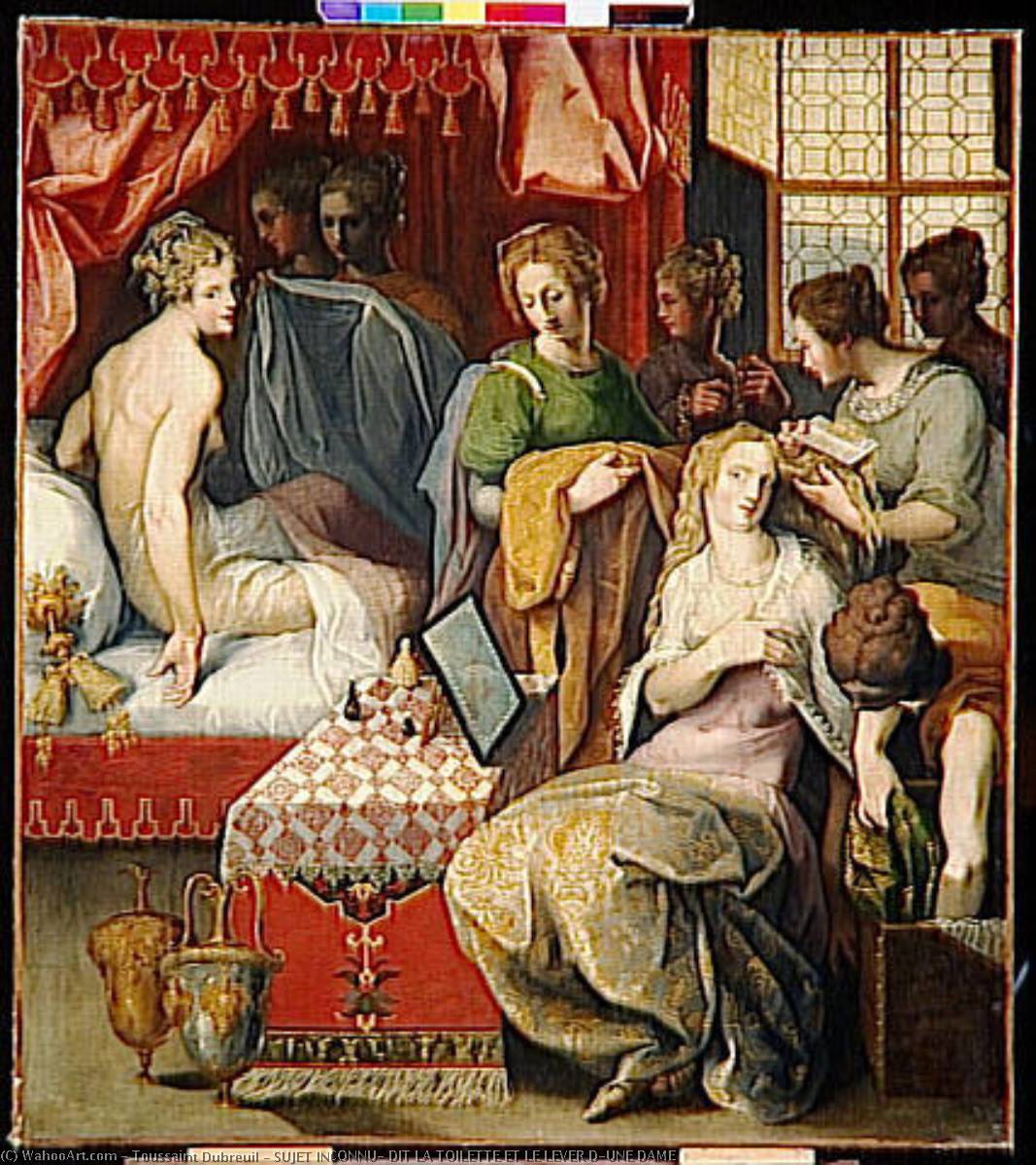
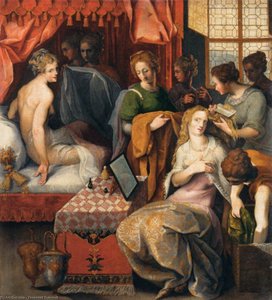
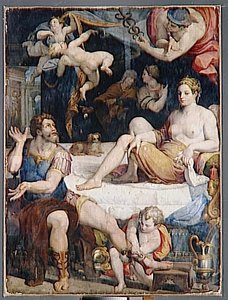
SUJET INCONNU, DIT LA TOILETTE ET LE LEVER D'UNE DAME


 詳細を見る
詳細を見る




































作品のオリジナル比率に合わせた、当店の規定サイズからお選びください。

特定のフレームやスペースに合わせて、ご希望のサイズをご入力いただけます。選択されたサイズが元の画像の比率と異なる場合、アートワークをトリミングするか、手描きで要素を追加して絵画を拡張いたします。デジタルモックアップ を制作し、制作開始前にご確認(承認)をいただきます。
画面上のプレビューは、実際のトリミングや拡張を正確に反映しているものではありません。最終的な構図は、モックアップによってのみ正確にご確認いただけます。
カスタムサイズもご利用いただけますが、元の比率を維持するためには、あらかじめ用意されたリストからサイズを選択することをお勧めいたします。
ご注文後、ArtsDot.com チームより詳細な指示をお送りするとともに、仕上がりイメージ(モックアップ)をご提供いたします。


 ガラスオプションは、110cm未満のサイズでのみご利用いただけます。

SUJET INCONNU, DIT LA TOILETTE ET LE LEVER D'UNE DAME
複製技法
複製画のサイズ
-


合計金額
$ 388
A Glimpse into a Lavish World: Toussaint Dubreuil’s “SUJET INCONNU”
Toussaint Dubreuil’s “SUJET INCONNU, DIT LA TOILETTE ET LE LEVER D'UNE DAME,” often referred to as "The Toilette and the Awakening of a Lady," is more than just a depiction of a private moment; it’s a meticulously crafted window into the opulent world of 16th-century French aristocracy. Painted in 1598, this tapestry, rendered with astonishing detail and a subtly unsettling atmosphere, offers a rare glimpse into the daily rituals and social dynamics of a privileged elite. The scene unfolds within a richly appointed bedroom – a space dominated by a monumental bed draped in sumptuous fabrics, its presence immediately establishing a sense of grandeur and wealth. The composition is deliberately crowded, teeming with figures engaged in various activities: a partially nude woman emerging from her slumber, attended by servants diligently performing their duties, and others absorbed in pursuits like sewing and reading. This density isn’t chaotic; rather, it speaks to the constant activity and intricate social choreography that characterized aristocratic life.
The Mannerist Palette and Italian Influence
Dubreuil's style firmly places him within the Second School of Fontainebleau, a movement deeply influenced by the artistic currents flowing from Italy. He skillfully blended the elongated forms, dramatic poses, and heightened emotionality characteristic of Mannerism – a style that prioritized elegance and psychological intensity over strict realism – with the classical ideals championed by the Italian Renaissance. Notice particularly the subtly distorted proportions of the figures, the swirling draperies that seem to defy gravity, and the carefully orchestrated use of light and shadow. These elements contribute to an overall sense of theatricality and heightened drama. The influence of artists like Francesco Primaticcio, a key figure in shaping the Fontainebleau style, is readily apparent in the tapestry’s densely packed composition and its penchant for elaborate detail. Dubreuil's work represents a crucial bridge between the rigid formality of earlier French painting and the more expressive and dynamic approach favored by Italian masters.
Decoding Symbolism: Intimacy and Social Hierarchy
Beyond its aesthetic qualities, “SUJET INCONNU” is laden with symbolic meaning. The partially nude figure emerging from bed represents a moment of vulnerability and intimacy – a private ritual performed within the confines of the bedroom. However, this intimate scene is framed by a complex social hierarchy. The attendants attending to the woman are not merely servants; they represent the intricate web of relationships and obligations that defined aristocratic society. The presence of objects like books and sewing implements suggests intellectual pursuits and domestic duties, further reinforcing the tapestry’s portrayal of a carefully constructed world. Some scholars have suggested the scene might allude to mythological or allegorical themes, perhaps referencing figures from classical literature associated with beauty, sleep, and awakening – though definitive interpretations remain debated.
Technique: The Art of Tapestry Weaving
The remarkable detail and richness of “SUJET INCONNU” are a testament to the skill of its creator and the demanding process of tapestry weaving. Likely executed in wool and silk threads, the work demonstrates an extraordinary level of technical mastery. The intricate knotting techniques used to create the image required immense patience and precision. The vibrant colors – reds, golds, browns, creams, greens, and blues – were achieved through careful dyeing processes, utilizing natural pigments derived from plants and minerals. The flattened perspective, a common characteristic of tapestries, creates an illusion of depth while simultaneously emphasizing the decorative qualities of the artwork. The texture itself—the raised pile of wool and silk—invites tactile engagement, suggesting the luxurious materiality of the scene depicted.
A Legacy of Elegance: Dubreuil’s Place in Art History
Though Toussaint Dubreuil's individual fame has often been overshadowed by his contemporaries, “SUJET INCONNU” stands as a significant example of French Mannerist painting and a remarkable achievement in tapestry weaving. It offers a captivating glimpse into the world of 16th-century aristocracy – a world defined by wealth, social complexity, and an enduring fascination with beauty and intimacy. Reproductions of this exquisite work continue to inspire admiration for its technical brilliance, symbolic depth, and evocative atmosphere, solidifying Dubreuil’s legacy as a key figure in the artistic landscape of his time.
関連作品

アーティストの略歴
The Elegance of Mannerism: The Life and Legacy of Toussaint Dubreuil
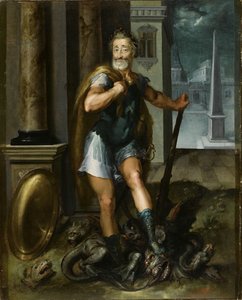
Toussaint Dubreuil, a name etched into the delicate fabric of the French Renaissance, stands as a masterful bridge between the structured grandeur of Mannerism and the fluid, emotive grace of Italian influence. Born in Paris around 1561, Dubreuil emerged during a transformative era when the French court sought to mirror the sophisticated aesthetics of the Italian masters. His life, though relatively brief, concluded in 1602, yet the impact of his brushwork remains a testament to the artistic ambitions of the Second School of Fontainebleau. This movement was not merely a stylistic choice but a cultural phenomenon, blending the elongated, stylized forms of Mannerism with a vibrant, rhythmic energy that sought to elevate the French spirit through classical ideals.
The foundation of Dubreuil’s artistry was laid under the watchful eye of Ruggiero de Ruggieri at Fontainebleau. This formative period was crucial, as it immersed him in the principles of classical sculpture and the humanist philosophies that defined the royal court. From this tutelage, he inherited a meticulous devotion to detail and an uncanny ability to render idealized beauty. His early works reveal a profound grasp of Mannerist techniques—characterized by expressive gestures and complex, undulating draperies—yet they are simultaneously infused with a subtle, lyrical nuance derived from Italian traditions. This synthesis allowed him to create compositions that felt both structurally sophisticated and emotionally resonant.
Narrative Grandeur and Mythological Vision
Dubreuil’s creative impulse was deeply rooted in the literary and mythological landscapes of his time. He found endless inspiration in the epic tales of Homer, the poetic explorations of Pierre de Rationale, and the dramatic narratives of Torquato Tasso. Through these subjects, he explored universal themes of heroism, virtue, and divine grace, translating ancient legends into visual spectacles for the French aristocracy. His canvases often feature:
- Heroic Confrontations: Dramatic scenes where figures are caught in moments of intense physical and emotional struggle, utilizing elongated limbs to heighten the sense of tension.
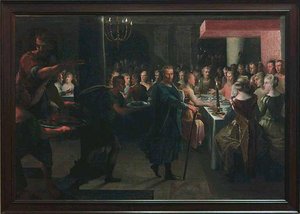
- Opulent Festivities: Grandiose depictions of banquets and royal celebrations, such as his work Sujet inconnu, dit Un banquet, which capture the splendor and social hierarchy of the era.
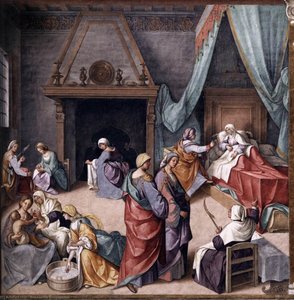
- Intimate Portraits and Domesticity: More delicate explorations of beauty and ritual, exemplified by works like La Toilette et le Lever d'une Dame, where the grace of the human form is celebrated through soft light and refined detail.
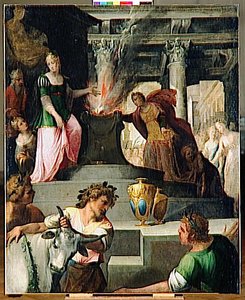
In masterpieces such as Sacrifice Antique, Dubreuil demonstrates his ability to evoke profound mystery. Through the use of flickering flames and shadowy, enigmatic figures, he invites the viewer into a world of ancient ritual, where the boundaries between the mortal and the divine become blurred. This capacity for atmosphere is what distinguishes him from his contemporaries, as he moved beyond mere imitation of style to achieve a true sense of narrative depth.
Historical Significance and Artistic Triumph
The zenith of Dubreuil’s career was marked by his monumental contributions to the Fontainebleau Palace. His ability to execute ambitious fresco projects showcased a technical versatility that commanded respect within the highest circles of French nobility. These large-scale works served as much more than decoration; they were political and cultural statements, reinforcing the prestige of the French monarchy through the language of classical triumph. While he may not have achieved the widespread fame of some of his peers, his role in refining the Second School of Fontainebleau was indispensable.
Dubreuil’s legacy lies in his ability to harmonize disparate influences into a cohesive, uniquely French aesthetic. By weaving together the tension of Mannerism with the harmony of the Italian Renaissance, he helped define an era of unparalleled elegance. His work remains a vital study for anyone seeking to understand the transition of European art toward a more emotive and narrative-driven future, ensuring that his name continues to resonate within the halls of art history.
Toussaint Dubreuil
1561 - 1602 , France
基本情報
- Artistic Movement Or Style: Second School Fontainebleau; Mannerism; Italian Art Influence
- Artists Who Influenced This Artist: ['Ruggiero de Ruggieri']
- Date Of Birth: ca. 1561
- Date Of Death: 1602
- Full Name: Toussaint Dubreuil
- Nationality: French
- Notable Artworks:
- Hyante & Climene
- Sujet inconnu, dit Un banquet
- SUJET INCONNU, DIT LA TOILETTE ET LE LEVER D'UNE DAME
- Place Of Birth: Paris, France
関連記事

The Enduring Legacy of Oil on Canvas: Technique, History & Aesthetic Impact
Explore the rich history & techniques of oil painting – from Renaissance masters to Impressionism. Discover pigments, layering methods, and why this timeless medium endures. Expert insights for artists & art enthusiasts.

Oil on Canvas: A Historical & Technical Exploration of a Timeless Artistic Medium
Explore the rich history & enduring techniques of oil painting on canvas. Discover the science behind its longevity, conservation practices, and contemporary relevance. Expert insights for art enthusiasts.

The Enduring Power of Painting: A Historical & Contemporary Exploration of Form and Emotion
Explore the rich history & enduring techniques of oil painting with ArtsDot. Discover masterpieces, learn about art collecting, and find authentic handmade reproductions crafted by skilled artists.

油彩のキャンバス:技法、歴史、そして現代の実践 - 古典美術愛好家へ
油彩の技法、歴史、巨匠たちの秘密を徹底解説。古典美術愛好家向けに、初期フランドル絵画から現代の実践まで深く掘り下げます。ArtsDotで高品質な複製画やカスタムオーダーも承ります。
Oil on Board Masters: 10 Paintings That Redefined Art | ArtsDot
Explore 10 legendary 'Oil on Board' masterpieces by Van Gogh, Monet & more! Discover art history, iconic styles like Impressionism, and find museum-quality reproductions to elevate your home decor. Explore the full collection online at ArtsDot.com.

