

 プレビュー
プレビュー
 プリントを購入
 シェアする
シェアする シェアする
シェアする
 詳細を見る
詳細を見る

 ダウンロード
 似ている作品
 X線調査
X線調査 スライドショー
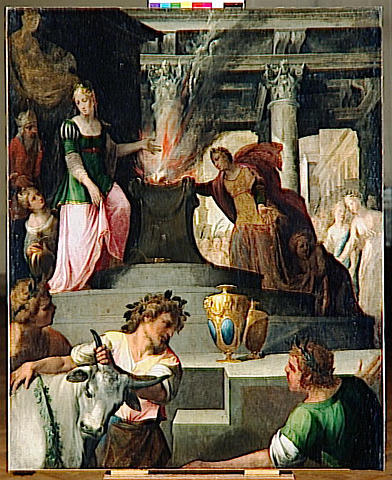
SUJET INCONNU, DIT SACRIFICE ANTIQUE


 詳細を見る
詳細を見る




P118B $10

P118H $10

P118W $10

P438Z $10

P508JH $12

P508YH $12

P805H $10

P805Z $10

P919BZ $10

P919G $10

P919XJ $10

P959ZH $10

P968JZ $12

W106C $8

W218G $10

W218JH $8

W218Y $10

W307PJ $10

W316G $10

W316PJ $8

W316Y $10

W398PJ $8

W4111J $10

W500HY $15

W500JH $15

W692G $12

W849H $8

W940BG $15

W953PJ $8




作品のオリジナル比率に合わせた、当店の規定サイズからお選びください。

特定のフレームやスペースに合わせて、ご希望のサイズをご入力いただけます。選択されたサイズが元の画像の比率と異なる場合、アートワークをトリミングするか、手描きで要素を追加して絵画を拡張いたします。デジタルモックアップ を制作し、制作開始前にご確認(承認)をいただきます。
画面上のプレビューは、実際のトリミングや拡張を正確に反映しているものではありません。最終的な構図は、モックアップによってのみ正確にご確認いただけます。
カスタムサイズもご利用いただけますが、元の比率を維持するためには、あらかじめ用意されたリストからサイズを選択することをお勧めいたします。
ご注文後、ArtsDot.com チームより詳細な指示をお送りするとともに、仕上がりイメージ(モックアップ)をご提供いたします。


 ガラスオプションは、110cm未満のサイズでのみご利用いただけます。

SUJET INCONNU, DIT SACRIFICE ANTIQUE
複製技法
複製画のサイズ
-


合計金額
$ 413
SUJET INCONNU, DIT SACRIFICE ANTIQUE – Toussaint Dubreuil
Toussaint Dubreuil’s “Ancient Sacrifice” stands as a testament to the Second School of Fontainebleau—a remarkable confluence of Mannerist grandeur and Italian Renaissance influence that captivated the artistic sensibilities of 16th-century France. While often overshadowed by more celebrated contemporaries like François Dubois, Dubreuil's oeuvre possesses an undeniable character defined by elongated figures, undulating draperies, and densely populated compositions mirroring the stylistic explorations championed by artists such as Francesco Primaticcio—a direct reflection of the profound impact Italian artistic ideals had on French painting during his prolific career. The artwork depicts a dramatic scene centered around an altar or pyre where flames ascend, immediately establishing a palpable sense of solemnity and impending ritual. Figures are meticulously arranged around this focal point, creating a dynamic narrative tension that draws the viewer’s eye into the heart of the composition. Dubreuil's masterful use of perspective subtly flattens the space, characteristic of the period, yet skillfully employs overlapping figures and receding architectural elements to convey depth and heighten visual interest. Color plays a crucial role in conveying the artwork’s emotional resonance. The dominant palette leans towards earthy tones—browns, ochres, and muted greens—providing a grounding counterpoint to bursts of vibrant red adorning one figure's drapery and pinks and greens punctuating the clothing of another. Strategic highlights within the flames introduce brilliant yellows and oranges, amplifying their luminosity and emphasizing their symbolic significance as conduits of divine fire. Dubreuil’s technique is characterized by layering colors with painstaking precision and employing loose brushstrokes to achieve a textural richness that captures the flickering effect of the flames. The medium—oil paint on canvas—allowed for nuanced blending and tonal modulation, contributing significantly to the artwork's overall visual impact. Furthermore, the artist’s meticulous attention to detail extends beyond mere representation; it embodies the humanist spirit prevalent during Dubreuil’s time, reflecting a desire to capture not just what is seen but also what is felt. The subject matter delves into themes of mortality and faith, underscored by the presence of a bull—a symbol deeply rooted in pagan religious traditions—further enriching the artwork's narrative complexity. “Ancient Sacrifice” transcends mere visual depiction; it invites contemplation on profound questions concerning human existence and spiritual belief. Dubreuil’s legacy resides not only in his artistic skill but also in his ability to evoke emotion and inspire reflection, cementing his place as a pivotal figure within the Second School of Fontainebleau and a cornerstone of French Renaissance art history.- Artist: Toussaint Dubreuil
- Born Year: 1561
- Death Year: 1602
- Birth City: Paris
- Birth Country: France
- Notable Artworks: Hyante & Climene
- Style & Medium: Mannerist; Oil Paint on Canvas
関連作品
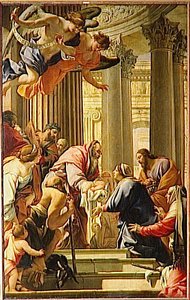
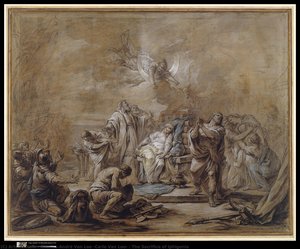

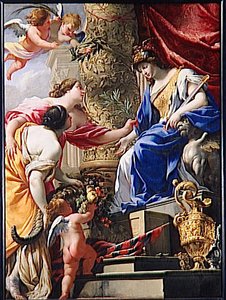
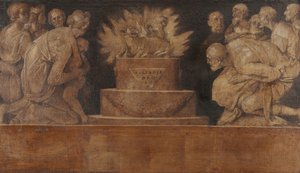
アーティストの略歴
The Elegance of Mannerism: The Life and Legacy of Toussaint Dubreuil
Toussaint Dubreuil, a name etched into the delicate fabric of the French Renaissance, stands as a masterful bridge between the structured grandeur of Mannerism and the fluid, emotive grace of Italian influence. Born in Paris around 1561, Dubreuil emerged during a transformative era when the French court sought to mirror the sophisticated aesthetics of the Italian masters. His life, though relatively brief, concluded in 1602, yet the impact of his brushwork remains a testament to the artistic ambitions of the Second School of Fontainebleau. This movement was not merely a stylistic choice but a cultural phenomenon, blending the elongated, stylized forms of Mannerism with a vibrant, rhythmic energy that sought to elevate the French spirit through classical ideals.
The foundation of Dubreuil’s artistry was laid under the watchful eye of Ruggiero de Ruggieri at Fontainebleau. This formative period was crucial, as it immersed him in the principles of classical sculpture and the humanist philosophies that defined the royal court. From this tutelage, he inherited a meticulous devotion to detail and an uncanny ability to render idealized beauty. His early works reveal a profound grasp of Mannerist techniques—characterized by expressive gestures and complex, undulating draperies—yet they are simultaneously infused with a subtle, lyrical nuance derived from Italian traditions. This synthesis allowed him to create compositions that felt both structurally sophisticated and emotionally resonant.
Narrative Grandeur and Mythological Vision
Dubreuil’s creative impulse was deeply rooted in the literary and mythological landscapes of his time. He found endless inspiration in the epic tales of Homer, the poetic explorations of Pierre de Rationale, and the dramatic narratives of Torquato Tasso. Through these subjects, he explored universal themes of heroism, virtue, and divine grace, translating ancient legends into visual spectacles for the French aristocracy. His canvases often feature:
- Heroic Confrontations: Dramatic scenes where figures are caught in moments of intense physical and emotional struggle, utilizing elongated limbs to heighten the sense of tension.
- Opulent Festivities: Grandiose depictions of banquets and royal celebrations, such as his work Sujet inconnu, dit Un banquet, which capture the splendor and social hierarchy of the era.
- Intimate Portraits and Domesticity: More delicate explorations of beauty and ritual, exemplified by works like La Toilette et le Lever d'une Dame, where the grace of the human form is celebrated through soft light and refined detail.
In masterpieces such as Sacrifice Antique, Dubreuil demonstrates his ability to evoke profound mystery. Through the use of flickering flames and shadowy, enigmatic figures, he invites the viewer into a world of ancient ritual, where the boundaries between the mortal and the divine become blurred. This capacity for atmosphere is what distinguishes him from his contemporaries, as he moved beyond mere imitation of style to achieve a true sense of narrative depth.
Historical Significance and Artistic Triumph
The zenith of Dubreuil’s career was marked by his monumental contributions to the Fontainebleau Palace. His ability to execute ambitious fresco projects showcased a technical versatility that commanded respect within the highest circles of French nobility. These large-scale works served as much more than decoration; they were political and cultural statements, reinforcing the prestige of the French monarchy through the language of classical triumph. While he may not have achieved the widespread fame of some of his peers, his role in refining the Second School of Fontainebleau was indispensable.
Dubreuil’s legacy lies in his ability to harmonize disparate influences into a cohesive, uniquely French aesthetic. By weaving together the tension of Mannerism with the harmony of the Italian Renaissance, he helped define an era of unparalleled elegance. His work remains a vital study for anyone seeking to understand the transition of European art toward a more emotive and narrative-driven future, ensuring that his name continues to resonate within the halls of art history.
Toussaint Dubreuil
1561 - 1602 , France
基本情報
- Artistic Movement Or Style: Second School Fontainebleau; Mannerism; Italian Art Influence
- Artists Who Influenced This Artist: ['Ruggiero de Ruggieri']
- Date Of Birth: ca. 1561
- Date Of Death: 1602
- Full Name: Toussaint Dubreuil
- Nationality: French
- Notable Artworks:
- Hyante & Climene
- Sujet inconnu, dit Un banquet
- SUJET INCONNU, DIT LA TOILETTE ET LE LEVER D'UNE DAME
- Place Of Birth: Paris, France
関連記事

Golden Hour on the Nile: Symbolism & Artistic Legacy of Egyptian Sunsets
Explore the rich symbolism of Egyptian sunset paintings & their artistic legacy. Discover how color, ritual, and landscape shaped ancient beliefs – a guide for discerning collectors.
Embodying the Polis: Civic Virtue as Subject & Symbol in Western Art
Explore the fascinating history of civic virtue in Western art! From ancient Greece to the French Revolution, discover how artists depicted ideals of citizenship, duty & republicanism. Expert analysis at ArtsDot.
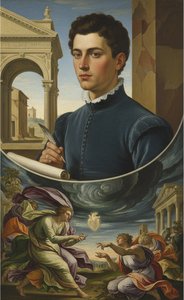
Jacopo Pontormo: A Bridge Between Renaissance Tradition & Mannerist Emotion
Explore the captivating world of Jacopo Pontormo, a pivotal Italian Mannerist painter. Discover his unique style, influences & masterpieces – and find museum-quality reproductions at ArtsDot.
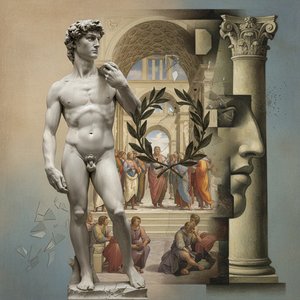
The Enduring Echo of Antiquity: Classical Ideals in Art from Renaissance to Modernism
Explore the lasting impact of classical ideals on art from the Renaissance to Modernism. Discover key movements, iconic artists & find museum-quality reproductions at ArtsDot.
The Enduring Legacy of Classical Style: Form, Narrative & Influence in Art
Explore the enduring legacy of classical art – from ancient Greece & Rome to Neoclassicism. Discover key artists, philosophical roots & build a timeless collection with ArtsDot's expert guidance.

