


 プレビュー
プレビュー
 シェアする
シェアする シェアする
シェアする
 詳細を見る
詳細を見る

 ダウンロード
 似ている作品
 X線調査
X線調査 スライドショー
 Stats
StatsStill Life with Fruit and Glass


 詳細を見る
詳細を見る
ジークレー/アートプリント
迅速な制作と多彩な仕上げオプションを備えた、ミュージアムクオリティのジークレーまたはキャンバスプリント。 ( 手描きの絵画を購入 Switch to Digital Image)




P118B $10

P118H $10

P118W $10

P438Z $10

P508JH $12

P508YH $12

P805H $10

P805Z $10

P919BZ $10

P919G $10

P919XJ $10

P959ZH $10

P968JZ $12

W106C $8

W218G $10

W218JH $8

W218Y $10

W307PJ $10

W316G $10

W316PJ $8

W316Y $10

W398PJ $8

W4111J $10

W500HY $15

W500JH $15

W692G $12

W849H $8

W940BG $15

W953PJ $8




作品のオリジナル比率に合わせた、当店の規定サイズからお選びください。

特定のフレームやスペースに合わせて、ご自身でサイズを指定することも可能です。選択されたサイズが元の画像の比率と一致しない場合、作品をトリミングするか、鏡面反射または単色での塗りつぶしによって画像を拡張いたします。制作を開始する前に、ご確認用のデジタルモックアップをお送りいたします。
画面上のプレビューには、実際のトリミングや拡張は反映されませんのでご注意ください。最終的な構図を正確に確認できるのは、モックアップのみとなります。
カスタムサイズも承っておりますが、元の比率を維持するためには、あらかじめ用意されたリストからサイズを選択することをお勧めいたします。


 ガラスオプションは、110cm未満のサイズでのみご利用いただけます。

Still Life with Fruit and Glass
ジークレー/アートプリント
複製画のサイズ
-


合計金額
$ 62
A Symphony of Form and Color
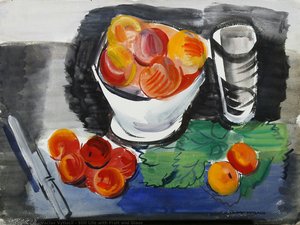
In the quiet intimacy of Still Life with Fruit and Glass, created in 1930, we encounter a moment of profound stillness captured through the lens of early twentieth-century modernism. The composition centers around a bountiful bowl, overflowing with the vibrant textures of apples, oranges, and tomatoes, which serve as anchors of warmth within the frame. Surrounding this central feast, scattered carrots and a delicate cup with a resting spoon introduce a sense of lived-in reality, suggesting a domestic scene paused in time. A solitary bottle perched in the upper left corner provides a structural counterpoint, guiding the eye through a carefully orchestrated arrangement of shapes and light. This work is not merely a depiction of food; it is an exploration of how light interacts with organic surfaces, turning everyday objects into vessels of aesthetic wonder.
The technique employed by Vaclav Vytlacil reflects his deep engagement with the evolving language of abstraction and form. While the subject matter remains rooted in the classical tradition of the still life, there is an unmistakable rhythmic quality to the brushwork that hints at the artist's future as a pioneer of American abstraction. The interplay between the heavy, saturated tones of the fruit and the more delicate, translucent qualities of the glassware creates a tactile experience for the viewer. Each stroke contributes to a sense of volume and weight, inviting the observer to feel the skin of the orange or the cool smoothness of the glass. For the discerning collector or interior designer, this painting offers a sophisticated balance of classical subject matter and modern sensibility, making it a versatile masterpiece for any curated space.
Beyond its visual splendor, the painting resonates with an emotional depth that speaks to the timelessness of the domestic sphere. There is a nostalgic, almost meditative quality to the arrangement, evoking a sense of abundance and the quiet beauty found in the mundane. As one of Vytlacil's earlier explorations, this piece serves as a bridge between the representational traditions he learned at the Art Institute of Chicago and the revolutionary "push and pull" theories he would later champion alongside Hans Hofmann. To possess a reproduction of this work is to bring a piece of art history into the home—a fragment of a transformative era where the boundaries of perception were being redrawn, offering both a window into the past and a timeless inspiration for the modern interior.
関連作品

アーティストの略歴
The Architect of Abstraction: The Life and Legacy of Vaclav Vytlacil
In the vibrant tapestry of American modernism, few threads are as intricately woven or as profoundly influential as those spun by Vaclav Vytlacil. Born in New York City on November 1, 1892, to Czech immigrants, Vytlacil’s journey was one of constant movement and artistic evolution. Though his roots were planted in the bustling energy of Manhattan, his early years in Chicago provided a diverse cultural backdrop that would later inform the rich, layered textures of his work. His formal odyssey began at the Art Institute of Chicago in 1906, where he first learned to translate the physical world into pigment and form. This foundational period was marked by a rigorous pursuit of technical mastery, a trait that would remain a cornerstone of his practice even as he ventured into the radical territories of abstraction.
The trajectory of Vytlacil’s career took a decisive turn when he moved to New York to study at the prestigious Art Students League in 1913. Under the watchful eye of the portraitist John C. Johansen, Vytlacil developed an acute sensitivity to tonal control and meticulous observation. However, the boundaries of traditional representation could not long contain his burgeoning curiosity. Seeking the vanguard of innovation, he turned his gaze toward Europe, immersing himself in the artistic currents of Munich. It was during this transformative period that he encountered the legendary Hans Hofmann. This meeting would become the defining moment of his life, establishing a profound intellectual and aesthetic bond. As one of Hofmann’s most devoted disciples, Vytlacil embraced the revolutionary principles of spatial tension and color dynamics, eventually becoming a vital conduit for these ideas as they crossed the Atlantic to reshape American art.
A Symphony of Form and Color
Vytlacil’s oeuvre serves as a breathtaking chronicle of an artist transitioning from the tangible to the transcendental. His early works often found beauty in the quietude of the domestic sphere, utilizing still life compositions to explore the interplay of light and volume. In masterpieces such as Still Life with Grapes, Vase, and Fish, one can witness the delicate tension between classical subject matter and modern experimentation. He possessed a singular ability to elevate the mundane—a cluster of grapes or the curve of a vase—into something monumental through deliberate brushwork and a sophisticated understanding of weight and balance. These compositions were not merely depictions of objects but were explorations of how light breathes life into form, creating a sense of three-dimensional presence that pulls the viewer into a shared, tactile space.
As his relationship with Cubist aesthetics deepened, Vytlacil’s work underwent a radical metamorphosis. The structured reality of his early still lifes gave way to the rhythmic energy of abstraction. His later compositions, such as the striking Abstract Composition [Triptych], demonstrate a mastery of geometric shapes, bold lines, and textured surfaces. In these works, the artist moved beyond the representation of objects to focus on the pure emotional resonance of color and space. He utilized the lessons learned from Hofmann to create canvases that felt alive with movement, where the boundaries between foreground and background dissolved into a harmonious dialogue of energetic strokes. This evolution reflects a lifelong commitment to pushing the limits of what paint could communicate, moving from the observation of the external world to the expression of an internal, rhythmic truth.
Historical Significance and Enduring Influence
Beyond his individual canvases, Vaclav Vytlacil played a crucial role in the pedagogical landscape of mid-century America. He was not merely a practitioner of modernism but one of its most dedicated educators and advocates. Following World War II, he became instrumental in disseminating the transformative teachings of Hans Hofmann across the United States, lecturing at various institutions and fostering a new generation of artists who would go on to define the American avant-garde. His ability to bridge the gap between European innovation and American experimentation helped solidify a unique identity for American abstraction, making it a formidable force on the global stage.
Today, the legacy of Vytlacil is preserved in the permanent collections of the world's most esteemed institutions, including:
- The Museum of Modern Art (MoMA)
- The Metropolitan Museum of Art
- The Smithsonian American Art Museum
Vytlacil’s contribution to art history lies in his role as a bridge-builder—between tradition and revolution, between the figurative and the abstract, and between the teachings of the Old World and the burgeoning spirit of the New. His life remains a testament to the power of artistic devotion and the enduring impact of a vision that seeks to find the infinite within the finite.
vaclav vytlacil
1890 - 1984
基本情報
- Artistic Movement Or Style: Abstract American Art; Hans Hofmann's teachings
- Artists Or Movements Influenced By This Artist: Cubist Movement
- Artists Who Influenced This Artist: Hans Hofmann
- Date Of Birth: November 1, 1892
- Date Of Death: January 5, 1984
- Full Name: Vaclav Vytlacil
- Nationality: American
- Notable Artworks:
- Abstract Composition [Triptych]
- Still Life
- Place Of Birth: New York City, USA
関連記事
アンリ・マティスの傑作25選:色彩と情熱の軌跡|ArtsDot
アンリ・マティスの傑作25選🎨 色彩と情熱が織りなす世界を旅する。フォーヴィスム代表の巨匠、マティスの絵画の魅力と歴史を紐解きます。ArtsDotで高品質なアートプリントや複製画を見つけ、インテリアに芸術的な輝きを✨ Explore the full collection online

Charles Sheeler Jr.: Precisionism, Industrial Aesthetics & the American Modernist Vision
Explore the groundbreaking work of Charles Sheeler Jr., a pivotal figure in American Precisionism. Discover his iconic industrial landscapes, photographic studies & lasting influence on modernist art. Expert insights for collectors.

ポール・セザンヌ:至高の25選 - 傑作と革新の軌跡 | ArtsDot
ポール・セザンヌの至高の25選。ポスト印象派を代表する画家、セザンヌの傑作と革新的な技法を紐解きます。ArtsDotで高品質な複製画やインテリアアートを見つけ、芸術の世界をご自宅に。今すぐコレクションをご覧ください。
The Bountiful Still Life: Symbolism & Artistic Representation of Fruit Across Art History
Explore the rich history of still life painting & the symbolism of fruit across art movements. Discover masterpieces from Caravaggio to Cézanne with ArtsDot – expert guidance & museum-quality reproductions.
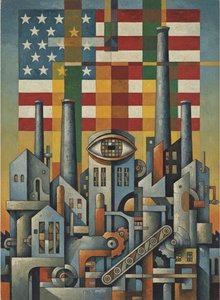
Precision of Vision: Charles Demuth & the Modernist Reframing of American Industry
Explore the groundbreaking art of Charles Demuth & the Precisionism movement. Discover iconic paintings like 'The Figure Five in Gold,' his unique style, and lasting impact on American Modernism. Learn more at ArtsDot.