

 プレビュー
プレビュー
 プリントを購入
 シェアする
シェアする シェアする
シェアする
 詳細を見る
詳細を見る

 ダウンロード
 似ている作品
 X線調査
X線調査 スライドショー
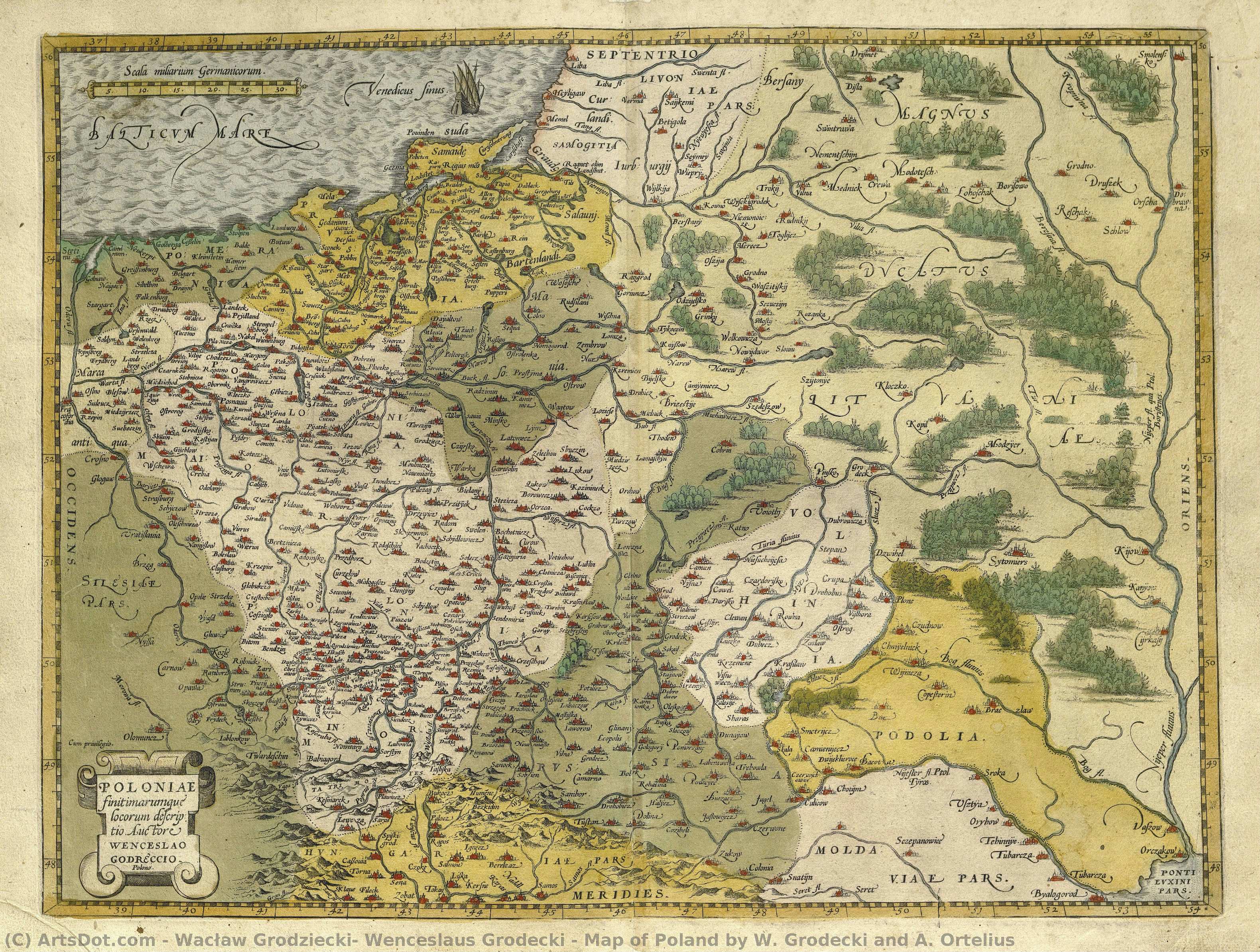
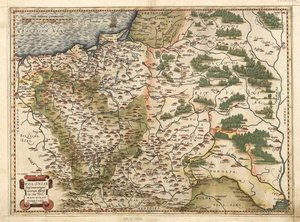
Map of Poland by W. Grodecki and A. Ortelius


 詳細を見る
詳細を見る




































作品のオリジナル比率に合わせた、当店の規定サイズからお選びください。

特定のフレームやスペースに合わせて、ご希望のサイズをご入力いただけます。選択されたサイズが元の画像の比率と異なる場合、アートワークをトリミングするか、手描きで要素を追加して絵画を拡張いたします。デジタルモックアップ を制作し、制作開始前にご確認(承認)をいただきます。
画面上のプレビューは、実際のトリミングや拡張を正確に反映しているものではありません。最終的な構図は、モックアップによってのみ正確にご確認いただけます。
カスタムサイズもご利用いただけますが、元の比率を維持するためには、あらかじめ用意されたリストからサイズを選択することをお勧めいたします。
ご注文後、ArtsDot.com チームより詳細な指示をお送りするとともに、仕上がりイメージ(モックアップ)をご提供いたします。


 ガラスオプションは、110cm未満のサイズでのみご利用いただけます。

Map of Poland by W. Grodecki and A. Ortelius
複製技法
複製画のサイズ
-


合計金額
$ 263
A Journey Through Time: The Cartographic Masterpiece of Poland
To gaze upon the Map of Poland by Wacław Grodecki and Abraham Ortelius is to embark on a voyage through the intellectual and artistic renaissance of the late 16th century. Created in 1579, this exquisite piece serves as more than a mere geographical guide; it is a profound window into the Renaissance mind, where the precision of science meets the elegance of classical artistry. The map captures a moment in history when the boundaries of the known world were being redrawn by the hands of scholars and explorers alike. Through its intricate linework and detailed topography, the work breathes life into the rivers, towns, and territories of a Poland that stood at the heart of European significance.
The aesthetic allure of this piece lies in its monochromatic, old-fashioned charm. Rendered in a striking black and white palette, the map evokes a sense of timelessness and scholarly gravity. Every stroke of the engraver's tool contributes to a rich tapestry of information, where tiny symbols represent the pulse of civilization—cities, trade routes, and natural landmarks. The composition is layered with a delicate complexity that invites the viewer to linger, searching for hidden details within the winding waterways and rugged borders. This meticulous attention to detail creates an atmosphere of discovery, making it an intellectually stimulating centerpiece for any collection.
The Intersection of Science and Artistry
The collaboration between Wacław Grodecki, a pioneering Polish cartographer and cleric, and the legendary Abraham Ortelius represents a monumental union of geographical insight and printing mastery. Grodecki’s deep understanding of the Polish landscape, rooted in his rigorous academic training at Kraków and Leipzig, provided the essential scientific foundation. When paired with the sophisticated engraving techniques characteristic of the Ortelius era, the result is a work that transcends utility to become fine art. The map does not merely show where things are; it tells a story of human presence and territorial identity.
For the discerning collector or interior designer, this reproduction offers an unparalleled opportunity to introduce a sense of historical prestige into a space. The stark, elegant contrast of the black ink against the aged texture of the paper provides a sophisticated neutral element that complements both classical and contemporary decor. Whether placed in a grand library, a professional study, or a modern living area, the map acts as a conversational anchor, evoking themes of exploration, heritage, and the enduring human quest for knowledge. It is an investment in a piece of history that brings the profound weight of the 16th century into the modern home.
関連作品
アーティストの略歴
The Scholar of Silesia: The Life and Legacy of Wacław Grodecki
In the vibrant intellectual landscape of the sixteenth century, few figures embodied the Renaissance ideal of the polymath as gracefully as Wacław Grodecki. Born around 1535 in Grodków, within the historical region of Silesia, Grodecki’s life was a profound tapestry woven from threads of scientific inquiry and spiritual devotion. His journey began amidst the scholarly halls of Kraków University, where he immersed himself in the rigorous disciplines of philosophy and mathematics. This foundational education did more than merely sharpen his intellect; it provided him with the analytical tools necessary to bridge the gap between the abstract world of numbers and the tangible reality of the physical earth. As he moved toward further studies at Leipzig University, Grodecki embraced the humanist principles that were then reshaping Europe, preparing himself for a career that would transcend the boundaries of both the pulpit and the parchment.
Grodecki’s professional life was marked by a rare duality, as he ascended the ecclesiastical hierarchy while simultaneously contributing to the burgeoning field of cartography. As a canon of Wrocław Cathedral and later as the Dean of Bratislava Collegiate Church, his influence within the Catholic Church was significant, granting him a position of authority and stability. Yet, it was perhaps in the quiet, meticulous work of mapping that his most enduring scientific legacy was forged. He did not merely observe the world; he sought to define it with an accuracy that was revolutionary for his era. His deep understanding of the Polish landscape, nurtured by years of academic rigor and travel, allowed him to transform geographical data into works of art that captured the very pulse of a nation.
A Union of Science and Artistry
The true brilliance of Grodecki’s work is most vividly realized in his monumental collaboration with the legendary Flemish cartographer Abraham Ortelius. This partnership represented a historic intersection where geographical insight met the pinnacle of printing mastery. When Grodecki provided his precise topographical data for Ortelius’s seminal Theatrum Orbis Terrarum, he was participating in the creation of what would become the most influential atlas in history. The resulting maps, such as the exquisite Map of Poland created in 1579, are far more than utilitarian tools; they are masterpieces of Renaissance engraving. To gaze upon these works is to witness a moment where the precision of science meets the elegance of classical artistry, rendered in a striking monochromatic palette that evokes a sense of timelessness and scholarly gravity.
In these cartographic achievements, one finds a delicate complexity that invites endless discovery. Every fine line and intricate symbol serves a dual purpose: to inform the traveler and to delight the eye. The maps breathe life into the winding waterways, rugged borders, and bustling trade routes of a Poland that stood at the heart of European significance. Through his work, Grodecki helped redraw the boundaries of the known world, ensuring that the topographical truth of his homeland was etched permanently into the collective consciousness of Europe. His ability to blend the empirical with the aesthetic ensured that his contributions were not merely recorded in history books but were celebrated as triumphs of human perception.
Historical Significance and Enduring Influence
The historical significance of Wacław Grodecki lies in his role as a pioneer who bridged disparate worlds. He was a man who could navigate the complex theological debates of the Counter-Reformation with the same dexterity that he used to navigate the intricate details of a river basin. His life serves as a testament to the era's belief that knowledge is a unified pursuit, where the study of the heavens and the earth is inseparable from the study of the soul. By serving as a trusted advisor to figures like Ortelius, Grodecki ensured that the scientific advancements of the sixteenth century were grounded in accurate, localized expertise.
Ultimately, the legacy of Grodecki remains etched in the very maps that continue to fascinate historians and art lovers alike. He stands as a symbol of the Renaissance spirit—a period defined by curiosity, the pursuit of truth, and the belief that through meticulous observation and artistic expression, humanity could begin to truly understand its place within the vastness of the world. His life, spanning from the academic centers of Poland and Germany to the religious heartlands of Bohemia and Slovakia, remains a profound chapter in the story of European intellectual history.
wacław grodziecki, wenceslaus grodecki
1535 - 1591 , Poland
基本情報
- Artistic Movement Or Style: Cartography
- Artists Or Movements Influenced By This Artist: ['Renaissance']
- Artists Who Influenced This Artist: ['Abraham Ortelius']
- Date Of Birth: 1535
- Full Name: Wacław Grodecki
- Nationality: Polish
- Notable Artworks: ['Map of Poland']
- Place Of Birth: Grodków, Poland
関連記事

White on Canvas: 10 Masterpieces & Timeless Elegance for Your Home Decor
Explore 10 iconic white paintings by Monet, Whistler & Rothko! Discover the stories behind these serene masterpieces and their impact on art history. Find museum-quality reproductions for your home decor at .

Dark Masterpieces: 10 Iconic Paintings Dominated by Black Tones |
Explore 10 iconic paintings dominated by black tones, from Rembrandt’s chiaroscuro to Goya's dark expressions. Discover the stories behind these masterpieces & find museum-quality art reproductions for your home at .

Monochrome Visions: Exploring the Aesthetic & Historical Significance of Black & White Photography
Explore the rich history & artistic power of black and white photography. From early techniques to iconic masters like Ansel Adams, discover why monochrome continues to captivate art lovers today. Expert insights for collectors.
Mars Black Masterpieces: 10 Iconic Paintings & Timeless Art Decor Ideas
Delve into the power of 'Mars Black' with 10 iconic paintings by masters like Rembrandt & Caravaggio. Explore dramatic chiaroscuro, gothic art, and timeless beauty. Find museum-quality reproductions & elevate your home decor on .
The Subtleties of White: Exploring Absence, Light & Symbolism in Art History
Explore the profound symbolism & history of white in art! From ancient purity to modern abstraction, discover how artists have used absence & light. Expert insights from ArtsDot.

