 プレビュー
プレビュー
 シェアする
シェアする シェアする
シェアする
 詳細を見る
詳細を見る

 ダウンロード
 似ている作品
 X線調査
X線調査 スライドショー
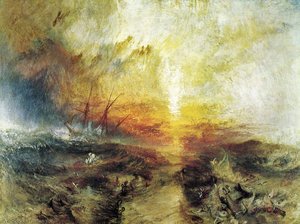
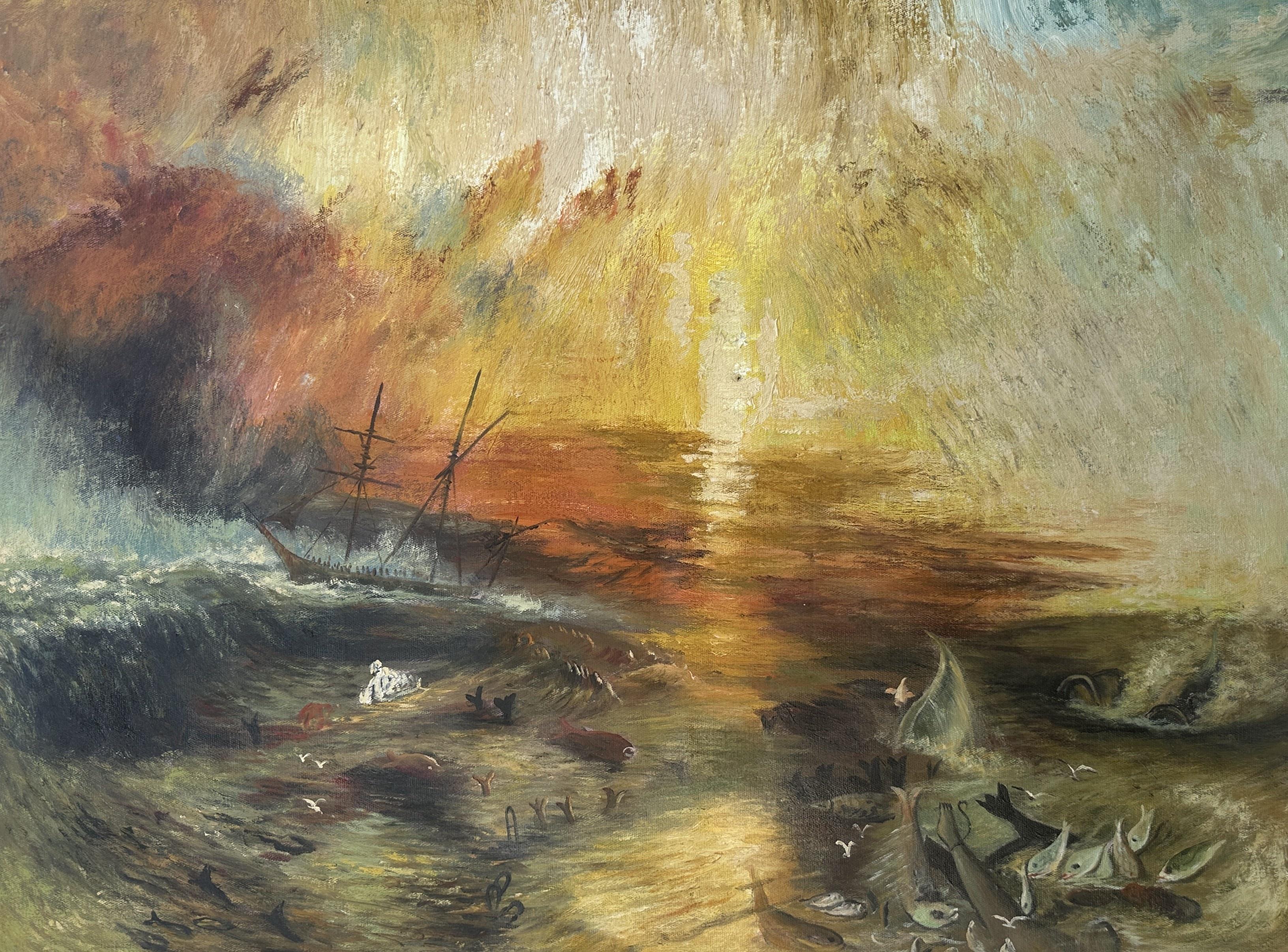
Slavers Throwing Overboard the Dead and Dying—Typhon coming on - J. M. W. Turner
 アクリル絵具
- ウォールアート
- Romanticism
 2026
2026- Studio Hand Painted Art Available Now
 62 x 84 cm
- Artwork Reference (Famous): 奴隷船が死者と瀕死者を海に投棄する―台風の接近
 詳細を見る
詳細を見る
在庫割引油彩画あり
すぐに発送可能な在庫ありの手描き油彩画。チェックアウト時に額装を追加できます。 ()






































 ガラスオプションは、110cm未満のサイズでのみご利用いただけます。


作品解説
A Tempest of Humanity: Confronting Turner’s ‘Slavers Throwing Overboard the Dead and Dying—Typhon coming on-----0671’
J.M.W. Turner, a name synonymous with the Romantic era, possessed an unparalleled ability to translate raw emotion onto canvas. This hand-painted acrylic reproduction of his powerful ‘Slavers Throwing Overboard the Dead and Dying—Typhon coming on-----0671’ is not merely a visual representation; it's an immersive experience into a harrowing moment of history and moral reckoning. The painting, born from Turner’s outrage at the Zong massacre – a horrific incident where enslaved people were thrown overboard to claim insurance money – transcends simple depiction, becoming a visceral indictment of human cruelty.
The Sublime in Suffering
Turner's artistic style is immediately recognizable here: loose, dynamic brushwork that prioritizes atmosphere and feeling over precise detail. The subject matter—the brutal act of discarding human lives into the churning sea amidst an approaching typhoon—is rendered with a fiery palette of oranges, reds, and yellows clashing against deep blues and grays. This isn’t a painting about accuracy; it's about evoking the emotional impact of unimaginable suffering and the overwhelming power of nature. The lone figures struggling in the waves are dwarfed by the tempest, emphasizing their vulnerability and the indifference of the natural world.
Technical Mastery & Collector’s Value
Our studio artists have meticulously recreated Turner's vision using acrylic on canvas, capturing the texture and luminosity of the original. The technical qualities—the blending of colors to create a sense of swirling chaos, the layering of paint to suggest depth and movement—are faithfully reproduced. This piece is part of our Studio Hand Painted Artisanal Masterpieces collection, ensuring exceptional quality and attention to detail. Collectors will value this artwork not only for its aesthetic beauty but also for its historical significance and powerful message. It’s a conversation starter, a poignant reminder of past injustices, and a testament to Turner's enduring legacy.
Bring the Power Home
Imagine owning a piece that embodies both artistic brilliance and moral weight. This reproduction allows you to experience Turner’s masterpiece firsthand, adding a touch of dramatic beauty and historical depth to your collection. Framing is available to perfectly complement this stunning work. Don't miss the opportunity to acquire this exceptional artwork – a powerful statement piece that will resonate for generations. Contact ArtsDot today to learn more about acquiring ‘Slavers Throwing Overboard’ and explore our full range of hand-painted reproductions!
関連作品
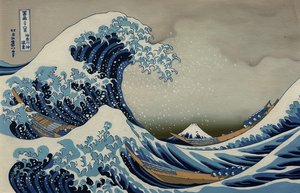
アーティストの略歴
The Luminary of Light: A Journey Through the Life and Art of J.M.W. Turner
Joseph Mallord William Turner, a name synonymous with the sublime power of landscape and the evocative dance of light, remains one of Britain’s most celebrated and influential artists. Born in Covent Garden, London, in 1775, Turner's journey from a barber’s son to a master painter was fueled by an innate talent, relentless dedication, and a visionary spirit that would forever alter the course of art history. From his earliest days sketching architectural details to his later, almost abstract explorations of atmosphere and color, Turner consistently pushed the boundaries of artistic expression. His formal training began at the Royal Academy Schools in 1789, where he quickly distinguished himself as a promising student. However, Turner was not content with merely replicating established styles; he sought to capture the very essence of nature – its raw power, its fleeting beauty, and its inherent drama. Early works reveal a meticulous attention to topographical detail, reflecting the prevailing artistic tastes of the time. Yet, even in these early pieces, hints of his future direction are visible—a sensitivity to light and shadow, a willingness to experiment with color, and an emerging fascination with the sublime. He was particularly drawn to the Dutch Golden Age painting style, absorbing influences from artists like Rembrandt and Vermeer.The Evolution of a Visionary: From Topography to Transcendence
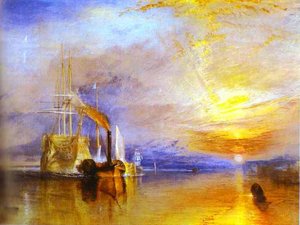
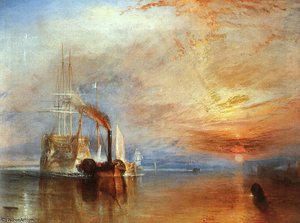
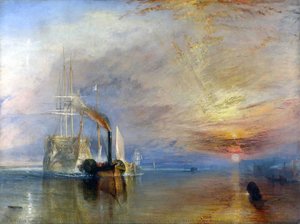
Turner’s artistic development was marked by constant experimentation and a growing desire to move beyond mere representation. Influenced by masters like Claude Lorrain and J.M.W. Cozens, he began to infuse his landscapes with a romantic sensibility, emphasizing emotional response over precise depiction. His travels throughout Europe, beginning in 1802, proved pivotal, exposing him to diverse landscapes and inspiring new approaches to composition and color. He wasn’t simply recording what he saw; he was interpreting it through the lens of his own unique vision. These expeditions took him to Italy, Switzerland, Germany, and Norway, where he meticulously documented breathtaking vistas and absorbed inspiration from local artistic traditions. The early 19th century witnessed a shift in Turner's style towards greater expressiveness. His seascapes, in particular, became increasingly dramatic, capturing the fury and majesty of the ocean with unprecedented intensity. Paintings like “The Fighting Temeraire Tugged to Her Last Berth to Be Broken Up” (1839) are not merely depictions of a ship being towed to its final resting place; they are poignant meditations on mortality, loss, and the relentless march of progress. The use of light in this work is particularly striking—a golden sunset casting a melancholic glow over the scene, symbolizing the passing of an era. Turner skillfully employed dramatic chiaroscuro techniques, highlighting the interplay between darkness and illumination to heighten emotional impact.A Master of Atmosphere: Light, Color, and the Sublime
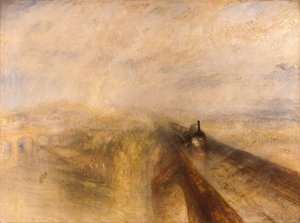
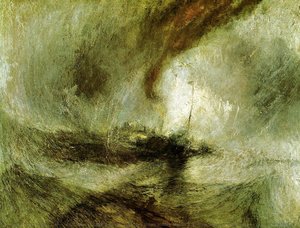
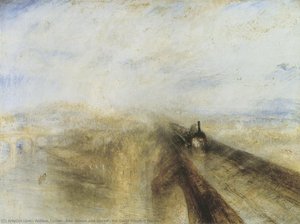
Turner’s later works are characterized by an almost radical departure from traditional artistic conventions. He increasingly prioritized atmosphere and color over form and detail, creating paintings that seem to dissolve into pure light and energy. Works like “Rain, Steam and Speed – The Great Western Railway” (1844) exemplify this approach—a swirling vortex of color and motion that captures the dynamism of the industrial age. Critics were often baffled by these later works, but their influence on subsequent generations of artists would prove profound. He was a pioneer in exploring the effects of light and atmosphere, anticipating the Impressionists’ focus on capturing fleeting moments and subjective perceptions. His use of color was equally innovative—bold, vibrant hues applied with loose brushstrokes to create a sense of movement and energy. Turner wasn't simply painting landscapes; he was attempting to convey the very *feeling* of being in nature – the awe, the wonder, the terror.Turner’s unwavering commitment to artistic vision cemented his place as one of Britain’s greatest painters. He established himself as a leading figure in the Romantic movement, shaping its aesthetic sensibilities and inspiring countless artists who followed in his wake. His legacy continues to resonate today, reminding us that art can transcend mere representation—that it can capture the sublime beauty of the natural world and evoke profound emotional responses.
Notable Works & Collections
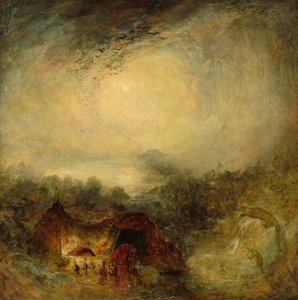
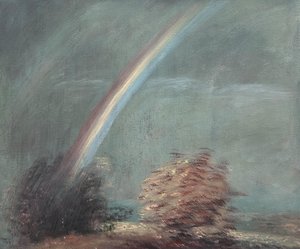
- The Morning After the Deluge (1843): A powerful depiction of nature’s forces, housed in the Tate Collection, London.
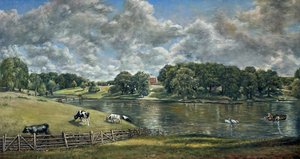
- Chichester Canal (1828): Commissioned by George Wyndham, currently at the Tate Collection.
- Ruins of Tintern Abbey: A stunning watercolor showcasing his mastery of light and atmosphere, found in the Calouste Gulbenkian Museum (Lisboa, Portugal).
- The Fighting Temeraire Tugged to Her Last Berth to Be Broken Up (1839): A poignant masterpiece exploring themes of loss and change.
- Rain, Steam and Speed – The Great Western Railway (1844): Capturing the dynamism of the industrial age with swirling color and motion.
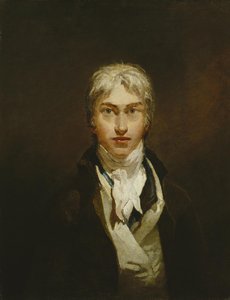
ウィリアム・ターナー
1775 - 1851 , イギリス
基本情報
- Artistic Movement Or Style: ロマン主義絵画
- Artists Or Movements Influenced By This Artist: ['クロード・ローラン']
- Date Of Birth: 1775年4月23日
- Date Of Death: 1851年12月19日
- Full Name: ジョゼフ・マロード・ウィリアム・ターナー
- Nationality: イギリス人
- Notable Artworks:
- 嵐 - グレート・ウェスタン鉄道
- 戦闘テメライア
- Place Of Birth: ロンドン、イギリス
関連記事
Acrylic Revolution: 10 Masterpieces That Redefined Modern Art | ArtsDot
Explore 10 legendary acrylic paintings that revolutionized modern art! From Helen Frankenthaler's color fields to Richter’s abstract power, discover the stories behind these iconic masterpieces. Find museum-quality reproductions & elevate your home decor on ArtsDot.com.
マーク・ロスコ傑作25選:色彩が織りなす深遠な世界|ArtsDot
マーク・ロスコの傑作25選。抽象表現主義を代表する巨匠、色彩が織りなす深遠な世界を探求します。絵画の背景や技法、感動的なストーリーを紐解き、ArtsDotで高品質なアートプリントをお楽しみください。リビングやオフィスにモダンアートを飾るなら!
ロマン主義を彩る至宝:時代を象徴する10大名作の世界
ロマン主義を代表する10大名作を紐解く!ドラクロワ、ルーベンスなど巨匠たちの情熱と色彩が息づく世界。時代を超えて愛される傑作の物語を深く探求し、お部屋に彩りを添える高品質なアートプリントを見つけましょう。ArtsDot.comで全ての作品を発見してください。
Acrylic on Paper: A Modern Canvas for Contemporary Expression
Explore the versatility of acrylic painting on paper! Discover expert techniques, artist insights & archival practices for creating stunning contemporary art. Learn more at ArtsDot.
アンリ・マティスの傑作25選:色彩と情熱の軌跡|ArtsDot
アンリ・マティスの傑作25選🎨 色彩と情熱が織りなす世界を旅する。フォーヴィスム代表の巨匠、マティスの絵画の魅力と歴史を紐解きます。ArtsDotで高品質なアートプリントや複製画を見つけ、インテリアに芸術的な輝きを✨ Explore the full collection online